The Long Walk Review – A Relentless March into the Heart of Humanity
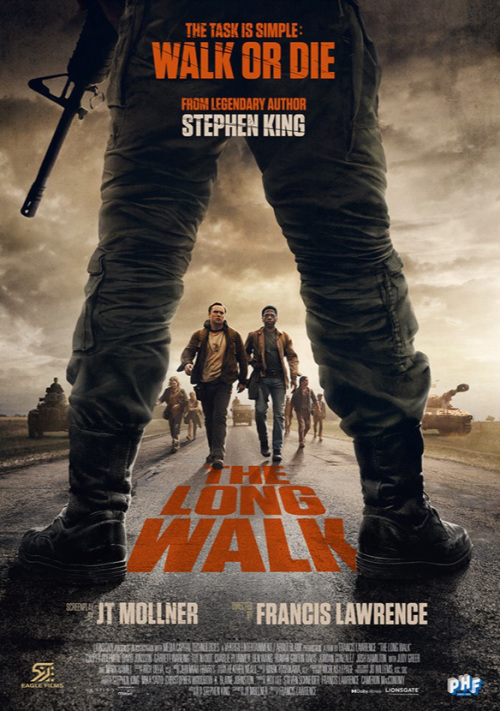
Based on the acclaimed novella by Stephen King (writing under his Richard Bachman pseudonym), The Long Walk is a dystopian horror thriller that transforms a chillingly simple idea into something emotionally profound.
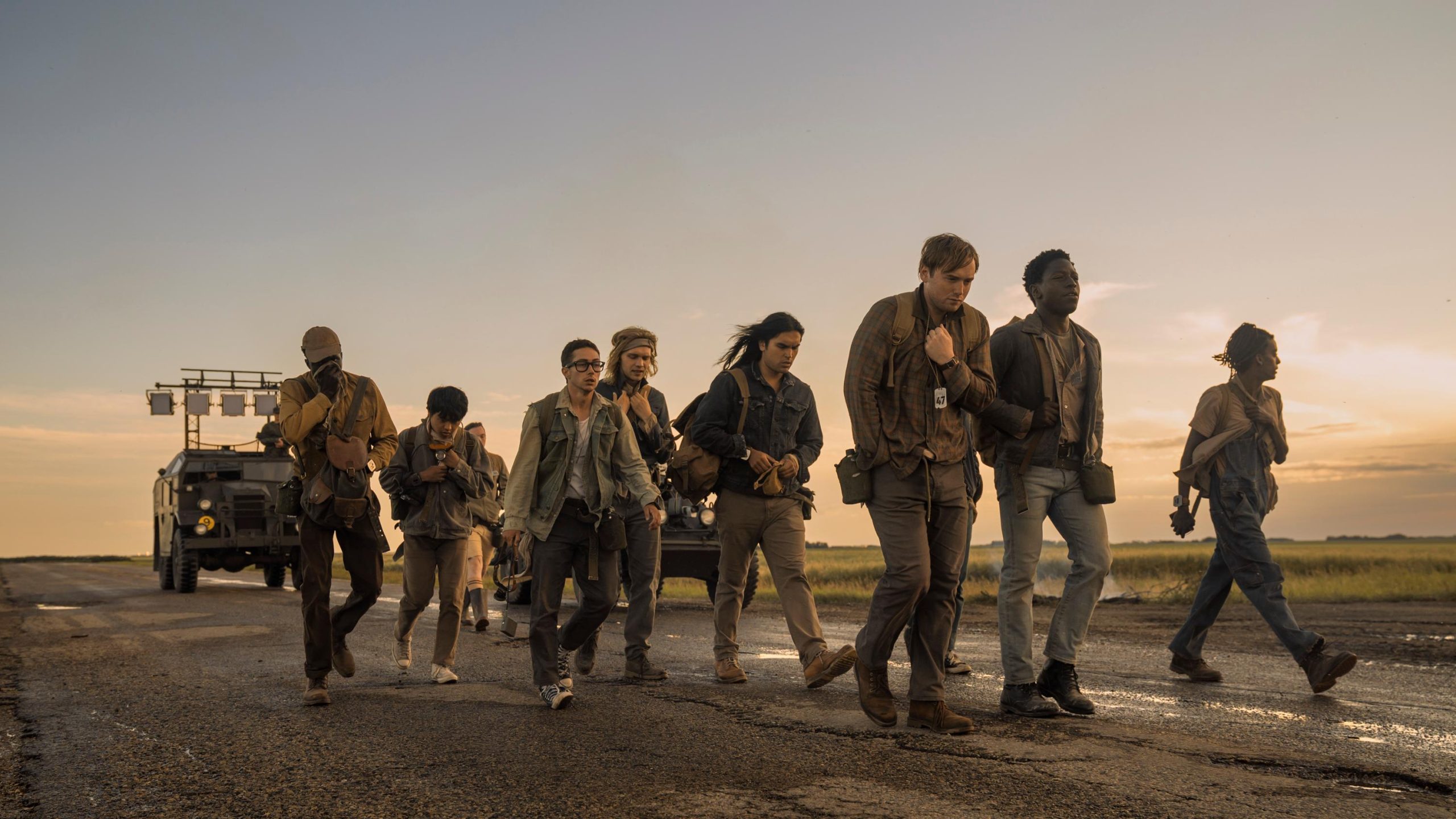
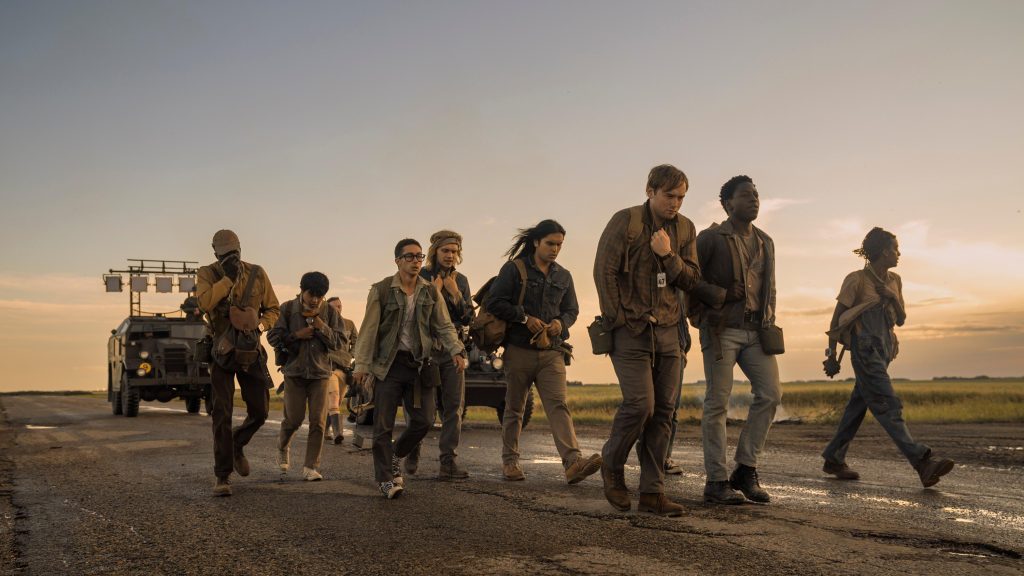
In a crumbling post-war America, fifty teenage boys are chosen to take part in a deadly contest: walk at a steady pace without stopping. If they slow down too long, armed soldiers execute them on the spot. The last boy standing wins unimaginable riches and one wish of his choosing.
What could have felt repetitive instead becomes mesmerising. Director Francis Lawrence, known for his work on the The Hunger Games films, delivers a measured and unflinching portrayal of this grim competition. His camera lingers on faces caked in sweat and dirt, showing every step as an act of defiance, every stumble as a potential death sentence.
A Journey Through Despair and Brotherhood
At the heart of the film are two boys: Ray Garraty, played with astonishing depth by Cooper Hoffman, and McVries, portrayed by the magnetic David Jonsson. Their relationship is the lifeblood of the story, slowly developing from wary allies to something resembling brothers. Hoffman channels quiet rage and aching vulnerability, while Jonsson counters with a charm that barely masks his own despair. Their small moments together — conversations about family, hopes, and regrets — anchor the film’s emotional core amidst the chaos.
The supporting cast bring striking texture to this doomed parade. Ben Wang brings comic relief as foul-mouthed Olson, while Tut Nyuot lends gentle humanity as the empathetic Baker. Charlie Plummer imbues the antagonistic Barkovitch with unsettling volatility, and even brief appearances from Judy Greer as Garraty’s worried mother carry lasting weight. Watching each boy falter and fall is gut-wrenching, because by then they are more than faceless competitors. They are people we know, and care for.
The Major and the Machinery of Death
Overseeing it all is the sinister Major, played by Mark Hamill. His performance is chilling, a calm and calculating figure who administers death as if reading sports scores. He never touches the dirt or sweat of the boys’ struggle, and that distance makes him even more terrifying. He is the face of a system that strips humanity from its victims while turning their suffering into public spectacle.
Lawrence wisely shoots the film in sequence, letting exhaustion and physical decline seep naturally into the performances. Cinematographer Jo Willems uses long takes to capture the endless road as a claustrophobic trap. The sound design further suffocates you: the rhythmic tramp of boots, the electronic chirp of a warning, the sudden crack of a rifle. These noises are never loud, yet they loom like predators waiting to strike.
Endurance, Connection, and the Cost of Winning
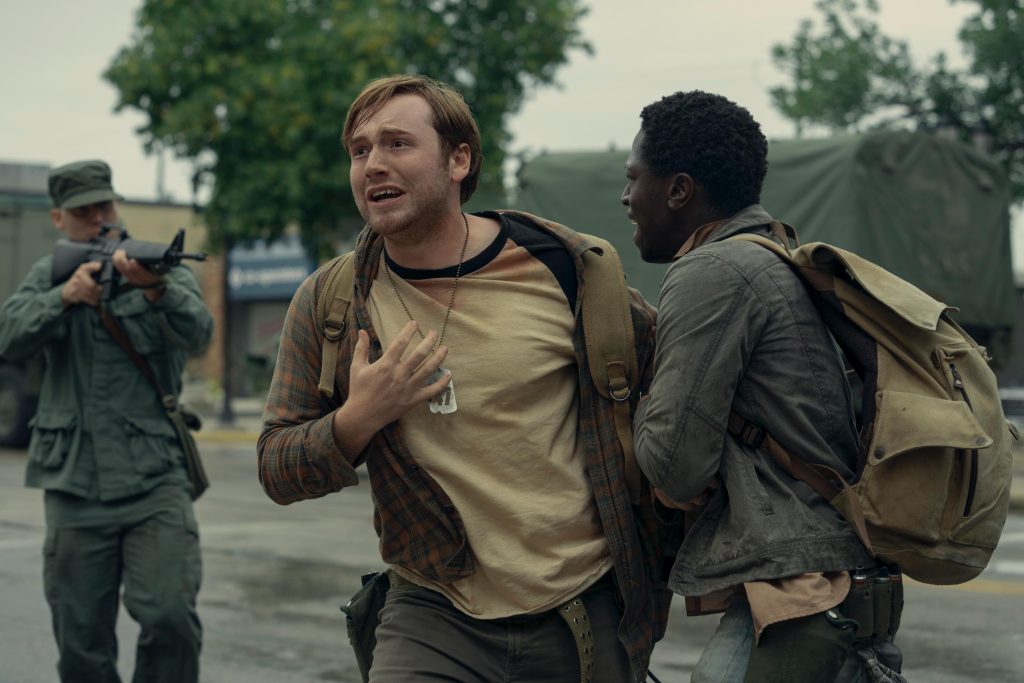
What makes The Long Walk so powerful is how it uses this oppressive setting to explore resilience and connection. Amid the cruelty of the contest, the boys form bonds — sharing food, encouraging each other, sometimes even risking their own survival to help a friend. These fragile moments of kindness shine like flares in the dark, and make their inevitable losses far more devastating.
Rather than offer catharsis, The Long Walk leaves you drained and hollow, mirroring the state of its lone survivor. It is a film about the cost of ambition, the fragility of hope, and the desperate need for human connection in a world designed to strip it away. It stands proudly alongside the strongest Stephen King adaptations like The Shawshank Redemption and The Mist, not through spectacle but through its relentless humanity.