28 Years Later Review – Boyle and Garland’s Return Infects the Genre with Vision and Fury
More than two decades since 28 Days Later rewired the circuits of zombie horror, Danny Boyle and Alex Garland return to the franchise they helped define with the bold, bizarre, and unrelenting 28 Years Later. In a cinematic landscape crowded with end-of-the-world stories, this long-awaited third entry slices through the noise with startling intensity and thematic weight.
Rather than attempt to replicate the past, Boyle and Garland blow it wide open. Their vision is weirder, grander, and more introspective than ever before, turning 28 Years Later into not just a horror film, but a kind of post-apocalyptic folk epic. What begins with Teletubbies—yes, really—quickly spirals into carnage, setting the tone for a film that embraces chaos with purpose.
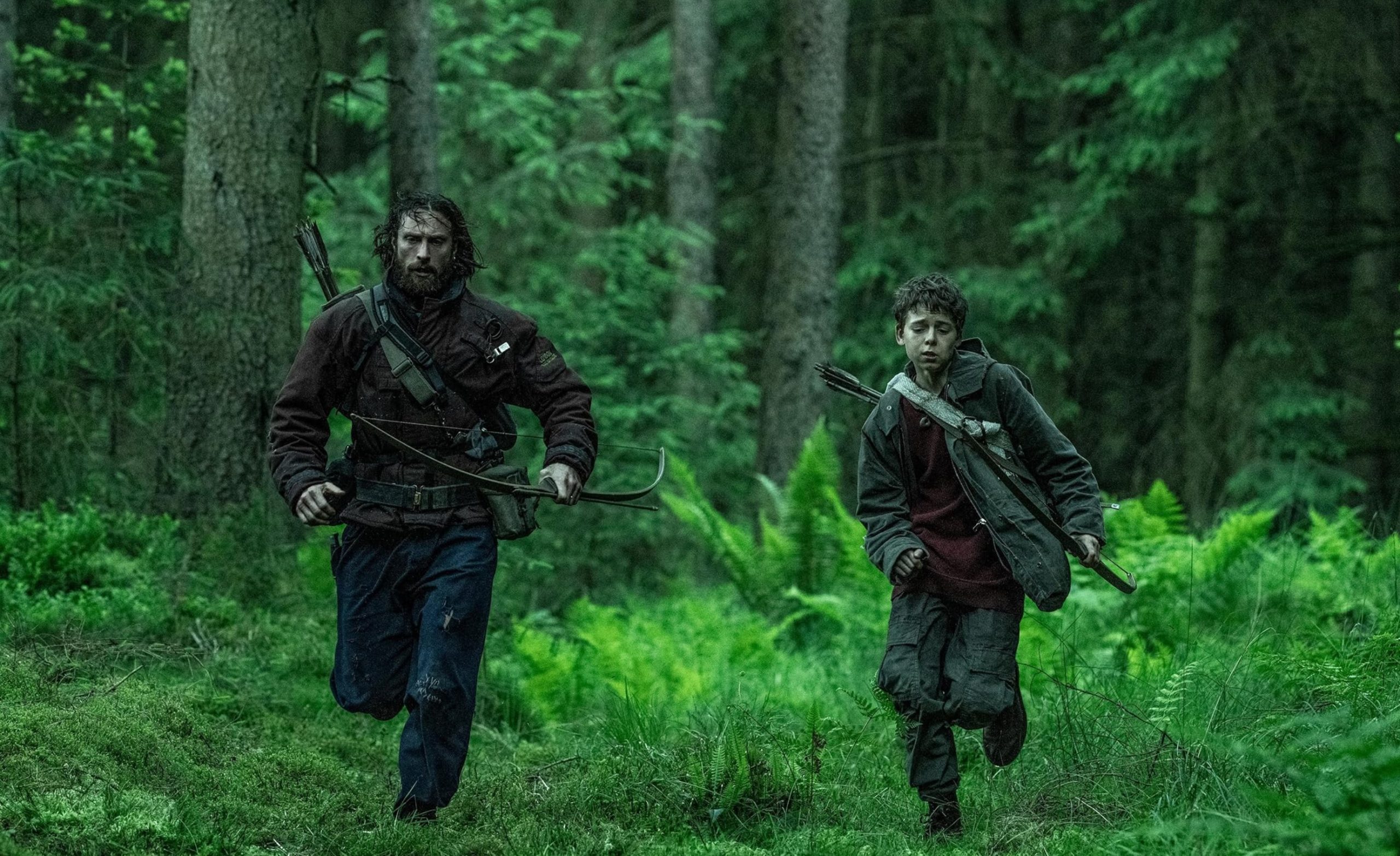
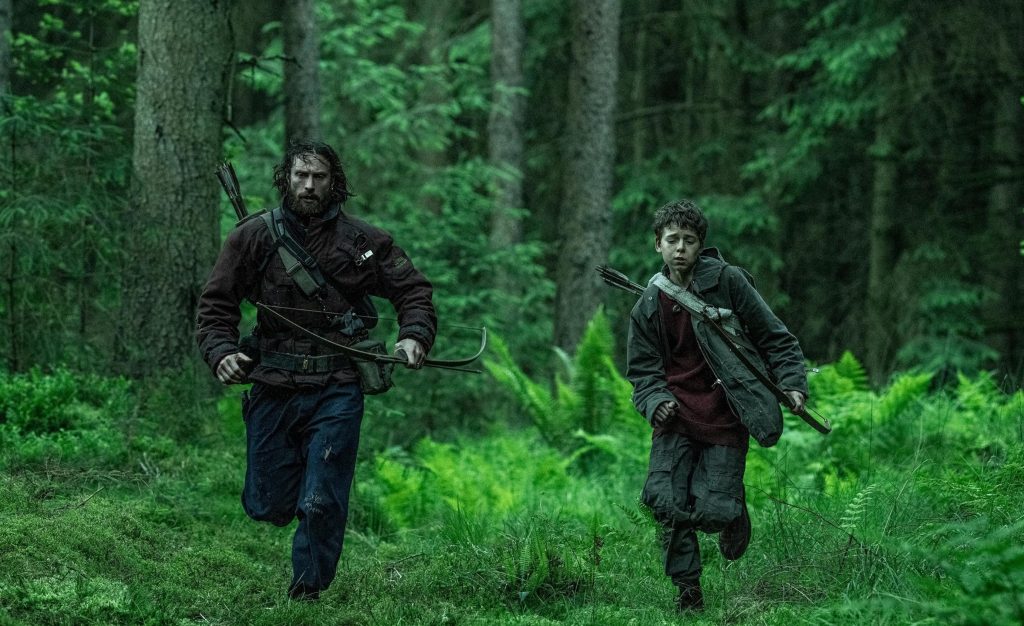
The story leaps forward nearly three decades after the initial outbreak, finding Britain cut off entirely from the outside world, left to fester in viral isolation. On Lindisfarne, also known as Holy Island, a fragile outpost of survivors clings to routine and tradition. 12-year-old Spike (Alfie Williams, a genuine revelation) has never been inland, never seen beyond the water’s edge. When his father Jamie (Aaron Taylor-Johnson) takes him into the abandoned mainland for the first time, Spike’s wide-eyed reaction—“It’s so big”—underscores the mystery and menace that lies beyond the shoreline.
Their journey echoes the emotional dynamics of The Last of Us, with a reluctant protector guiding a younger companion through danger-laced ruins. Along the way, the film introduces a chilling new evolution in the infected: the Alphas—massive, relentless men who absorb arrows like pinpricks. A particular moment where one Alpha silently watches from a hilltop is enough to send shivers. These towering threats, alongside faster and slower variants of the infected, heighten the tension significantly. Still, their completely nude presentation raises questions. While unsettling, the shift from fully clothed infected in the first two films to completely exposed figures here feels unexplained and slightly jarring. Unless these unfortunate souls were bitten in the buff, the stylistic choice risks distracting from the horror it’s meant to enhance.
Visually, the film is electric. Shot in part on iPhones, Boyle cleverly updates the rough aesthetic of 28 Days Later with sleek, jarring edits and modern cinematic techniques. Bullet-time rigs capture kills from multiple angles, creating a fractured, almost dreamlike rhythm to the violence. 28 Years Later swings between handheld grit and lyrical beauty, from pastoral stillness to frantic chase. It feels tactile, immediate, and often overwhelming in the best way.
Thematically, Garland and Boyle are reaching for something far beyond standard survival horror. The rage virus serves not only as a biological threat but as a metaphor for Britain’s own post-Brexit identity crisis. The country’s isolation is literal, its inhabitants disconnected not just from the world but from their own history. The film weaves in archival World War II footage, medieval imagery, and rural religious iconography, crafting a vision of survival that’s both regressive and nationalistic. Is this the “great” past some long to return to? Or is it a warning about the myths we use to justify cultural decay?
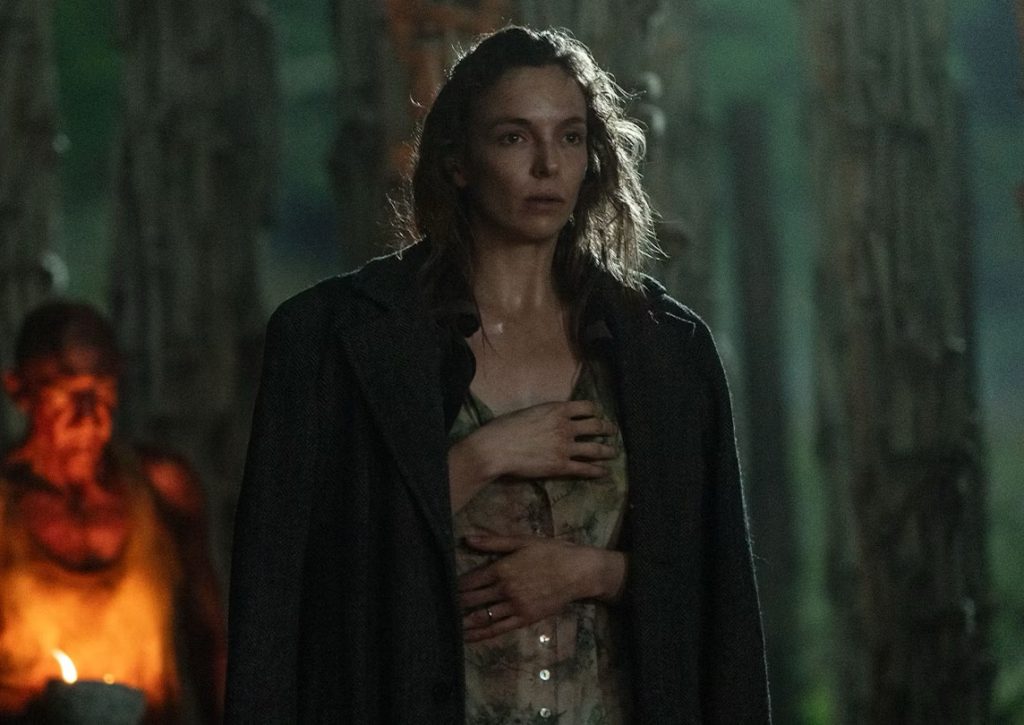
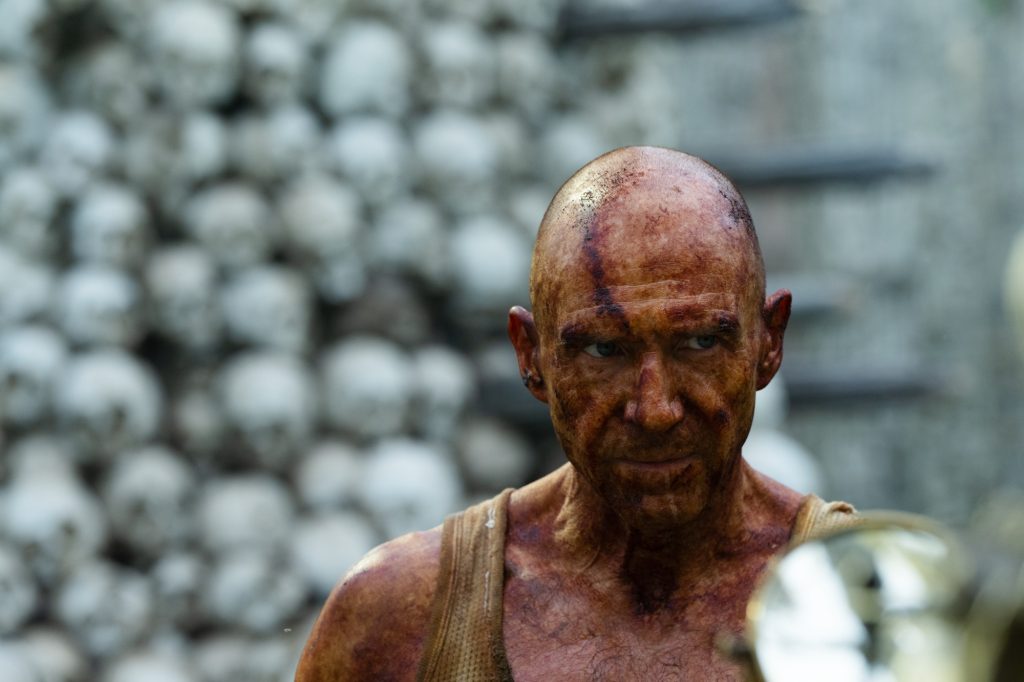
Jodie Comer delivers one of the film’s most powerful performances as Isla, Spike’s ailing mother, teetering between lucidity and breakdown. Her presence is emotionally raw and deeply human, grounding the film in a very personal sense of loss and trauma. Ralph Fiennes, meanwhile, lends theatrical gravitas to Dr. Kelson, a former doctor who now dispatches infected and builds eerie monuments from their skulls. He’s part prophet, part madman—an unsettling symbol of reason turned ritual.
28 Years Later Brings Boyal Back To His Brutal Best
The horror is sharp and brutal. When the infected strike, they do so with terrifying speed and volume. The tension Boyle builds before their arrival is masterful. And in a rare feat, the score by Young Fathers matches the film’s manic tone beat-for-beat—electrifying, percussive, and ferociously alive. The first half of the film is particularly strong, building dread through silence, subtle character work, and bursts of pure terror.
Where the film stumbles slightly is in tone—especially in its final act. A sequence involving a tracksuit-wearing, parkour-performing human gang appears late in the narrative and feels lifted from another movie entirely. While the infected remain primal, horrifying, and believable, this group’s slick, stylized energy feels at odds with the grounded mythology built throughout the rest of the film. Their athleticism and fashion-forward presentation borders on comic book surrealism, injecting a jolt of disbelief into an otherwise immersive world. It’s not a deal-breaker, but it’s a tonal detour that stands out like a dislocated thumb.
Still, these risks are part of the film’s DNA. 28 Years Later doesn’t aspire to clean, predictable storytelling. It’s wild, unkempt, and exploratory. The film often sacrifices clarity for impact, but never lacks purpose. It knows exactly what it’s trying to say—even if it leaves some viewers uncomfortable or unsure.
This is Boyle at full throttle, drawing on everything from Trainspotting to Sunshine to Steve Jobs in how he plays with energy and time. It’s Garland unfiltered, chasing the abstract metaphysical horror of Annihilation and Men with new, nationalistic dread. Together, their vision is urgent, mournful, and appropriately chaotic.
And best of all? There’s more to come. 28 Years Later ends on a cliffhanger, but we won’t be waiting another two decades. The next chapter is already shot and scheduled to release in just four months, directed by Nia DaCosta (Candyman, 2021). The story may be getting bigger, but if Boyle and Garland have laid the groundwork, the franchise may have found a second life—and a new identity altogether.
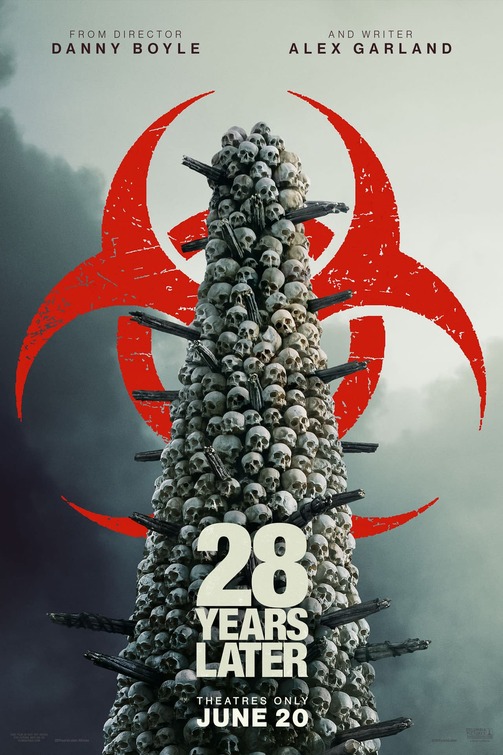
In a sea of apocalyptic cinema, 28 Years Later roars to life as a fearless, feverish odyssey. It’s not neat. It’s not always easy. But it’s alive in the way few blockbusters dare to be anymore. Just like its infected, it charges forward, burning with rage—and vision.