Give Me Something Good Review: Halloween Horror Made With Heart, But Familiarity Bites
Low budget horror has always been one of the great training grounds for filmmakers. You don’t necessarily need expensive sets, enormous crews or recognisable stars to make something effective. A house, a few willing actors, some fake blood and a strong idea can sometimes be enough. Give Me Something Good, written and directed by Clay Moffatt, embraces that do it yourself tradition with a Halloween set horror comedy about a small gathering that goes disastrously wrong after somebody makes the inevitable mistake of bringing out a Ouija board.
It’s clearly a film made by people who enjoy horror and wanted to have fun creating one of their own. Unfortunately, enthusiasm can only carry a production so far. Give Me Something Good has problems with its storytelling, performances and technical presentation, while its biggest obstacle is simply how familiar everything feels. There’s little here that seasoned horror viewers won’t have encountered many times before. That doesn’t make it worthless, though, and there are enough signs of commitment behind the camera to make us hope Moffatt continues developing his craft.
The story centres on Lucy (Samantha Santillanes), a student whose priorities don’t exactly include partying. Her friend Selena (Melissa Rokuskie) wants to attend a gathering being held by Caitlyn, but Lucy is stressed about falling behind with her biology homework and would rather stay home. Selena comes up with a compromise. They’ll have their own little party at Lucy’s house, meaning Lucy can enjoy herself without completely abandoning her studies. More importantly, Selena promises to invite Colt (Jonathan Michaels), the boy Lucy fancies, while her own boyfriend Jarrod (Drew Lopez) will come along too.
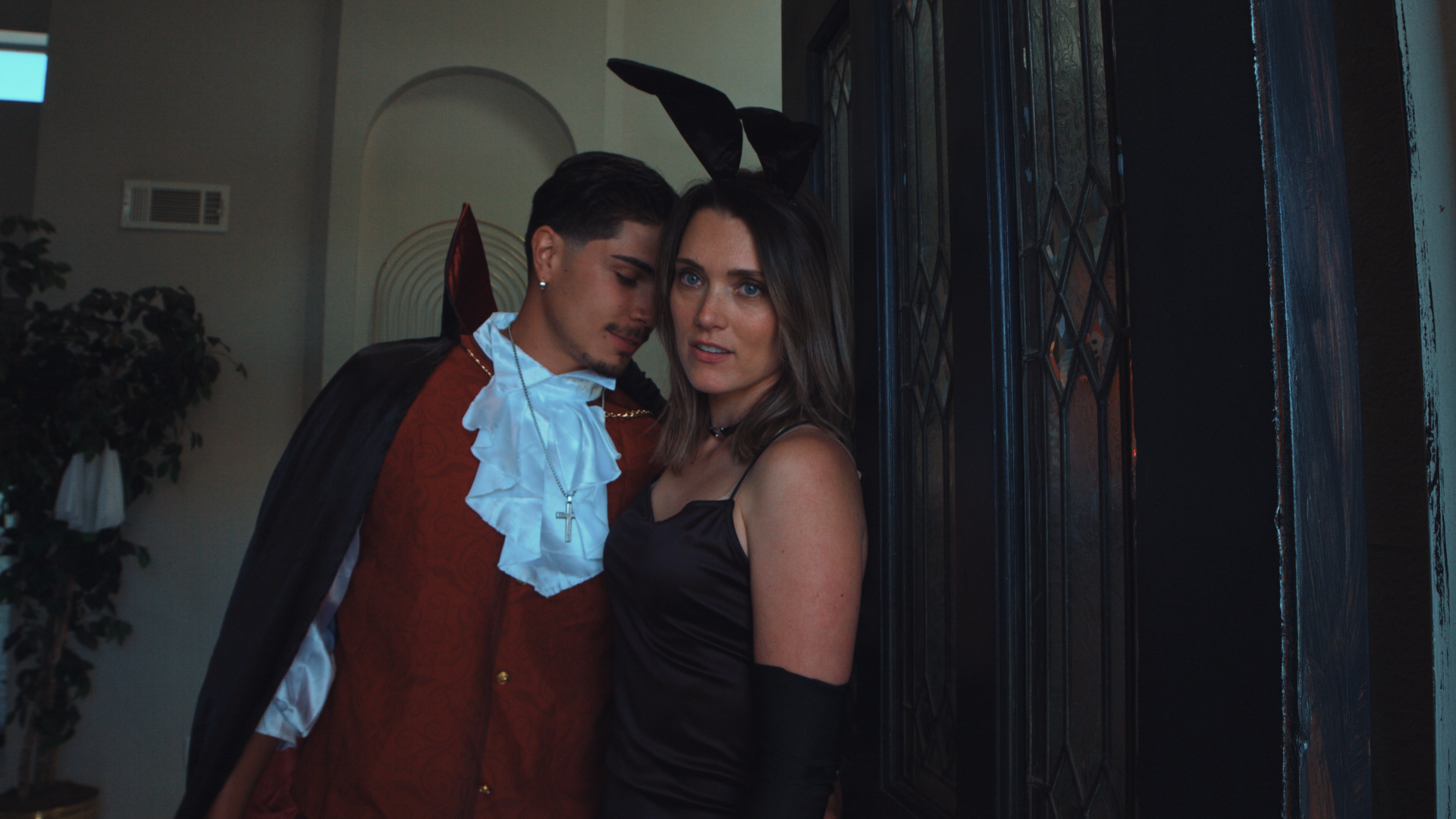
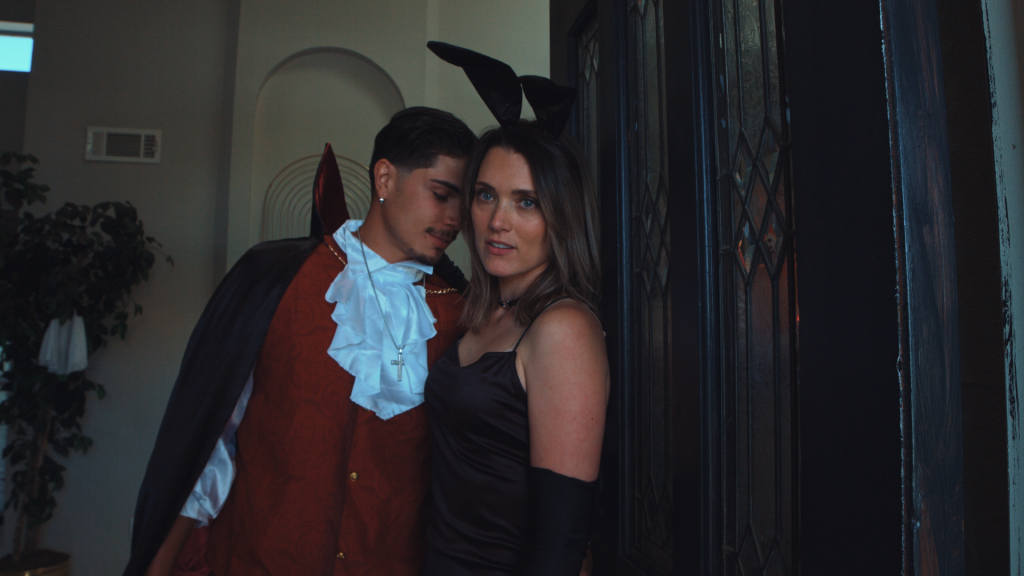
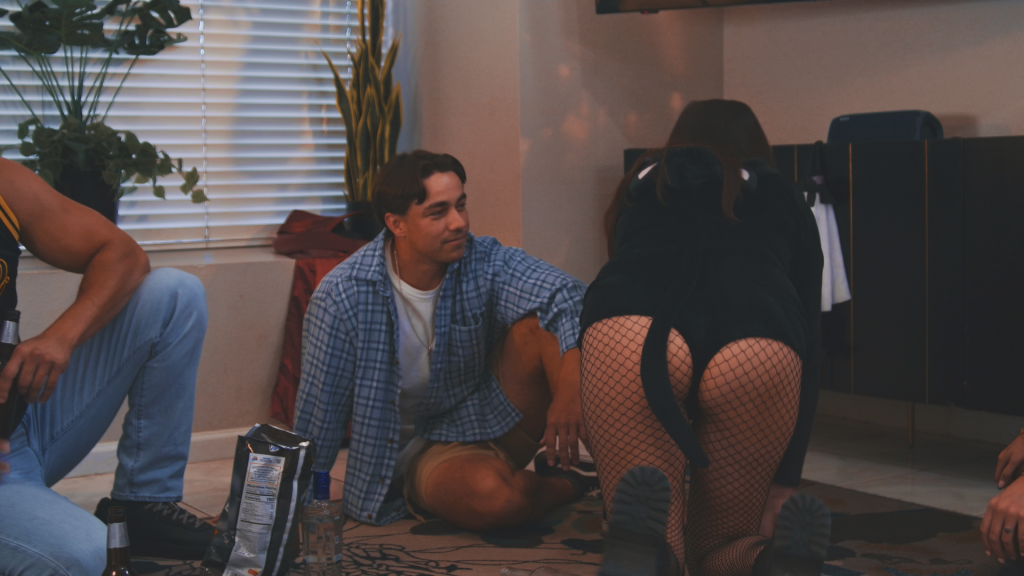
Calling what follows a party is perhaps being generous. Only a handful of people gather at the house, making it more of a small Halloween get together, but it provides Lucy and Colt with an opportunity to spend some time together. Selena and Jarrod eventually disappear upstairs for some privacy, while Lucy’s older brother Austin (Stephen Kessen) is elsewhere in the house. Everything is harmless enough until Austin appears carrying a Ouija board and persuades the others to give it a try.
Horror fans know the rules. Nothing good ever comes from a Ouija board.
Initially, very little happens, but the atmosphere soon changes. There’s an interruption from a trick or treater, the lights begin behaving strangely and Lucy suddenly collapses. When she regains consciousness, her eyes have turned red and whatever is now controlling her has considerably less interest in biology homework than she did. Lucy begins attacking the other partygoers, transforming the modest Halloween gathering into a fight for survival.
It’s here that Give Me Something Good encounters its biggest problem. The ingredients are so recognisable that the film struggles to generate many surprises from them. Young people gathering on Halloween, a Ouija board, supernatural possession and friends being attacked inside a house have been used countless times across horror cinema. Familiarity isn’t automatically a criticism, and some of the genre’s greatest films are built from ideas that had already been explored elsewhere, but revisiting established material places greater importance on finding a distinctive angle.
Moffatt never quite finds that angle. Once Austin produces the board, it’s relatively easy to predict the direction in which events are heading. The film would have benefited from another complication, a more unusual mythology surrounding the entity, a revelation concerning one of the characters or simply a stranger set of rules governing what has been unleashed. Something unexpected could have transformed a familiar setup into Moffatt’s own variation on it. Instead, Give Me Something Good remains very close to the established possession movie template.
That familiarity matters even more because the film runs for around 40 minutes. That’s a substantial running time for a short, particularly one built around a relatively straightforward premise. The opening spends plenty of time establishing Lucy, Selena, their relationships and the gathering before the supernatural element takes control, while later sequences could also have been tightened. A leaner cut might have given the film more urgency, especially once Lucy becomes possessed and the other characters realise they’re in danger.
Give Me Something Good Has the Passion, Now It Needs a Stronger Identity
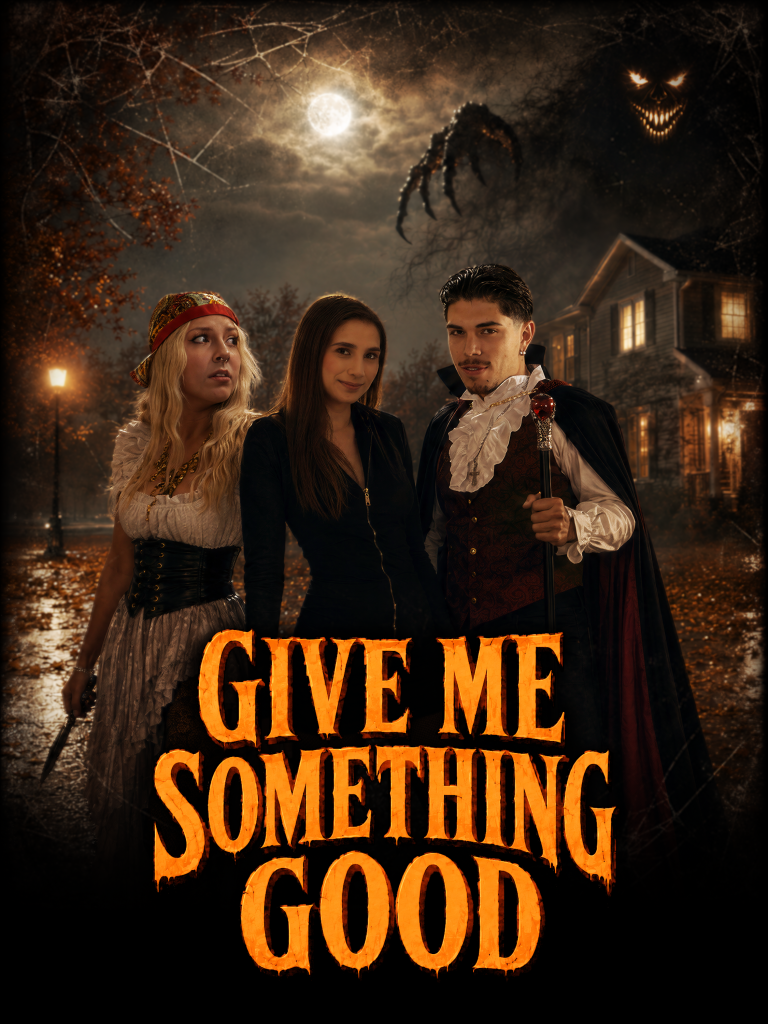
The horror comedy label presents another difficulty. Give Me Something Good contains both horror and humorous material, but neither side is pushed far enough to completely establish the tone. The supernatural sequences aren’t especially frightening, while the comedy is more light hearted than genuinely funny. Horror comedy is a deceptively difficult balancing act because the audience needs to understand when they’re supposed to laugh while still accepting the threat when the film wants them to care about it. Here, the two elements don’t always comfortably meet.
Samantha Santillanes has the most interesting assignment because Lucy effectively becomes two characters. Early on she’s the comparatively sensible student who would rather concentrate on her work, before the possession gives Santillanes permission to become much broader and nastier. The glowing eyes, enormous grin and increasingly violent behaviour make the change immediately obvious, and Santillanes appears to enjoy playing the possessed version of Lucy. Melissa Rokuskie also brings energy to Selena and establishes a believable friendship with Lucy during the earlier material.
Across the wider ensemble, the performances are uneven. Some exchanges feel natural enough while others have the stiffness frequently encountered in micro budget productions where performers may not have extensive screen experience. What does come across is that the cast seem willing to throw themselves into the material. Once things become bloody, nobody appears reluctant to embrace the silliness and messiness of what they’re making, and that enthusiasm gives the film a likeable quality even when the performances themselves aren’t completely convincing.
The visual presentation is similarly rough around the edges. Adam Berardi’s cinematography generally takes a functional approach, making sure the action and characters are visible without developing a particularly distinctive visual language for the film. Lighting and image consistency can vary between shots, which occasionally draws attention away from the story, and the Halloween setting could have been exploited much more aggressively to create atmosphere.
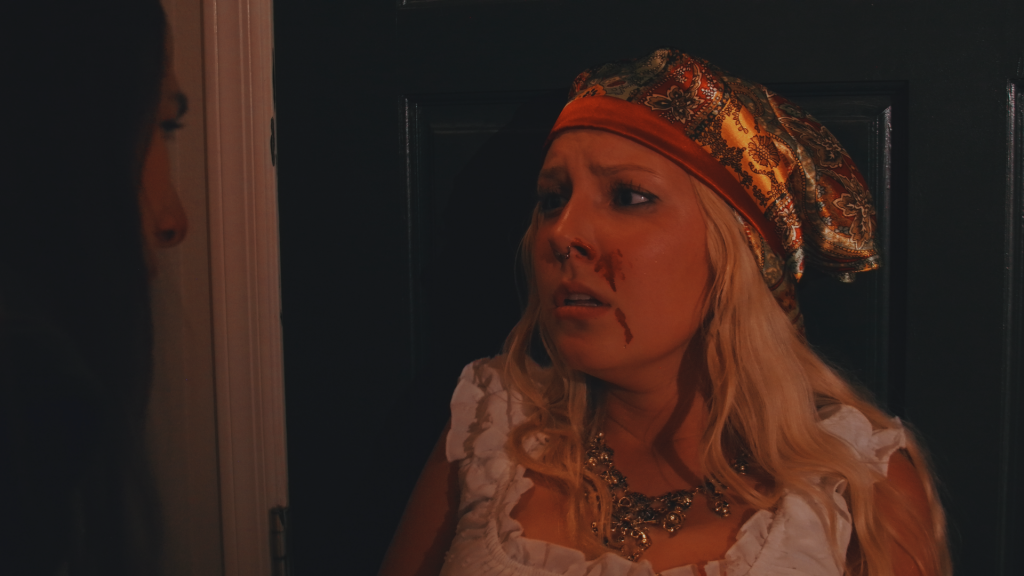
This is one area where limited finances don’t necessarily have to be an insurmountable obstacle. Horror filmmakers have been creating atmosphere from darkness, shadows, practical lamps, silhouettes and negative space for decades. A low budget production can sometimes benefit from showing less rather than attempting to illuminate everything. Moffatt’s future horror work could become much more visually interesting by treating the limitations as part of the aesthetic rather than something that needs to be hidden.
Sound also needs greater attention. Dialogue levels aren’t always consistent and the music can sometimes compete with what the characters are saying. For an independent filmmaker looking to improve from project to project, sound is one of the areas we’d put very high on the list. Audiences will accept an inexpensive camera far more readily than dialogue they have difficulty understanding, and a carefully constructed soundtrack can make a tiny horror film feel considerably larger and more professional than its budget suggests.
When the violence arrives, the filmmakers certainly aren’t afraid of getting messy. Lucy’s possession eventually leads to blood, wounds and practical makeup effects as she works her way through the gathering. The effects themselves are obviously limited by the resources available and don’t always convince under close scrutiny, but there’s something pleasing about seeing a micro budget horror production attempt physical gore rather than avoiding it altogether.
With effects like these, presentation can be as important as the prosthetic itself. Darkness, partial glimpses, reaction shots and carefully chosen editing can make an inexpensive effect considerably nastier because the audience mentally completes what it hasn’t fully seen. That’s another area where Moffatt could potentially turn budgetary restrictions into an advantage on future projects.
What we’d most like to see from him, however, is greater originality. Give Me Something Good demonstrates that Moffatt can organise a production, assemble a cast and crew and complete a substantial horror project. Those aren’t insignificant achievements. The next challenge should be finding an idea that immediately makes people curious because they haven’t seen that exact version of it before.
That doesn’t mean abandoning the horror influences he clearly enjoys. Quite the opposite. Take those influences and twist them. If there’s going to be another Ouija board, give it a rule we’ve never encountered. If somebody becomes possessed, make the possession behave differently. If the story is set at Halloween, find a way of making the date essential rather than simply decorative. A filmmaker doesn’t need to reinvent horror itself, but audiences should ideally leave knowing what made your horror movie different.
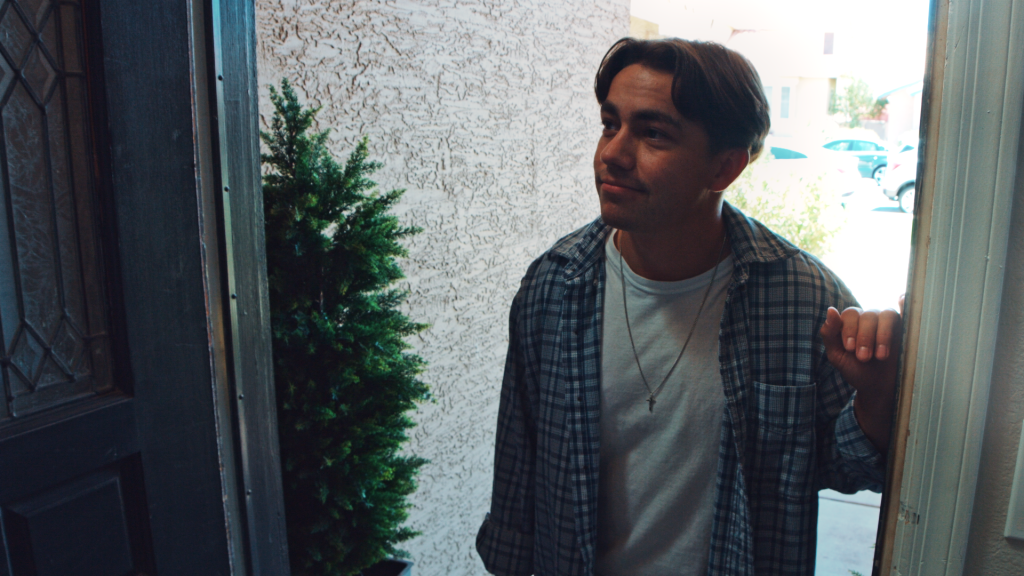
There are indications that Moffatt is thinking about how individual images can leave an impression. The final shot is one of the more effective choices in the film, using a wide composition and allowing the consequences of the climax to sit with us rather than immediately rushing away from them. It’s the kind of moment that suggests stronger filmmaking instincts can emerge when the material is given room to breathe.
Ultimately, Give Me Something Good isn’t a particularly successful horror comedy. Its story is too familiar, the scares rarely generate much tension, the humour doesn’t consistently land and several technical areas need further refinement. Those are significant problems, but they don’t mean Moffatt should stop making films. They mean the opposite.
One of the great advantages of independent filmmaking is that every completed production can teach you something the previous one couldn’t. You discover which scenes should have been shorter, which shots didn’t work, where the sound failed you, which performances needed another take and which screenplay ideas weren’t as strong on screen as they appeared on the page. The important thing is carrying those lessons forward rather than simply repeating the same process.
Clay Moffatt clearly has the persistence required to keep creating. Give Me Something Good was written and directed by Moffatt, with Adam Berardi producing and handling cinematography, and the finished film exists because a group of people were prepared to give their time and energy to making a Halloween horror movie together. There’s value in that, even if the finished result doesn’t quite work.
Now we’d like to see Moffatt take his time and make the next leap. Develop the screenplay until every scene earns its place. Concentrate on sound and atmosphere. Push the performances further. Find more interesting ways to tell the story visually and, above everything else, give us an idea we couldn’t predict after the first ten minutes.
Give Me Something Good has plenty of problems, but filmmaking careers aren’t defined by one imperfect micro budget horror movie. They’re defined by what filmmakers learn from making them. Moffatt clearly loves cinema enough to keep picking up the camera, and hopefully this experience becomes another useful step towards the film where his enthusiasm, experience and an original idea finally come together.