Macbeth in Compton Review: Shakespeare, Skid Row Records and One Very Big Gold Chain
William Shakespeare probably never imagined Macbeth opening with cars cruising through 1990s Compton while a beat evokes the West Coast hip-hop of the period. Then again, Shakespeare also never got to see someone translate “Pray thee, peace” into “You better shut yo ass up!” in the subtitles, so frankly the man missed out.
Macbeth in Compton is a 19-minute proof of concept directed by Page Kennedy, who also stars as Mac and co-wrote the film with Casey Zeman. It takes one of Shakespeare’s most famous tragedies, drops it into the Los Angeles rap industry of the 1990s and discovers that murderous ambition, manipulation, masculinity and people doing terrible things to advance their careers actually travel remarkably well across several hundred years. Who knew the Scottish Play was only a record contract away from becoming a gangsta rap thriller?
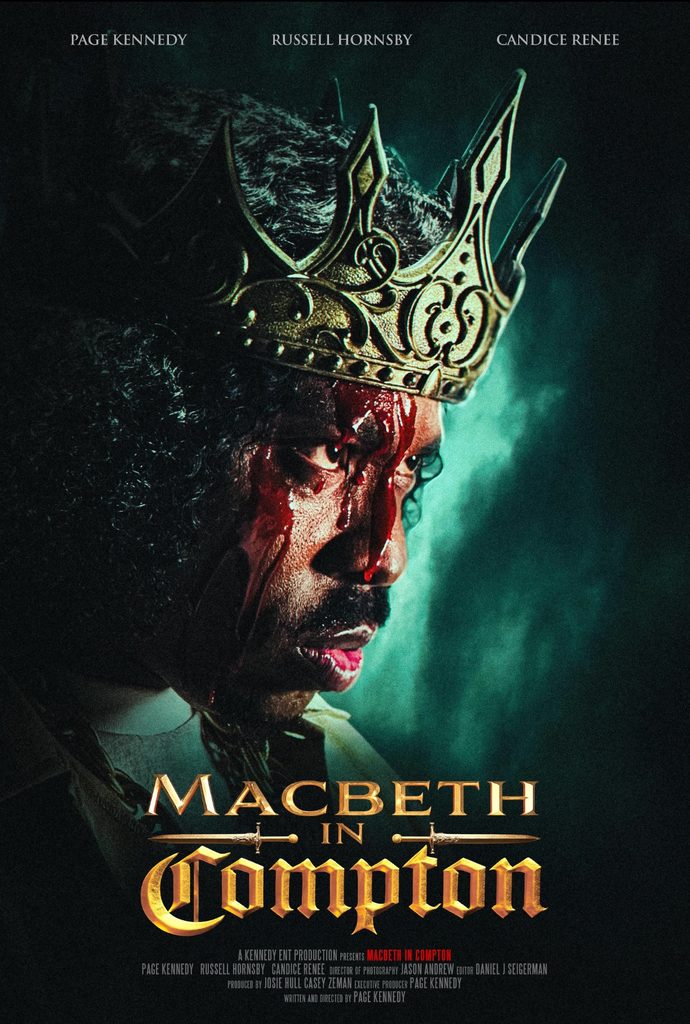
We generally live on horror around here, but thrillers are always welcome when they bring enough darkness with them, and Macbeth in Compton certainly qualifies. Its opening immediately establishes the concept as Duncan (Russell Hornsby), head of Skid Row Records, presents aspiring rapper Mac with an absolutely enormous gold chain during his “chaining day”. Calling it jewellery seems inadequate. Mac could probably use the thing to secure a motorbike.
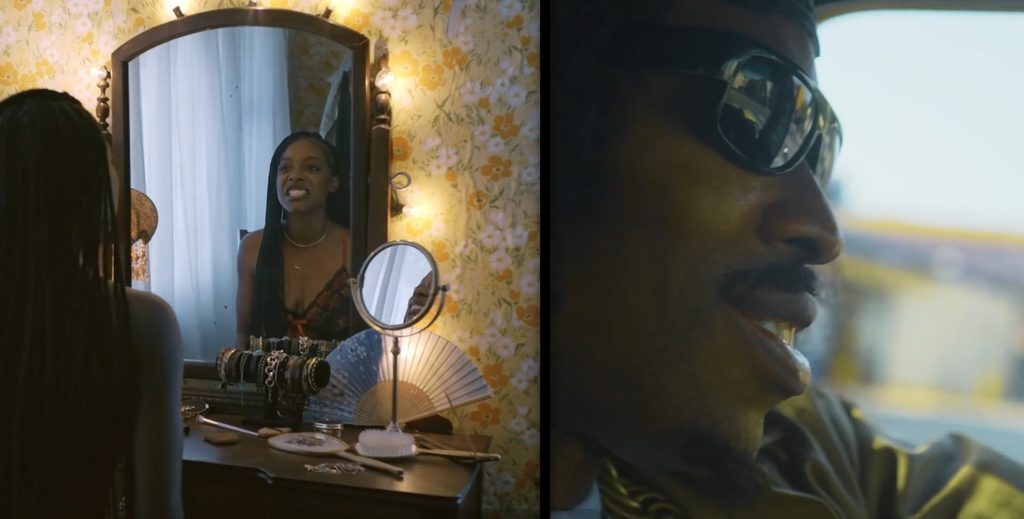
From there we meet former rapper Lady M (Candice Renee), performing into a bathroom mirror before her rap continues into the bedroom. Director of photography Jason Andrew gives the short a slick, highly polished appearance, while Kennedy embraces split screens, crossfades and energetic editing that make portions of the film resemble a period music video. The lighting is particularly impressive, giving the interiors a richness that immediately makes the proof of concept feel more expensive and accomplished than its short running time might suggest.
The smartest decision, however, is not simply updating Shakespeare’s plot but retaining the Shakespearean language. Mac, Lady M and Duncan speak in a heightened dialect derived from the original material, while subtitles underneath translate everything into contemporary language for anyone whose last encounter with Shakespeare involved staring through a classroom window and wondering whether lunchtime would ever arrive.
It could easily have become a gimmick, but it works surprisingly well. Kennedy is particularly comfortable with the language, delivering Mac’s speeches without making it feel as though he’s desperately trying to remember something he learned for GCSE English. Renee is equally convincing as Lady M, using her expressions and physicality alongside the dialogue so that the audience can understand her intentions even when Shakespeare’s phrasing becomes more elaborate.
There are echoes of Baz Luhrmann’s Romeo + Juliet in the willingness to retain archaic language while completely transforming the world surrounding it. Macbeth in Compton isn’t trying to imitate that film, but it shares the basic understanding that Shakespeare doesn’t necessarily need to be confined to castles, tights and somebody called Sebastian wandering around holding a skull. Put the same ideas into a world audiences immediately recognise and the material can acquire an entirely different energy.
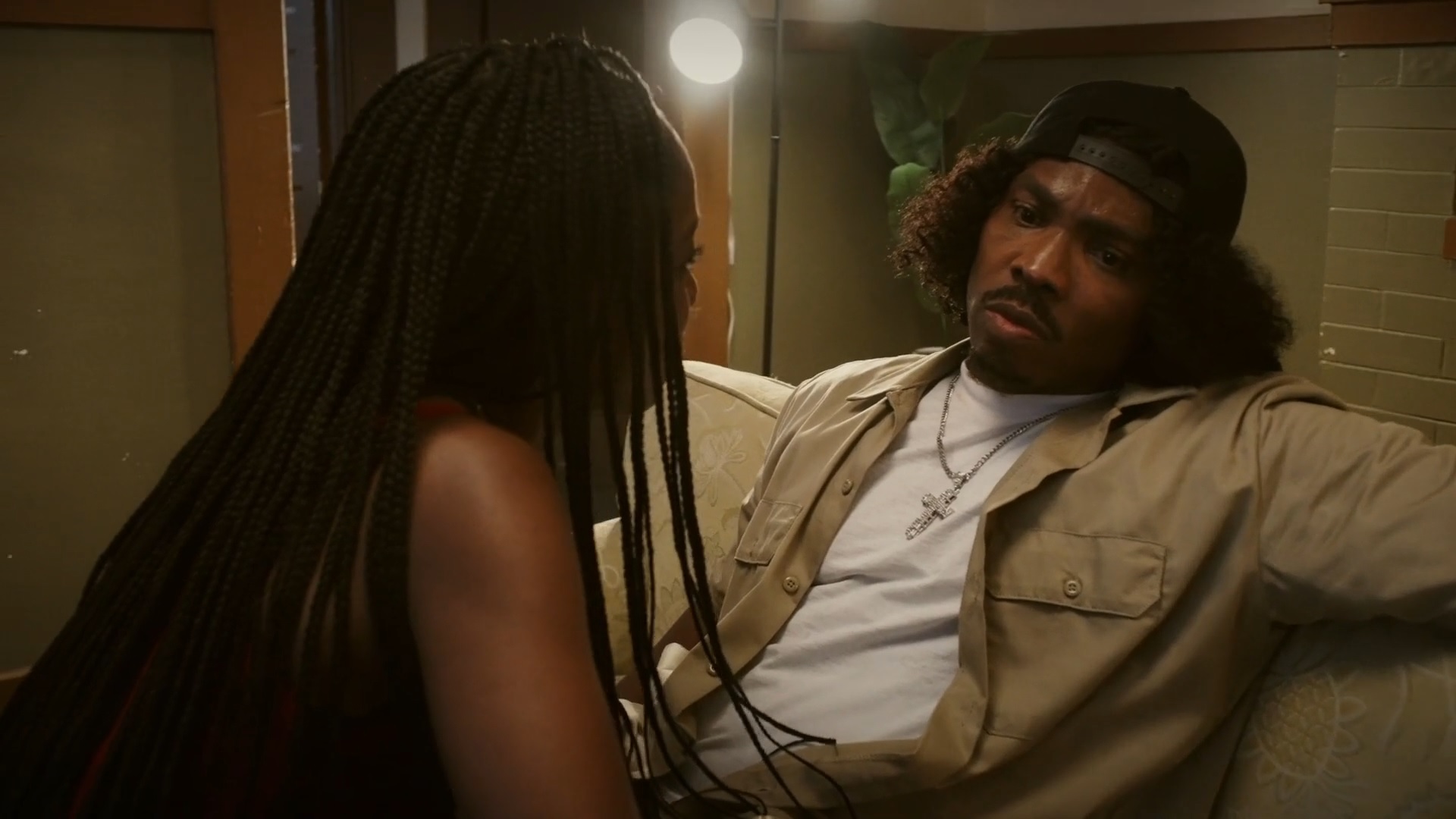
That becomes particularly apparent when Mac returns home after securing his record deal. He removes the enormous chain, grabs a beer and prepares to smoke while contemplating his situation. Lady M soon arrives and begins pushing him towards dealing with Duncan, but Mac understandably isn’t enthusiastic about murdering the man who has just given him a record contract and enough gold to alter the Earth’s gravitational pull.
Lady M responds by attacking his masculinity and questioning whether he has the courage to fulfil his promise. Mac briefly grabs her around the throat, but she continues provoking him until he releases her. Then comes that magnificent “Pray thee, peace”, followed by the subtitle telling us what Mac essentially means: “You better shut yo ass up!” If Shakespeare had included that version underneath the original text, English literature lessons would have been considerably more popular.
Renee gets some of the short’s strongest material as Lady M continues dismantling Mac’s resistance. Her speech about having nursed a child and nevertheless being prepared to destroy that child rather than break a promise retains the disturbing brutality of Shakespeare’s Lady Macbeth, but the setting gives it an unusual new flavour. Mac asks what happens if they fail. Lady M’s answer is effectively that they won’t, which is exactly the sort of confidence you want from somebody proposing murder.
Her next persuasion technique is considerably less likely to appear in the school curriculum. She initiates sex with Mac while calmly explaining how they are going to murder Duncan, including her plan to get his guards drunk before Mac kills him in his sleep. Nothing says healthy relationship quite like combining foreplay with a homicide briefing.
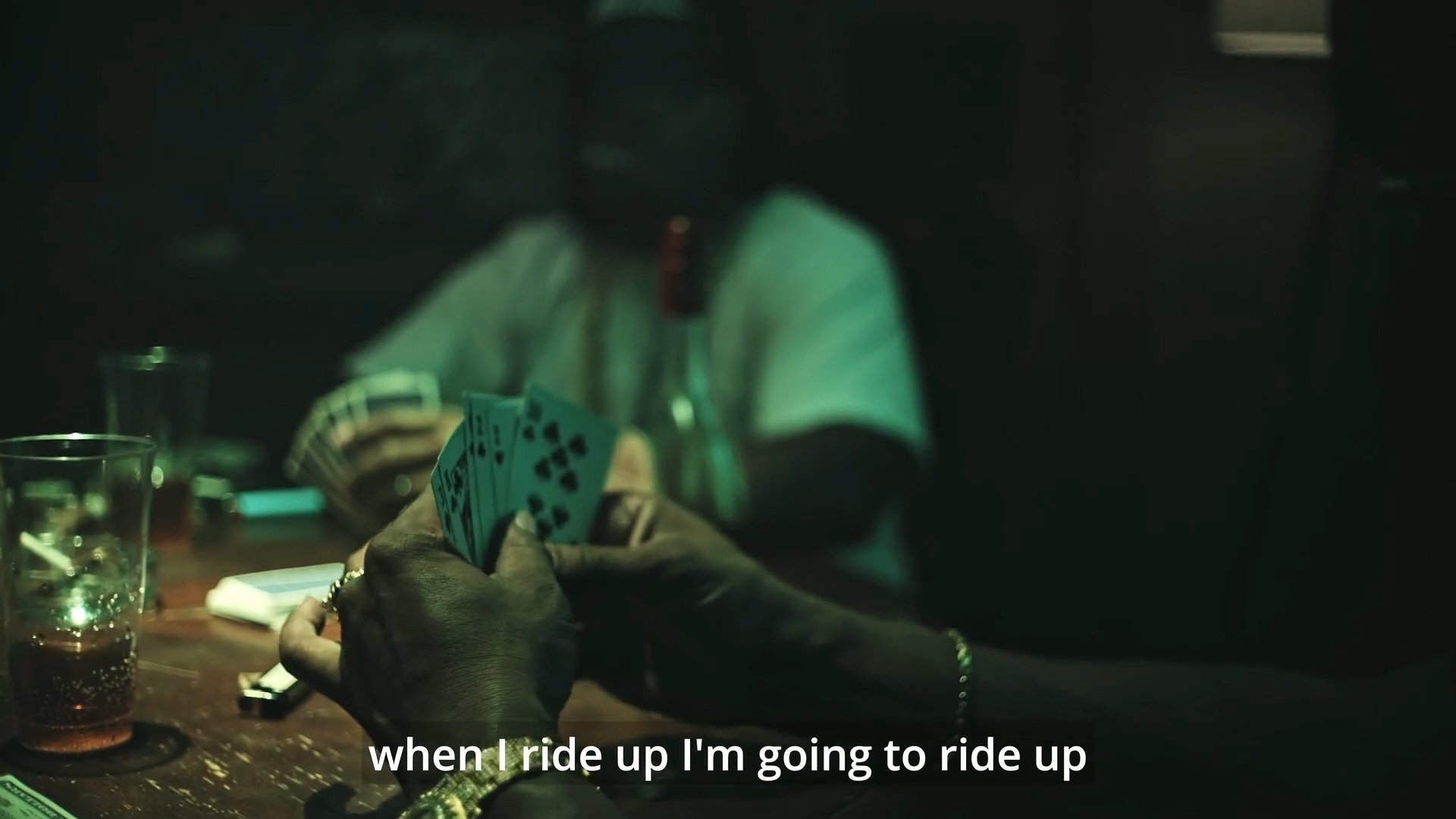
The plan subsequently unfolds during a card game. Duncan and Mac enjoy themselves while Lady M supplies the drinks, the guards become increasingly intoxicated and loud rap music fills the room. She dances with Duncan while Mac watches, and eventually the guards are unconscious on the sofa and Duncan retires to bed. Everything has gone according to plan, which in Macbeth is generally the precise moment you should start worrying.
Mac enters Duncan’s room carrying a knife, but Duncan wakes and fights back. Hornsby brings an imposing physical presence to the confrontation as Duncan gets his hands around Mac’s throat, only to realise that the knife has already entered his body. Blood follows, and the two men slide down the wall together as this condensed version of Shakespeare’s tragedy reaches the event that will presumably send a feature adaptation spiralling into considerably greater chaos.
Macbeth In Compton Brings Shakespeare To The Rap Generation
As a proof of concept, Macbeth in Compton does exactly what it needs to do. It demonstrates that the central idea works, establishes the visual language, introduces the major characters and leaves enough unexplored to make a longer version genuinely interesting. More importantly, the combination of Shakespeare and 1990s Los Angeles doesn’t feel forced. The world of rap labels, status, rivalry, loyalty and ambition proves an unexpectedly natural environment for the material.
Kennedy deserves considerable credit both in front of and behind the camera. Mac feels comfortable within this world, and Kennedy handles the Shakespearean dialogue confidently while giving the film plenty of visual energy as director. Renee is equally important to its success. Lady M needs to dominate Mac psychologically without becoming a caricature, and her expressions, body language and delivery give the character a dangerous confidence throughout their scenes together.
It is also great to see Russell Hornsby as Duncan. Viewers will recognise him from projects including Fences and Creed II, and his presence gives Duncan immediate authority without the short needing to spend precious minutes establishing it. With only 19 minutes available, that economy matters.
Visually, Macbeth in Compton is impressively accomplished, although the framing could occasionally benefit from greater variety. There are a lot of close-ups and medium close-ups, and pulling the camera further back more often would allow the actors to use the environments and give the blocking more room to breathe. Andrew’s cinematography is otherwise one of the production’s strengths, particularly the lighting and controlled camera movement.
Pakk Hui’s music is another important ingredient because this concept lives or dies partly on whether the hip-hop environment feels naturally integrated with Shakespeare’s story. Thankfully, it does. The rap industry isn’t simply decoration pasted over Macbeth. It becomes a contemporary framework through which the play’s obsession with ambition and power can be explored.
Macbeth in Compton is ultimately a very successful proof of concept because it leaves us wanting the thing a proof of concept is supposed to make us want: the feature or television series. Shakespearean tragedy and 1990s Compton shouldn’t necessarily fit together this comfortably, yet Kennedy and his team make a convincing argument that they do. If a full-length adaptation can maintain the performances, visual confidence and inventive translation demonstrated here while expanding the characters and giving the camera a little more room to breathe, this could become something very special.
And if nothing else, Shakespeare has finally taught us an important lesson overlooked by generations of academics: never trust your girlfriend when she starts discussing regicide during sex.