Dolly Review: A Porcelain-Faced Nightmare Stalks the Tennessee Woods
Slashers are having a bit of a resurgence lately. For years the genre flirted with psychological horror and elevated themes, but every now and again audiences just want something simple: a creepy villain, a bad situation, and plenty of blood. Dolly, directed by Rod Blackhurst, happily delivers exactly that.
Premiering at Fantastic Fest 2025, Dolly is a grimy, ferocious slice of modern slasher filmmaking that proudly wears its inspirations on its sleeve. Shot on 16mm film, the movie immediately has a texture and grit that feels like a throwback to the rougher horror films of the 1970s and early 1980s, a period that clearly influenced the filmmakers.
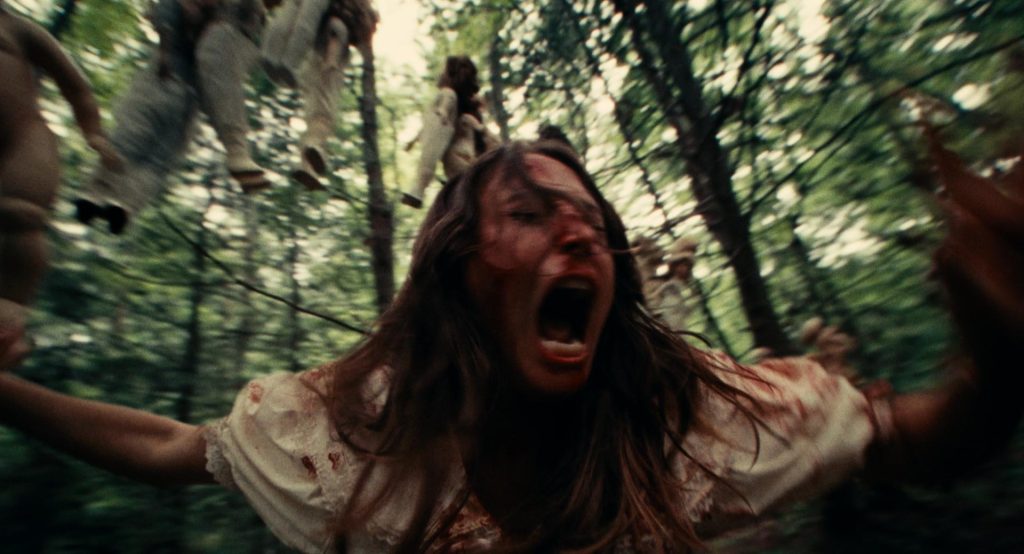
The premise is wonderfully straightforward. Chase (Seann William Scott) and his girlfriend Macy (Fabienne Therese) head out for a long hike through the remote woods of Tennessee. Chase is planning to propose, and Macy is well aware of it. Their romantic getaway, however, is cut violently short when they stumble across something deeply unsettling: a strange clearing filled with broken dolls nailed to trees, swaying in the wind like some nightmarish art installation.
Naturally, Chase does what people in horror films have been doing for decades: he goes to investigate.
That decision proves to be a very bad one.
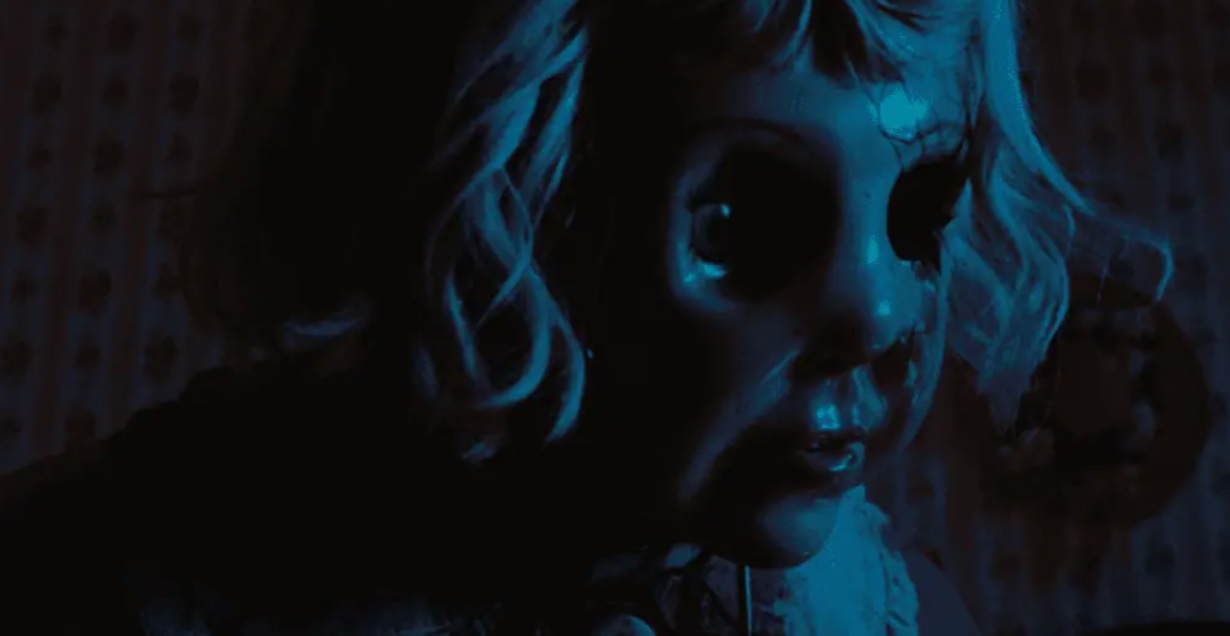
From the shadows emerges Dolly, a towering figure wearing a cracked porcelain doll mask. Before Chase can properly react, Dolly lifts him into the air and violently attacks him with a shovel. It is a brutal introduction to the film’s main antagonist and a clear statement that Dolly is not here to play nice.
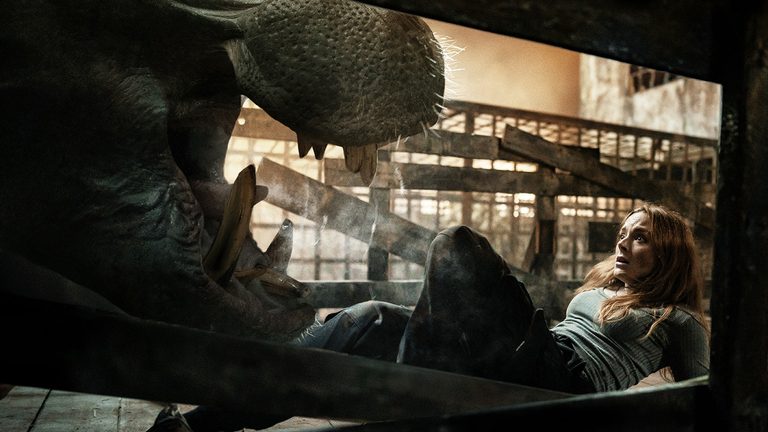
With Chase out of the way, Macy becomes Dolly’s new obsession. She is dragged back to a decaying house deep in the woods, placed in a cradle, dressed in frilly clothes, and forced to play the role of Dolly’s “child.” What follows is a deeply uncomfortable captivity scenario where Macy must navigate the strange, violent rules of her captor if she hopes to survive.
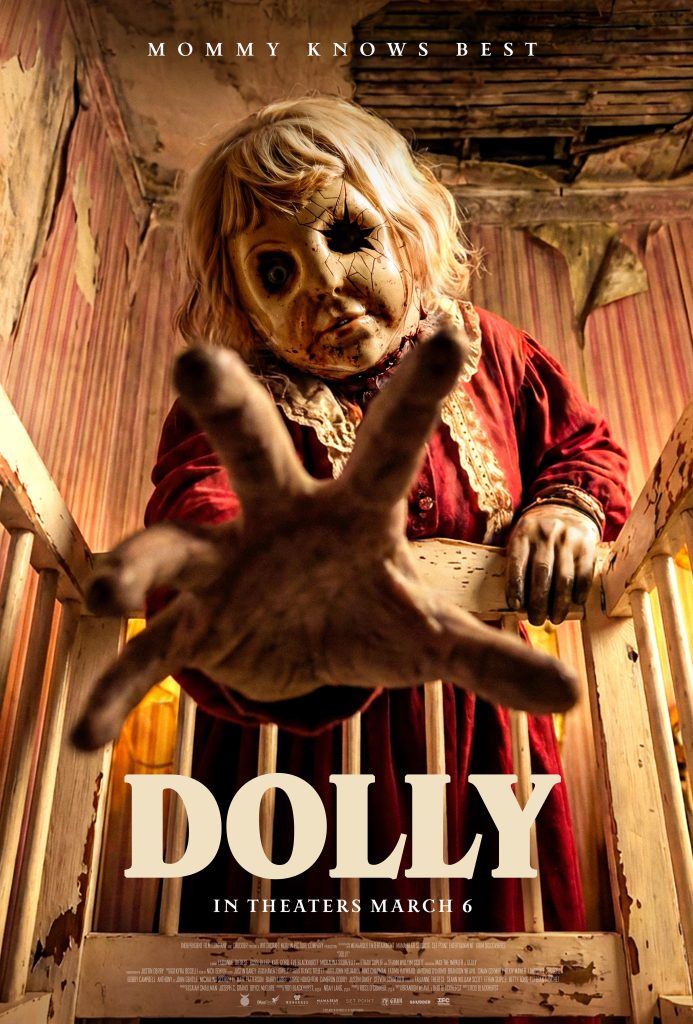
The idea behind Dolly is both disturbing and oddly fascinating. This masked killer is not simply hunting victims for sport. Instead, Dolly appears to crave the experience of motherhood, albeit in the most twisted way imaginable. The result is a strange and often unsettling dynamic between captor and captive as Macy finds herself forced to play along.
The performance from professional wrestler Max the Impaler, who portrays Dolly, is a major highlight of the film. Hidden behind the porcelain mask and dressed in a red-and-white outfit, Max creates a character that is equal parts unpredictable and terrifying. Dolly moves with strange, childlike mannerisms, sometimes cradling Macy gently and other times erupting into sudden, shocking violence.
It is easy to see why audiences have already begun comparing the character to iconic slasher villains. There are echoes of Leatherface in the physicality and the mask, but Max the Impaler brings enough originality to the role to ensure Dolly stands on their own as a genuinely creepy presence.
Fabienne Therese also deserves credit for her performance as Macy. Much of the film rests on her ability to react to the horrifying situation around her, and she spends the majority of the runtime battling fear, confusion, and desperation. Therese handles the role well, conveying Macy’s gradual emotional shift as she tries to understand how to survive the situation she has found herself trapped in.
Fans of practical horror effects will also find plenty to enjoy. The film wastes very little time getting to the violence, and when it does arrive it is visceral and practical. Limbs snap, blood sprays, and several scenes lean heavily into the kind of rubbery gore effects that horror fans have always appreciated.
While the body count itself is not enormous, the brutality of the moments we do get is enough to satisfy anyone looking for something gnarly. Blackhurst clearly understands that practical effects often feel more impactful than digital ones, and the film embraces that approach wholeheartedly.
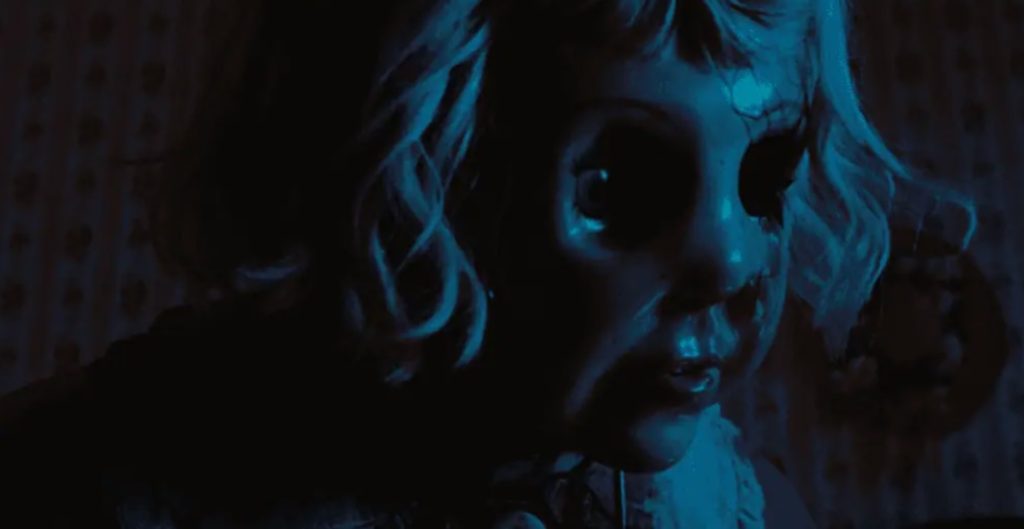
Visually, Dolly also benefits greatly from its decision to shoot on 16mm film. The grainy texture adds atmosphere and reinforces the film’s old-school slasher vibe. In an era dominated by digital filmmaking, the choice gives Dolly a distinctive look that helps it stand out from many of its contemporaries.
The story itself is not overly complicated, and that works in the film’s favour. Rather than getting bogged down in excessive backstory or symbolism, the movie focuses on building tension and delivering a series of increasingly uncomfortable situations for Macy.
There are also appearances from Seann William Scott and Ethan Suplee, both of whom serve as producers on the film as well. Scott’s role may surprise viewers who are used to seeing him in more comedic performances, and his early scenes help establish the film’s premise before things descend into chaos.
If Dolly has a weakness, it is that the film occasionally hints at deeper themes about trauma and identity without fully exploring them. Expanding the story just a little further might have pushed the film even closer to greatness. Still, what we get is a tight, mean-spirited slasher that knows exactly what it wants to be.
At just 87 minutes, the film moves quickly, rarely overstaying its welcome and constantly pushing toward its next disturbing moment.
Ultimately, Dolly succeeds because it understands the core appeal of slasher horror. It introduces a memorable villain, throws a helpless protagonist into a nightmare scenario, and lets the carnage unfold.