Spades Review: An Undead Vigilante Deals Out Brutal Justice
Johnny Yong Bosch has spent more than three decades kicking people, voicing people, occasionally voicing people who kick other people, and generally building the sort of career that makes scrolling through his credits an endurance event. Many will remember him as Adam Park from Mighty Morphin Power Rangers, Power Rangers Zeo and Power Rangers Turbo, while anime and gaming fans will know his voice from the likes of Bleach, Trigun and Devil May Cry. With Spades, Bosch adds another substantial job to the collection by making his feature directorial debut while also writing, producing, shooting, editing, composing for and starring in the film.
That’s a lot of hats for anybody to wear, particularly on an independently produced action film reportedly made for approximately $50,000. What makes Spades such an enjoyable surprise is how rarely it looks like somebody has been forced to count every dollar. Bosch has created a violent supernatural crime thriller with gun battles, martial arts, masked gangsters, neon-soaked rooms and an undead vigilante who likes playing cards almost as much as he likes putting bullets into bad people. Subtle it isn’t, but subtlety would probably have ruined the fun.
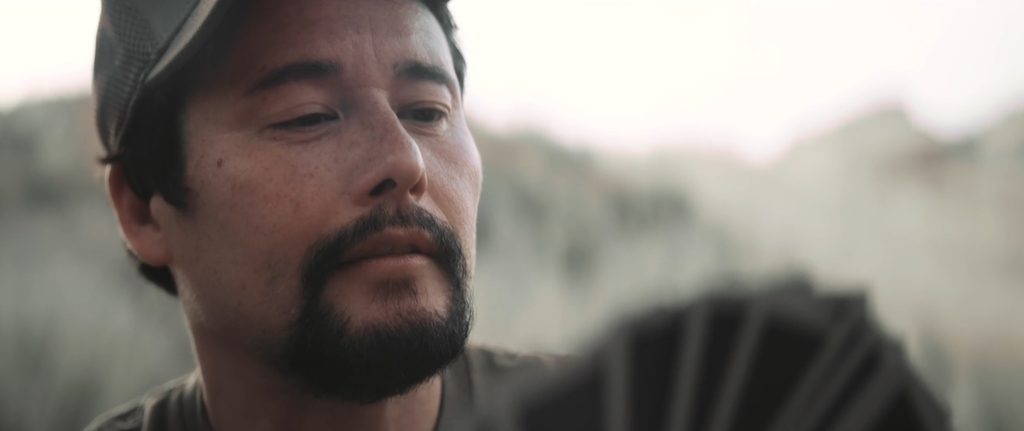
Jason Narvy stars as James Bishop, a former soldier whose past refuses to stay where he left it. The opening throws us directly into battle, with smoke, gunfire and wounded soldiers immediately establishing the memories that continue to torment him. Among those memories is Spades, played by Bosch, entertaining his fellow servicemen with a playing-card trick during a quieter moment before the fighting resumes.
Bishop’s recollections eventually reveal the source of much of his trauma. During combat, Spades saves Bishop from an attacker and is shot multiple times in the process, apparently dying while protecting his friend. Years later, Bishop is a detective in San Angeles, but civilian life hasn’t magically repaired him. Nightmares continue to drag him back into combat, while a sequence at a firing range demonstrates that even something as fundamental to his former life as handling a weapon has been affected.
The film could easily have used those memories merely as an excuse for explosions before racing towards the next fight, but Bosch gives Bishop’s trauma genuine importance. His relationship with his daughter Lana, played by Maya Brattkus, has also fractured following the death of Bishop’s wife, leaving him with problems that cannot be solved by punching somebody through a wall. Narvy handles that material particularly well, giving Bishop enough vulnerability that he remains interesting when nobody is shooting at him.
Anyone whose Power Rangers memories are firing off at this point isn’t imagining the connection. Narvy played Eugene “Skull” Skullovitch across multiple iterations of the franchise, while another familiar Rangers face, Paul Schrier, who played Bulk, appears here as Captain Avery. Bosch hasn’t simply assembled a reunion and expected nostalgia to do the work, though. Spades is very much its own beast, and it certainly isn’t aimed at the Saturday morning television audience that first encountered many of these performers.
Unless Saturday morning television has become considerably more violent since we last checked.
Spades Deals Out Some Serious Punishment
Bishop’s latest investigation begins when a woman is discovered dead in the woods. He quickly realises that the jogger who supposedly found her isn’t telling the complete truth, and the resulting confrontation leaves Bishop battered badly enough to require hospital treatment. It is there that the film makes its decisive move into supernatural territory.
Bishop sees Spades standing in the doorway.
This isn’t quite the man he remembers. Surrounded by mist, illuminated by vivid colour and with glowing white eyes, the figure looks considerably less like an old military friend and considerably more like somebody death has returned with unfinished business. Whether Bishop can trust what he has seen becomes another question for a man already struggling with traumatic memories.
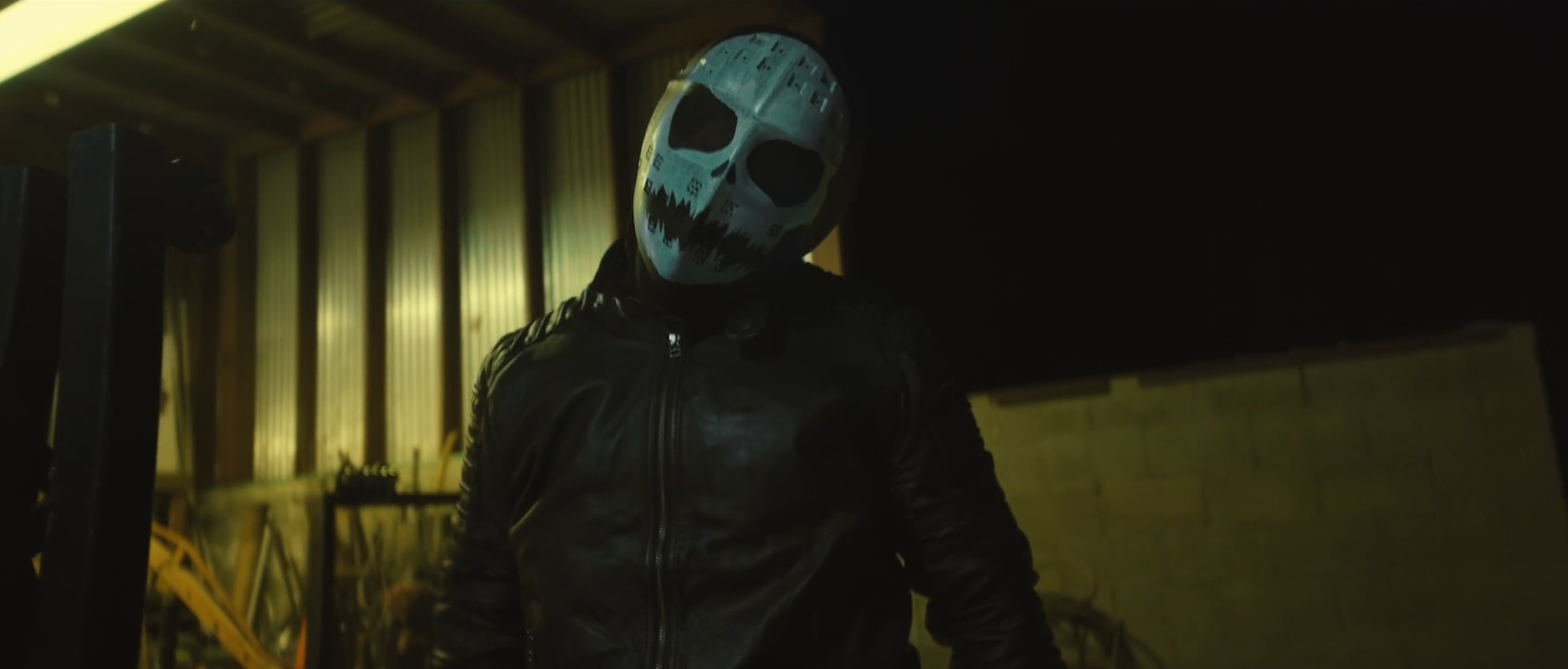
Meanwhile, San Angeles has bigger problems. Nobuaki Shimamoto plays Saito, a vicious criminal figure whose masked associates immediately give his organisation a distinctive visual identity. Bosch wastes little time establishing Saito’s temperament. A meeting turns sour and a pen suddenly becomes something you definitely wouldn’t want returned afterwards. Repeatedly stabbing somebody in the neck is one way of making sure nobody asks to borrow your stationery again.
Shimamoto makes Saito appropriately unpleasant without needing to spend every appearance shouting about how evil he is. He has a controlled menace that works particularly well against the more theatrical presence of Spades, and the colourful lighting surrounding his criminal world adds considerably to the atmosphere.
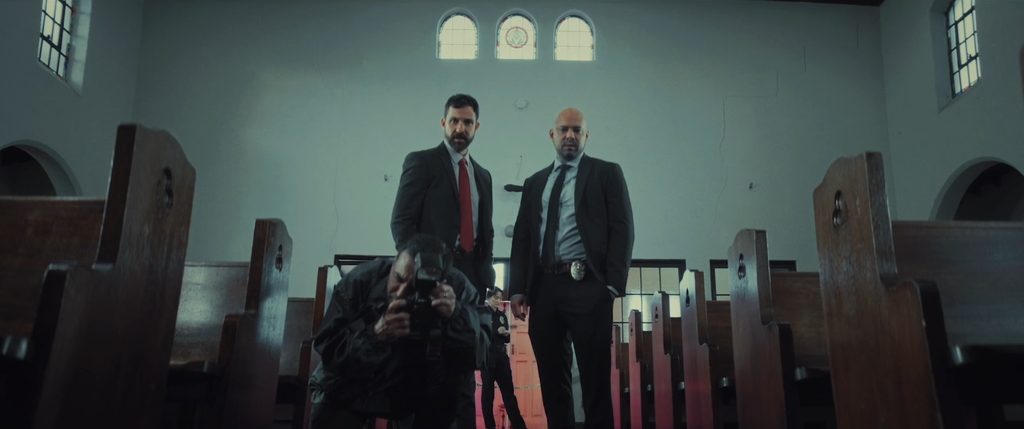
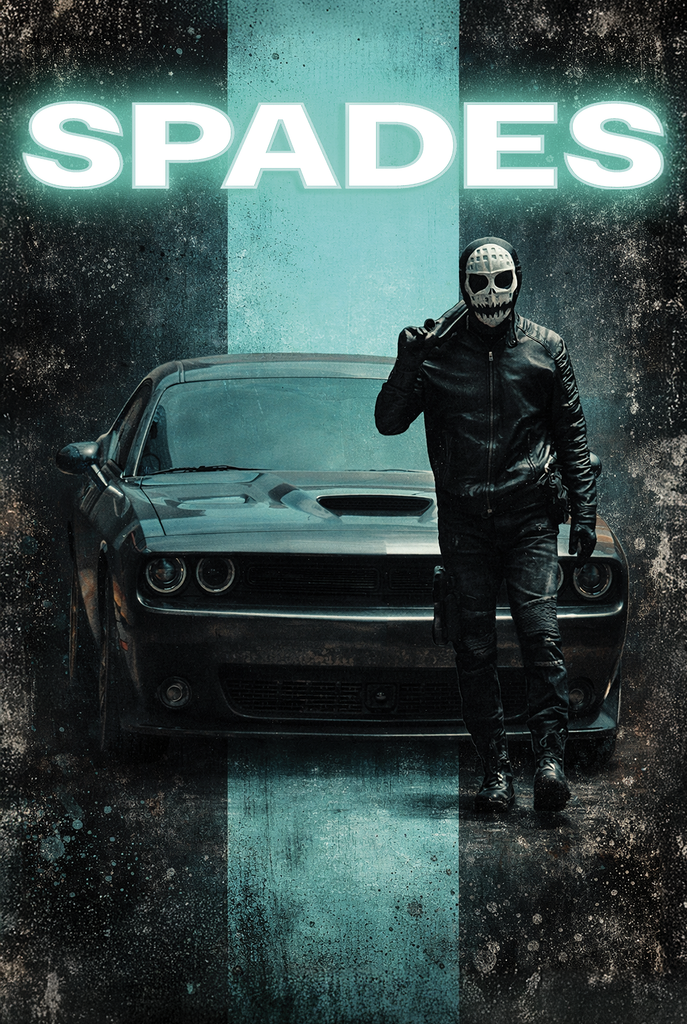
Spades himself receives a terrific proper introduction when Bella Moretti (Cassidy Espinola) goes to church for confession. Her late father’s debts have attracted some extremely unfriendly collectors, who intend to force her into working for them. When Bella’s resistance gets her knocked to the floor, a masked man in a leather jacket enters and introduces himself by throwing a playing card before drawing his weapon with remarkable speed.
Two shots later, Bella’s problems have acquired two new holes in their heads.
Spades then asks her to pick a card, echoing the trick Bishop remembers from their military days, before calmly departing and leaving Bella with two bodies and presumably quite a story to tell the next priest. It’s stylish, knowingly cool and exactly the point at which Bosch’s film shows what kind of antihero it wants Spades to be.
There is inevitably a touch of The Crow to the sight of a seemingly dead man returning as a black-clad vigilante, but Spades isn’t simply Eric Draven with a deck of cards. His mission expands into an assault upon the criminal underworld of San Angeles, while Bishop’s investigation begins intersecting with a human-trafficking operation and his own increasingly personal problems.
Bosch wisely gives the action some teeth. Spades isn’t Power Rangers with the safety catch removed slightly. Bullets enter skulls, bodies are damaged and blood flows freely, while the fights have enough speed and impact to sell the idea that the people involved actually know how to move. Bosch’s martial-arts background is hardly a secret, and Spades provides him with ample opportunity to put physical performance at the centre of the character.
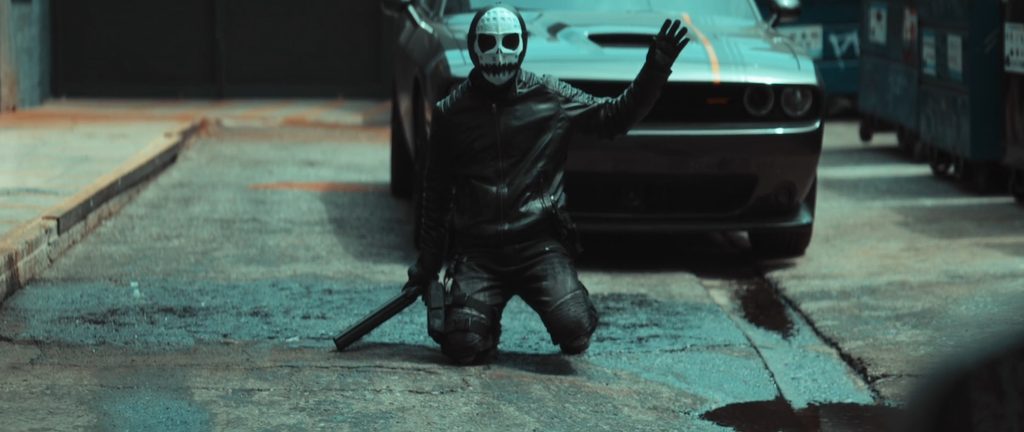
Hector Soria is credited as action coordinator, fight choreographer and stunt coordinator, supported by an extensive stunt team, and their work is one of the film’s biggest strengths. The combat doesn’t feel like an afterthought added because somebody decided an action movie probably ought to contain some action. Gunplay and hand-to-hand fighting are fundamental to the film’s personality, with Spades moving through encounters with the confidence expected from somebody who was already an experienced soldier before acquiring his supernatural upgrade.
Bosch also clearly understands that action is more effective when audiences care about what happens between the fights. Bishop’s damaged relationship with Lana gives Narvy something substantial to play, while his guilt over Spades provides an emotional connection between the detective story and the supernatural vigilante material. The film has a surprisingly sincere centre beneath all the masks, bullets and people discovering that Spades has absolutely no interest in taking prisoners.
Narvy is particularly good. His performance has to balance detective, grieving father and traumatised veteran without allowing any one aspect to swallow the others. Bishop can still analyse a crime scene and pursue a suspect, but Spades never pretends that years of trauma disappear simply because the screenplay requires its hero to become an action machine.
Bosch himself spends much of the film behind a mask, meaning physicality and voice become particularly important. That latter requirement isn’t exactly unfortunate when your leading man has spent decades as one of the busiest voice performers around. His extensive credits include Ichigo Kurosaki in Bleach, Vash the Stampede in Trigun, Nero in the Devil May Cry games and numerous roles across anime, animation and gaming.
Behind the camera, Bosch proves equally ambitious. He is credited not only as director and writer but as director of photography and editor, while sharing composing duties with Greg Chun. That degree of creative control could easily have produced something self-indulgent, but visually it gives Spades a surprisingly coherent identity.
Colour is particularly important. Reds, purples and pinks flood scenes involving Spades and the criminal underworld, transforming otherwise ordinary interiors into heightened comic-book spaces, while Bishop’s nocturnal nightmares make striking use of cooler teal tones. The result frequently looks far more expensive than the reported budget would suggest. Bosch also keeps the camera moving when the material demands it, and there is an obvious effort to find interesting compositions rather than merely recording actors delivering dialogue against whatever wall happened to be available.
That achievement becomes considerably more impressive when placed alongside the circumstances of production. According to the film’s press material, Spades was self-financed for approximately $50,000 and became the first feature from Bosch’s Vox Rocket Studio. It has subsequently received several festival honours, including Best Feature at the SoCal Film Awards and Best Action Film at the New York International Film Awards, while Narvy received a Best Actor award from the New Jersey Film Awards.
None of that means Spades magically escapes the limitations of independent filmmaking. There are moments where its resources become more apparent, and its mixture of crime thriller, family drama, supernatural fantasy and full-blooded action gives the film plenty to juggle. Yet ambition counts for something when the results are actually visible on screen, and Bosch has squeezed an impressive amount of movie from the resources available.
Most importantly, Spades knows what it wants to be. This is a colourful, violent antihero film in which gangsters wear sinister masks, a dead soldier apparently returns to wage war on criminals and playing cards can serve as both magic tricks and calling cards. Bosch doesn’t seem remotely embarrassed by any of it, nor should he be.
Spades may have begun as a relatively small independent passion project, but the finished film has considerably more personality than plenty of action movies made with far deeper pockets. Narvy gives it an emotional anchor, Shimamoto provides a suitably nasty adversary and Bosch makes his masked antihero look extremely cool while demonstrating considerable confidence in his first feature as director.
If bone-crunching fights, supernatural vigilantes, neon lighting and bad guys discovering that they’ve picked the wrong evening to commit a crime sound like your idea of a pleasant night in, Spades deals a pretty strong hand. You can catch the film now on Amazon Prime.