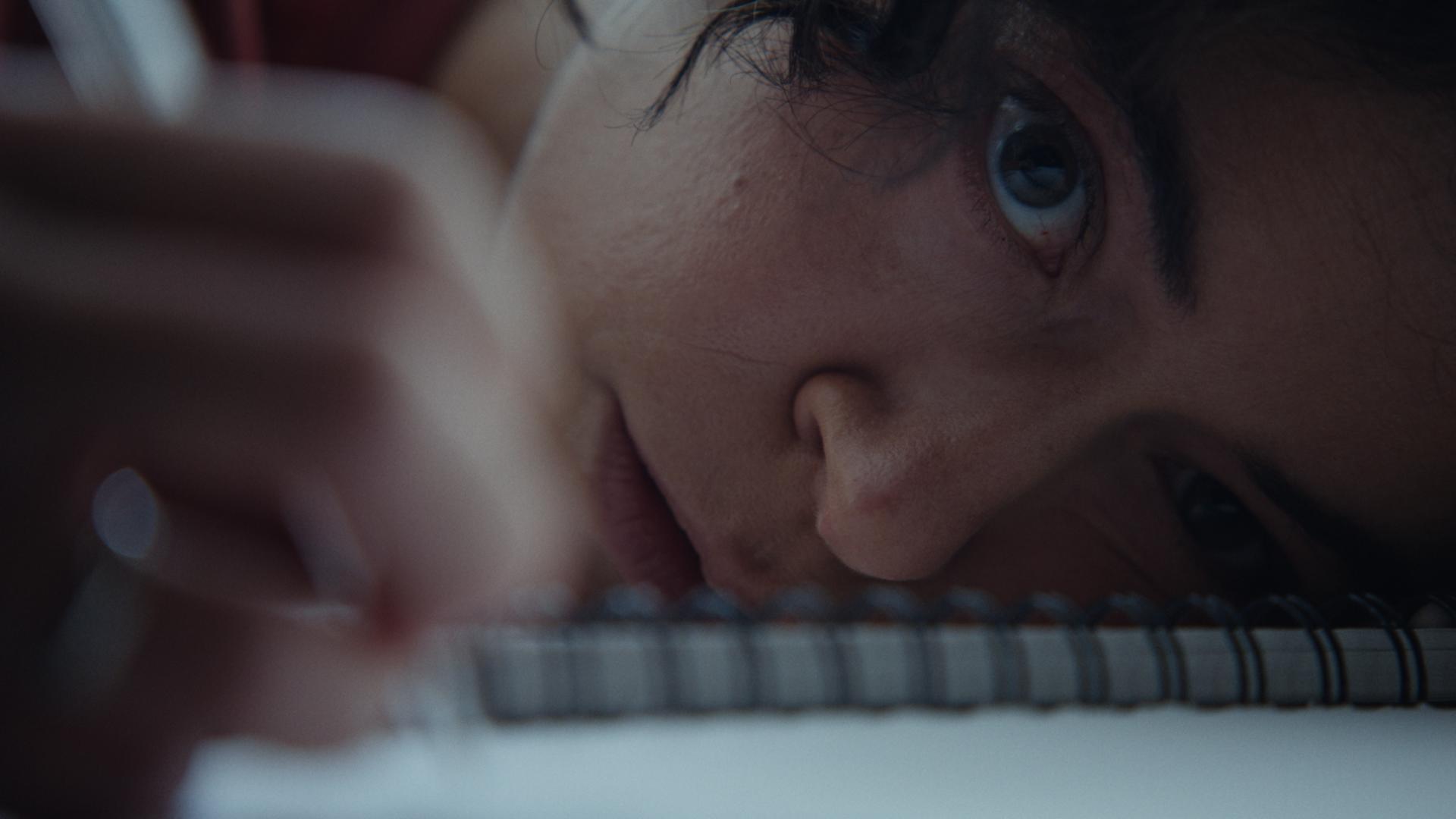
Keeper Review – Osgood Perkins Serves Forest Dread and Cake With a Side of Unease
If Osgood Perkins had his own menu, the main dish would be “slow-cooked dread served cold.” With Keeper, the director adds another course to his horror repertoire – one that is quiet, off-kilter, and baked through with creeping tension and a suspicious dessert.
Tatiana Maslany stars as Liz, a painter who heads off to the countryside for a romantic anniversary trip with her boyfriend Malcolm, played with slippery calm by Rossif Sutherland. He’s a doctor. The cabin belongs to his family. The vibe is upscale rustic. The vibe is also a little cursed.
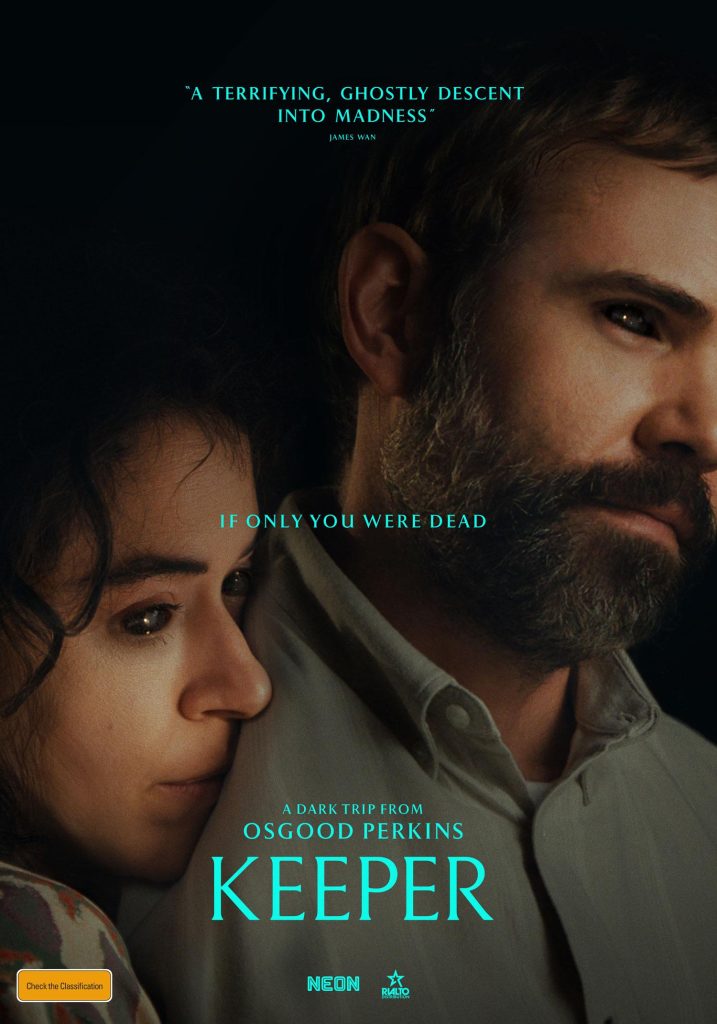
There is a boxed chocolate cake waiting on the counter. It is a gift, supposedly, from a caretaker. There is also a cousin named Darren, the kind of guest who brings a meat cleaver to a wine-and-lanterns getaway. He shows up uninvited with a European model girlfriend who claims not to speak English. Until she does. And she does not recommend the cake.
From there, Keeper begins to do what Perkins does best. The film slips into a kind of atmospheric trance, using eerie silences and carefully offbeat framing to slowly erode Liz’s sense of control. The cabin, with its modern wood-and-glass design, becomes a psychological maze. Doors lead to places they shouldn’t. Sounds echo without origin. Reflections don’t quite match the present.
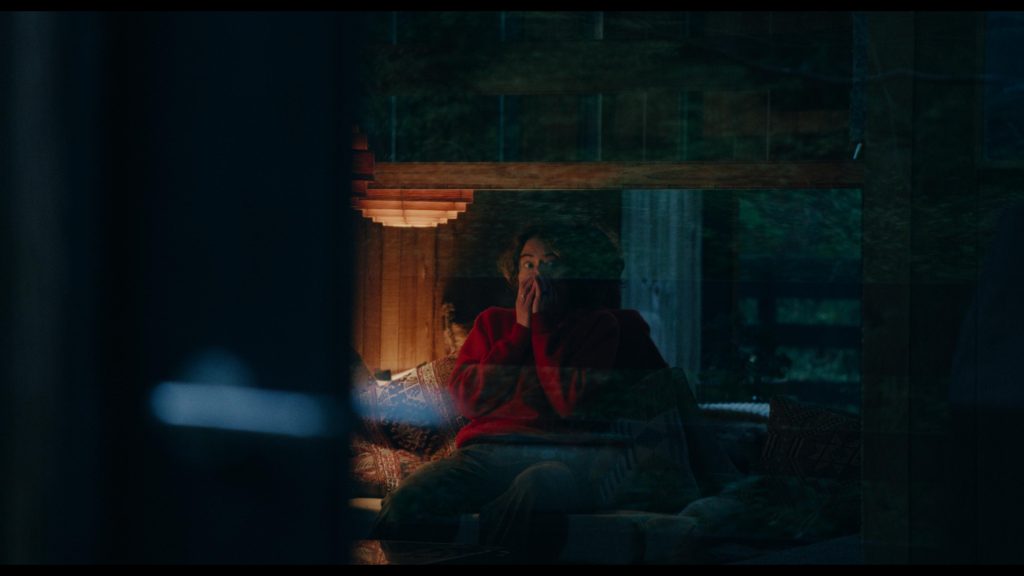
The horror builds in suggestion, not volume. Strange figures begin to appear around the house. Visions interrupt the calm. The woods breathe. It’s the kind of horror where nothing jumps out, but everything seems like it might.
Maslany carries it all with a performance full of subtle calibration. She gives Liz the texture of a woman who is tired of ignoring red flags and just wants a nice weekend. Her increasing isolation is believable, even when the film starts to drift into the surreal. She reacts like a real person in a strange situation, not a horror character following genre instructions.
Perkins directs with the confidence of someone who trusts unease more than exposition. For large stretches, there is little explained. That’s part of the point. The film takes its time, laying visual breadcrumbs, allowing the viewer to sit in discomfort. It’s not confusing, but it is purposefully disorienting. Like waking up from a dream where you knew something terrible was happening but couldn’t say exactly what.
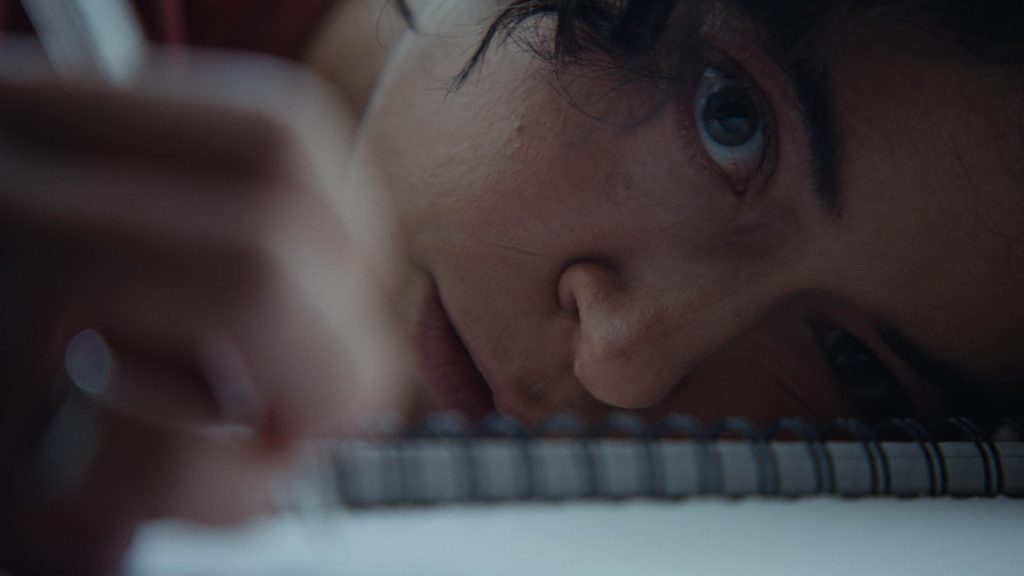
Jeremy Cox’s cinematography frames everything like it’s being watched from behind a tree, or from the corner of the room. Production designer Danny Vermette gives the cabin a layout that feels deliberately hard to map. It’s stylish but unfamiliar. Nothing settles. Nothing quite feels safe.
There are some pacing issues in the middle stretch, as the film leans hard into repetition and ambiguity. Audiences who prefer their horror with a roadmap may start to fidget. But if you stick with it, the film begins to answer the questions it’s been quietly asking all along – not with a bang, but with a steadily growing sense of wrongness.
Keeper is less interested in delivering conventional scares and more invested in the horror of being gaslit by the person you’re supposed to trust. At its core, this is a film about relationships – about control, power, and the things we overlook in the name of love. There’s real weight to the way it examines vulnerability inside intimacy, and how easily that vulnerability can be twisted.
Do not expect a monster movie. Do not expect a scream-a-minute thriller. What Keeper offers is something slower, stranger, and more metaphorical – horror by way of folk tale, dream logic, and lightly poisoned romance. By the end, it leaves a bitter aftertaste that sticks with you.
It is not as immediately impactful as Longlegs, nor as crowd-pleasing as The Monkey, but Keeper shows that Perkins remains one of the most quietly unsettling voices in modern horror. This is a story that prefers to lurk behind your shoulder rather than leap out in front of you.
Just maybe skip the cake.