Teenage Sex and Death at Camp Miasma Review: Slashers, Sex and a Serious Case of Overthinking It
There is a moment in Teenage Sex and Death at Camp Miasma when faded scream queen Billy Presley attempts to explain what made the fictional Camp Miasma films work in the first place. While young filmmaker Kris Williams is approaching the material through identity, representation, cultural interpretation and enough film theory to make you instinctively start looking for the nearest university lecturer, Billy essentially boils the appeal of the old movies down to something considerably simpler: “flesh and fluids”. Frankly, Billy may have a point, because Jane Schoenbrun’s latest is at its strongest whenever it remembers that sometimes people watched slasher movies because they wanted sex, blood, a memorable killer and teenagers making exceptionally poor decisions in isolated woodland locations.
Schoenbrun’s follow up to I Saw the TV Glow is an ambitious, strange, frequently funny and beautifully made love letter to the slasher movie, while simultaneously interrogating just about everything the genre has ever represented. Sex, gender, exploitation, fandom, nostalgia, filmmaking, franchise ownership, cultural reassessment, identity and the relationship between horror and desire are all thrown into the cinematic blender. Sometimes the results are fascinating, sometimes they are extremely funny, and sometimes you rather wish somebody would unplug the blender and let a masked lunatic chase someone through the woods for ten minutes.
The brilliant conceit at its centre is Camp Miasma, an entirely fictional horror franchise that feels as though somebody discovered a forgotten shelf of VHS tapes somewhere between Friday the 13th, Sleepaway Camp and the increasingly desperate sequels produced by virtually every successful slasher series of the 1980s. The original Camp Miasma became an unexpected hit, its bizarre killer Little Death became a horror icon, sequels inevitably followed and, as the years passed, diminishing returns transformed a once valuable property into dormant intellectual property awaiting resurrection. If you’ve spent an unhealthy portion of your life watching Jason Voorhees wander around summer camps, Manhattan, Hell and outer space, the joke requires absolutely no explanation.
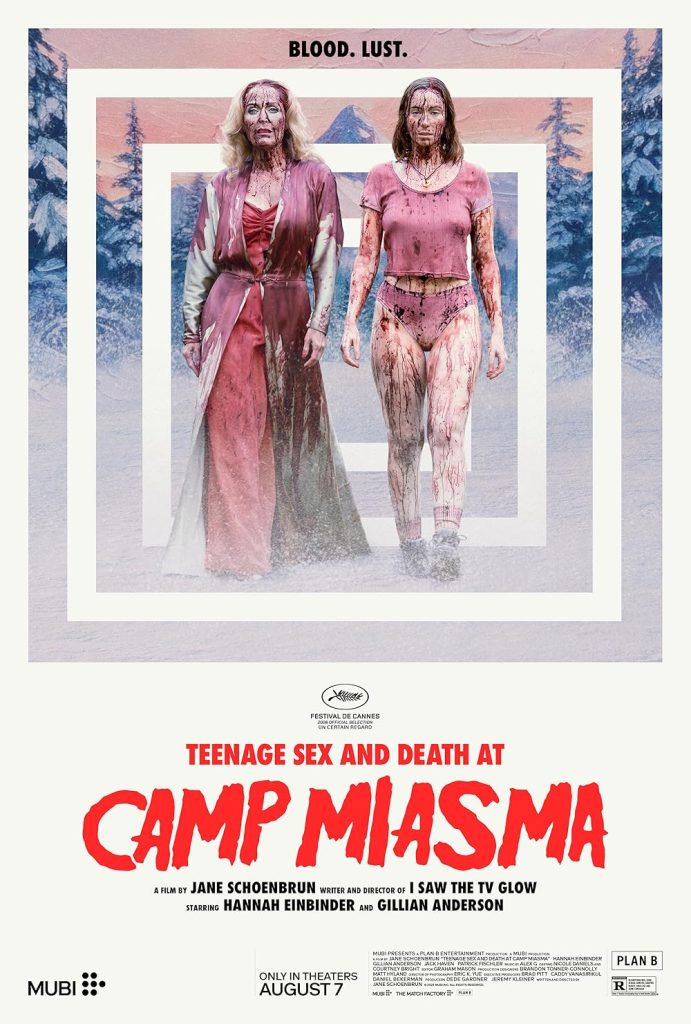
The opening credits are particularly wonderful. Schoenbrun presents an entire history of Camp Miasma through VHS releases, toys, newspaper advertisements, merchandise and other franchise debris, allowing us to understand decades of fictional horror history almost immediately. The parallels with Friday the 13th are deliberately obvious, right down to the franchise eventually attempting a Manhattan adventure, and there is something immediately recognisable about watching a cheap horror film unexpectedly become a phenomenon before being milked through increasingly dubious sequels and merchandising. It is one of the movie’s best ideas because Schoenbrun doesn’t merely tell us that Camp Miasma was important; they manufacture decades of fake pop culture around it until you almost believe you missed the films yourself.
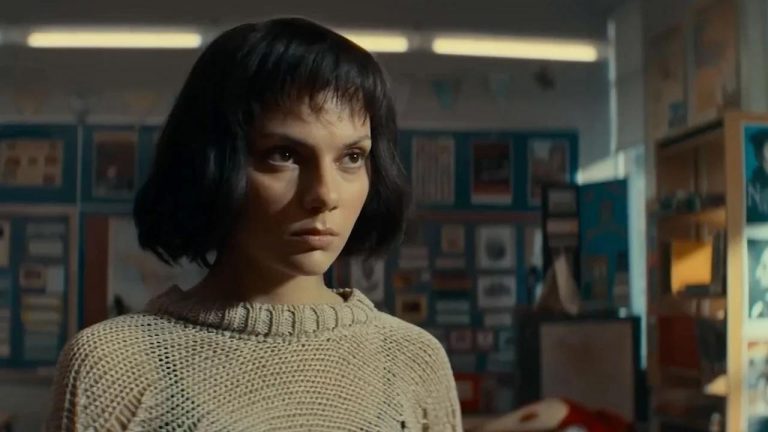
Into this comes Kris Williams, played by Hannah Einbinder, a 29 year old filmmaker whose recent Sundance success has landed her the opportunity to resurrect the franchise. Kris isn’t merely familiar with Camp Miasma. She grew up obsessed with it, and her relationship with the original movie became tangled up with her developing sexuality and identity. Consequently, this isn’t simply another studio assignment to her. Kris sees the opportunity to reclaim and reinterpret something enormously important from her youth, but there’s an immediate problem: she has a much clearer understanding of what she believes the old film represents than what might actually make a new Camp Miasma film entertaining.
Her big idea involves Billy Presley, the final girl from the original Camp Miasma. Billy disappeared from the franchise after the first movie and subsequently disappeared almost entirely from the industry, eventually becoming a reclusive figure living at Camp Tivoli, the location associated with the original production. Kris travels there hoping not merely to interview Billy but to persuade her to return for the proposed reboot and potentially build the entire film around her. Hollywood, however, has already performed the necessary calculations and concluded that Billy Presley isn’t Laurie Strode. Kris’s agent rather brutally points out that Billy doesn’t possess the legacy value of Jamie Lee Curtis, Neve Campbell or Heather Langenkamp, placing her instead closer to the level of Bruce Springsteen’s sister from the Sleepaway Camp sequels. It is cruel, horribly funny and exactly the sort of conversation you can imagine taking place during the development of a studio horror reboot.
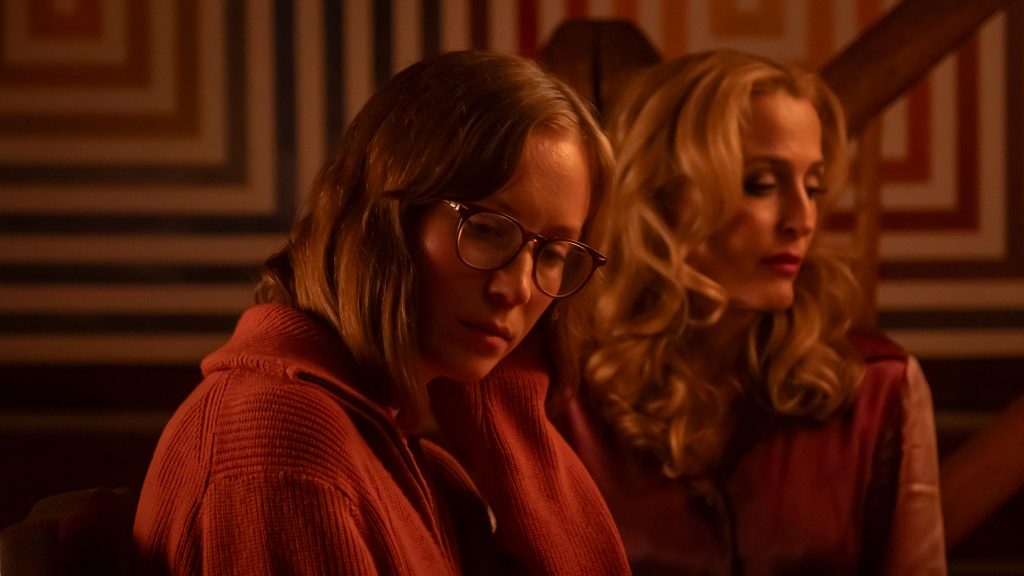
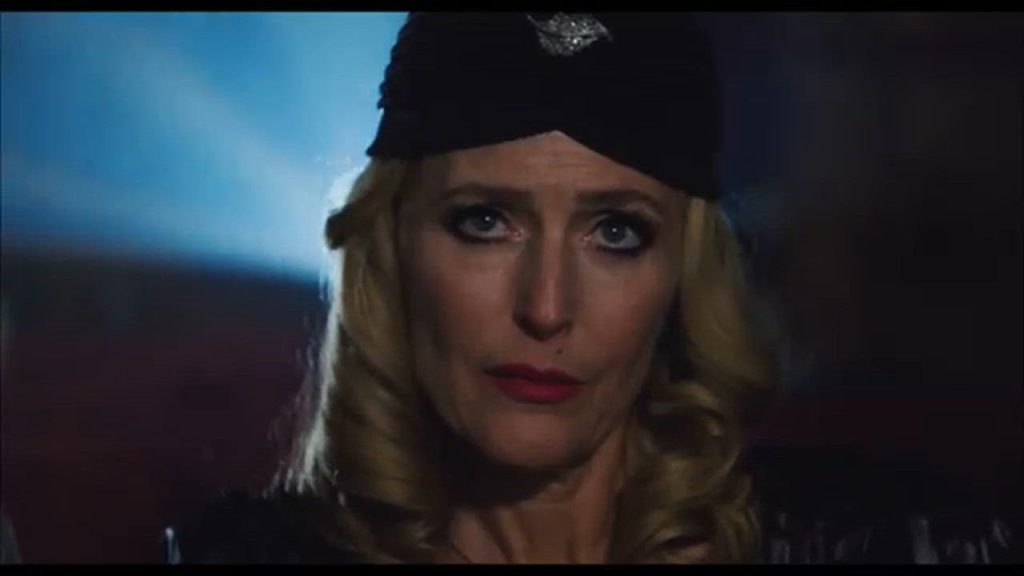
Then Gillian Anderson enters the film and promptly steals it. Anderson plays Billy as part forgotten scream queen, part eccentric recluse and part Norma Desmond, complete with a Southern drawl and the confidence of somebody who has had several decades to decide precisely how much she cares about everyone else’s opinion. Anderson is enormously entertaining, but importantly she doesn’t turn Billy into a joke. Beneath the eccentricity is someone with a complicated relationship with the movie that made her famous and the industry that subsequently left her behind. The film becomes strongest whenever Billy and Kris simply sit together and argue about what Camp Miasma actually means, because the two women approach horror from almost completely opposite directions.
Kris wants to analyse it; Billy wants to experience it. Kris talks about representation, politics, authorship and the cultural baggage accumulated by the franchise, while Billy keeps dragging the conversation back towards whether the resulting films are actually any good. Their disagreement becomes one of the movie’s most interesting ideas because neither woman is entirely wrong. Horror absolutely can carry political, sexual and cultural meaning, intentionally or otherwise, and decades of genre cinema have provided plenty worth examining. But horror also needs to function as horror. Eventually somebody has to stop writing the thesis, pick up the machete and get on with it.
That tension represents both the greatest strength and biggest weakness of Teenage Sex and Death at Camp Miasma. Schoenbrun has plenty to say about queer identity and the historically complicated relationship between LGBTQ representation and horror cinema. Little Death itself becomes part of that conversation, with the fictional franchise subsequently reassessed over its treatment of gender, while the killer’s name adds another deliberately unsubtle layer to the relationship between sexuality and death: “la petite mort”, literally “the little death”, is a euphemism associated with orgasm. These aren’t ideas being randomly attached to the film by critics afterwards; they’re woven deliberately into the construction of Camp Miasma itself.

The problem isn’t that the film explores queer characters or queer themes. The problem is that it keeps explaining them. There are stretches where characters don’t seem to be having conversations so much as delivering competing essays about horror cinema, identity and representation. Themes that have already been communicated perfectly well through character or imagery are discussed, analysed, reconsidered and occasionally discussed again just in case somebody in row twelve was opening a packet of Minstrels the first time around. Queer characters simply existing naturally within horror shouldn’t require the film to repeatedly shine a spotlight on their queerness, and the constant intellectualisation can paradoxically make something intended to feel normal and lived in begin to feel more self conscious.
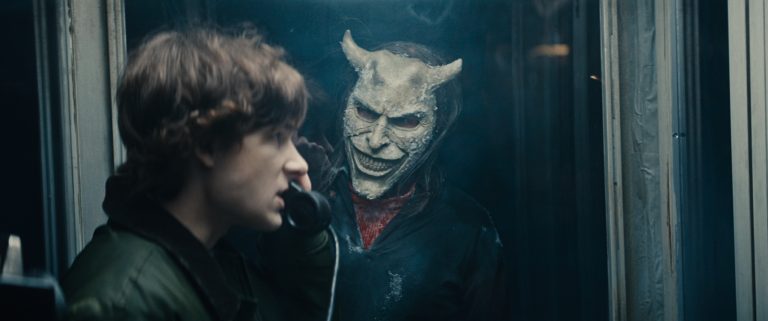
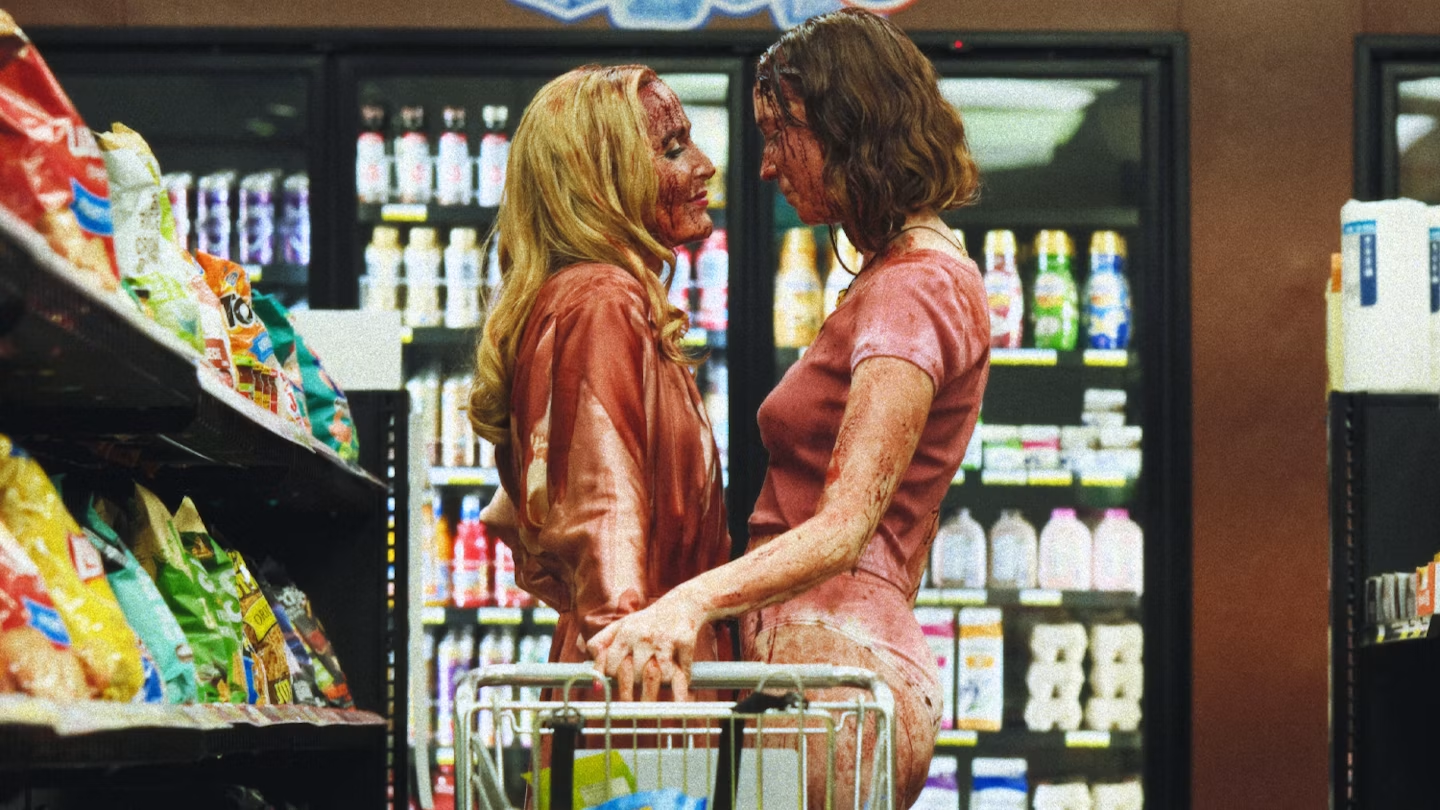
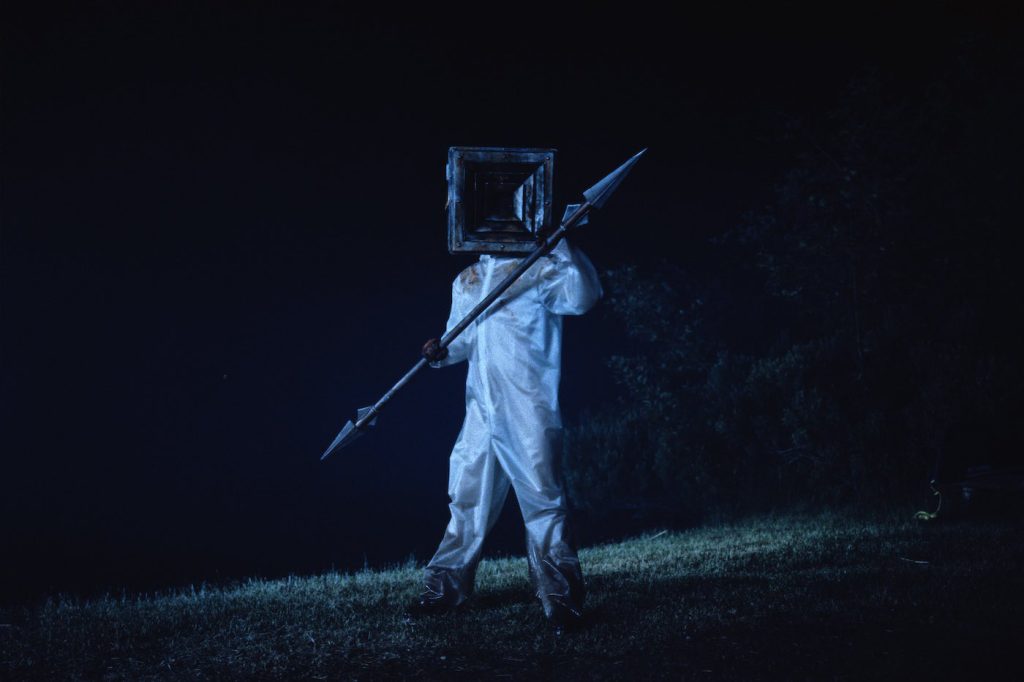
That’s particularly frustrating because Schoenbrun is a talented visual filmmaker who frequently doesn’t need all that explanation. Eric Yue’s cinematography gives the movie a heightened, deliberately artificial quality, with saturated colours, stylised environments and imagery that occasionally feels closer to a remembered VHS movie than objective reality. The reconstructed Camp Miasma material is especially enjoyable, embracing ridiculous gore, geysers of blood and knowingly exaggerated slasher conventions. Little Death himself, wandering around with what resembles an industrial air vent stuck over his head, is exactly the sort of ludicrous horror creation that shouldn’t work but somehow does.
Those sequences also understand something fundamental about the movies being referenced: they were fun. The original Friday the 13th wasn’t sitting around worrying about its place within the wider cultural conversation. It wanted teenagers, a summer camp, Tom Savini effects and enough inventive murder to make audiences tell their friends about it afterwards. Sleepaway Camp certainly ended up becoming the subject of decades of discussion surrounding gender and representation, but people also remember it because it is a completely bonkers slasher movie with one of the most unforgettable endings in horror history. Teenage Sex and Death at Camp Miasma clearly loves those films, yet occasionally seems slightly embarrassed by how uncomplicated that love can be.
Einbinder gives a good performance as Kris, particularly when the character’s confidence as a filmmaker collides with her considerably less certain personal life. Whether she always convinces as someone a studio would entrust with a potentially valuable horror franchise is another matter, although some of that awkwardness is undoubtedly intentional. Kris has spent so long thinking about what Camp Miasma means that she hasn’t necessarily worked out what her version of it actually is, and there is something amusingly believable about a studio hiring somebody to reinvent an old horror property because they want a fashionable new perspective, then immediately becoming nervous when that filmmaker actually proposes doing something different with it.
Anderson, though, is the film’s secret weapon. Every time Billy appears, the movie becomes more relaxed, unpredictable and alive. Her chemistry with Einbinder gives the increasingly intimate relationship between Billy and Kris credibility, while Anderson understands exactly how far she can push the character’s theatricality without allowing her to become a caricature. The film’s references to Sunset Boulevard are hardly subtle, but Anderson is having enough fun with the material that you don’t particularly care. Billy feels like someone who survived becoming a cult horror icon and then watched the culture spend decades deciding what she represented without anybody remembering to ask her.
There is also something genuinely affectionate about the film’s treatment of horror fandom. The mountain of Camp Miasma merchandise, the arguments about sequels, the obsession with continuity, the rehabilitation of once dismissed entries and the studio’s sudden interest in resurrecting a dead franchise because nostalgia has made it valuable again will be immediately recognisable to genre fans. This is a world where yesterday’s disposable rubbish becomes tomorrow’s expensive collector’s edition with reversible artwork, lobby cards, a poster and a book explaining why the movie everybody hated in 1989 was secretly a misunderstood masterpiece. Horror fans know this cycle intimately, and Schoenbrun clearly does too.
The film is also smart enough to recognise the uncomfortable contradiction at the heart of modern fandom. We can love these films while acknowledging that some of them contain ideas or representations that have aged badly, and we can discuss those elements without pretending the movies themselves have suddenly ceased to be entertaining. Kris sees Camp Miasma through the perspective of someone shaped by it, while Billy remembers the grubby reality of actually making the thing. One sees cultural significance; the other remembers bodies, blood, sex and filmmaking. The best scenes allow those perspectives to collide without insisting that either provides the definitive answer.
Teenage Sex and Death at Camp Miasma: When an Agenda Gets in the Way of the Horror
Unfortunately, the movie’s tendency towards self analysis keeps getting in its own way. The LGBTQ themes are central to Schoenbrun’s story and absolutely belong there, but there are moments when the film seems unwilling simply to allow its characters to exist without turning their experiences into another discussion. Representation can sometimes feel most natural when sexuality or gender is simply part of who somebody is rather than the beginning of another conversation explaining why it matters. After a while, Billy’s “flesh and fluids” philosophy starts sounding less like an amusing counterargument and more like desperately needed filmmaking advice: give us the sex, give us the blood, give us Little Death wandering around Camp Miasma wearing that wonderfully ridiculous vent shaped headgear and give us Gillian Anderson behaving like Norma Desmond wandered into Friday the 13th Part VII and decided she owned the place. Perhaps give the film theory a night off.

Teenage Sex and Death at Camp Miasma is certainly not a bad film. It is well made, visually distinctive, intelligently conceived and anchored by an excellent Gillian Anderson performance, while its recreation of an imaginary 1980s slasher franchise is affectionate enough that you almost wish somebody would actually make all the terrible Camp Miasma sequels sitting on those fictional VHS shelves. Hannah Einbinder does good work with a difficult character, the film within the film material is frequently terrific and Schoenbrun’s genuine affection for horror cinema is apparent even when the movie is busy taking the genre apart to discover why it meant so much in the first place.
Claims that it is one of the very best horror films of 2026, however, feel excessive. There is a cleverer, funnier and considerably sharper movie trapped somewhere inside this one, occasionally fighting its way through all the commentary to spray blood across the walls. It is interesting enough to provoke conversation, flawed enough to provoke arguments and strange enough that it will undoubtedly find a passionate audience willing to explain why everyone else has misunderstood it. Perhaps that is entirely appropriate for a movie about a fictional horror franchise whose fans have spent decades doing exactly the same thing. For us, though, Billy Presley ultimately has the better pitch: a little less analysis, a little more flesh and fluids.