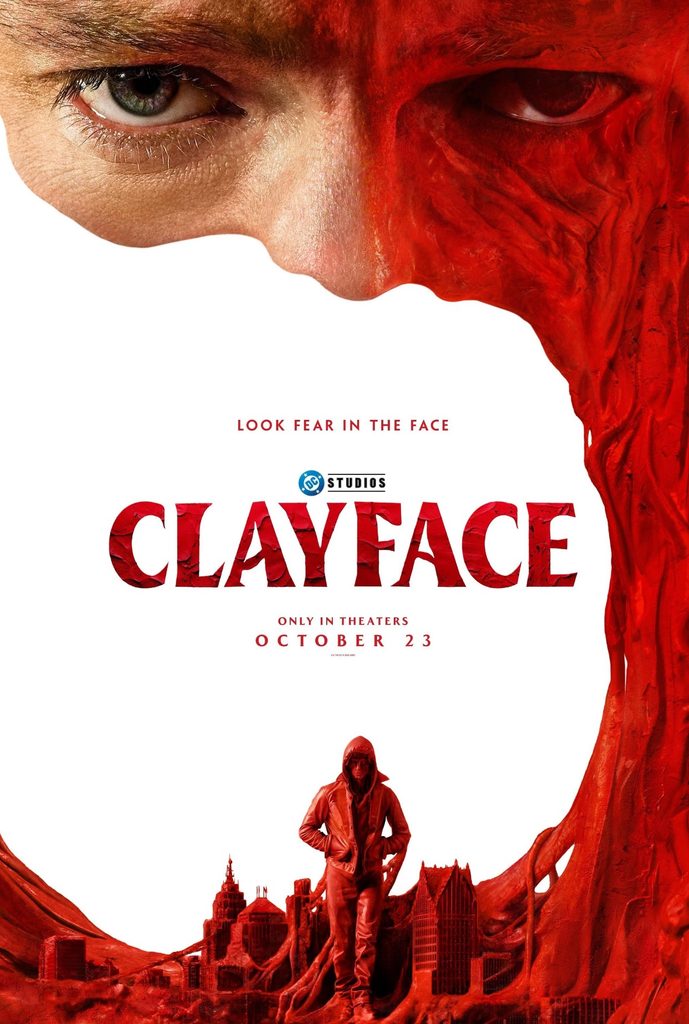
Clayface Review: DC Gives Its Shapeshifting Villain a Face Full of Trouble
After Joker proved that a DC villain could headline a film without Batman standing on a rooftop nearby looking moody, DC has naturally gone back to Gotham’s rogues gallery for another standalone villain story. This time it is Clayface, the actor turned supervillain who has been lurking around Batman’s world for decades in comics, animation and games, but who has never previously had this kind of live-action cinematic spotlight.
Clayface arrives with plenty to interest horror fans too. There are grotesque prosthetics, facial mutilation, body horror and a central character whose relationship with his own flesh becomes increasingly complicated. Not everything works, but when the film gets nasty, it can be a lot of fun. There is also no Batman, not even a mention of him, which becomes increasingly strange when Gotham starts filling up with murderous weirdos and nobody appears particularly concerned that the city’s usual nocturnal pest controller has taken the evening off.

Matt Hagen seemingly has everything. He is a successful actor, has received his first Academy Award nomination and has reached the point where television appearances and celebrity attention come with the territory. One such appearance is hosted by Rob Brydon, who even gets to wheel out one of his Al Pacino impressions. Joker had Robert De Niro hosting a talk show. Clayface has Rob Brydon pretending to be Al Pacino. Gotham’s entertainment industry is clearly becoming increasingly unpredictable.
Matt is also apparently doing rather well with women. At a nightclub, he attracts the attention of a woman who unfortunately happens to be involved with a Gotham gangster. His best friend and fellow actor warns him that pursuing her is a spectacularly stupid idea, but Matt ignores him and the pair end up in bed together. This is the sort of decision that usually results in either an awkward morning or a very short superhero film.
Matt wakes the following morning to discover the gangster and several of his men standing around his bed watching him sleep. Quite how long they’ve been there is never clear. Five minutes? Half an hour? Did somebody cough and get told to start again because Matt nearly woke up? Whatever happened, everyone apparently agreed that silently surrounding a sleeping actor was the most intimidating way to begin proceedings.
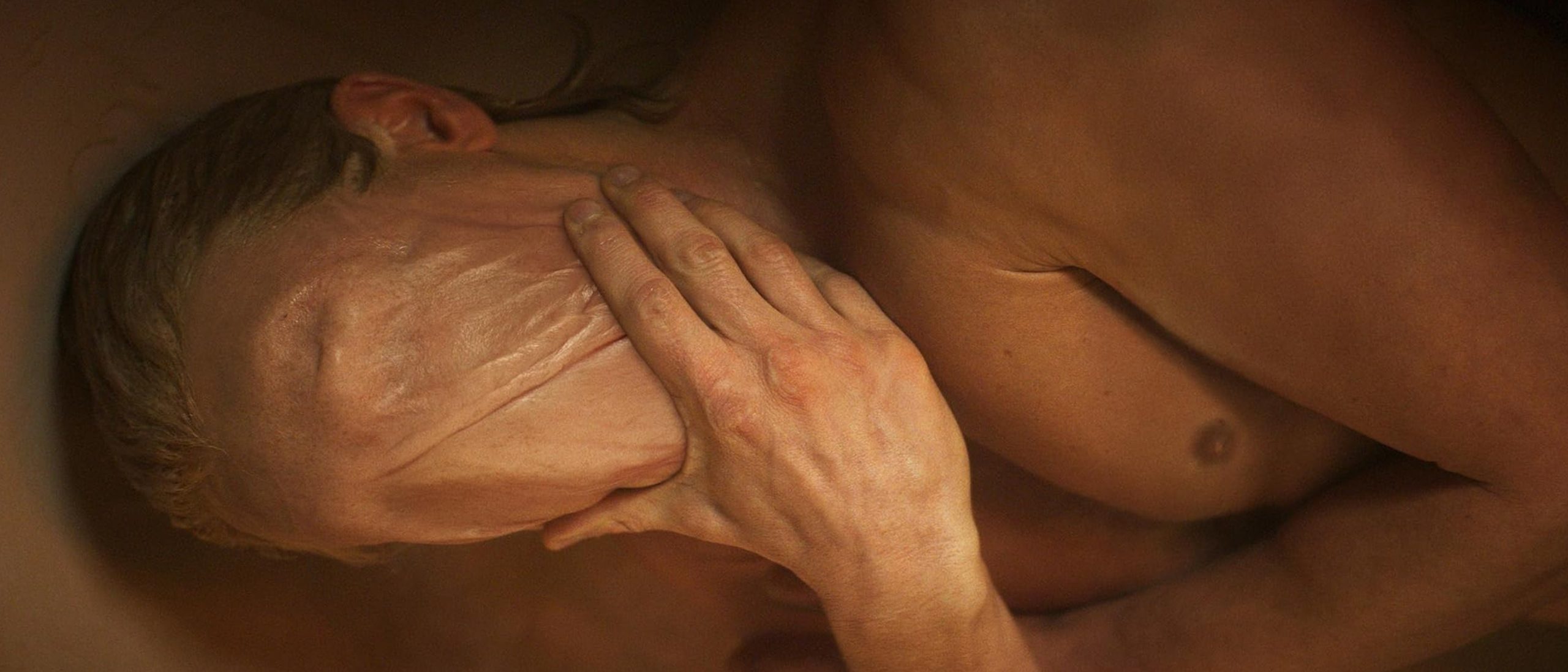
The humour disappears quickly when the woman is sent away and Matt is restrained. His attackers carve up his face, leaving the actor horribly disfigured and requiring extensive reconstructive surgery. Clayface produces some genuinely gruesome imagery during these sequences, including the kind of damaged facial tissue that makes you instinctively touch your own nose just to check it is still attached. Watching somebody’s nose being manipulated like loose upholstery isn’t something we’re desperate to experience again.
The surgeons cannot properly restore Matt’s face, leaving him wearing an opaque mask with more than a hint of The Phantom of the Opera about it. His career promptly disappears, his agent abandons him and his financial situation deteriorates. His solicitor, played by Eddie Marsan, manages his affairs with approximately the level of success you would expect from somebody appearing in a supervillain origin story, while Matt’s apartment becomes collateral in an attempt to sue the gangster responsible for his injuries.
That doesn’t work either. The gangster walks because of insufficient evidence and witnesses, with intimidation and corruption helping ensure Matt gets nowhere. Before long, the Academy Award nominated actor has gone from premieres and television interviews to living in a cockroach infested room wondering where everything went wrong. Presumably the cockroaches don’t recognise him either, which feels unnecessarily cruel.
Then Matt discovers an article about a scientist developing experimental AI nanotechnology capable of repairing organs and other physical damage in animals. He seeks her out and asks whether she can restore his face, only to be told that human trials are still roughly a year away and treating him could result in her research being shut down and potentially much worse. Matt insists that he will sign whatever waivers are necessary because apparently paperwork is the one thing capable of making experimental nanotechnology completely safe.
Eventually, she agrees.
The treatment takes place over a period of weeks and, remarkably, Matt’s face begins healing. Naturally, he immediately becomes impatient. Rather than waiting for the doctor to finish the treatment properly, he rushes off to a premiere to announce his return to the world. His timing proves unfortunate when his newly restored face begins drooping during a conversation with his former agent, which is not generally considered ideal red carpet behaviour.
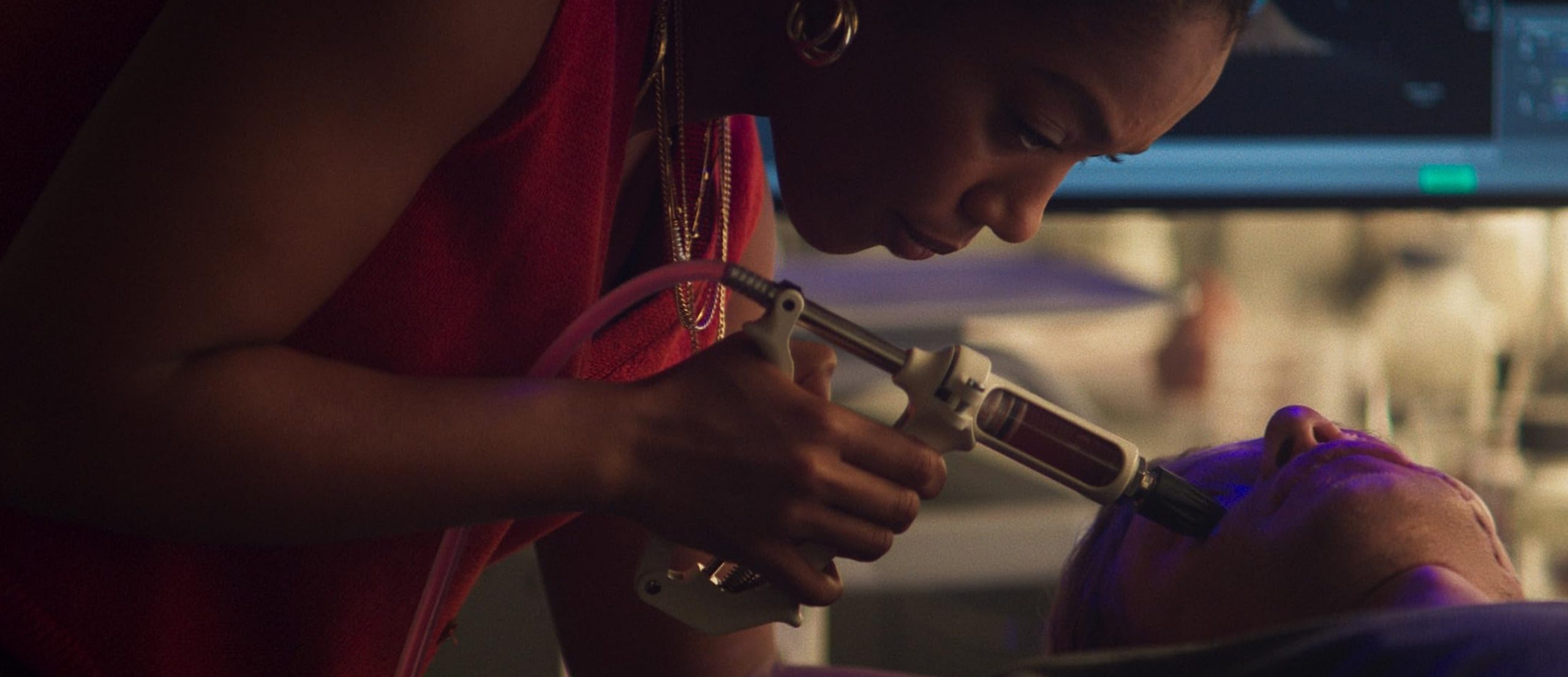
Matt responds to this medical setback in the calmest and most scientifically responsible way possible. While the doctor is away, he takes the remaining nanotechnology and injects all of it into his face. If a medical professional tells you that an experimental treatment needs to be administered carefully over several weeks, “inject absolutely everything immediately” probably isn’t printed anywhere on the instruction leaflet.
After a violent reaction, Matt appears normal again. Except he very definitely isn’t. He soon discovers that physical injuries heal almost instantly and, considerably more importantly, he can assume the appearance of other people at will. For an actor whose entire existence has revolved around his face and identity, it is a wonderfully appropriate superpower. For a furious man carrying around an increasingly lengthy revenge list, it is also incredibly useful.
Matt begins working his way through the people he believes have wronged him. The gangster is an obvious target, but the list expands to include his solicitor, the woman from the nightclub and even his former friend and fellow actor after Matt discovers his betrayal. He also develops feelings for the scientist responsible for treating him, creating another complication because her fiancé happens to be a Gotham police detective who increasingly suspects Matt is connected to the growing collection of bodies.
Proving it is another matter entirely. Witness identification becomes slightly problematic when your prime suspect can walk into a room looking like Dave and leave it looking like Susan. Somewhere in Gotham, a police sketch artist has presumably thrown his pencils in the bin and gone home.
Tom Rhys Harries makes Matt easy to sympathise with, and that ultimately becomes one of Clayface’s biggest problems. For much of the film, the supposed villain is surrounded by people who have done genuinely horrible things to him. He has been mutilated by gangsters, abandoned when his looks disappear, financially ruined, betrayed and denied justice. When he finally develops superhuman abilities and begins retaliating against some thoroughly unpleasant people, the expected response is presumably horror at what he is becoming.
Instead, there are moments when you find yourself thinking that perhaps carving somebody’s face to pieces was always going to have consequences. That creates an odd tension at the heart of Clayface because Matt is supposed to be travelling towards villainy, yet for much of the running time he functions more like an antihero.
Giving villains understandable motivations is obviously preferable to having them sit in underground lairs stroking cats and explaining their plans to anybody who walks past, but Batman possesses arguably the greatest rogues gallery in superhero history. It would be nice if DC occasionally allowed one of these lunatics to be a proper lunatic.
The film also substantially reworks the character’s comic history. The original Clayface was Basil Karlo, an actor who became the first character to use the name, while Matt Hagen was the second Clayface and acquired his abilities through very different circumstances involving radioactive protoplasm. Because apparently falling into mysterious radioactive goo was once considered a perfectly acceptable occupational hazard. Several other characters have subsequently carried the Clayface identity, so this version effectively takes elements of the mythology and reshapes them into a new origin.
That doesn’t bother us particularly because comic characters have been reinvented countless times. The more important question is whether this version works on its own terms, and there is certainly enough here to keep horror fans entertained. Matt’s mutilation and reconstruction provide some of the film’s nastiest material, while the idea of flesh no longer behaving according to the usual rules gives Clayface plenty of body horror potential.
The film is at its best when it embraces that grotesque side of the character. Watching Matt discover what his altered body can do gives the story something beyond the usual revenge thriller mechanics, and there is something inherently disturbing about a person whose face is no longer permanent. The prosthetic work is particularly effective in places, providing the sort of unpleasant detail that makes you wince while simultaneously leaning closer to the screen because horror fans are apparently wired incorrectly.
What is less successful is Gotham itself. For one of the most distinctive fictional cities in popular culture, it can feel surprisingly anonymous here. Gotham should have personality coming out of its drains, probably accompanied by a man dressed as a question mark and somebody firing umbrellas at pedestrians. Instead, parts of the city could belong to almost any grim American crime thriller.
Then there is Batman. We don’t need him to appear, and having the Dark Knight suddenly drop into Matt’s story would probably overwhelm the entire film. The moment those ears appeared in silhouette, Clayface could start transforming into a twelve-foot dragon and half the audience would still be whispering, “Batman’s here.”
But not even mentioning him feels strange. Gotham has organised crime, corruption, murder and now a shapeshifting serial killer wandering around borrowing people’s faces, yet nobody seems particularly interested in whether the city’s most famous vigilante might have an opinion. Maybe Batman is on holiday. Maybe Killer Croc has blocked a sewer. Maybe Calendar Man has remembered it’s Tuesday. Whatever the explanation, Matt gets plenty of room to work.
That absence also contributes to the sense that Clayface occasionally feels disconnected from the larger mythology it belongs to. It is perfectly possible to tell a standalone Gotham story without stuffing it with references, cameos and somebody mentioning Wayne Enterprises every six minutes, but a little more of the city’s distinctive comic book character would have gone a long way.
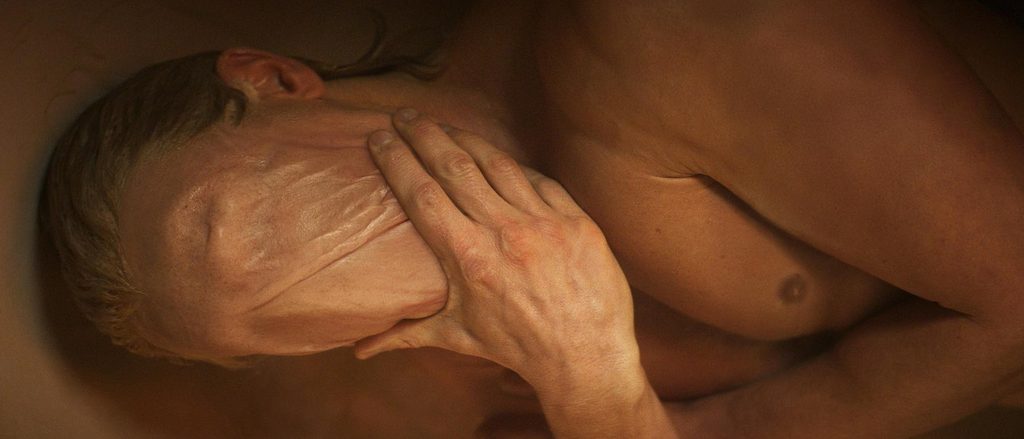
As a horror film, Clayface fares better. There are some properly gruesome moments, some effective prosthetic work and a central concept naturally suited to body horror. Harries carries the emotional side convincingly too, selling both Matt’s initial confidence and the devastation that follows the destruction of the face upon which he built his career.
The problem is that Clayface never quite goes far enough with either half of its identity. It is a superhero villain origin story reluctant to make its protagonist truly villainous, while its horror elements occasionally suggest something nastier and stranger than the film ultimately delivers. There is plenty of entertainment along the way, and watching Matt use his abilities for revenge certainly has its pleasures, but the character feels capable of supporting something much more unhinged.
Batman has a rogues gallery overflowing with colourful psychopaths, monsters and criminals. Clayface gives us another damaged man with a tragic backstory, legitimate grievances and several very good reasons to be angry with the world. He might technically be the villain, but for much of the film you are still on his side, which makes his eventual descent into criminality less disturbing than it perhaps should be.
Still, Clayface is entertaining enough when it gets weird, bloody or gruesome, and Harries gives the film a protagonist worth following even when the material around him doesn’t always make the most of its possibilities. There is a much crazier horror film hiding somewhere inside this one, desperate to burst through the surface and start rearranging faces.
Maybe next time DC can forget the sympathetic backstory and give us a villain who is simply an absolute bastard. Batman is going to need somebody worth punching eventually, because at this rate Gotham isn’t building a rogues gallery. It’s building a support group.