Crystal Lake: A Bloody Good Return for Friday the 13th, but Did Jason Really Need a Scientific Origin?
WARNING: This review contains major spoilers for all eight episodes of Crystal Lake. If you haven’t watched the series yet, turn back now. Unlike Camp Crystal Lake Counsellors, we’ll still be here when you return.
It has been a very long time since Friday the 13th fans had anything substantial to sink a machete into. Jason Voorhees hasn’t fronted a feature film since Marcus Nispel’s 2009 Friday the 13th, meaning one of horror’s most recognisable killers effectively spent more than 17 years sitting on the cinematic bench while Michael Myers, Ghostface, Leatherface and almost everybody else found ways back onto our screens. For a franchise that once released sequels with almost industrial efficiency, Jason’s absence became increasingly ridiculous with every passing year.
It wasn’t entirely silent. Friday the 13th: The Game arrived in 2017 and became a cult favourite, but the legal dispute surrounding the franchise stopped new content being added in 2018. The game was eventually removed from sale at the end of 2023 and its remaining online services ended at the close of 2024. More recently, Jason resurfaced through the Jason Universe initiative, appeared in the 13-minute Sweet Revenge short directed by Mike P. Nelson, and finally joined Dead by Daylight in June 2026. There have been other appearances and plenty of merchandise, but none of it was the full-blooded dramatic return fans had spent years waiting for.
Behind much of that wilderness period was the complicated legal battle involving original screenwriter Victor Miller and rights holder Horror Inc. Miller served notice in 2016 seeking to reclaim his rights to the original screenplay under US copyright law, beginning a dispute that ultimately reached the US Court of Appeals. In 2021, the court upheld a ruling that Miller had written the screenplay as an independent contractor rather than an employee, allowing his termination claim to stand. The practical rights situation surrounding Friday the 13th remained complicated because many of the elements audiences associate with the franchise were developed after Miller’s original screenplay. Years of legal uncertainty, rumours and abandoned possibilities followed while Jason’s machete gathered dust.
Then, finally, came Crystal Lake. The eight-part Peacock and A24 series created by Brad Caleb Kane isn’t the straightforward Jason Voorhees television series some fans might have imagined. Instead, it goes backwards and concentrates primarily on Pamela Voorhees, taking the relatively simple tragedy described in the original 1980 film and expanding it into almost eight hours of family drama, conspiracy, gruesome violence and increasingly strange additions to the mythology. Having binged the entire season, our reaction is frustratingly divided because when Crystal Lake is good, it’s really bloody good, but some of its attempts to reinvent the mythology left us wondering why anybody thought certain things needed changing in the first place.
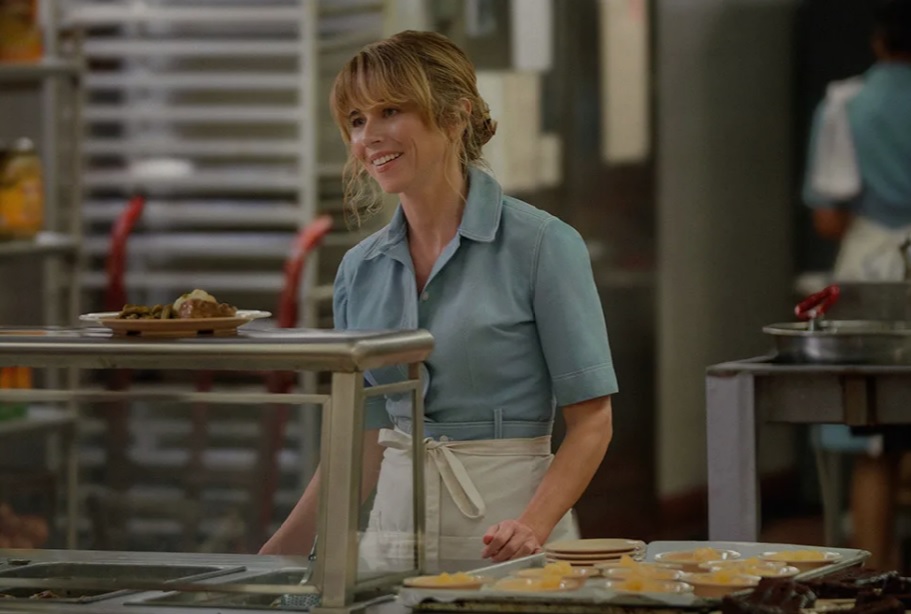
Linda Cardellini is the biggest reason the series works. Taking over a character so inseparably associated with Betsy Palmer could easily have resulted in imitation, but Cardellini creates her own Pamela while retaining enough of the original character that you can believe this woman might eventually become the Mrs Voorhees we know. She is frightening, unstable, loving, damaged and occasionally heartbreaking. Palmer’s Pamela arrived near the end of Friday the 13th as the answer to the movie’s mystery, whereas Cardellini has considerably more time to explore the woman before the murderer.
That additional time gives Pamela something the films never really had the opportunity to provide: a life. Her grief over Jason feels genuine, her relationship with him gives the tragedy greater emotional weight, and her inability to accept what happens to her son becomes painful rather than merely deranged. When the violence finally takes over, Cardellini can switch from devastated mother to terrifying killer without making Pamela feel like two completely different characters. She doesn’t try to replace Palmer’s performance, and that’s absolutely the right decision. This is a different interpretation of Pamela, but Cardellini is excellent throughout.
Visually, Crystal Lake is also gorgeous. The main story takes place in 1972, while flashbacks reach further into Pamela’s past, including events beginning in 1959. The production design, costumes, cars, hairstyles and colour palette give the series a convincing period identity rather than simply throwing a few flares onto actors and calling it the seventies. There is something wonderfully appropriate about seeing Camp Crystal Lake presented with the texture of an earlier era, and the show frequently looks like it belongs to the world from which Friday the 13th originally emerged.
And then there is the gore, because Crystal Lake thankfully remembers exactly which franchise we’re watching. The series isn’t embarrassed by Friday the 13th‘s reputation for outrageous death scenes, and the results include smashed jaws, stabbings, horrific burns and enough damage to heads and faces to keep Camp Crystal Lake’s local undertaker in business until retirement. The prosthetic work is particularly impressive, with many of the kills possessing the kind of physical nastiness that feels appropriate for a franchise whose reputation was built partly on the groundbreaking effects work of people such as Tom Savini. Anyone worried that prestige television might result in a tasteful, restrained Friday the 13th can relax. People get absolutely mangled.
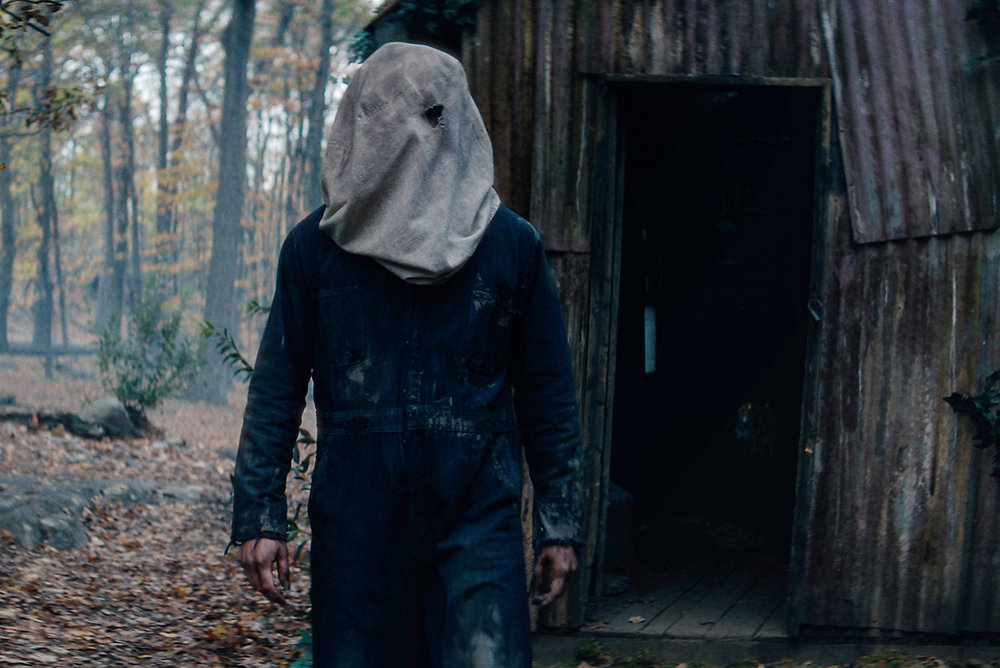
Unfortunately, Crystal Lake also falls into the trap that so many modern prequels encounter. It decides that something which worked perfectly well without an explanation desperately needs explaining. The original Friday the 13th mythology was beautifully simple. Jason drowned at Camp Crystal Lake in 1957. Pamela blamed the counsellors who should have been watching him, and the camp became associated with murder and tragedy. Years later, when Steve Christy attempted to reopen Crystal Lake, Pamela returned and started killing again. Jason subsequently turned out not to be dead, somehow surviving in the wilderness before becoming the killer of Friday the 13th Part 2. The continuity was never exactly Shakespeare, and the series became increasingly supernatural until Jason Lives simply resurrected him with lightning and effectively said, “There you go. Zombie Jason. Deal with it.” We dealt with it. We loved it. Nobody demanded a laboratory report.

Crystal Lake, however, wants answers. The series introduces Bellflower Chemical and Project Argonaut, a secret programme connected to Jason’s father, Elias Wittering, played by Hamish Linklater. Pamela, originally Pamela Scott in this continuity, becomes caught up in Bellflower’s experimental medical programme while pregnant with Jason. The company’s work is ultimately revealed as a Cold War project intended to create human beings capable of surviving extreme trauma and even the effects of nuclear war. Jason becomes its successful subject, with accelerated cellular regeneration allowing him to survive catastrophic injury, while the series uses that idea to help explain both his durability and the physical transformation that follows his disappearance into Crystal Lake.
One important correction is necessary because some discussion of this plot has simplified it into Jason being injected with cockroach DNA. That isn’t literally what the series establishes. The cockroach comparison relates to the programme’s desire to develop human beings with extraordinary resilience, using the insect’s famous reputation for survival as an analogy for what Bellflower hopes to achieve. That’s certainly less ridiculous than somebody approaching Pamela with a syringe marked COCKROACH, but the larger problem remains the same. We’re just not convinced Jason ever needed a scientific explanation at all.
Seeing young Jason, played by Callum Vinson, also removes some of the mystery. He talks, interacts and behaves like a child rather than the silent presence audiences associate with adult Jason. Strictly speaking, the original films never established that Jason was incapable of speaking normally as a young boy, so this isn’t really a continuity contradiction. Even so, there is something unsettling about Jason being almost unknowable, and watching him chatting away inevitably chips at that mystique. Did we need to hear Jason having ordinary conversations before he became the hulking killer who communicates primarily through heavy breathing and putting agricultural equipment through people?
The scientific explanation is the much bigger problem. Did we really need to know why Jason became so difficult to kill? Did we need a corporation, secret experiments, regenerative biology and an abusive father directly connected to the programme? For us, the tragedy of Pamela and Jason was stronger because it was simple. A mother lost her vulnerable child. She blamed the people who failed him. Her grief became madness and eventually murder. Then the boy who apparently drowned emerged from the woods and continued the bloodshed. Sometimes mythology becomes less interesting the more you explain it, and Jason Voorhees absolutely does not need the horror equivalent of a midichlorian count.
The biggest groan, however, came when Crystal Lake returned to one of the most sacred moments in the franchise: the opening murders from the original film. The recreation is initially fantastic. Barry and Claudette sneak away together, and the staging deliberately mirrors the 1980 sequence, right down to visual details recognisable to anyone who has watched Friday the 13th an unhealthy number of times. For a moment, it feels like an affectionate reconstruction of the scene that started everything. Then Crystal Lake changes what happened, and that’s where our tolerance for reinvention finally snapped.
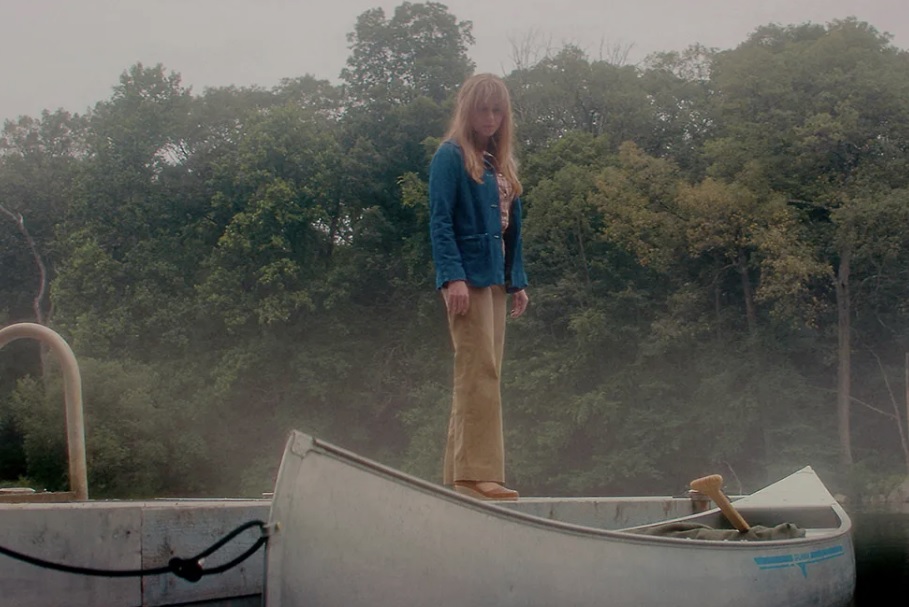
Grace, Jason’s young friend, is under the influence of LSD and attacks Barry and Claudette. Pamela becomes involved and ultimately finishes Claudette herself before protecting Grace and helping redirect blame elsewhere. So it isn’t quite accurate to say Pamela has been completely removed from the murder, but the series absolutely rewrites the event by making Grace responsible for initiating the attack rather than presenting the killings as Pamela’s revenge. The original film never explicitly states that Barry and Claudette were the exact counsellors neglecting Jason when he drowned the previous year, despite that becoming a common interpretation among fans, but their deaths have always belonged to the story of Pamela Voorhees and Camp Crystal Lake. Did that really need another killer inserted into it?
This is the danger with prequels to beloved horror properties. Writers understandably don’t want to spend eight episodes merely dramatising information fans already know, and Kane has approached the material as an expansion and reinvention rather than treating every previous detail as untouchable scripture. Creatively, that makes sense, but there is a difference between adding to mythology and rewriting its foundations. Tell us what Pamela did between Jason’s drowning and the original film. Give us relationships we never knew about. Show us Crystal Lake as a functioning community. Explore her grief, introduce new murders, create new characters and uncover tragedies we never knew occurred. There is an enormous amount of empty space available without changing the handful of events fans have carried with them for 46 years.
That is why Crystal Lake can be both enjoyable and frustrating. We liked it, and at times we really liked it. Cardellini is terrific, the period setting is beautifully realised, the gore delivers, the practical effects are frequently superb and seeing the world of Friday the 13th properly alive on screen again produces a nostalgic thrill that shouldn’t be underestimated after such a long absence. There is clearly affection for the franchise throughout the production, and enough works that we’ll happily return for more.

But Project Argonaut, the attempt to scientifically explain Jason’s resilience, the extensive reinvention of Pamela’s history and particularly the alteration of Barry and Claudette’s murders feel like answers to questions we weren’t asking. For anyone wondering whether this should now replace the films’ history in their head, our answer is simple: not in ours. We can happily treat Crystal Lake as its own interpretation of the legend, enjoy Cardellini’s Pamela, admire the kills and look forward to seeing where the series goes next, while keeping the original continuity exactly where it has always been.
When we put on Friday the 13th, Pamela Voorhees is still the grieving mother whose son drowned because the counsellors weren’t paying attention. There is no Bellflower Chemical in our version, no Project Argonaut and no requirement for Jason to have a scientific explanation for why he’s so extraordinarily difficult to kill. Sometimes a monster is scarier when you don’t know why he keeps getting back up, and sometimes a bloke in a hockey mask with a machete really is all you need.