Buddy Is the Surprise Indie Horror Hit of the Weekend as Killer Unicorn Smashes Box Office Expectations
Sometimes horror audiences make their intentions wonderfully clear. You can spend hundreds of millions of dollars building cinematic universes, resurrecting established franchises and attaching familiar names to familiar properties, or you can apparently put a gigantic bright-orange unicorn into a deranged children’s television programme and watch people turn up. Casper Kelly’s Buddy has emerged as one of 2026’s most unexpected independent horror successes, opening to an estimated $5.36 million from just 1,258 North American cinemas and comfortably outperforming its pre-release expectations. The film finished sixth at the domestic box office, with its opening reported at more than twice the roughly $2.5 million that had been projected.
That $5.36 million becomes considerably more impressive when the size of the release is taken into account. Buddy has recorded the biggest opening of 2026 for a film playing in fewer than 1,800 cinemas, while simultaneously producing some significant milestones for its distributors. It is Roadside Attractions’ biggest opening weekend since the pandemic and the second-biggest opening in the company’s history, behind I Can Only Imagine in 2018. For Saban Films, Buddy has gone one better, delivering the biggest opening weekend in the company’s 12-year history. For a film arriving on 1,258 screens rather than receiving the enormous rollout afforded to a major studio release, those are remarkable numbers.
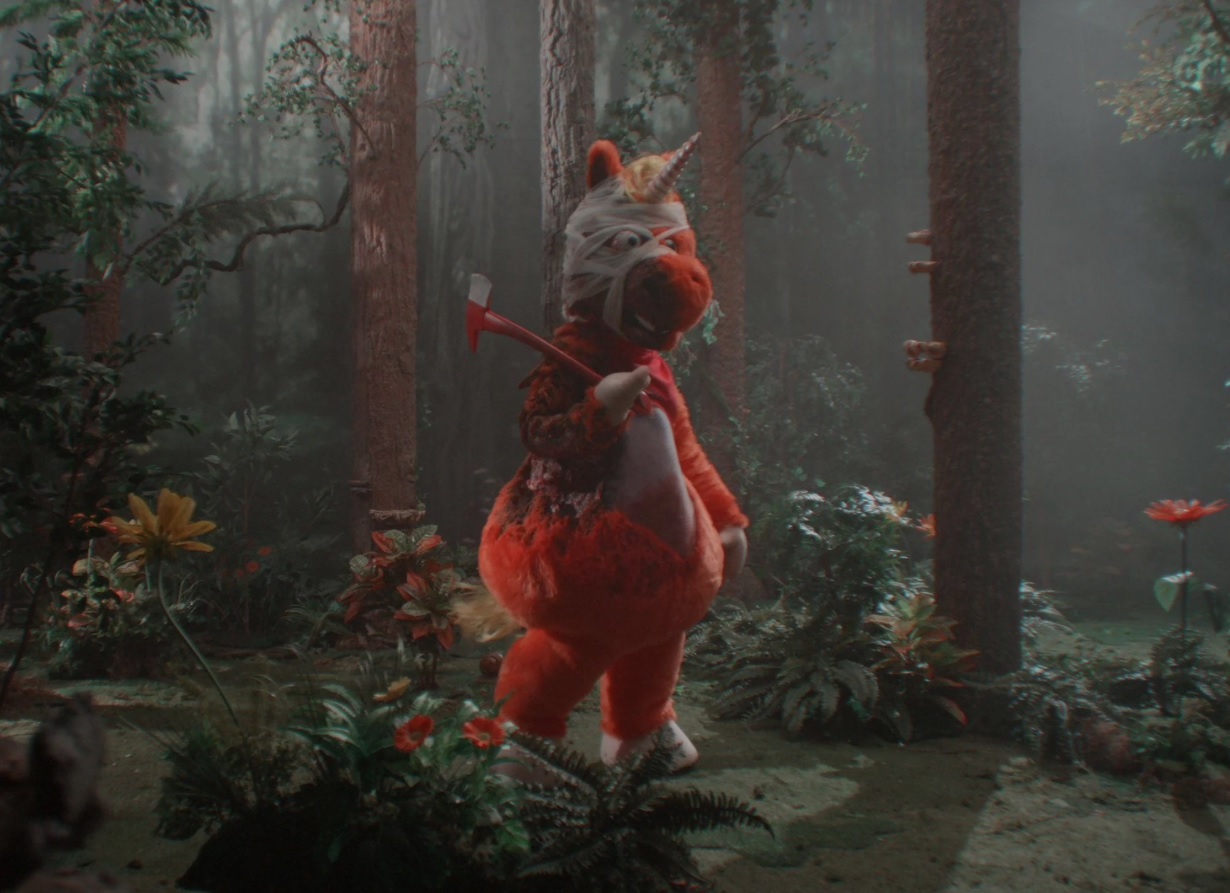
What makes the result particularly interesting is that Buddy wasn’t supposed to become one of the weekend’s major box-office stories. Expectations were substantially lower, and even a finish somewhere around its original projection would have represented a respectable result for an independently distributed horror film. Instead, the orange unicorn more than doubled that forecast and turned what might have been a modest genre opening into a genuine surprise hit. Independent horror has produced plenty of unexpected theatrical performers over the years, but Buddy has achieved something measurable rather than merely earning the vague and increasingly overused description of a “cult hit”: audiences actually bought enough tickets during its first weekend to break records for the companies releasing it.
From Sundance to a $5 Million Weekend
Buddy began its public life at the 2026 Sundance Film Festival, where it received its world premiere in January as part of the festival’s Midnight programme. The film was written and directed by Casper Kelly, with Jamie King sharing screenplay credit, and marked Kelly’s feature directorial debut after his previous work included the celebrated Adult Swim short Too Many Cooks. The Sundance cast announcement already gave the film considerably more star power than its wonderfully ridiculous premise might suggest, with Cristin Milioti, Delaney Quinn, Topher Grace, Keegan-Michael Key, Michael Shannon and Patton Oswalt among those involved.
Roadside Attractions and Saban Films later acquired North American distribution rights, with the theatrical release ultimately arriving on 28 August 2026. The basic idea behind the film is beautifully simple. It’s Buddy! is a fictional 1990s-style children’s television programme in which a group of youngsters sing, dance and learn lessons alongside Buddy, an enormous orange unicorn. Everything is relentlessly colourful and cheerful until one of the children refuses to participate. Buddy doesn’t take it particularly well, the apparently perfect television world begins to fall apart and the children discover that the lovable creature supposedly looking after them has a violent side.
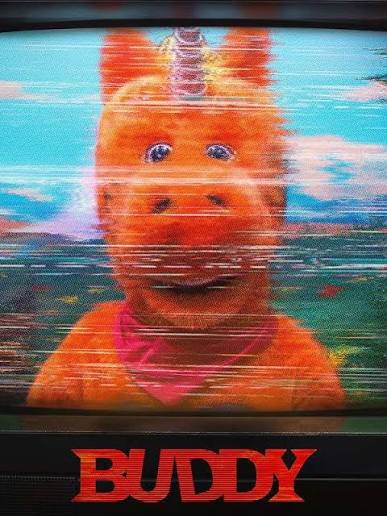
Kelly has openly discussed the influence of children’s television on the concept. The original pitch presented to him by BoulderLight Pictures essentially involved imagining a horror version of something like Barney, while Kelly subsequently revisited programmes including Barney & Friends, Pee-wee’s Playhouse, Blue’s Clues and The Doodlebops while developing his approach. Rather than simply turning Buddy into Barney with homicidal tendencies, Kelly and his collaborators worked to give the character his own identity, something voice actor Keegan-Michael Key has discussed when explaining how he approached the role.
Key has even revealed one particularly unexpected influence on his performance: Robert De Niro’s Dwight Hansen in the 1993 drama This Boy’s Life. Key explained that he wanted to ground Buddy’s behaviour rather than simply play him as somebody consciously behaving like a horror villain. That makes the character considerably stranger than the simple sight of a murderous orange unicorn might suggest, because Buddy continues behaving according to the rules and personality of his own peculiar universe even as everything around him becomes increasingly horrific.
A Surprisingly Impressive Cast
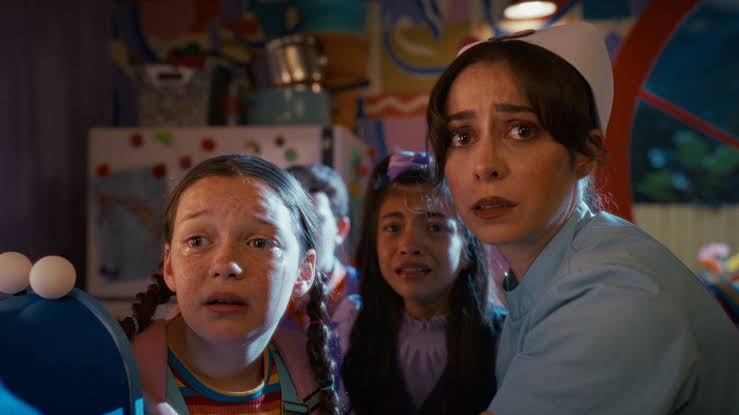
Cristin Milioti plays Grace, a woman whose story becomes connected to the mysterious children’s programme, while Topher Grace plays her husband Ben and Delaney Quinn plays Freddy. Keegan-Michael Key provides Buddy’s voice, with the film surrounding them with an unusually strong collection of performers for such an eccentric independent horror production. Michael Shannon and Patton Oswalt are also among the voice cast, while Clint Howard appears as George, an elderly cowboy associated with another children’s programme.
The film itself was produced by Low Spark Films and BoulderLight Pictures, with principal photography taking place in Northeast Ohio. Locations included Brooklyn, Solon and Burton, with much of the production centred around the Cleveland area. That independent production background makes the scale of its opening particularly notable: this wasn’t a major studio horror franchise arriving with thousands of screens and decades of brand recognition behind it. It was an original film built around a deeply peculiar concept which first had to persuade audiences that an orange unicorn called Buddy was worth being frightened of.
Buddy Had Already Become a Social Media Star
There was, however, evidence before release that something unusual was happening. The marketing campaign deliberately avoided relying on a conventional trailer and instead concentrated heavily on Buddy himself, releasing teasers and creating material designed to make the character feel as though he had escaped from his fictional television programme and wandered into the real world. By the film’s opening weekend, its social channels had accumulated more than 450,000 followers and more than 150 million views, an enormous level of online attention for a film receiving a comparatively limited theatrical release.
The campaign also took Buddy into public spaces, including appearances connected with San Diego Comic-Con and Times Square. Rather than attempting to sell audiences a complicated mythology, the marketing had an advantage that many films would kill for: Buddy himself is immediately recognisable. He’s huge. He’s orange. He’s a unicorn. And he looks like somebody designed a children’s television mascot before subsequently deciding that children had been happy for quite long enough. The humour there is ours, but the effectiveness of putting the character at the centre of the campaign can be seen in the extraordinary social numbers accumulated before release.
Roadside Attractions’ Howard Cohen and Eric d’Arbeloff and Saban Films’ Jonathan Saba and Shanan Becker said they had loved Buddy when they saw it at Sundance. In their statement following its theatrical success, they highlighted the imaginative worlds Kelly created using practical effects and said audiences were responding to the film’s unusual mixture of horror, comedy and thriller elements. They also revealed that there had originally been an expectation that the movie might be snapped up by a major studio following Sundance; when that didn’t happen, Roadside and Saban saw an opportunity. Judging purely by the opening-weekend numbers, it was an opportunity they were right to take.
Young Audiences Turn Out for Buddy
The audience breakdown is almost as interesting as the money. Exit polling reported following the opening shows that 83 per cent of Buddy’s audience was under the age of 35, while Hispanic moviegoers accounted for 37 per cent. Those figures don’t prove why people bought tickets, and it would be speculation to claim that younger audiences are suddenly abandoning established franchises in favour of original films, but they do tell us something concrete: Buddy found a particularly young audience during its opening weekend.
Its reception from critics has also been generally positive, although hardly unanimous. The film currently sits at 87 per cent positive from 100 critic reviews on Rotten Tomatoes, with an average rating of 7/10, while Metacritic has recorded a score of 67 from 22 critics, categorised as “generally favourable”. Individual reactions have ranged considerably: some critics have praised Kelly’s surreal collision of children’s television and horror, while others have argued that the central joke struggles to sustain a feature-length film. That difference of opinion hasn’t prevented audiences from turning up during its first weekend.
Another Good Weekend for Original Horror
It’s tempting to turn every successful independent horror release into evidence of some enormous shift in cinema-going habits, but one weekend isn’t enough to support that conclusion. What Buddy does provide is another concrete example of an original horror film finding a substantial theatrical audience without an enormous screen count. Its $5.36 million opening is not being called impressive simply because expectations were low: it has produced actual company records for Roadside Attractions and Saban Films and the strongest 2026 opening reported for a release on fewer than 1,800 screens.
What happens next will be important. Opening weekends can be driven by effective marketing and an enthusiastic core audience, while the second and third weekends reveal considerably more about word of mouth and a film’s theatrical staying power. There is therefore no sensible way of predicting from Sunday’s figures exactly where Buddy will finish its run. What we can say is that the film has already performed substantially better than expected, attracted an overwhelmingly under-35 opening audience and transformed a relatively small independent horror release into one of the weekend’s surprise box-office stories.
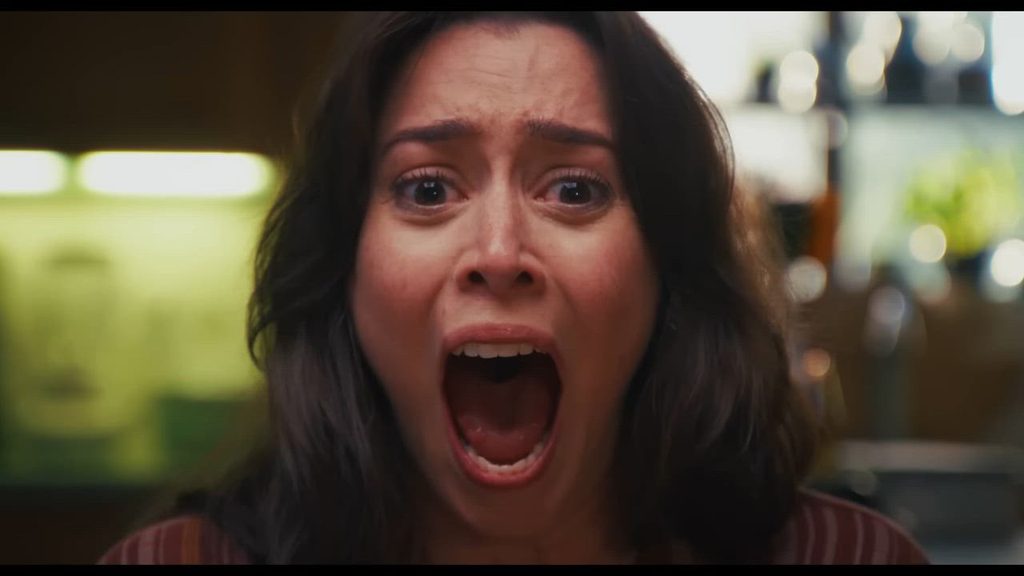
And perhaps that’s the nicest part of the whole thing. Buddy isn’t Part 7, a reboot, a legacy sequel or the latest resurrection of a horror character who was conclusively killed three films ago. It’s a Casper Kelly film about children trapped inside a nightmarish television programme controlled by an enormous orange unicorn. Nobody needed to know forty years of mythology before buying a ticket, and nobody needed a family tree explaining which previous instalments still count.
$5.36 million. 1,258 cinemas. More than double its projected opening. Roadside Attractions’ second-biggest debut ever. Saban Films’ biggest ever.
Whatever happens to Buddy from here, its opening weekend can already be called a surprise indie horror hit without exaggeration. Sometimes the strangest ideas really do connect with an audience.
And sometimes all you need is a massive orange unicorn with serious anger-management problems.