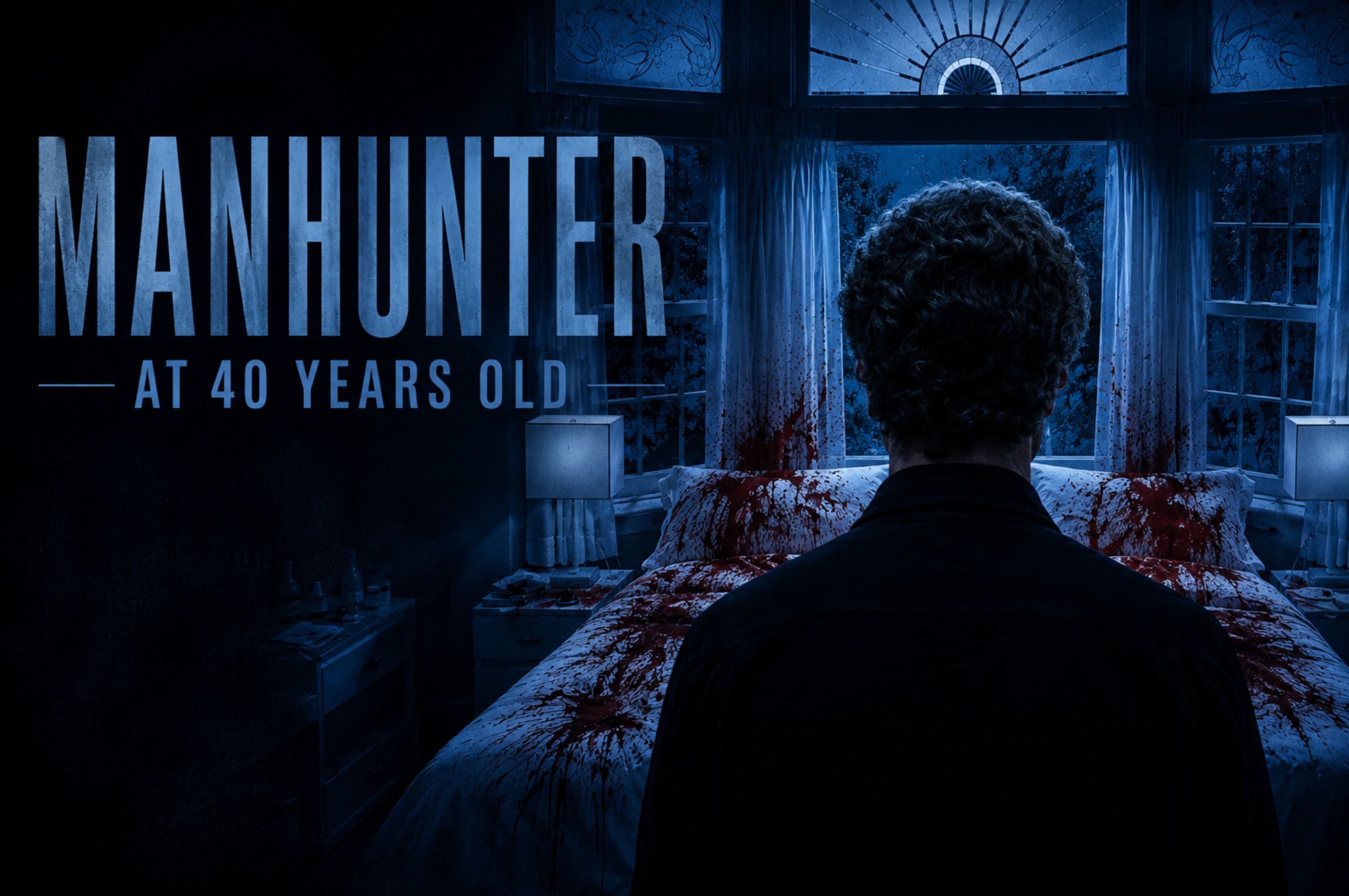
Manhunter at 40: Forty Years of Michael Mann’s Serial Killer Masterpiece
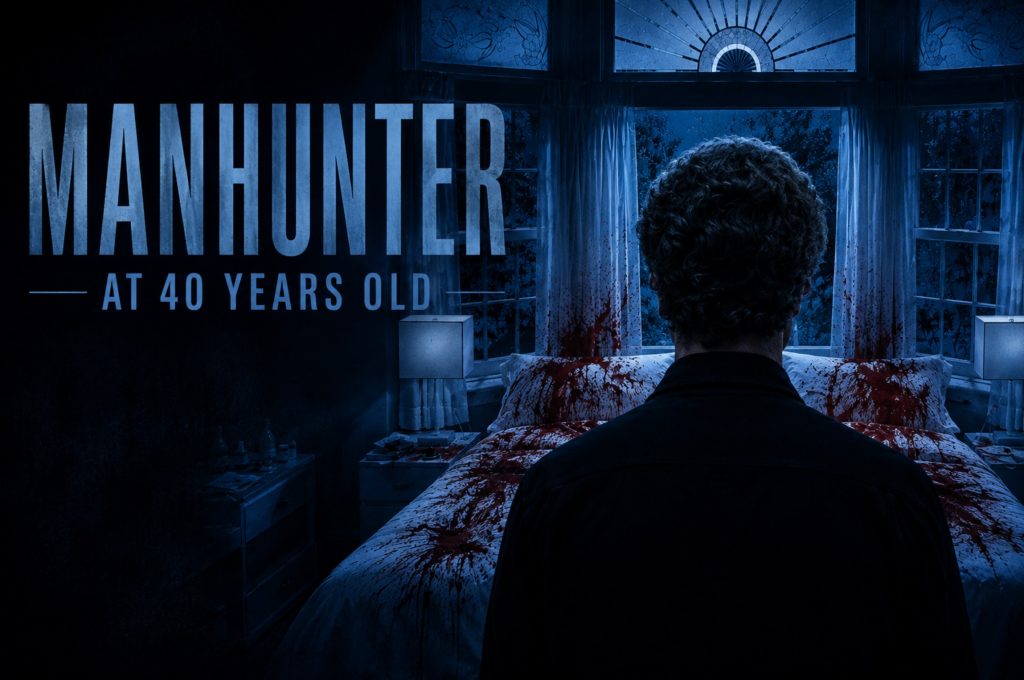
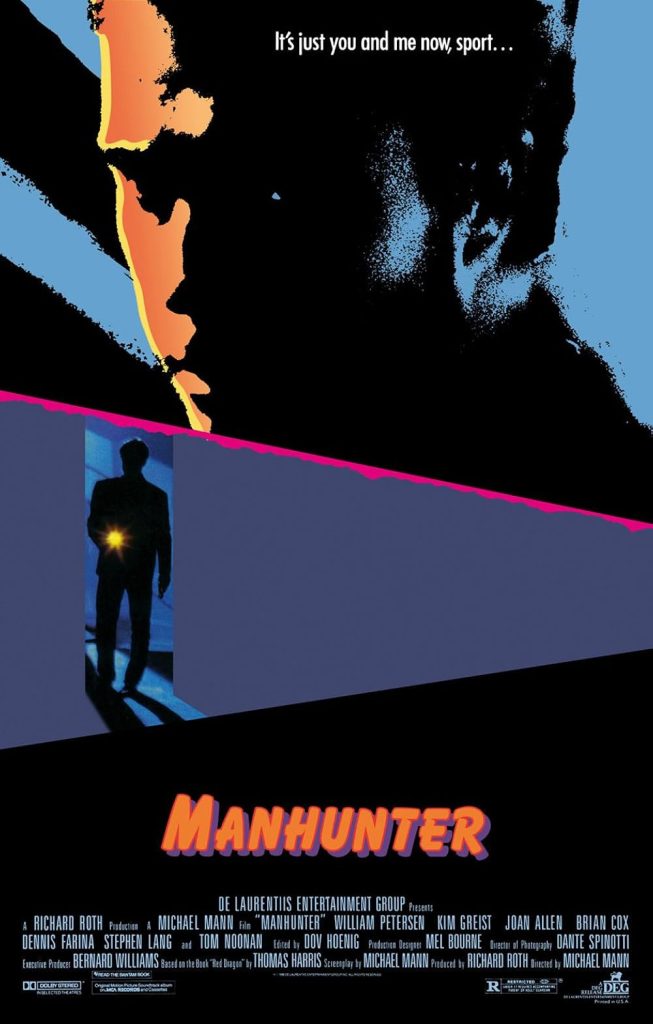
Forty years ago this week, on 15 August 1986, Manhunter opened in American cinemas. It arrived in 779 theatres, made a fairly underwhelming $2.2 million over its opening weekend and eventually crawled to just over $8.6 million at the domestic box office. Audiences had been given one of the greatest serial killer thrillers ever made and, for the most part, decided they had something better to do. Never mind. We got there eventually. Four decades later, Michael Mann’s adaptation of Thomas Harris’s Red Dragon is no longer simply the strange 1980s Hannibal Lecter film that came before The Silence of the Lambs. It is a masterpiece, and for us it sits in the holy trinity of serial killer cinema alongside The Silence of the Lambs and Se7en, with David Fincher’s Zodiac hovering immediately behind them looking slightly annoyed that a trinity can, by definition, only contain three films.
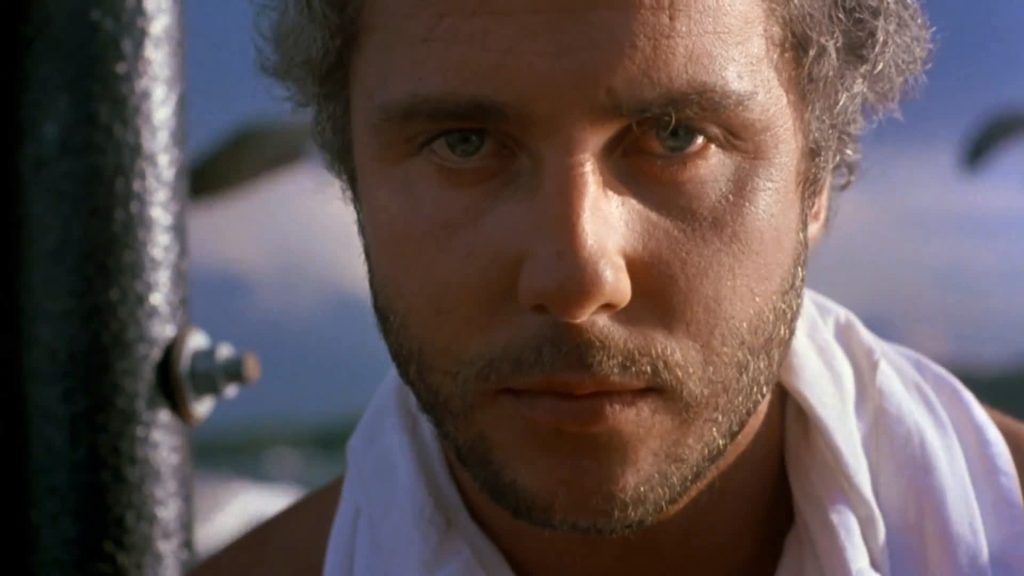
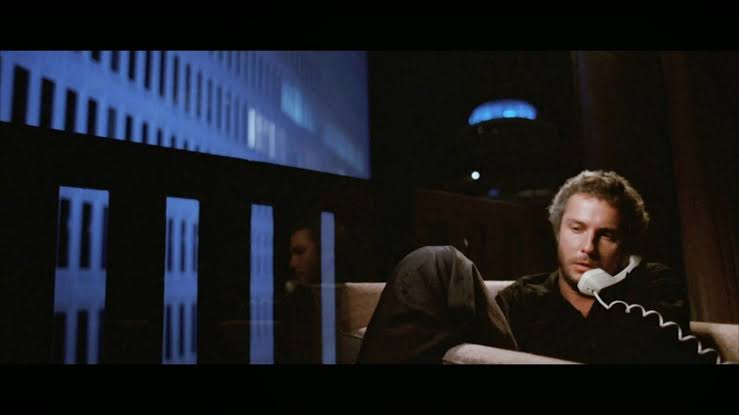
There have been countless serial killer films since, many with bigger budgets, nastier murders and increasingly elaborate psychopaths, but very few have crawled beneath the skin in quite the same way. Manhunter is frightening without constantly trying to frighten you, stylish without apologising for being stylish and intelligent without stopping every five minutes so somebody can explain the plot to the slowest person in the cinema. William Petersen is magnificent, Tom Noonan is terrifying, Brian Cox gives us the first screen Hannibal and Michael Mann directs the whole thing as though somebody has handed him the keys to 1986 and told him to make the most Michael Mann film imaginable. He does. There are blues. There are synths. There are enormous glass windows. There are people staring moodily towards oceans. There is enough immaculate interior design to make you wonder whether the FBI has a separate department devoted entirely to finding serial killers who own very expensive furniture.
And we bloody love it.
Before Hannibal Lecter Became Hannibal Lecter
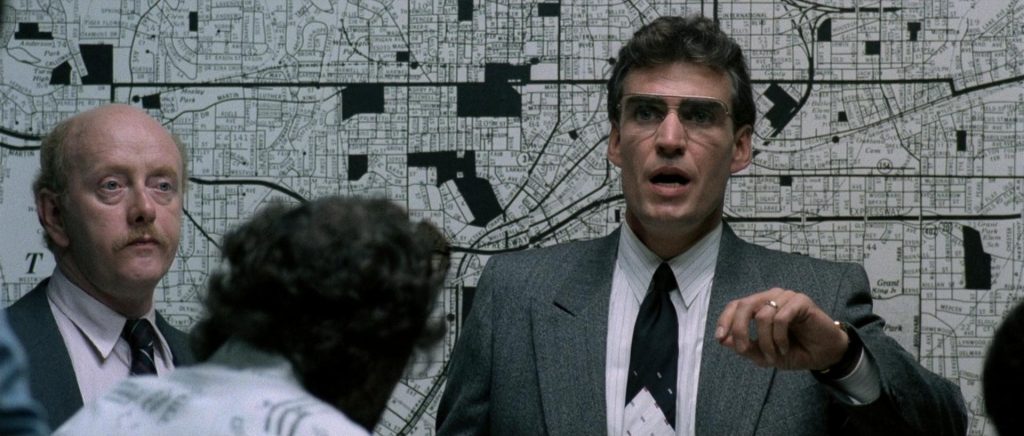
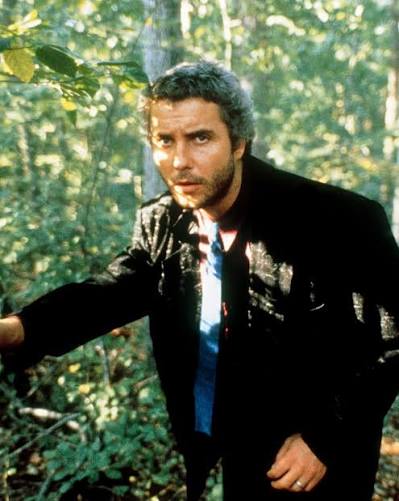
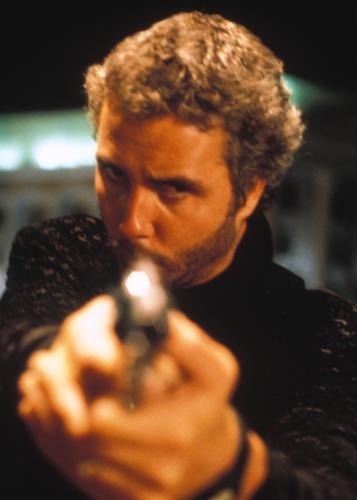
Manhunter was the first screen adaptation of Thomas Harris’s 1981 novel Red Dragon, although producer Dino De Laurentiis changed the title. William Petersen plays Will Graham, a former FBI profiler whose extraordinary ability to understand killers has come at an enormous psychological cost. Graham previously captured the brilliant psychiatrist and murderer Hannibal Lecktor, played here by Brian Cox, but the experience almost destroyed him. He has retreated to Florida with his wife Molly and son Kevin when his former boss Jack Crawford, played by Dennis Farina, comes asking for help with a new case.
Two families have been slaughtered inside their homes, and Crawford knows another full moon is approaching. The killer has been dubbed the Tooth Fairy, although we eventually meet him as Francis Dollarhyde, played with astonishing physical and psychological menace by Tom Noonan. Graham reluctantly agrees to investigate, beginning a pursuit that requires him to do the very thing he has tried to escape: enter the mind of a murderer and start thinking like him.
That idea would subsequently become enormously familiar. Profilers pursuing serial killers became a genre unto themselves, filling cinemas, television schedules and approximately 48,000 airport novels. In 1986, however, Mann’s approach felt disturbingly fresh. Graham isn’t Sherlock Holmes with an FBI badge, spotting an unusual fibre and immediately announcing that the killer is a 42 year old Sagittarius who drives a brown Ford Cortina and dislikes Tuesdays. His ability is intuitive, obsessive and dangerous. Every time Graham understands Dollarhyde a little better, there is a sense that he has surrendered another piece of himself to do it.
Walking Through the Leeds House
The film tells us exactly what kind of experience we’re getting almost immediately. After that deeply unsettling opening, with the killer’s point of view moving through a sleeping family’s home, Graham eventually enters the Leeds house and reconstructs what happened there. It remains one of the finest crime scene sequences ever filmed because Mann understands that the frightening thing isn’t necessarily seeing the murders. It is entering the place afterwards and imagining them.
Graham walks through an ordinary family home at night, retracing the killer’s movements and speaking through what he believes happened. There are no corpses waiting to jump up, no masked figure hiding behind a shower curtain and no cat suddenly flying out of a cupboard because the soundtrack needs something to go BANG. The violence has already happened, yet the house feels contaminated by it. Graham looks at bedrooms, windows, mirrors and points of entry, gradually transforming a familiar domestic environment into something threatening simply by explaining how another person saw it.
If you encountered Manhunter when you were young, that stuff could be genuinely frightening. Dollarhyde wasn’t Freddy Krueger, Jason Voorhees or some supernatural creature that required you to accidentally read the wrong Latin inscription before it could get you. He entered houses. He watched families. He chose people living perfectly ordinary lives and turned the safest place they knew into a crime scene. Suddenly that dark landing outside your bedroom looked slightly different after watching Manhunter, particularly when you were young enough to know you definitely shouldn’t have been watching it in the first place.
Petersen is superb throughout these sequences because he never presents Graham’s gift as a superpower. Graham is good at this because he can emotionally move towards people from whom everyone else instinctively retreats, and that terrifies him. He understands that there is something within himself capable of making that journey. Petersen plays the exhaustion, obsession and fear of that beautifully, and it gives Manhunter an emotional tension that the many profiler procedurals it helped inspire rarely matched.
“He’s Seen These Films”
Then comes the breakthrough, and it is one of our favourite detective revelations in any thriller.
Graham has the victims’ home movies. He watches them repeatedly because he understands that Dollarhyde must have seen something. The killer knows these homes too well. He arrives prepared. There has to be a connection between what Dollarhyde knows and what the families themselves have recorded. Then Graham finally realises that he and the murderer have been looking at exactly the same thing.
The films.
Dollarhyde has seen the home movies.
The beauty of the revelation is that it isn’t some absurd last minute clue dropped into the screenplay by divine intervention. The answer has been there all along, sitting inside material Graham has already examined. One of the crucial details involves a padlock visible in the footage but no longer present when the murders occur, despite Dollarhyde arriving prepared with bolt cutters. The killer isn’t magically familiar with these houses. He has watched the families’ home movies through his work processing film.
Petersen absolutely sells the moment. Graham’s brain suddenly accelerates as the pieces connect, and his excitement isn’t the triumphant swagger of a movie detective congratulating himself for being clever. There is urgency bordering on mania because another family is going to die unless he can turn that realisation into a name. The investigation finally has direction, and the film’s disparate details suddenly lock together.
It is brilliant writing, brilliant acting and brilliant filmmaking. No enormous explosion is required. A man realises somebody else has watched some home movies and it is absolutely riveting.
Tom Noonan: One Very Large Reason Not to Sleep
And then we have Tom Noonan.
Francis Dollarhyde could easily have become ridiculous. The character has an elaborate internal mythology, immense physical presence, terrible crimes behind him and an obsession with becoming something greater than himself. Played incorrectly, he could have turned into a collection of serial killer mannerisms searching for a performance.
Noonan instead makes him horribly human.
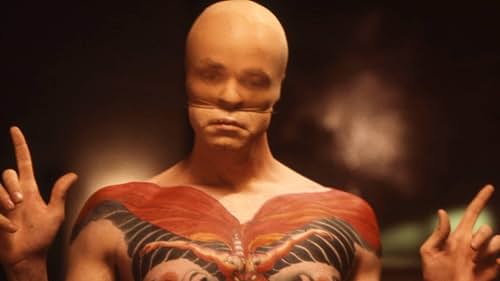
His size is obviously intimidating, but some of his most unsettling moments come from his awkwardness. His relationship with blind co-worker Reba McClane, wonderfully played by Joan Allen, exposes vulnerability without asking us to forgive what he is. For brief moments, we can see the possibility of a different Francis. That doesn’t diminish the horror of Dollarhyde; it makes him more disturbing because the monster isn’t occupying every second of his existence.
Noonan reportedly kept his distance from the actors whose characters were pursuing him, helping preserve the unease between them. Whatever the method, the result is extraordinary. There is something fundamentally uncomfortable about his presence even before violence enters the equation. You wouldn’t necessarily look at Dollarhyde across a room and immediately think “serial killer”, but you might suddenly remember that you’ve left the oven on and need to go home immediately.
The Freddy Lounds material is particularly effective. Stephen Lang makes Lounds so magnificently obnoxious that for much of his early screen time you would happily pay somebody to lock him in a cupboard. Then Dollarhyde gets hold of him and you immediately want the poor bastard returned safely to his newspaper desk where he can irritate everybody for another fifty years. That is how effectively Manhunter establishes the difference between somebody being unpleasant and somebody being genuinely terrifying.
Brian Cox Got There First
Five years before Anthony Hopkins turned Hannibal Lecter into a cultural phenomenon in The Silence of the Lambs, Brian Cox gave us Hannibal Lecktor.
The spelling is different, and so is the performance.
Hopkins is magnificent, of course. There is no need to diminish one performance to celebrate another. But Cox’s Lecktor is fascinating because he feels less like the grand theatrical Hannibal who later became an icon and more like somebody you might actually have the terrible misfortune of meeting. He’s intelligent, amused, observant and utterly poisonous. He doesn’t need to turn every sentence into a performance because he knows Graham is already frightened of him.
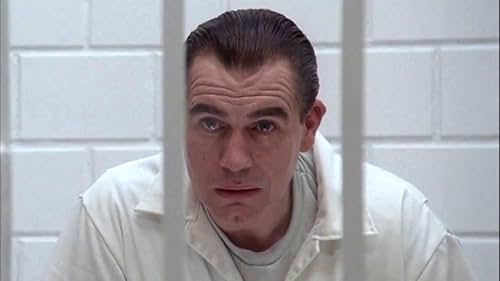
The scenes between Petersen and Cox work because both men understand what is really happening. Graham needs Lecktor because Lecktor can see the killer in a way conventional investigators cannot. Lecktor is interested in Graham because he can see how dangerously close Graham’s own thought processes move towards the people he hunts. Graham is effectively asking the devil for directions while desperately hoping the devil doesn’t notice they’re travelling along some of the same roads.
Later incarnations understandably gave Hannibal far more prominence, particularly after The Silence of the Lambs turned him into one of cinema’s most famous characters. Manhunter benefits enormously from restraint. Lecktor is not the main attraction. He is something Graham reluctantly visits because the alternative may be another murdered family.
Michael Mann Turns the 1980s Into Art
There is absolutely no mistaking when Manhunter was made, and thank God for that.
Mann doesn’t merely allow the film to look like the 1980s. He practically marinates it in the decade. Electric blues, cold whites, greens and violent bursts of colour dominate the frame. Architecture becomes psychological. Empty rooms feel enormous. Characters stand against oceans and windows while synthesizers pulse underneath them. Mann and cinematographer Dante Spinotti create a world that is simultaneously beautiful and deeply uneasy.
There was a period when calling a film “very 80s” could be intended as criticism. With Manhunter, it is one of the greatest compliments available. Why should a film made in 1986 desperately attempt to look as though it was made in some neutral cinematic dimension where nobody has ever heard a synthesizer? Mann’s stylisation gives the film an identity that the much more conventional 2002 Red Dragon adaptation can only dream about.
And since we’ve mentioned it, yes, Brett Ratner’s Red Dragon has an extraordinary cast. Edward Norton, Anthony Hopkins, Ralph Fiennes, Emily Watson, Harvey Keitel and Philip Seymour Hoffman are not exactly the people you’d expect to find performing in the village hall on a Thursday night. Yet the film itself is crushingly ordinary compared with Manhunter. Ratner takes the same basic material and makes a competent Hollywood thriller. Mann takes it and makes Manhunter. There is the difference.
We’re not going to pretend neutrality here. We think Manhunter is a million times better. Scientific testing of that exact figure remains ongoing.
Possibly the Greatest Serial Killer Soundtrack Ever?
The soundtrack deserves an article of its own. Michel Rubini, The Reds, Shriekback, The Prime Movers, Kitaro, Klaus Schulze, Red 7 and, most memorably, Iron Butterfly combine to create something that is completely inseparable from the film. Shriekback’s “This Big Hush” gives the Dollarhyde and Reba material an eerie romantic quality, while The Prime Movers’ “Strong as I Am” feels enormous against Mann’s images. The music doesn’t politely accompany scenes; it frequently dictates their emotional temperature.
Then Mann unleashes “In-A-Gadda-Da-Vida” during the climax and all bets are off.
It is a wonderfully audacious choice, an old psychedelic epic suddenly roaring across a brutally modern 1986 thriller as Graham races towards Dollarhyde’s house. The song’s rhythms, the editing, the breaking glass and Graham’s assault on the house fuse together until the climax feels less like a conventional shootout than an audiovisual breakdown. Mann’s use of the song was reportedly influenced by his correspondence with convicted murderer Dennis Wayne Wallace, who associated it with the woman he murdered, adding an unsettling real world connection to its use.
Some aspects of the soundtrack were criticised when the film was new because they were considered excessively tied to contemporary 1980s music. Forty years later, that’s rather like complaining that Blade Runner contains too much Vangelis. The music is part of Manhunter’s DNA, and subsequent decades have been extremely kind to its combination of synth atmosphere, post punk and carefully selected songs.
The Ending That Looks Like the Film Is Coming Apart
The climax is noticeably different from the controlled precision of much of what precedes it. Graham crashes through Dollarhyde’s window and the film suddenly becomes fragmented, violent and almost hallucinatory. Slow motion collides with accelerated movement, glass explodes everywhere and the meticulous procedural rhythm disappears.
There were practical production pressures around the ending, including a severely stretched production as shooting reached its final stages, but it would be misleading to say the climax looks the way it does simply because the production ran out of money. Mann and Spinotti deliberately shot the sequence using different camera speeds to create its fractured visual character. The financial and scheduling pressure may have contributed to the circumstances in which it was completed, but much of the unusual appearance of the sequence is a filmmaking choice rather than an accidental rescue job.
There are wonderful stories from the production, though, about just how improvised things became. By the climactic gunfight, much of the normal crew support was reportedly no longer available, leading to decidedly low tech solutions for effects. Joan Allen recalled Mann himself throwing glass containers during the sequence, and Petersen was actually injured by flying glass. There were also improvised blood effects involving ketchup. Somehow that knowledge makes us love the film even more. One of the most striking climaxes of 1980s thriller cinema, and somewhere behind the camera people are effectively going, “Has anyone got some ketchup?”
The result works precisely because the film seems to lose control at the same moment Graham does. For nearly two hours he has attempted to defeat Dollarhyde intellectually, assembling fragments, entering his psychology and following the evidence. Finally, he literally hurls himself through the barrier separating them.
It is messy. It is violent. It is beautiful.
It is Manhunter.
A Film That Was Waiting for the World to Catch Up
When Manhunter opened on 15 August 1986, it wasn’t a hit. Its $8.6 million domestic total was disappointing, and contemporary critical reaction was mixed. Yet the film refused to disappear, particularly after The Silence of the Lambs became a phenomenon and audiences began looking backwards towards the first screen appearance of Hannibal Lecter.
More importantly, cinema and television started moving towards Manhunter. Profiling, forensic investigation and the psychology of serial murder became fixtures of popular culture. Petersen himself would eventually become the face of CSI, while the DNA of Mann’s film can be felt throughout the serial killer thrillers and police procedurals that followed.
Then came The Silence of the Lambs. Then Se7en. Years later, Zodiac demonstrated just how extraordinary a serial killer film could be when the inability to solve the case becomes as psychologically destructive as the killer himself.
For us, though, the holy trinity remains Manhunter, The Silence of the Lambs and Se7en. Three very different films, three very different approaches and three masterpieces. Zodiac can sit immediately beside them because we’re not monsters.
Forty Years and Still Nothing Quite Like It
Perhaps the greatest compliment we can give Manhunter on its 40th anniversary is that it still feels like Manhunter.
Nobody successfully copied it.
They copied pieces of it. They copied the troubled profiler, the behavioural investigation, the serial killer psychology, the forensic detail, the desaturated crime scenes and the idea that catching monsters requires understanding them. But the complete combination of Petersen, Noonan, Cox, Spinotti, that soundtrack and Michael Mann at his most gloriously Michael Mann remains unique.
It can also still frighten you. Not necessarily through conventional scares, but through ideas: somebody entering your house while you’re asleep, somebody watching your family without your knowledge, somebody seeing private moments you thought belonged only to you. The technology has dated, but the violation hasn’t.
That is why those home movies remain so powerful. They’re warm, ordinary images of families enjoying themselves. To Graham they are evidence. To Dollarhyde they are something else entirely.
The same pictures become completely different depending upon who is watching.
That’s Manhunter.
Now Give Us That 4K
The anniversary has at least been properly recognised. Manhunter: The Final Cut, a new 4K restoration associated with Michael Mann’s definitive version of the film, began a limited US theatrical run on 24 July 2026, forty years after the original release. A physical edition is expected later this year, making this an extremely good time to rediscover the film or finally correct the embarrassing gap in your collection.
And when the 40th anniversary 4K set arrives around Christmas, buy the bloody thing.

Seriously. We spend a lot of time complaining when films disappear from streaming platforms, when boutique labels struggle, when studios stop releasing catalogue titles and when somebody announces that the only legal way to watch a favourite film is through a streaming service whose monthly subscription now costs roughly the GDP of Belgium. Physical media only survives if people actually buy it. A beautifully restored edition of Manhunter is exactly the sort of release we should support.
Put it on the shelf. Keep it there. Watch it until you can hear the opening notes of “Strong as I Am” in your sleep. Then make somebody younger watch it and enjoy the moment when they realise that the old 1986 film you’ve been banging on about for years is better than almost every serial killer thriller they’ve seen since.
Forty years ago, Manhunter arrived in American cinemas and audiences largely failed to recognise what they had been given. Time corrected that. Today it stands as one of Michael Mann’s greatest films, one of the finest Thomas Harris adaptations, one of the defining serial killer thrillers and, for our money, one of the greatest genre films of the 1980s.
We have loved Manhunter for forty years. We’ll happily love it for another forty, by which point somebody will presumably have adapted Red Dragon for the seventh time, Hannibal Lecter will be played by an artificial intelligence hologram and Brett Ratner’s version will still be nowhere near as good.
Happy 40th anniversary, Manhunter.