
Also Known As: Francis Dolarhyde, The Tooth Fairy, The Great Red Dragon
First Appearance: Red Dragon novel (1981)
Film Debut: Manhunter (1986)
Most Iconic Form: Muscular, shirtless, with dragon tattoos and a cleft lip, speaking to mirrors or portraits, fixated on transformation
Kill Count: 2 families (implied 7–8 victims), plus several attempted
Portrayed by: Tom Noonan (Manhunter, 1986), Ralph Fiennes (Red Dragon, 2002), Richard Armitage (Hannibal, TV series)
Manhunter (1986) – The Birth of the Tooth Fairy
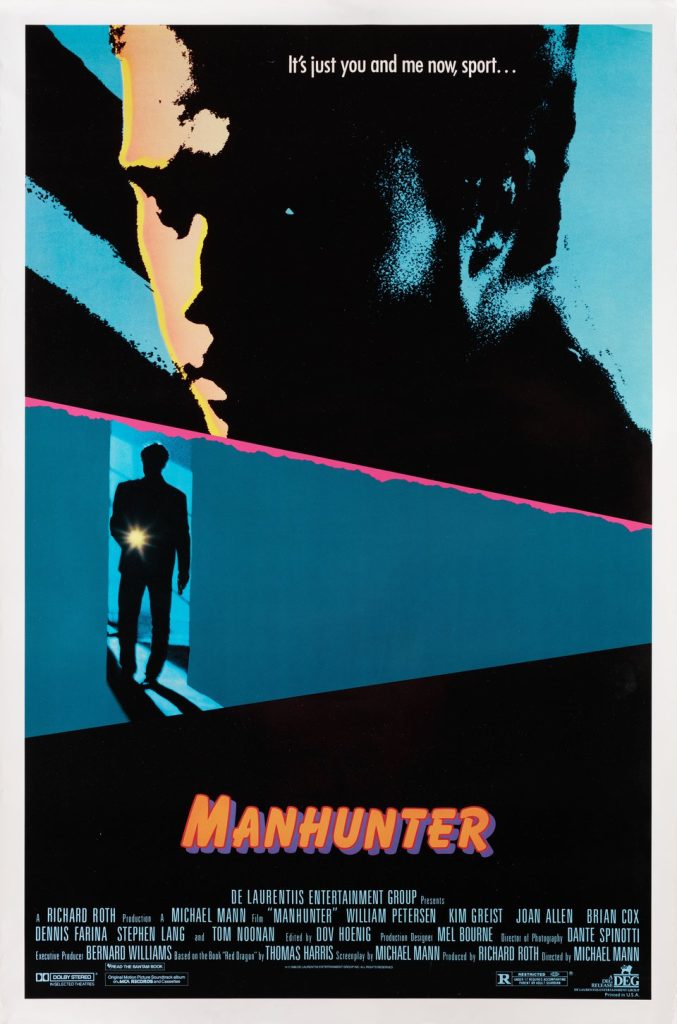
Directed by Michael Mann, Manhunter was the first on-screen adaptation of Thomas Harris’s Red Dragon, introducing Francis Dolarhyde as a methodical, psychologically fractured serial killer.
He stalks and murders entire families during full moons, choosing victims based on home videos and surveillance. He inserts broken mirrors into his victims’ eyes, symbolizing narcissism, control, and transformation.
Tom Noonan portrays Dolarhyde with terrifying calm and eerie sadness. His towering frame and soft-spoken voice make the violence feel even more intimate.
Key elements:
- Deeply disturbed by his cleft lip and childhood abuse
- Projects his identity onto William Blake’s painting, The Great Red Dragon and the Woman Clothed in Sun
- Believes he is becoming the Dragon, through blood and ritual
- Obsessively films himself and his victims
- Forms a connection with Reba McClane, a blind woman — his only tether to humanity
The film ends with Will Graham tracking him down. In this version, Dolarhyde is killed in a dramatic, final confrontation, shattered by his inability to reconcile love and monstrosity.
Red Dragon (2002) – The Duality of the Beast
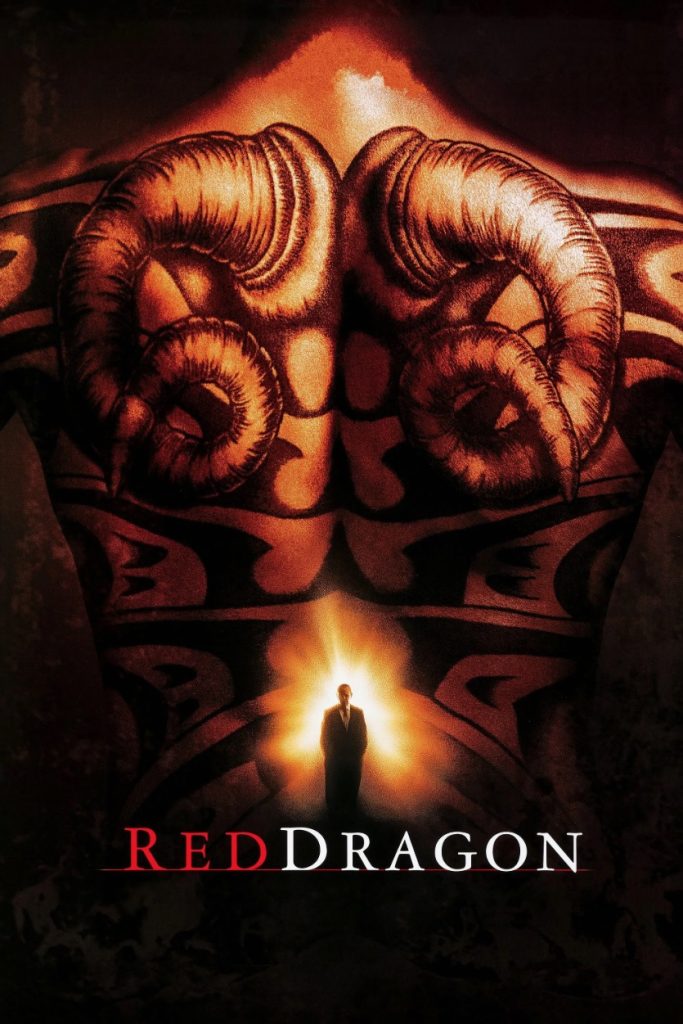
Directed by Brett Ratner, this film is a more faithful adaptation of Harris’s novel and serves as a prequel to The Silence of the Lambs. Ralph Fiennes portrays Dolarhyde with equal parts vulnerability and menace.
Here, Dolarhyde is a man-child trapped in his own trauma, yearning to become something greater than his suffering. He murders out of obsession, not joy — each act a step toward his “ascension” as the Dragon.
He:
- Works in a film lab, where he chooses victims through home videos
- Has his back tattooed with the Red Dragon painting
- Speaks to himself in mirrors and to the Dragon, which acts as his alter ego
- Is manipulated by Dr. Hannibal Lecter, who provides Graham’s address in hopes of triggering a final confrontation
His budding romance with Reba humanizes him — but also triggers his internal war. When he believes she’s betrayed him, he kills again, regressing into full madness. The film ends with his supposed death… only for him to reappear briefly, before being shot by Will Graham in front of his family.
Hannibal (TV Series, Season 3) – The Dragon Fully Unleashed
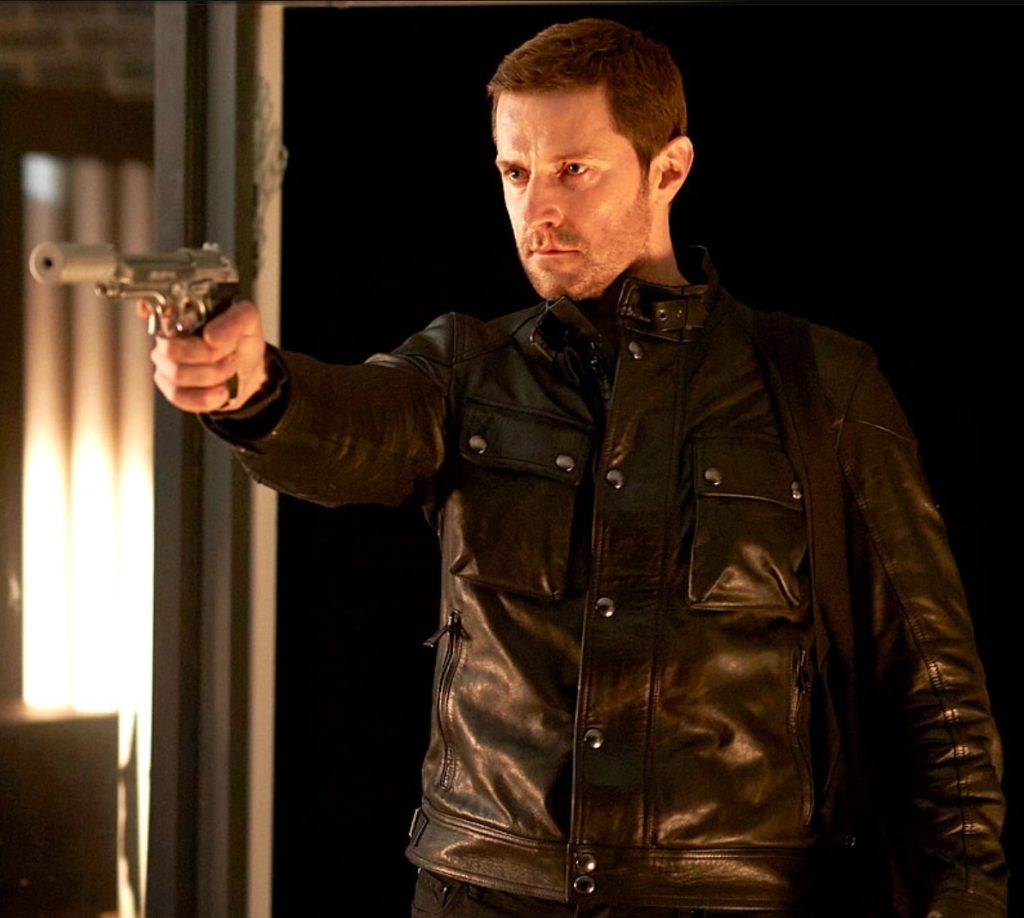
Richard Armitage plays a more abstract and slow-burn version of Dolarhyde. This version leans heavily into surrealism and psychological horror, emphasizing:
- His transformation rituals (eating painting fragments, postures, body language)
- Intimate, whispered conversations with the Dragon
- His complete rejection of his human self in favor of becoming a predator
The series goes deeper into body horror and symbolism, framing Dolarhyde not just as a killer — but as a monster in chrysalis.
Psychology & Behavior
- Suffers from disfigurement (cleft palate), severe childhood trauma, and schizophrenic delusions
- Views himself as weak and hideous — seeks transformation into a mythic, dominant being
- Murders families during lunar cycles to feed the Dragon’s power
- Keeps trophies: mirrors, recordings, pieces of victims
- Shows moments of kindness, especially with Reba — but always reverts to violence
- Dual personalities: Francis (repressed, ashamed) vs. The Dragon (dominant, violent)
- Highly intelligent, methodical, and physically strong
Cultural Impact
- Considered one of the most complex and tragic serial killers in fiction
- Preceded Hannibal Lecter on screen and in novel form
- The phrase “Do you see?” has become iconic among horror fans
- Inspired numerous homages in films, music videos, and even tattoos of the Red Dragon painting
- Compared often to:
- Norman Bates (trauma-based killer)
- Buffalo Bill (transformative violence)
- Patrick Bateman (delusions of grandeur)
- His duality — monster and man — is often cited in horror studies and criminal psychology media
League Placement
Francis Dolarhyde belongs in the Second Class Tier — deeply human, painfully broken, and haunting in his quiet devotion to darkness. He doesn’t want your fear. He wants your soul… to reflect the Dragon he has become.