Ranking the Child’s Play Films from Plastic Nightmares to Good Guy Greatness
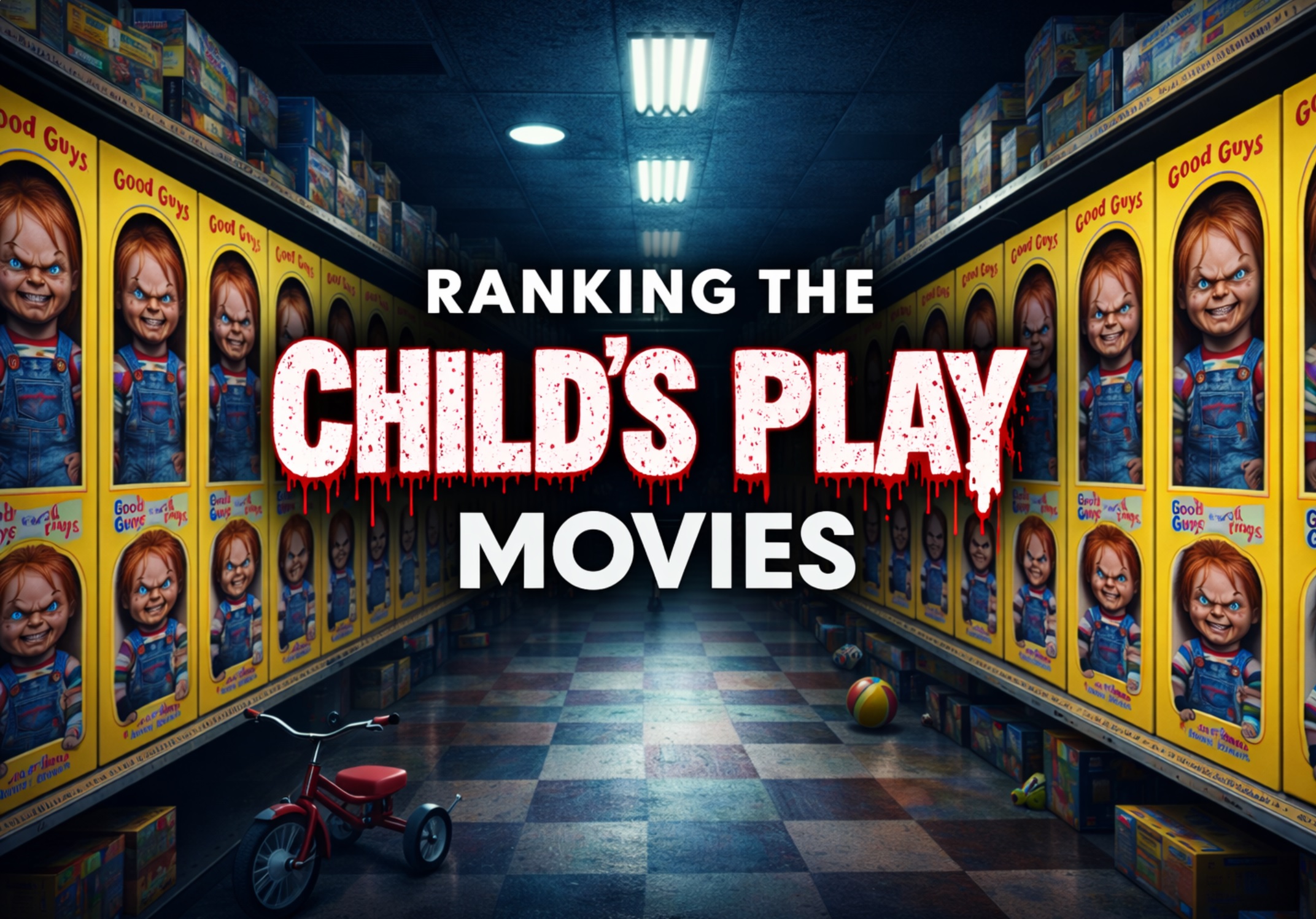
There are many horror villains who rely on size, strength, or supernatural presence to terrify their victims. Michael Myers is a silent giant. Jason Voorhees is basically an undead tank. Freddy Krueger stalks dreams with theatrical flair. And then there is Chucky. A three foot plastic doll with the voice of a chain smoking criminal who spends the better part of four decades screaming, swearing, stabbing, and somehow never running out of batteries.
What started in 1988 as a genuinely creepy high concept horror film about a serial killer transferring his soul into a Good Guy doll slowly evolved into one of the most bizarre, self aware, and consistently entertaining horror franchises ever made. Few series have swung so wildly in tone. One minute it is psychological terror involving voodoo and identity loss. The next it is a foul mouthed doll making sex jokes, getting married, having a child, and committing murder with the enthusiasm of someone who truly loves their job.
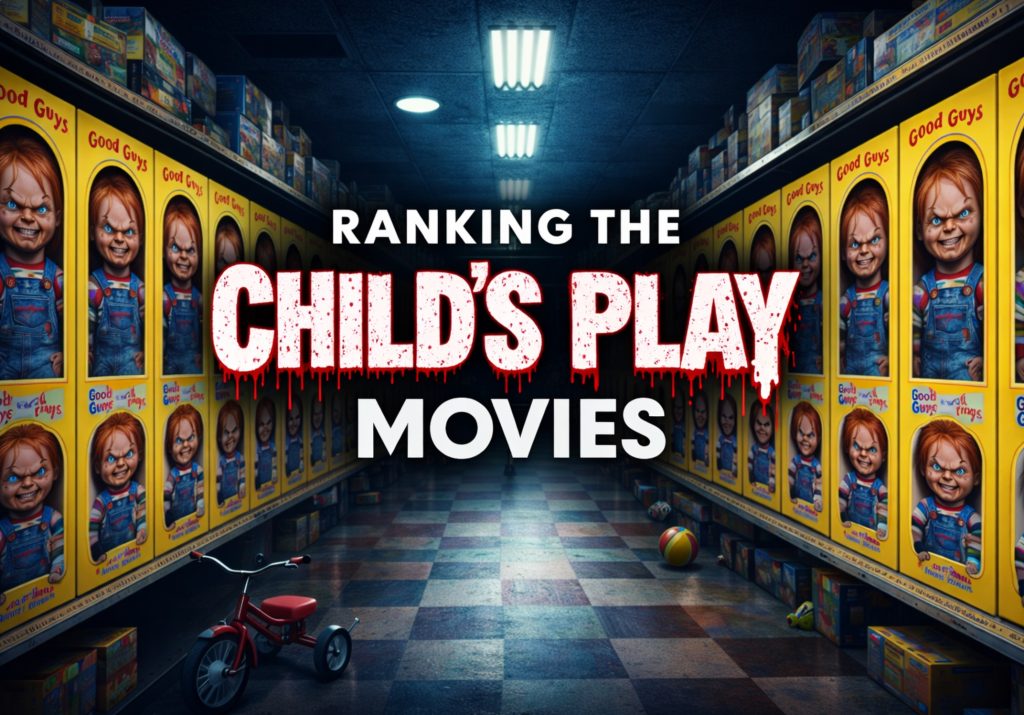
The Child’s Play films are a fascinating ride through changing horror trends, studio decisions, and one constant truth. Brad Dourif absolutely refusing to phone it in as the voice of Chucky. While other franchises reboot, retcon, and forget their roots, Chucky simply adapts, evolves, and keeps stabbing anyone unlucky enough to underestimate a toy. And let’s be honest, the biggest mystery of the entire series is not the voodoo. It is how nobody immediately punts the doll across the room the second he starts talking.
8. Seed of Chucky (2004)
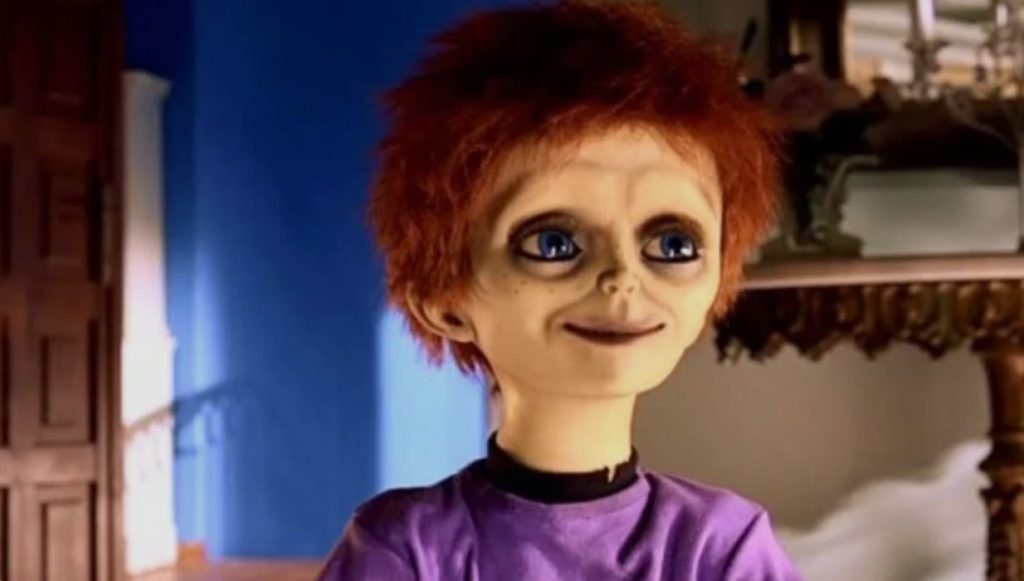
Ah yes. The point where the franchise looked itself in the mirror, laughed maniacally, and fully embraced absolute insanity. Seed of Chucky is not just a horror sequel. It is a full blown identity crisis wrapped in plastic limbs, Hollywood satire, and jokes that feel like they were written at three in the morning after a very strange brainstorming session.
Following the events of Bride of Chucky, our killer doll couple are resurrected in the most on brand way possible, on a movie set where a film about their own murders is being made. Yes, we have officially reached the meta era. Chucky and Tiffany are now fictional characters inside their own universe, and instead of returning to straightforward slasher territory, the film leans hard into comedy. Very hard. Possibly too hard.
Enter Glen, the child of Chucky and Tiffany, a doll who is traumatised, confused, and deeply uncomfortable with the idea of murder. Which, to be fair, is a perfectly reasonable reaction when your parents are homicidal maniacs trapped in plastic bodies. The film even dips into themes of identity and nature versus nurture, which is surprisingly ambitious for a movie that also features a killer doll masturbating to violent thoughts. Yes. That actually happens.
Jennifer Tilly plays a fictionalised version of herself, which is either genius or madness depending on how much patience you have. The plot revolves around Chucky and Tiffany attempting to possess human bodies again while navigating Hollywood egos, film sets, and the small issue of raising a child who does not want to stab people. It is less “slasher horror” and more “deranged horror sitcom with occasional murder.”
The kills are there, the humour is constant, and Brad Dourif still gives it his all as Chucky, proving once again that his voice work is the glue holding this entire franchise together. However, the tone is so exaggerated, so camp, and so deliberately ridiculous that any genuine sense of horror is completely thrown out the window and run over repeatedly.
That said, Seed of Chucky is not lazy. It knows exactly what it is doing. It is loud, self aware, and proudly stupid in a way that almost demands respect. But as a Child’s Play film, it drifts so far away from the creepy roots of the original that it barely feels like the same series anymore.
For some fans, it is a cult favourite. For others, it is the moment the franchise lost the plot entirely and decided that subtle terror should be replaced with outrageous comedy and doll family drama.
Bold. Bizarre. Occasionally funny. But easily the weakest entry when you remember this series once made a plastic doll genuinely terrifying.
7. Curse of Chucky (2013)
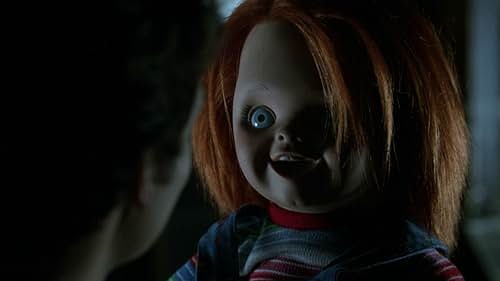
After the colourful chaos of Seed of Chucky, the franchise did something that genuinely shocked fans. It calmed down. It dimmed the lights. It stopped making sex jokes every five minutes and quietly crept back toward actual horror. On paper, this should have been the glorious return of terrifying Chucky. In reality, Curse of Chucky is more of a slow, gothic reset that works in parts and drags in others.
The film shifts the setting to a gloomy, isolated house and introduces Nica, a wheelchair bound protagonist played by Fiona Dourif, in a wonderfully on the nose bit of casting given her father has voiced Chucky since 1988. A mysterious Good Guy doll arrives by post, which is already a red flag. If a random doll turns up at your house unannounced, you do not bring it inside. You do not sit it at the table. You do not keep it around children. You throw it in the bin and move house immediately.
Naturally, nobody does this.
Instead, the doll sticks around as family tensions bubble beneath the surface. Relatives arrive. Old secrets begin to surface. And slowly, methodically, people start dying in ways that suggest the Good Guy doll is once again very much not a good guy. The slower pace is a deliberate attempt to bring back the suspense of the original film, with Chucky lurking in the background rather than constantly cracking jokes and sprinting around like a tiny maniac.
And to be fair, it works at times. The atmosphere is strong. The house setting adds a claustrophobic feel. There are some genuinely creepy moments involving Chucky subtly repositioning himself and watching events unfold like a plastic psychopath patiently waiting for his cue.
However, the film also suffers from being a bit too restrained for its own good. After the wild personality of the earlier sequels, this entry almost feels like it is apologising for them. The kills are less outrageous, the humour is toned down, and Chucky spends a surprising amount of time playing the long game instead of going full stab mode.
The biggest strength is the lore expansion. We finally get deeper connections to Charles Lee Ray’s past and his link to the family at the centre of the story, tying the narrative back into the original film in a way that feels more thoughtful than gimmicky. It is a smart move and shows that the creators still care about continuity rather than just rebooting everything for the sake of it.
Still, Curse of Chucky is not without its flaws. Some of the side characters exist purely to be victims, making deeply questionable decisions like it is written into their contracts. And once Chucky fully reveals himself, the shift from slow burn tension to more traditional franchise antics is slightly uneven.
It is not a bad film by any stretch. In fact, it deserves credit for dragging the series back from full parody territory and reminding audiences that Chucky can still be unsettling when he wants to be. But compared to the stronger entries, it feels more like a course correction than a fully confident return to form.
A respectable reset. Creepy in places. But still finding its footing after the plastic madness that came before.
6. Cult of Chucky (2017)
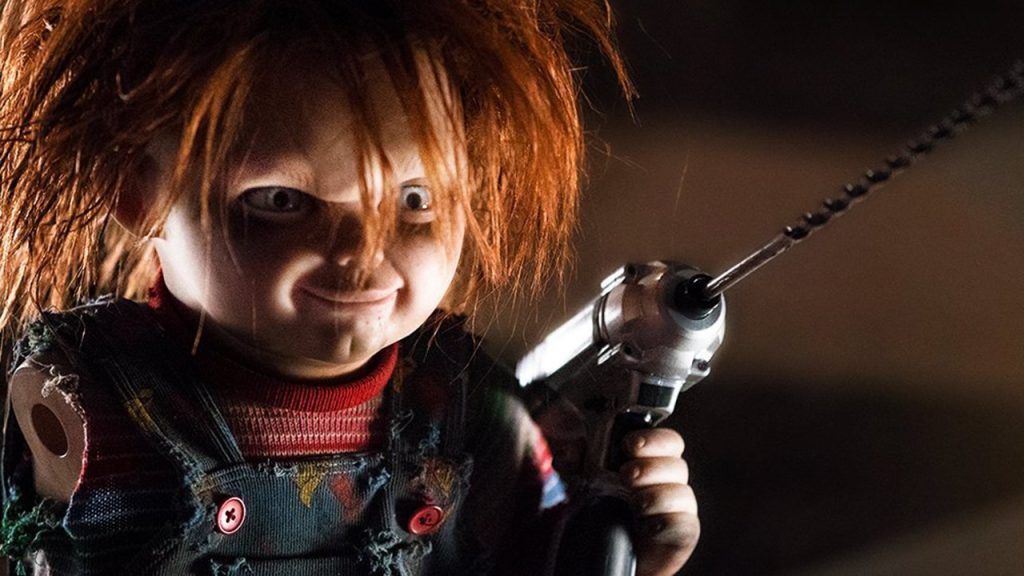
Just when you thought the franchise had steadied the ship with Curse of Chucky, along comes Cult of Chucky to politely push that ship back into complete and utter madness. But not the loud, campy, Jennifer Tilly chaos of the early 2000s. Oh no. This is quiet insanity. Clinical insanity. Literally. Because the majority of the film is set in a psychiatric hospital, which is arguably the worst possible place to put a possessed killer doll. Nobody will believe you. Ever.
Poor Nica returns, now institutionalised after the events of the previous film, and is being told by doctors that Chucky is just a delusion. Which is already hilarious when you consider this universe has documented cases of a serial killer transferring his soul into toys for decades. At some point, surely there is a police file somewhere titled “Haunted Doll Incidents, Ongoing.”
Enter Chucky. Again. Delivered in doll form as part of a therapy exercise, because the mental health plan in this facility apparently includes handing out replicas of a known murderer to vulnerable patients. Outstanding decision making. Truly top tier professionalism.
But here is where Cult of Chucky earns its title. There is not just one Chucky anymore. There are multiple Chuckys. A whole squad. A plastic army of foul mouthed psychopaths running around a mental institution like they are late for a stabbing convention. It is both ridiculous and weirdly impressive from a lore standpoint. Charles Lee Ray has basically unlocked the ability to copy and paste himself into multiple dolls, which raises the terrifying question of how nobody in this universe has simply banned Good Guy dolls entirely.
The tone is darker than the Bride and Seed era, but the absurdity is dialled right back up. One minute you have psychological horror and identity themes, the next you have multiple identical dolls arguing with each other like tiny murderous coworkers. Brad Dourif continues to absolutely carry the franchise on his vocal back, switching between sinister and sarcastic without missing a beat.
Then there is the returning legacy chaos. Andy Barclay is back, now a fully grown man who has spent his life traumatised by one very angry doll and has essentially dedicated his existence to Chucky containment. At one point he literally keeps a decapitated Chucky head locked away like a serial killer trophy. Sensible? Maybe. Completely unhinged? Definitely.
The film also leans heavily into mind games, possession twists, and psychological manipulation, which makes it feel smarter than some of the sillier entries, even while the core concept remains “multiple killer dolls terrorise a hospital.” It should not work. And yet, weirdly, it does.
That said, the logic remains gloriously questionable. Staff wander off alone. Patients ignore obvious danger. Nobody questions why the same doll keeps appearing in different places at suspicious times. If a doll in a psychiatric ward starts moving by itself, the correct response is not therapy. It is fire. Immediate fire.
Cult of Chucky is chaotic, inventive, and completely committed to its own nonsense mythology. It is darker, stranger, and far more entertaining than it has any right to be. Not quite top tier, but easily one of the most bonkers and enjoyable chapters in a franchise that refuses to die, much like Chucky himself.
5. Child’s Play (2019)
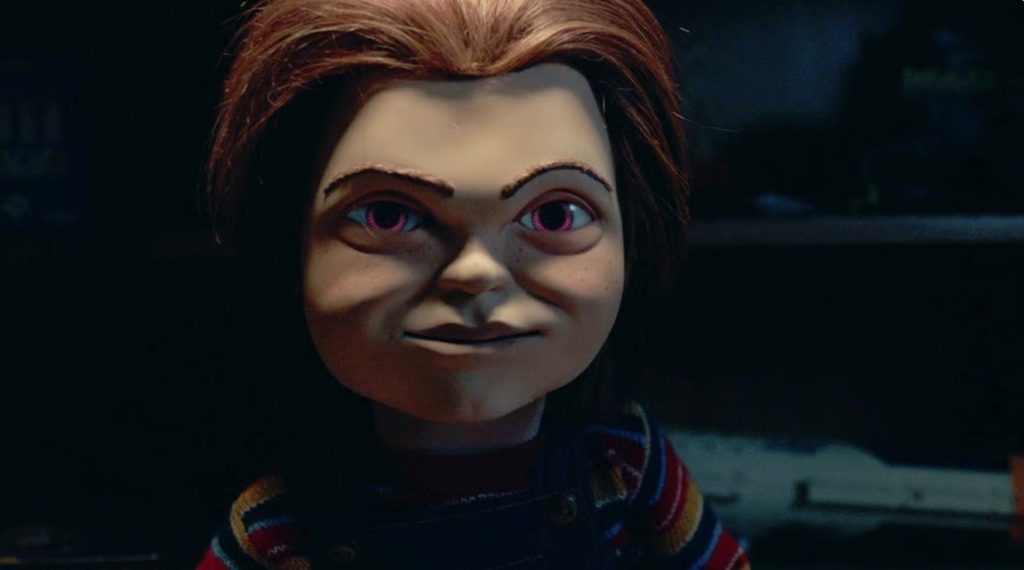
Ah yes. The remake. The reboot. The “what if we remove the voodoo, remove Charles Lee Ray, remove Brad Dourif, and replace supernatural terror with Bluetooth settings” experiment. Child’s Play (2019) is the film that looked at decades of established lore and said, “What if Chucky was not possessed by a serial killer, but instead was just… a faulty Alexa with anger issues.”
Instead of a Good Guy doll inhabited by the soul of Charles Lee Ray, we get a Buddi doll. A smart toy connected to the internet, smart homes, smart TVs, smart everything. Because nothing says horror like firmware updates. The origin story this time involves a disgruntled factory worker who disables the doll’s safety protocols before shipping it off. Which means the entire film’s chaos could have been avoided if someone had just done a basic quality control check.
Enter Andy, now a modern kid who receives the doll as a gift from his mum, who casually gives him a highly advanced AI companion like she is handing over a pair of socks. The doll bonds with Andy, learns behaviour, and slowly becomes obsessed with him. Which is actually a solid idea in theory. An AI that misunderstands human emotion and decides murder is a form of friendship. Disturbing. Clever even.
But then Chucky starts killing people because he has learned that bullying is bad and therefore the correct solution is dismemberment.
Mark Hamill voices Chucky this time, and to be fair, he does a great job. He plays the character less like a wisecracking maniac and more like a confused robot child slowly learning that violence solves problems. It is unsettling in a different way. Not iconic, but effective.
Still, for long time fans, the absence of Brad Dourif’s signature raspy menace is like watching a Halloween film without Michael Myers. Something just feels… off. This is not the foul mouthed, voodoo chanting psychopath we know. This is Siri if Siri snapped one day and decided your neighbour needed to go.
The kills are creative, the tech angle is interesting, and the film does lean into modern paranoia about smart devices watching us all the time. There is a genuinely amusing moment where Chucky begins controlling other electronics, essentially becoming a tiny plastic tech overlord. At one point he weaponises household gadgets like he is running a low budget Terminator uprising from a toy box.
However, the film also struggles with identity. It wants to be scary. It wants to be funny. It wants to be modern satire. It ends up being a bit of everything and not fully committing to any one tone. The emotional bond between Andy and Chucky is actually stronger than expected, but it also makes the violence feel strangely awkward rather than shocking.
And let us be honest. No matter how advanced the AI is, if a doll starts behaving suspiciously, staring at you in silence, and learning your daily routine, the correct response is not “let’s keep him around.” It is “bin, fire, and immediate therapy.”
Child’s Play (2019) is not a terrible remake. It is competently made, occasionally clever, and far better than many horror reboots. But as a Chucky film, it feels like a parallel universe spin off rather than a true continuation.
Good concept. Decent execution. But replacing voodoo with WiFi will never be as iconic as a tiny serial killer screaming obscenities while sprinting at your ankles with a knife.
4. Bride of Chucky (1998)
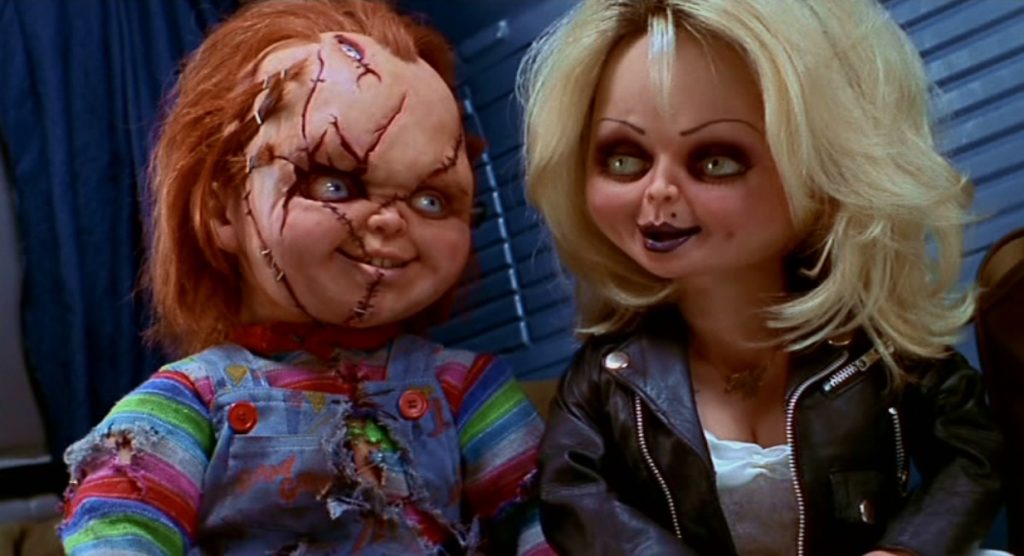
Now here is where the franchise looked at itself, took a long drag of a cigarette, and said, “You know what this series about a killer doll really needs? A goth girlfriend, road trip murders, and a full tonal identity crisis.”
Bride of Chucky is the exact moment the series stops pretending it is straight horror and fully leans into dark comedy, self awareness, and glorious chaos. Gone is the slow burn terror of the original. In its place is leather jackets, one liners, and Chucky becoming less of a lurking nightmare and more of a foul mouthed horror icon who clearly enjoys his job a little too much.
The film introduces Tiffany, the former girlfriend of Charles Lee Ray, played by Jennifer Tilly, who immediately steals the entire movie with a performance that is equal parts seductive, unhinged, and completely in on the joke. She resurrects Chucky using voodoo because apparently the lesson of the previous films is that bringing a serial killer back to life in doll form is a perfectly reasonable life choice.
Their relationship is essentially a toxic romcom, if romcoms involved electrocution, stabbing, and domestic arguments about murder etiquette. Watching Chucky and Tiffany bicker like a homicidal married couple is easily one of the most entertaining shifts the franchise ever made. At one point they argue about killing styles like they are debating interior design choices.
The plot itself is delightfully ridiculous. The dolls manipulate a pair of teenagers into driving them across America so they can retrieve a magical amulet and transfer their souls into human bodies. Which means the film is basically a road trip movie where the passengers in the back seat are two possessed dolls plotting murder while the humans remain blissfully unaware. How nobody notices two dolls constantly repositioning themselves, whispering, and committing crimes along the journey is a mystery that science may never solve.
Tonally, this is a massive pivot. The film openly references horror tropes, pokes fun at its own legacy, and embraces a campy style that would define the series for years. The kills are more creative, the dialogue is sharper, and Brad Dourif sounds like he is having the time of his life delivering insults in doll form. Which, frankly, he probably was.
And then there is the aesthetic. Chucky gets stitched back together with visible scars, giving him that iconic cracked and stapled look that somehow makes a plastic doll appear even more expressive. He looks less like a toy and more like a tiny, angry horror veteran who has seen things.
Of course, the horror purists were not thrilled. The film is far less scary than the earlier entries and far more comedic. But what it loses in dread, it gains in personality. Bride of Chucky understands that the concept of a killer doll can only stay terrifying for so long before audiences start laughing, so it leans into the absurdity instead of fighting it.
It is stylish, ridiculous, self aware, and endlessly quotable. Not the scariest entry by any stretch, but easily one of the most entertaining. The moment the franchise stopped trying to be subtle and instead proudly became the chaotic, murderous soap opera we secretly love.
3. Child’s Play 3 (1991)
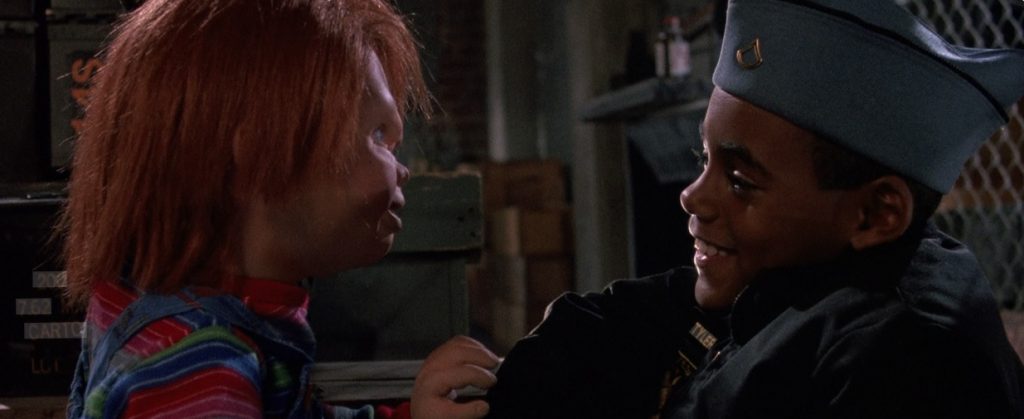
Ah, Child’s Play 3. The film that answers the question nobody was asking. What if a killer doll infiltrated a military academy. Because clearly the logical next step after terrorising homes and toy stores is to enter basic training and start stabbing cadets like a tiny plastic drill sergeant from hell.
Set eight years after the events of the second film, Andy Barclay is now a teenager and, traumatised beyond belief, has been shipped off to a military school. Which is a wonderfully compassionate solution. “This child has survived multiple attempted murders by a possessed doll.”
“Yes, let us send him somewhere strict, stressful, and full of authority figures who definitely will not believe him.”
Meanwhile, the Good Guy doll line is being relaunched because the company behind it has apparently learned absolutely nothing. Their factory literally restarts production using melted plastic from the original doll, accidentally reconstituting Chucky like some kind of cursed Happy Meal toy. Health and safety in this universe is not just bad, it is actively suicidal.
Once Chucky is back, he wastes no time mailing himself to Andy’s new location. Yes, the killer doll successfully uses the postal system. No disguise. No questions asked. Just a homicidal parcel arriving right on schedule. Royal Mail could never.
The military academy setting is actually a fun twist. Instead of suburban homes and toy stores, we now have drills, uniforms, obstacle courses, and a group of students who somehow fail to notice that a doll keeps appearing at crime scenes. Chucky roaming around a barracks like he is inspecting the troops is unintentionally hilarious. At this point he has less stealth and more “angry toddler with a knife energy.”
Brad Dourif, once again, absolutely carries the film vocally. His performance is as vicious and committed as ever, even when the script leans more into dark humour than outright horror. Chucky is snarkier, louder, and increasingly theatrical, edging closer to the wisecracking persona that would dominate later entries.
The kills are solid, if slightly less inventive than Child’s Play 2. The highlight is easily the carnival finale, which suddenly appears like the film remembered it needed a big set piece and threw Chucky into a haunted house ride for maximum chaos. It is ridiculous, colourful, and very on brand for a franchise that increasingly enjoys putting its villain in increasingly strange environments.
That said, the film does feel rushed. Released only a year after the second instalment, it lacks the tight suspense and atmosphere that made the earlier entries genuinely creepy. The military characters are mostly walking clichés, and some of the tension is replaced with faster pacing and louder confrontations.
Still, it is far from bad. It is entertaining, quotable, and has enough personality to avoid being forgettable. Plus, there is something deeply amusing about trained cadets being outwitted by a doll that can barely reach doorknobs.
Not as scary as the first two. Not as wild as what came later. But a very enjoyable middle chapter where Chucky proves that no environment is safe. Not homes. Not schools. And apparently not even military institutions trained for combat.
2. Child’s Play 2 (1990)
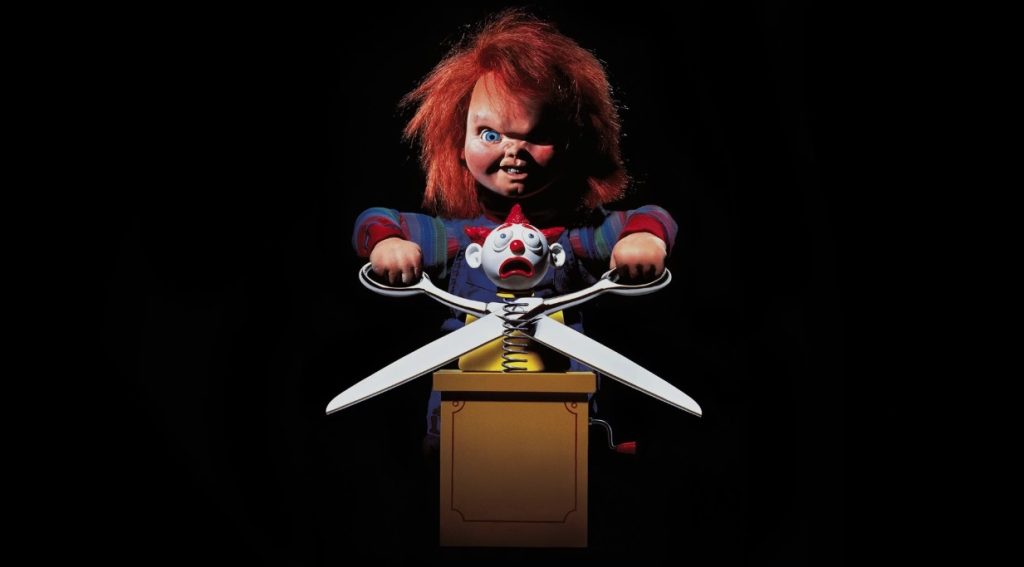
Now this is where the franchise said, “Right, you thought the first one was stressful? Let’s put the killer doll back into circulation and surround him with even more toys.” Because if there is one place you absolutely do not want a possessed murderer hiding, it is a factory that mass produces identical dolls. That is not a workplace. That is a serial killer’s paradise.
Child’s Play 2 picks up after the events of the original, with the toy company desperately trying to repair its reputation. Their solution to a doll being involved in multiple murders is not to quietly discontinue the product line. Oh no. It is to reconstruct the exact same doll from the evidence remains and relaunch the Good Guy brand like nothing ever happened. Corporate denial at its absolute finest. If a product line is linked to homicide, maybe do not rebuild it piece by piece in a dark warehouse full of sparks and ominous lighting.
Naturally, this process resurrects Chucky. Again. Because melting down cursed plastic and reassembling it is apparently the voodoo equivalent of hitting a reset button on evil.
Meanwhile, poor Andy Barclay is now in foster care after the trauma of the first film, and what does the system do? Place him in another home with another Good Guy doll. At this point, Andy should be legally allowed to scream the second he sees any toy with freckles and overalls. Instead, adults once again refuse to believe him, despite a literal trail of bodies linked to the same doll model. The level of adult incompetence in this franchise could fill an entire psychology textbook.
Chucky in this film is at his absolute peak as a horror villain. Still creepy. Still menacing. But now far more aggressive and confident. He is not just hiding in shadows anymore. He is sprinting, attacking, insulting, and generally behaving like a tiny psychopath with a personal vendetta. Brad Dourif’s performance is phenomenal, balancing genuine menace with just enough dark humour to make Chucky endlessly watchable.
The setting shift to a foster home and eventually the toy factory is genius. The idea of Chucky blending in with dozens of identical dolls is genuinely unsettling. One minute you are looking at a harmless toy display. The next you are wondering which one is about to swear at you and attempt murder. It taps directly into that childhood fear of toys coming to life when you are not looking.
The third act inside the factory is easily one of the best finales in the entire franchise. Conveyor belts, mechanical equipment, molten plastic, and a full blown battle between a traumatised child and an increasingly deranged doll. It is creative, tense, and gloriously chaotic. Watching Chucky get progressively more damaged and furious as the fight escalates is both intense and oddly satisfying.
There are also small touches that elevate the film. The foster sister Kyle is a strong addition, bringing attitude and realism to the chaos, and the pacing is far tighter than the first film. It wastes very little time and keeps the tension rolling once Chucky is back in play.
Most importantly, Child’s Play 2 manages the rare sequel trick of being bigger without losing what made the original work. It is scarier, funnier, and more inventive, while still treating Chucky as a genuine threat rather than a punchline.
If the first film made you afraid of a doll, this one made you afraid of an entire toy aisle. And honestly, after watching Chucky casually navigate a factory full of his own duplicates like a homicidal manager doing quality control, that fear feels completely justified.
1. Child’s Play (1988)
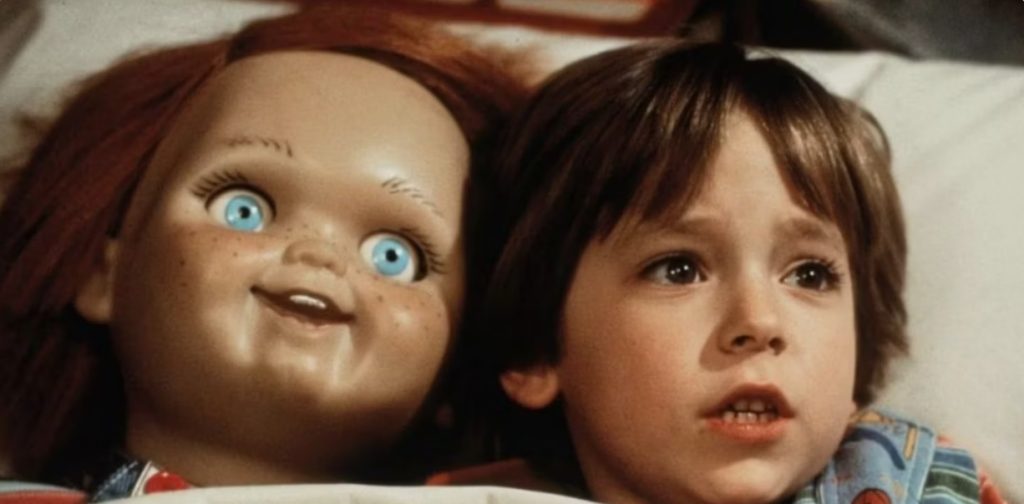
And here we are. The original. The one that started it all. The film that somehow managed to make a freckled, ginger, three foot plastic doll one of the most iconic horror villains of all time. Not a demon the size of a house. Not an unstoppable masked giant. A toy. A literal toy you could win in a fairground and carry home in a plastic bag. And yet, for an entire generation, this film made people side eye every doll in the room like it was plotting something.
Directed by Tom Holland and written by Don Mancini, Child’s Play plays it far more seriously than what the franchise would eventually become. This is not camp. This is not comedy chaos. This is a slow burn psychological horror film where the idea itself does most of the heavy lifting. A serial killer, Charles Lee Ray, transfers his soul into a Good Guy doll using voodoo as he dies. Already a wonderfully ridiculous premise. But the film sells it with such sincerity that you completely buy into the madness.
The brilliance of the first film is restraint. Chucky does not immediately start sprinting around shouting insults and stabbing everyone in sight. For a large portion of the runtime, he is just… there. Watching. Sitting silently. Being handed around like a normal toy while the audience knows full well that inside that plastic shell is a homicidal maniac with unfinished business. It is genuinely unsettling.
Poor Andy Barclay receives the doll as a birthday present from his mother, who unknowingly buys it from a shady street vendor because it is a bargain. Which is already a red flag. If a toy is being sold out of a coat on the street by a man who looks like he has definitely seen some things, you do not buy it for your child. You run. Immediately.
Brad Dourif’s performance as Chucky is nothing short of legendary. The moment the doll finally reveals himself and that sweet Good Guy voice drops into a snarling, foul mouthed tirade is one of horror’s greatest character introductions. The switch from innocent toy to raging psychopath is both shocking and darkly hilarious. From that point on, Chucky is not just a gimmick. He is a character. Angry. sarcastic. violent. and absolutely determined to survive.
What makes the film especially effective is how nobody believes Andy. Of course they do not. “The doll did it” is not exactly a strong courtroom defence. Watching adults dismiss him while the body count rises adds a layer of frustration that makes the tension even stronger. You are screaming internally for someone, anyone, to just throw the doll in a fireplace and be done with it.
The horror also comes from how grounded everything feels. The stalking. The manipulation. The slow realisation that Chucky is becoming more human the longer he stays in the doll body. It is not just a slasher film. It is a ticking clock story where the villain is literally racing against time to escape plastic imprisonment.
And when the film finally lets loose, it does so brilliantly. The apartment chase, the fire, the final confrontation, and Chucky becoming increasingly damaged and unhinged all build to a chaotic and satisfying finale. Seeing this tiny villain refuse to stay down no matter how many times he is burned, shot, or dismembered is both terrifying and weirdly impressive. The man has commitment.
Most importantly, Child’s Play achieves something the sequels gradually moved away from. It is actually scary. Properly scary. Not just funny. Not just entertaining. Genuinely creepy. It understands that the core idea is inherently disturbing and leans into it instead of winking at the audience.
Nearly four decades later, it still holds up as the best entry in the franchise by a comfortable margin. Smart, tense, creative, and anchored by one of the greatest horror voice performances of all time.
The others gave us chaos, comedy, and killer doll soap opera madness.
But this one gave us Chucky. And that alone makes it number one.