The Monkey (2025) Beats Its Way Into the Third Class Tier
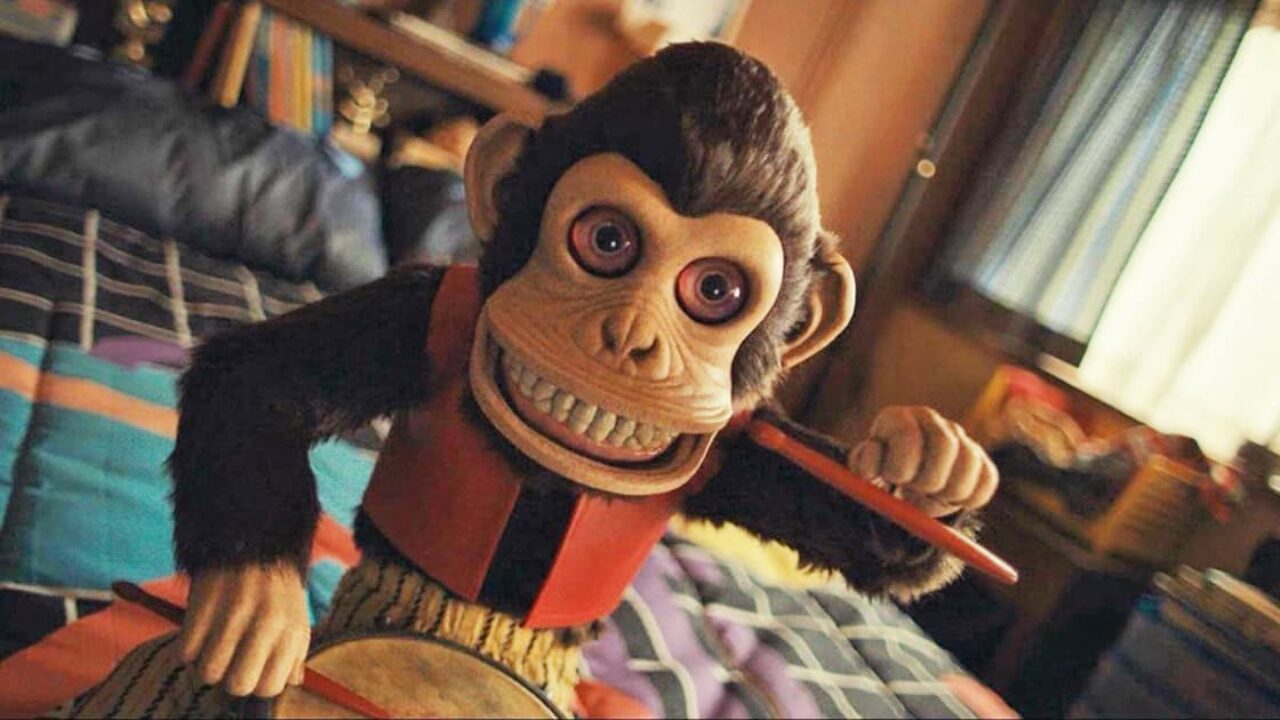
Every so often, a new horror “killer” arrives who completely breaks the traditional rulebook. No mask. No knife. No elaborate stalking sequences. No heavy breathing behind a wardrobe door. Just… a toy. Sitting there. Waiting. Judging. Drumming.
And now, officially, that toy has earned its place.
The cursed wind-up toy from The Monkey (2025) has been inducted into the Third Class Tier of the Hall of Killers, and honestly, it may be one of the most uniquely unhinged entries we have ever added to the roster. Not because it is the most physically intimidating. Not because it racks up kills in a traditional slasher sense. But because it weaponises sheer, chaotic inevitability.
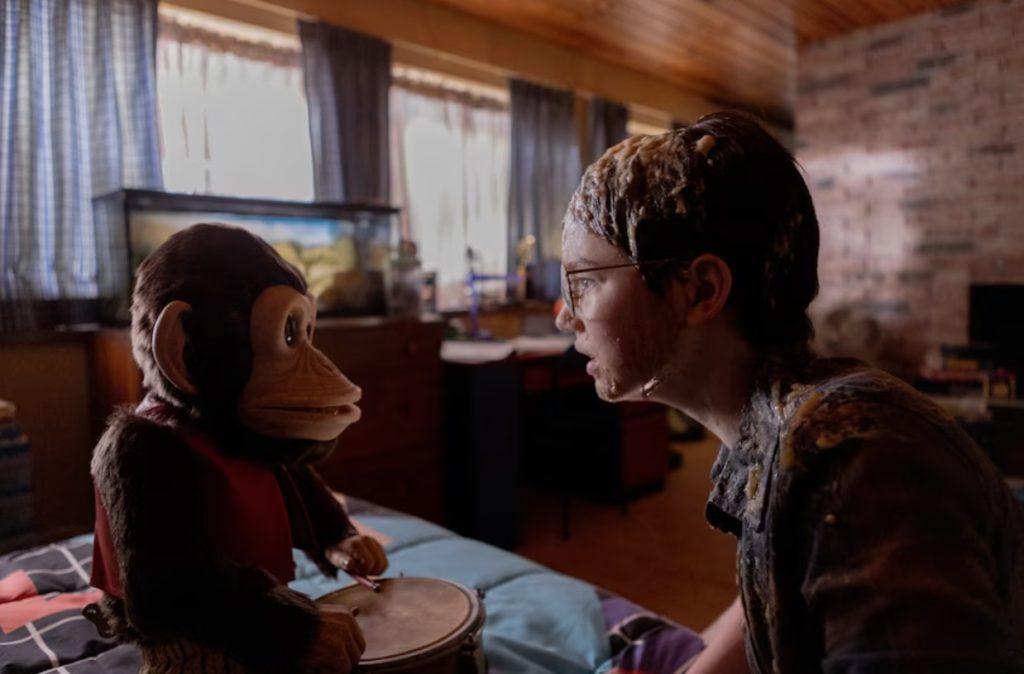
Directed and written by Osgood Perkins and based on Stephen King’s 1980 short story, The Monkey is a 2025 American comedy horror film starring Theo James in a dual role as twin brothers Hal and Bill Shelburn. Their lives are repeatedly derailed by a cursed drum-playing monkey toy that causes random and often grotesque accidental deaths whenever its key is wound. Also starring Tatiana Maslany, Christian Convery, Colin O’Brien, Rohan Campbell, Sarah Levy, Adam Scott, and Elijah Wood, the film blends pitch-black humour with extreme, deliberately absurd violence.
Released in the United States on February 21, 2025 by Neon, the film was produced by James Wan alongside Dave Caplan, Brian Kavanaugh-Jones, and Chris Ferguson, and went on to gross $68.9 million worldwide against a modest $10–11 million budget. Critically, it received generally positive reviews, with many praising Perkins’ willingness to embrace dark comedy and outrageous gore rather than play the concept completely straight.
Now, let’s address the drum-banging elephant in the room.
Is The Monkey technically a “killer”?
Yes.
And no.
And also absolutely yes.
Unlike traditional Hall of Killers icons who actively pursue their victims, The Monkey operates more like a supernatural domino effect. Wind the key, the monkey drums, and the universe itself decides somebody is about to have the worst day imaginable. The result is a string of wildly unpredictable deaths that range from freak accidents to full-blown catastrophic chain reactions. One of the film’s earliest sequences alone establishes the tone: the toy drums, and a ridiculous chain of events leads to a gruesome death that feels both shocking and darkly comedic. That balance becomes the film’s entire identity.
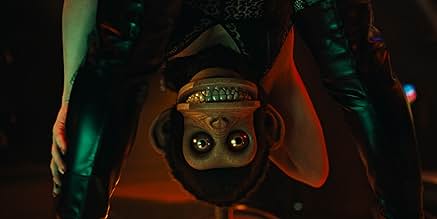
Within the narrative, the toy is discovered among the belongings of Captain Petey Shelburn before passing down to his twin sons, Hal and Bill. As children, they quickly learn that winding the monkey does not target specific victims. Instead, it kills at random, often in brutally ironic fashion. This is key to why the character (or object, technically) earns a Third Class placement rather than a higher tier. The Monkey lacks intent, strategy, or personal vendetta. It is not hunting. It is not planning. It is simply… functioning. Like a cursed machine powered by cosmic bad luck and extremely poor decision-making by humans who absolutely should know better than to keep winding it.
What makes the monkey especially memorable from a horror perspective is how Perkins intentionally leaned into comedic extremity. In adapting Stephen King’s story, the film famously replaces the original cymbal-banging toy with a drum-playing version, a creative change that also gave the character a more distinctive cinematic identity. Perkins has openly stated that the film’s humour and excessive gore were designed to highlight the absurd randomness of death rather than present a traditionally serious possessed-toy narrative.
And it works.
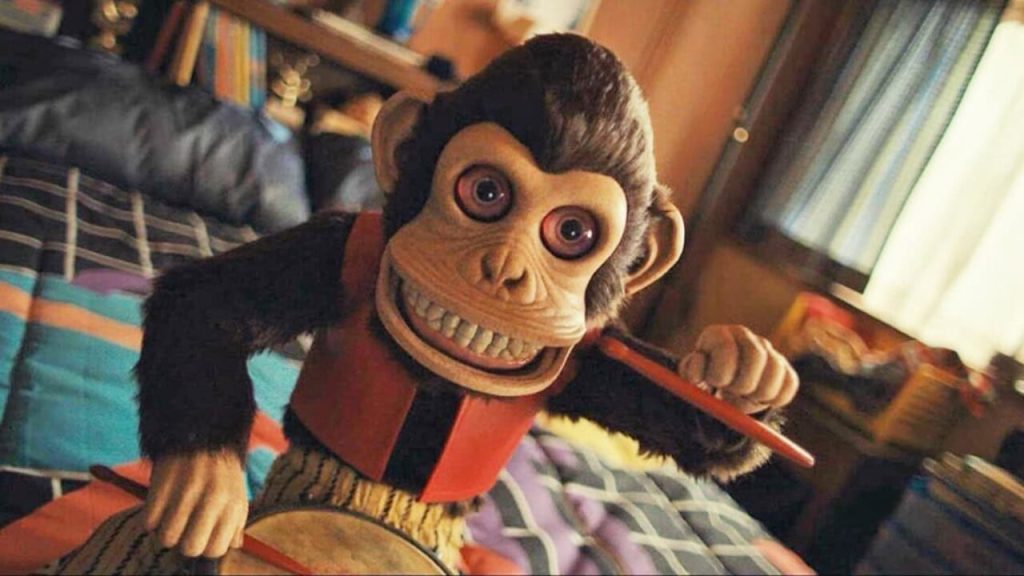
Instead of the toy creeping around like a miniature slasher villain (which would frankly be terrifying in a different way), it remains largely stationary. Calm. Innocent-looking. Almost polite. Meanwhile, people around it suffer increasingly insane and grotesque fates. This contrast is exactly what elevates The Monkey into Hall of Killers territory: it creates dread through inevitability rather than pursuit. You are not being chased. You are being statistically doomed.
From a franchise culture standpoint, the marketing alone helped cement its legacy. The trailer reportedly amassed massive viewership online shortly after release, and Neon even leaned into the film’s extreme violence during promotion, with reports that attempts to air the trailer on major television networks were rejected due to its content. That level of controversy and viral curiosity only amplified the film’s reputation as a gleefully unhinged entry in modern horror.
Critically, the reception reflected that tonal gamble. Review aggregators showed generally favourable reviews, with praise directed toward Perkins’ striking visual style, dark humour, and willingness to embrace the film’s bizarre premise rather than dilute it. Even Stephen King himself praised the film as “batshit insane,” which, in King terms, is essentially a glowing endorsement wrapped in a warning label.
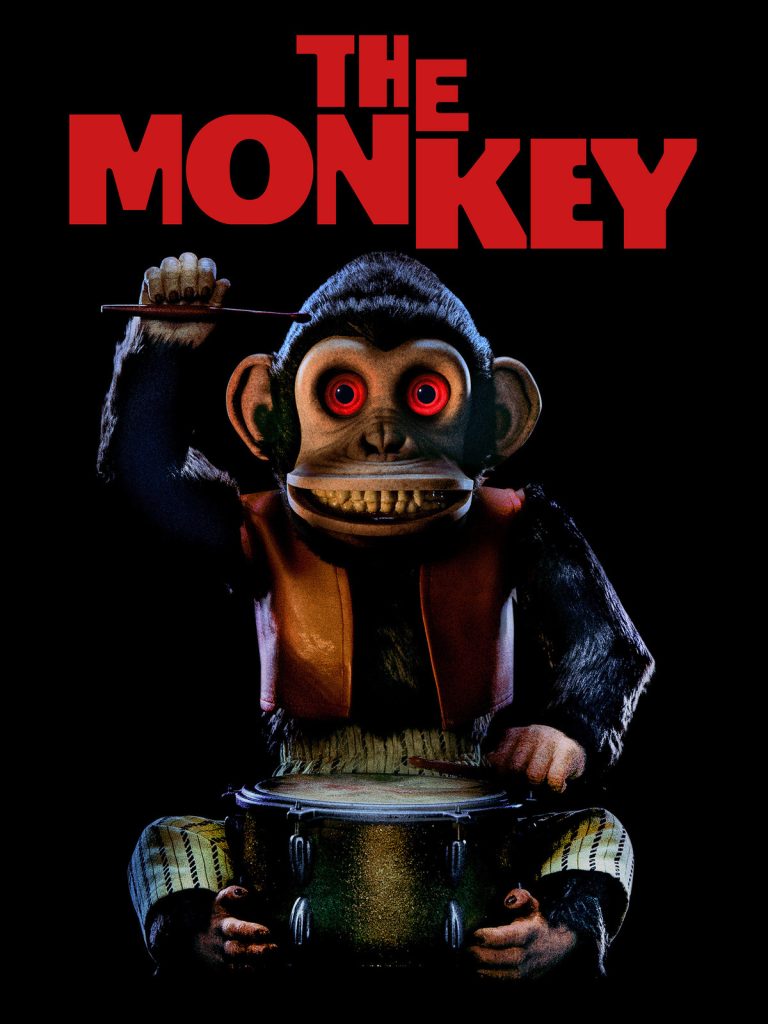
So why Third Class Tier specifically?
Because The Monkey is iconic, memorable, and undeniably lethal — but not a dominant, character-driven killer in the same vein as genre legends. It does not stalk victims, deliver quotable one-liners, or establish a mythos built on personal menace. Its horror comes from randomness, absurdity, and inevitability. You could lock it in a room and be perfectly safe… right up until someone, somewhere, makes the catastrophic decision to wind that key again.
In short, The Monkey earns its Hall of Killers status not through brute force, but through concept. It is a killer powered by human curiosity, bad judgment, and the universal horror of “what if the worst possible thing happened for absolutely no reason?”
And in a genre filled with masked maniacs, supernatural entities, and revenge-driven slashers, a small toy that sits still and politely drums while the world implodes around it is, somehow, one of the most darkly funny and disturbingly effective killers of the modern horror era.
Which is precisely why it now takes its rightful place in the Third Class Tier — quietly, ominously, and probably waiting for someone to wind the key again.