Primate Review: Rabid Chimp Turns a Family Home Into a Gore-Filled Siege
There are certain phrases in horror cinema that instantly tell you what kind of ride you’re in for. “When animals attack” is one of them. Add rabies and trapped-in-a-house siege horror, and your brain immediately starts free-associating to Cujo, claustrophobic home invasion setups, and the specific dread of being cornered by something that doesn’t need a motive beyond instinct. Johannes Roberts’ Primate fits squarely into that tradition, swapping out a Saint Bernard for a chimpanzee and cranking the gore until it feels like the dial might snap off in someone’s hand.
Primate Delivers Old-School Animal Attack Horror
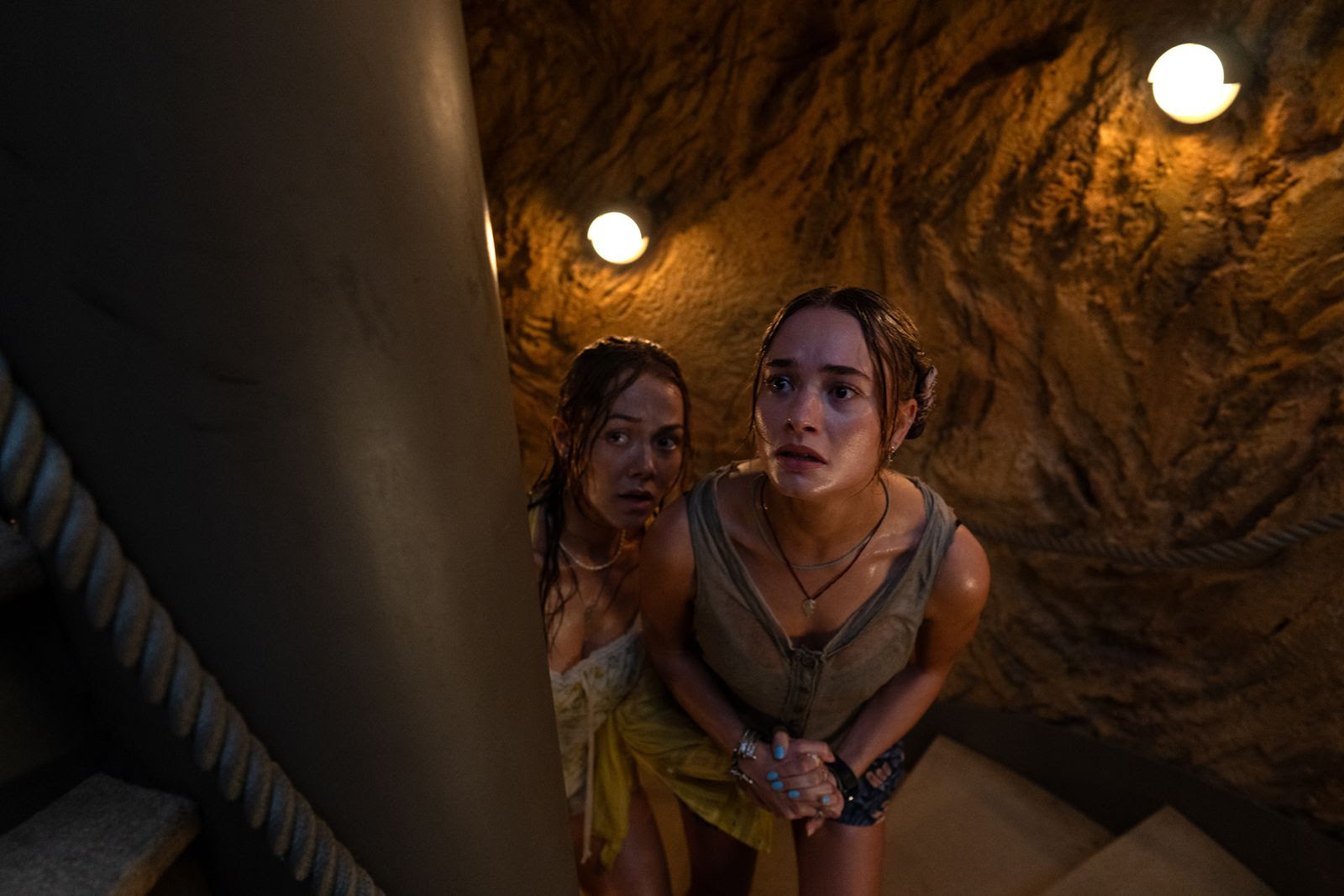
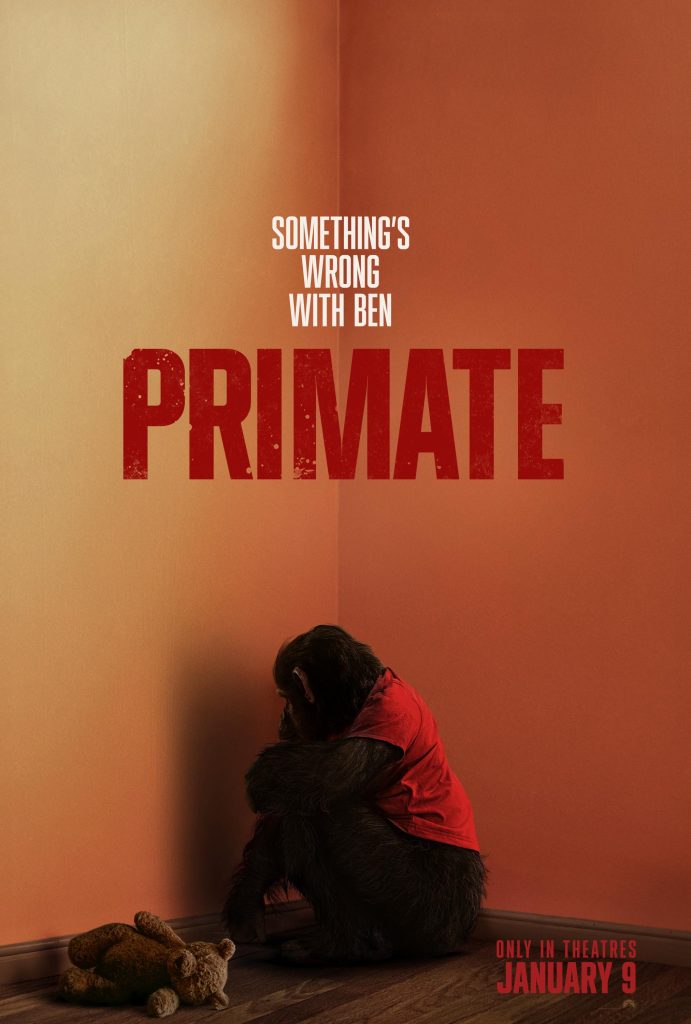
The setup is simple and refreshingly direct. Lucy returns to her family’s spectacular cliffside home in Hawaii after time away, bringing a couple of friends with her. Her father Adam, played with quiet authority by Troy Kotsur, is a successful author preparing to leave for a short book tour. Lucy’s younger sister Erin is still nursing resentment about being left behind, and the household’s most unusual resident, Ben the chimpanzee, appears to be a gentle, intelligent family companion. He wears clothes, likes teddy bears, follows rules, and communicates via handshakes, whistles, and a chunky electronic translator pad. You might already be muttering “absolutely not” under your breath, and you would be correct.
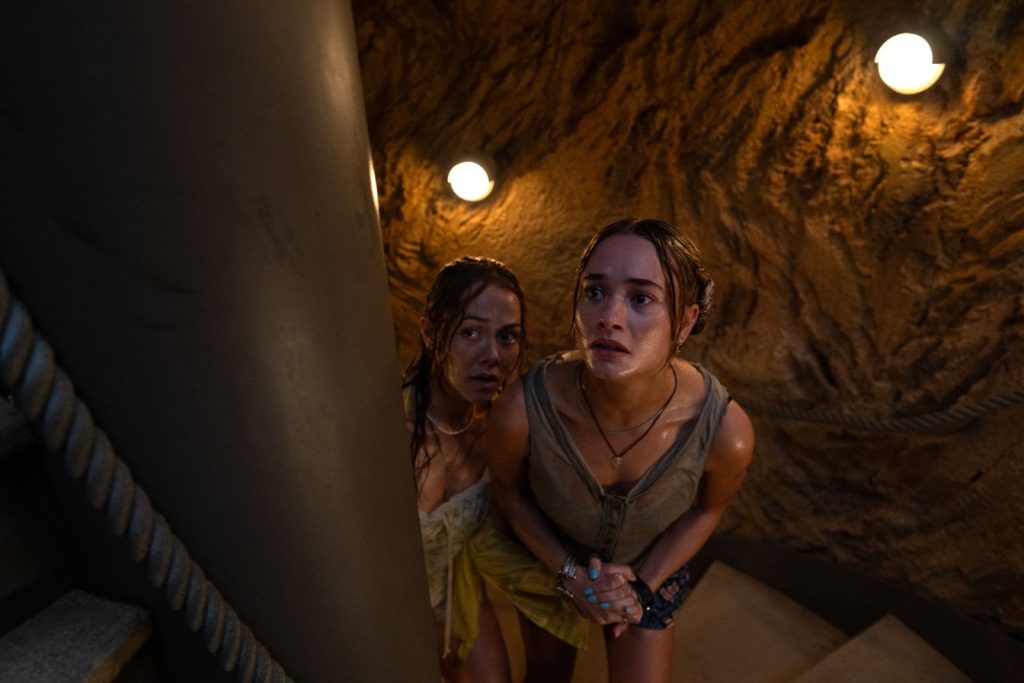
When Ben is bitten by a rabid animal, the film wastes no time collapsing the carefully constructed domestic routine into chaos. His training evaporates, instinct takes over, and Primate becomes a lean siege movie, trapping its characters inside a modern glass-and-concrete nightmare perched above a sheer drop. Escape routes vanish quickly, and the house itself becomes a pressure cooker as a very angry chimp roams the halls.
Roberts is not pretending to reinvent the wheel. This is deliberately old-school horror filmmaking. The DNA of Cujo runs right through the film, with echoes of Jurassic Park in the stalking behaviour and use of space, and even hints of John Carpenter’s siege tension in the way geography becomes weaponised. What Primate does well is execution. The pacing is tight, the layout of the house is clearly established, and Roberts understands exactly how long to let silence stretch before unleashing violence.
Gore, Creature Work, and Siege Tension
When the violence arrives, it does not pull its punches. The gore is frequent, practical, and unapologetically wince-inducing. Faces are torn, limbs are chewed, skulls meet hard surfaces at alarming speeds, and the film makes brutal use of its cliffside setting for sudden, stomach-dropping exits. This is not bloodless studio horror. It is wet, mean, and often uncomfortable in exactly the way creature features should be.
Millennium FX’s work is a major highlight. Ben is realised through a combination of performance, puppetry, animatronics, and suit work, with movement specialist Miguel Torres Umba giving the chimp a physical presence that feels disturbingly real. There are moments where the illusion fully locks in, and you stop thinking about effects altogether. That credibility is crucial. Without it, the film collapses. With it, Primate becomes genuinely threatening.
Troy Kotsur’s performance as Adam adds a layer of tension the film uses intelligently. His deafness is never treated as a gimmick, instead becoming a powerful source of suspense, particularly in scenes where the sound design drops away entirely and the audience is forced to experience danger from his perspective. Those silent stretches are among the film’s most effective sequences. Johnny Sequoyah anchors the film well as Lucy, selling both the fractured family dynamics and the escalating panic once things spiral beyond control. The supporting cast largely functions as slasher fodder, but the performances are solid enough that their inevitable fates still land with impact.
Flaws, Themes, and Final Verdict
Not every idea introduced is fully explored. There are interesting thematic undercurrents around communication, technology, and how humans project emotion onto animals, particularly through Ben’s translator pad and Adam’s reliance on sign language, but these elements mostly remain background texture. Once the killing starts, Primate prioritises momentum over introspection, and that will work better for some viewers than others.
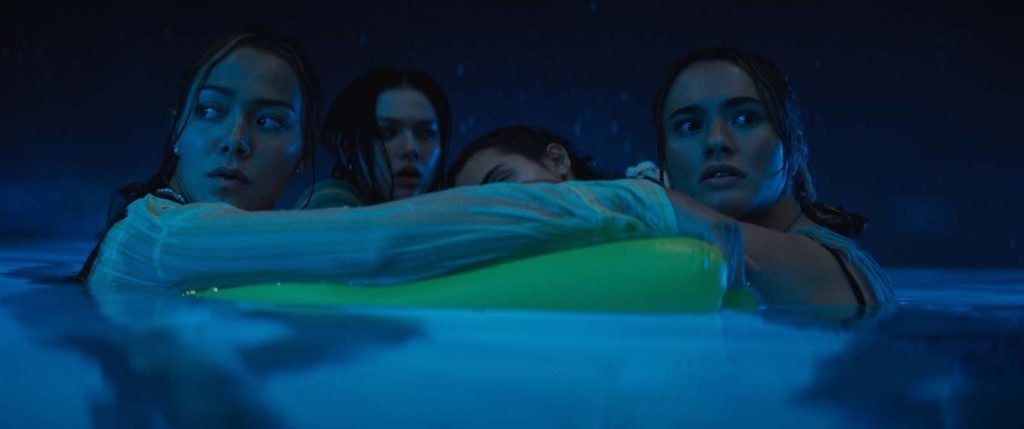
There are also moments where logic yields to spectacle. The transition from beloved pet to full-blown killing machine is abrupt, and certain survival decisions will prompt quiet disbelief. But this is genre filmmaking in its purest form. Overthinking is not encouraged. You are here to watch a rabid chimp terrorise a group of people in increasingly nasty ways, and the film delivers exactly that.
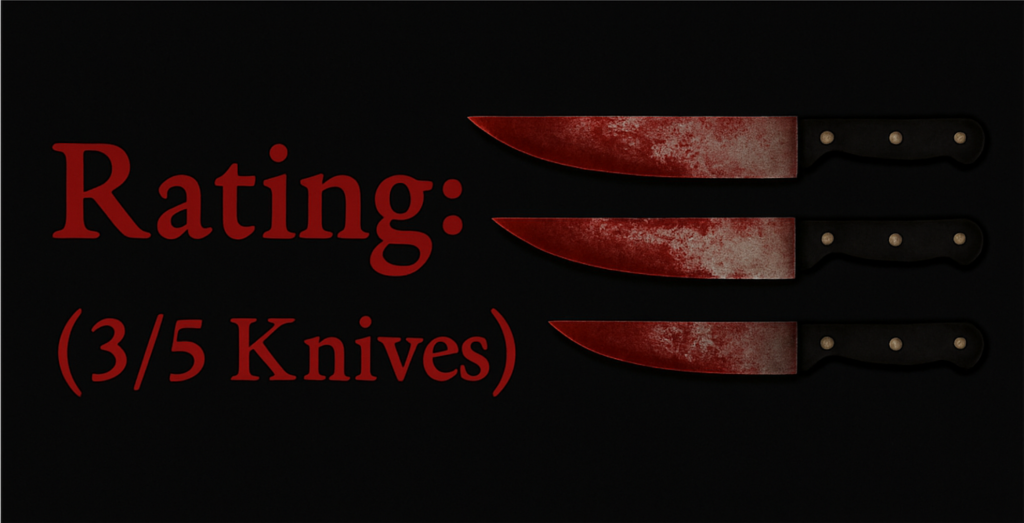
Ultimately, Primate is a well-crafted, blood-soaked entry in the “animals go mad” subgenre. It does not aim to redefine horror or dress itself up as elevated cinema. Instead, it embraces its grindhouse heart, its practical effects, and its pulpy thrills with confidence. It may not be groundbreaking, but it is tense, memorable, and frequently nasty in all the right ways.