Backrooms (2026) Review: Kane Parsons Successfully Expands The Internet Horror Phenomenon
The journey from internet creepypasta to major motion picture is not one that many creators manage successfully. Kane Parsons, however, has achieved exactly that. Having first gained attention through his hugely popular Backrooms short films on YouTube, the young filmmaker now makes his feature debut with Backrooms, a psychological horror film that remains faithful to the concept that inspired millions while confidently expanding it into something much larger.
The origins of the Backrooms are surprisingly simple. The phenomenon began in 2019 with a single unsettling image posted online, depicting a maze of empty yellow office corridors accompanied by a short description about accidentally “noclipping” out of reality and becoming trapped there forever. It was a concept that immediately resonated with people, tapping into fears of isolation, liminal spaces and the unknown. While the internet ran wild with theories and mythology, it was Parsons who truly brought the concept to life through his found footage shorts, helping transform the Backrooms into one of modern horror’s most recognisable creations.
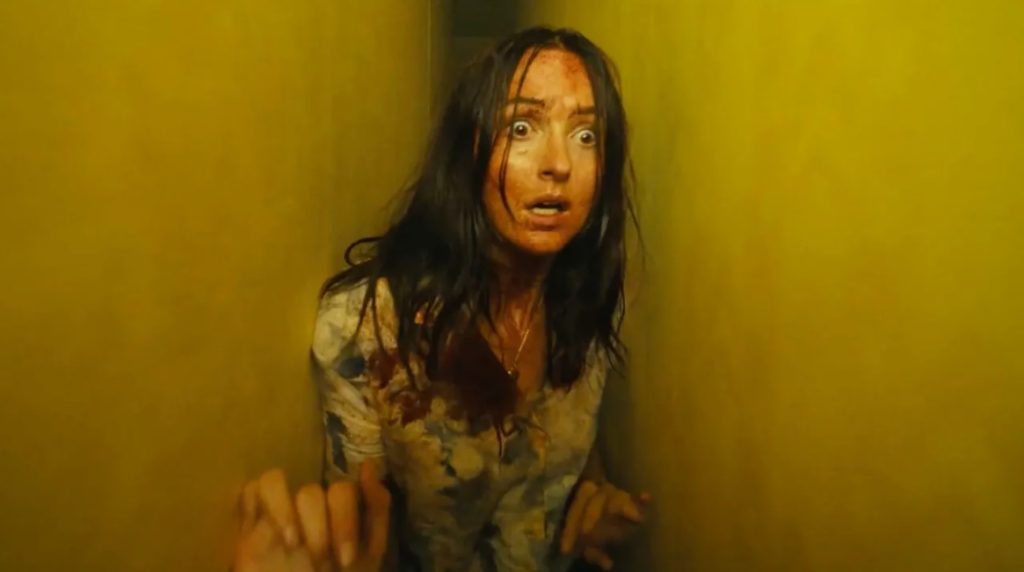
Now, under the A24 banner, Parsons attempts the difficult task of turning that concept into a feature-length narrative.
The film opens with a genuinely effective sequence presented as recovered footage from 1990. A scientist desperately navigates the endless corridors of the Backrooms while something unseen stalks him through the maze. It is an opening that immediately establishes the atmosphere and demonstrates that Parsons understands precisely what makes this world so unnerving. Rather than relying on loud jump scares or excessive exposition, he allows the environment itself to create dread.
From there we are introduced to Clark, played by Chiwetel Ejiofor. Once an ambitious architect, Clark now runs a struggling furniture business called Captain Clark’s Ottoman Empire. His marriage has collapsed, his dreams have faded away, and he spends his nights sleeping on one of the display beds inside his showroom. Therapy sessions with psychiatrist Mary Kline, played by Renate Reinsve, reveal a man haunted by regret and increasingly disconnected from the life he once hoped to build.
When strange electrical faults begin occurring throughout the store, Clark discovers an unusual junction box hidden within the building. Flicking a series of mysterious switches reveals something impossible: a doorway leading directly into the Backrooms.
From that point onwards, the film becomes a fascinating descent into a world where normal rules no longer apply.
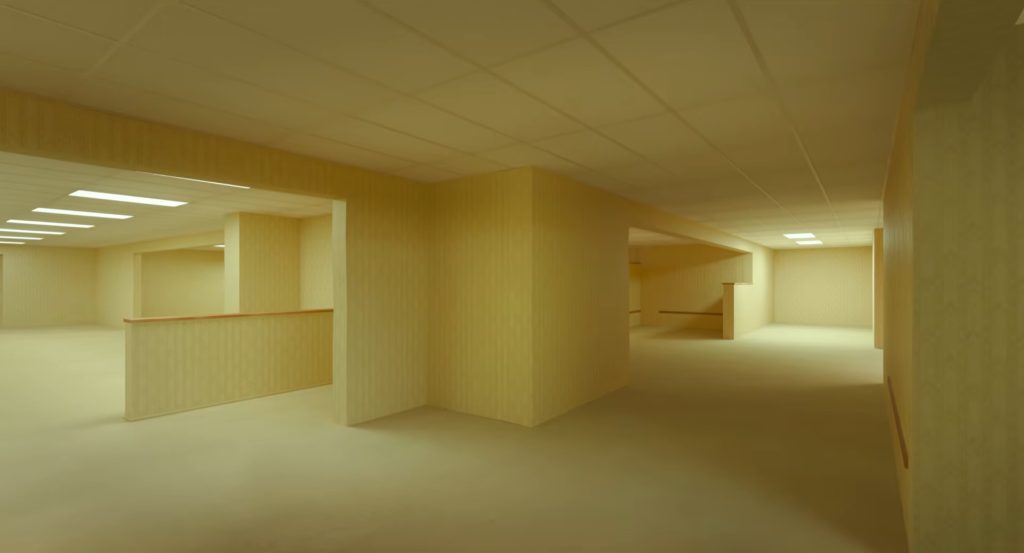
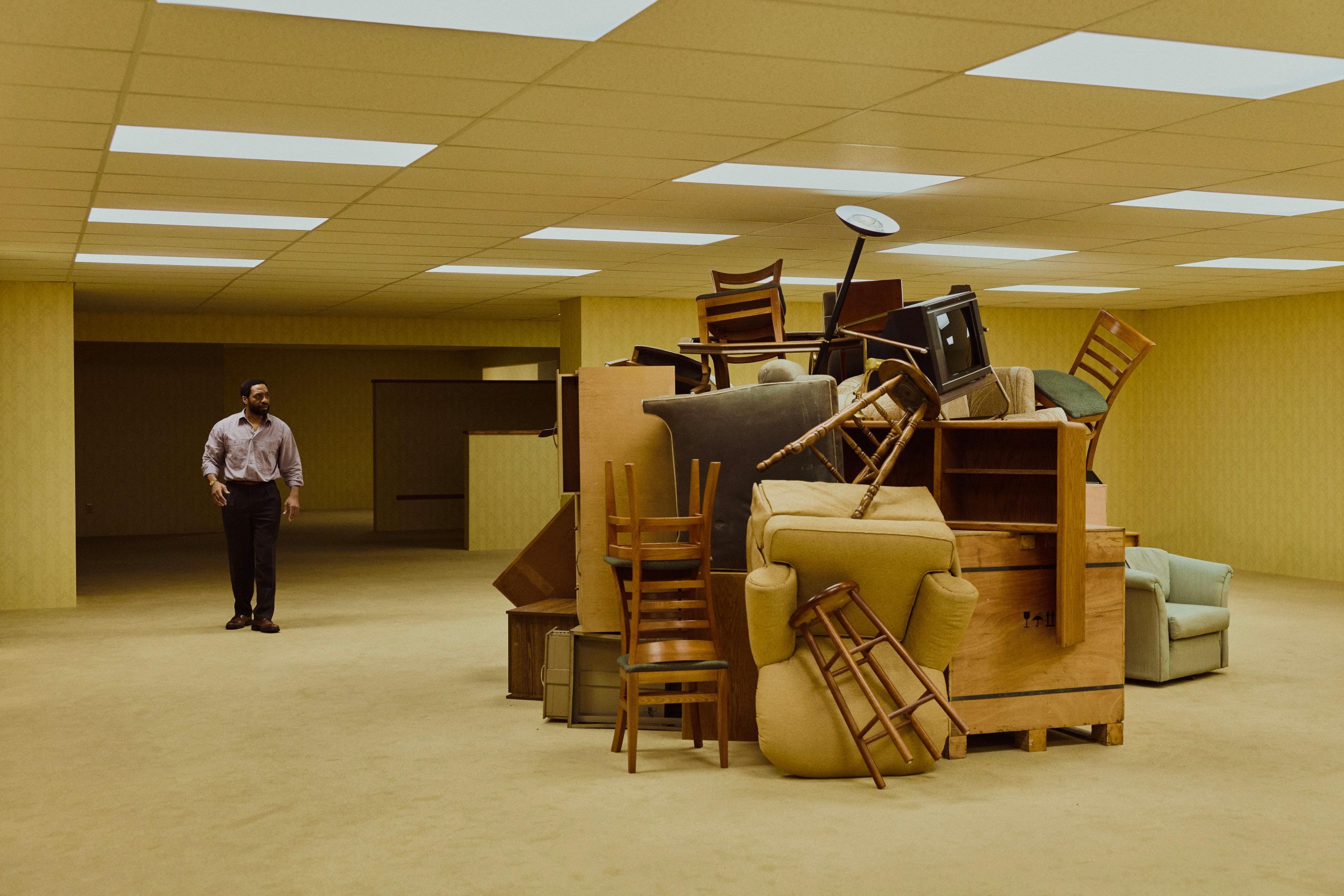
The familiar yellow wallpaper and stained carpets from the original image are present, but Parsons wisely expands the environment beyond what audiences may expect. Endless corridors stretch in every direction. Furniture appears abandoned in impossible places. Dead birds litter the floors. Shoes seem half-swallowed by carpet. Stop signs stand where they should not exist. Every room feels wrong somehow, as though reality itself has become corrupted.
The Backrooms become the film’s greatest achievement.
What makes the concept so effective is not necessarily what lives inside these spaces but the spaces themselves. Parsons understands this completely. Rather than constantly throwing creatures at the audience, he allows tension to build naturally through scale, emptiness and uncertainty. Every corner feels dangerous. Every distant noise demands attention. The endless maze creates a sense of hopelessness that becomes increasingly oppressive as the film progresses.
The atmosphere throughout is exceptional.
Many modern horror films feel compelled to explain every mystery they introduce. Backrooms largely avoids this trap. Questions remain unanswered. Certain events are left open to interpretation. The film trusts its audience to sit with uncertainty rather than spoon-feeding explanations, which ultimately makes the experience far more unsettling.
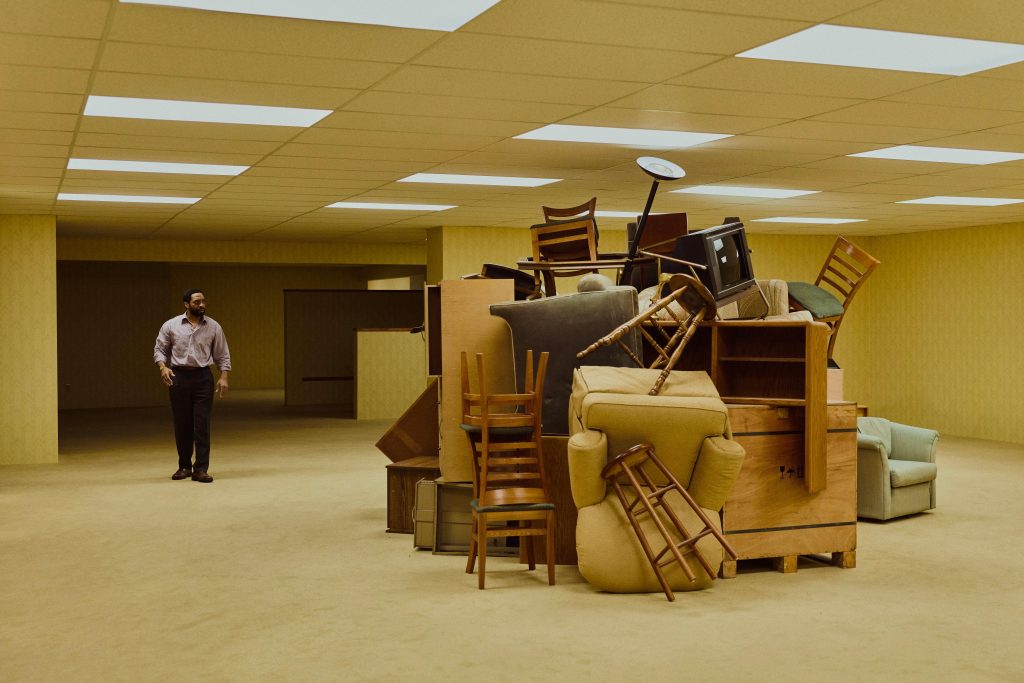
Chiwetel Ejiofor delivers a terrific performance as Clark. It would have been easy for the character to become unlikeable given his flaws, but Ejiofor brings enough vulnerability and humanity to ensure we remain invested in his journey. As Clark becomes increasingly obsessed with the Backrooms, the audience can understand why. For the first time in years, he has discovered something extraordinary. Something that gives him purpose.
Renate Reinsve also impresses as Mary. Lesser films might have reduced her role to exposition delivery, but she is given her own emotional struggles and complexity. The dynamic between Clark’s growing fascination and Mary’s scepticism provides some of the film’s strongest dramatic moments.
Visually, the film looks fantastic.
Considering Parsons began making horror videos on YouTube as a teenager, the leap in quality is remarkable. The cinematography captures both the vastness and claustrophobia of the Backrooms beautifully. The production design deserves enormous praise too. Every location feels carefully crafted to create discomfort. Familiar objects appear just out of place enough to trigger unease.
The film’s sound design is arguably even more impressive.
The constant hum of fluorescent lighting becomes almost hypnotic. Strange noises echo through distant corridors. Long stretches of silence are used effectively, creating tension without resorting to obvious tricks. The Backrooms feel alive through sound alone. It is the kind of film that genuinely benefits from a cinema screening where the audio can fully envelop the audience.
The score, co-created by Parsons, complements the visuals perfectly. It never overwhelms scenes but instead quietly amplifies the sense of dread simmering beneath the surface.
That is not to say the film is flawless.
There are moments where the pacing occasionally slows too much. Parsons is clearly fascinated by exploring the Backrooms, and sometimes the narrative momentum suffers as a result. A handful of sequences linger longer than necessary, particularly during the middle section. Some viewers may also feel that certain aspects of the mythology receive slightly more explanation than they require.
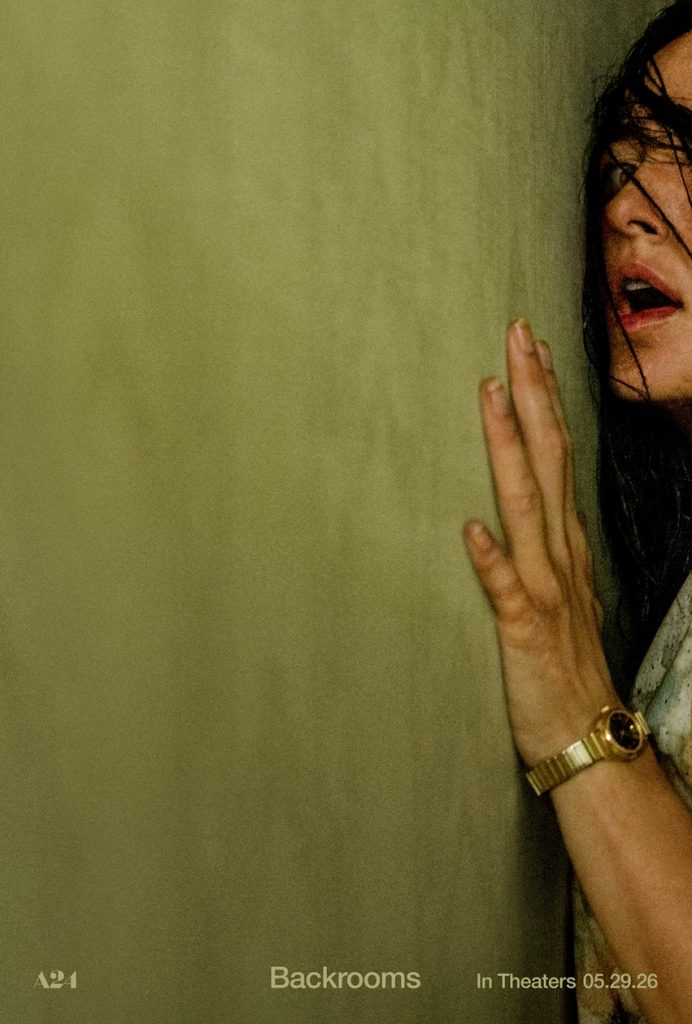
Outside of the Backrooms themselves, a few scenes feel visually conventional compared to the creativity displayed elsewhere. The contrast is noticeable because the sequences inside the maze are so striking.
Even so, these issues never derail the experience.
What ultimately makes Backrooms so refreshing is how different it feels from much of modern studio horror. In an era dominated by sequels, reboots and familiar formulas, Parsons delivers something genuinely strange. It recalls films such as The Blair Witch Project and Skinamarink in the way it weaponises atmosphere and uncertainty rather than relying on traditional horror mechanics.
The film also represents something encouraging for the future of the genre. Parsons is part of a growing generation of filmmakers who have emerged from unconventional backgrounds. His journey from internet creator to feature director demonstrates that talent can come from anywhere, and Backrooms suggests that horror’s next wave may not emerge from film schools or studio systems but from creators experimenting online.
Most importantly, Backrooms succeeds in preserving what made the original concept so effective. The feeling of being trapped somewhere impossible. The sense that something might be watching. The unsettling fear that reality itself has stopped making sense.
It is atmospheric, ambitious and frequently fascinating. While some pacing issues prevent it from reaching true greatness, Kane Parsons has delivered a highly impressive feature debut and firmly established himself as a filmmaker worth following.
For fans of liminal horror, psychological dread and imaginative world-building, Backrooms is well worth stepping into.