ED-209 Joins the Second Class of the Hall of Killers: The Enforcement Droid Who Shot Its Way into Our Hearts (and Everything Else)
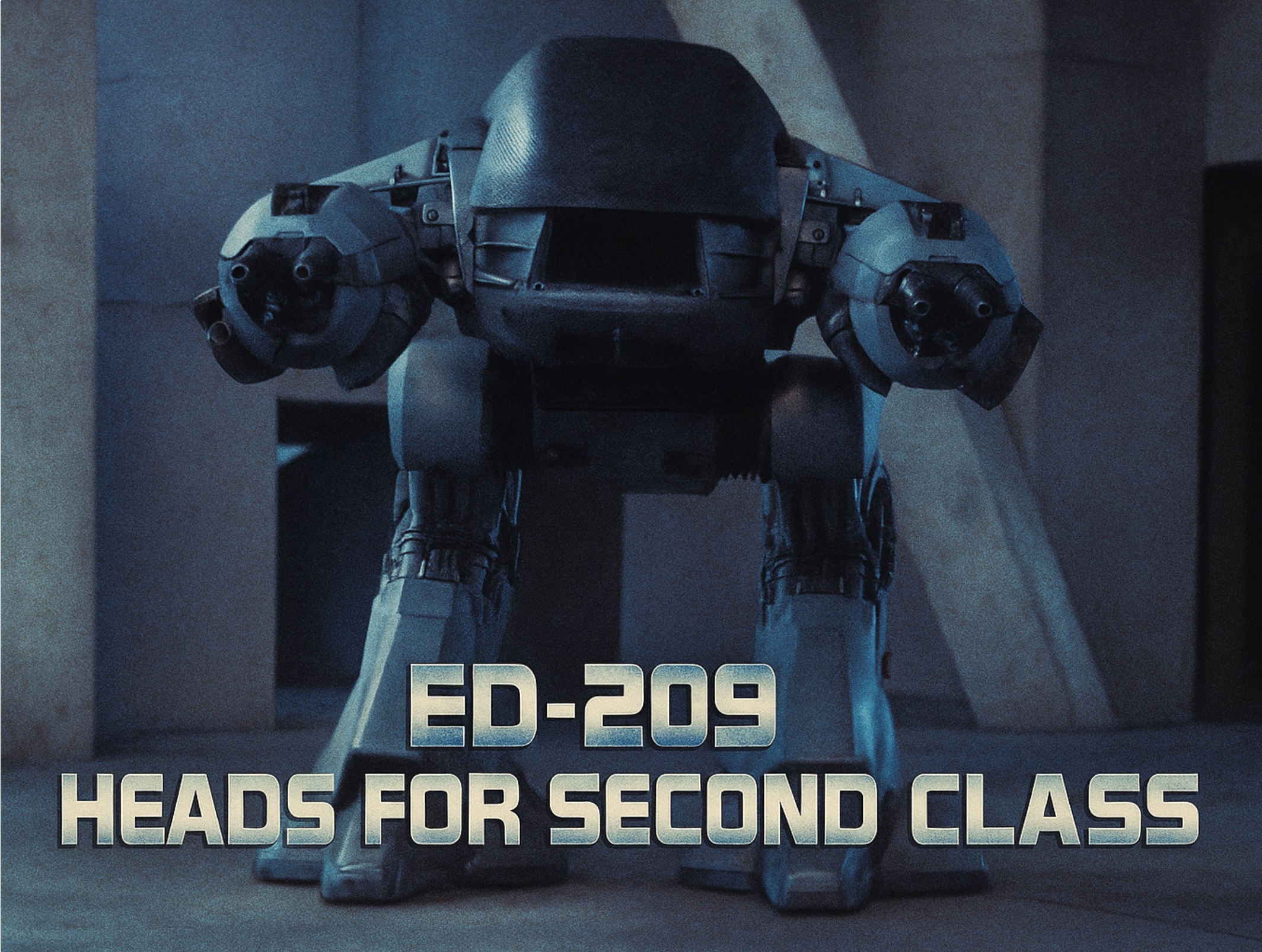
The Hall of Killers has a new inductee, and this one comes with twin autocannons, a temper, and the inability to handle basic office architecture. Yes, the one and only ED-209 from Robocop has officially blasted its way into the Second Class tier of cinematic murder legends. And frankly, it is about time.
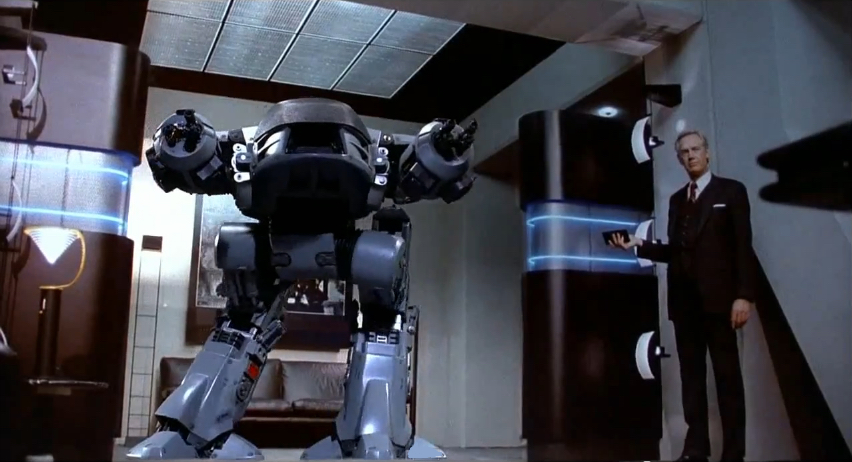
ED-209, short for Enforcement Droid Series 209, first strutted onto the screen in Paul Verhoeven’s 1987 masterpiece Robocop, a film that somehow managed to blend ultraviolence, satire, and social commentary into one gloriously blood-soaked symphony of chaos. Created by the fictional Omni Consumer Products as the future of law enforcement, ED-209 was supposed to be the ultimate deterrent against crime. Unfortunately, it turned out to be better at turning boardrooms into war zones than keeping the streets safe.
From the moment the lumbering machine entered that corporate demonstration and blasted poor Mr Kinney into a fine pink mist after politely asking him to drop his weapon, ED-209 cemented its place in movie villain history. It is a sequence so shocking and absurd that even now, almost forty years later, it feels both horrifying and hysterically funny. It is part of Robocop’s genius: that balance between satire and sheer spectacle. ED-209 is corporate hubris personified, a walking lawsuit with guns for arms and the decision-making skills of a caffeinated toddler.
Designed by special effects wizard Craig Davies and brought to life through Phil Tippett’s jaw-dropping stop-motion animation, ED-209 was as much a technical marvel as it was a narrative disaster zone. Tippett, who also worked on Star Wars and Jurassic Park, gave the hulking droid real weight and menace, even when it was throwing a mechanical tantrum. The iconic sequence where ED-209 is defeated by a flight of stairs—slipping, squealing, and wriggling helplessly on its back like a dying tortoise—remains one of cinema’s greatest moments of slapstick irony. You cannot call yourself a true movie fan until you have both feared and pitied a robot at the same time.
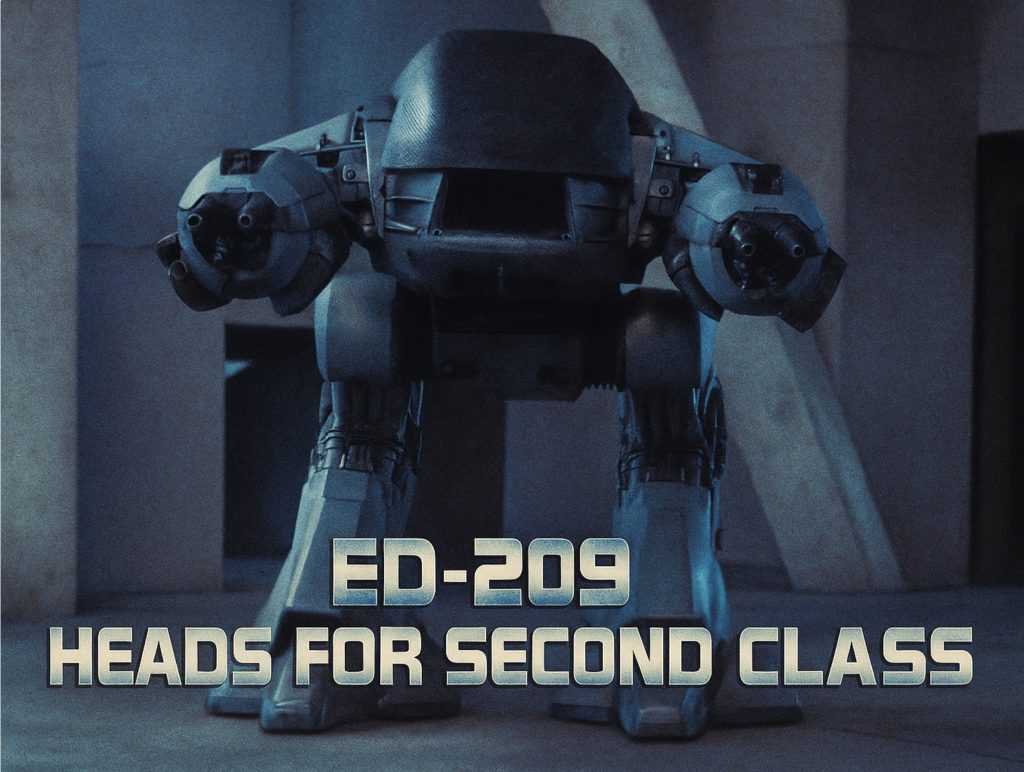
So why Second Class in the Hall of Killers, you might ask? Well, ED-209 has all the makings of a legend: violence, personality, and a tendency to explode without warning. But unlike Jason Voorhees or Freddy Krueger, it was never truly malevolent. It was simply doing its job, very badly. You could argue that ED-209 is more of a victim than a villain, an unfortunate creation of capitalism gone haywire. Still, any killer that can blow someone across a boardroom table in less than a second deserves a seat at the table, ideally one without stairs.
ED-209 joins a formidable Second Class lineup that includes Julia Cotton, Christine the car, and the werewolves of Dog Soldiers. It is a fitting place for a machine that, while not as mythic as the legends of the upper tiers, still changed the landscape of genre filmmaking. Its blend of menace and absurdity influenced everything from Terminator 2 to Starship Troopers (also directed by Verhoeven, who clearly never met a violent robot he did not love).
Behind the scenes, ED-209 was reportedly a nightmare to shoot, with its miniature models requiring painstaking attention to lighting and timing. Verhoeven wanted the robot to feel both imposing and ridiculous, a symbol of corporate overreach disguised as innovation. When you think about it, that makes ED-209 the perfect horror icon for the 1980s, a decade obsessed with greed, excess, and technology nobody quite understood.
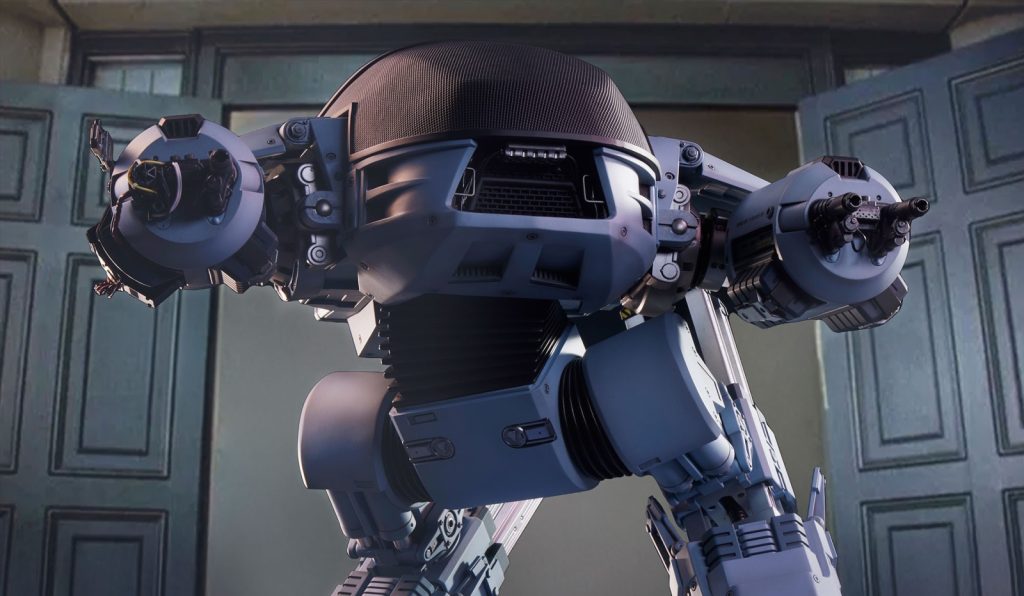
Despite only appearing briefly in the first film, ED-209’s legacy has endured. It appeared in the sequels, the animated series, comic books, and even video games, often as a reminder that no matter how advanced our machines become, they will probably still fail catastrophically the moment someone builds a staircase. Fans have since turned the droid into a cult favourite, celebrated for its bombastic voice commands (“You have twenty seconds to comply”) and its strangely endearing animal-like shrieks. Who knew a mechanised death machine could be so relatable?
In many ways, ED-209 embodies what makes the Hall of Killers so special. It is not just about how many people you kill—it is about how memorably you do it. ED-209 managed to terrify audiences, make them laugh, and provide a not-so-subtle critique of corporate irresponsibility, all while looking like a cross between a tank and an espresso machine.
So raise a glass, or a small calibre weapon, to ED-209, the robot that taught us all a valuable lesson. When the suits promise progress, it usually comes with gun turrets.
You have twenty seconds to applaud.