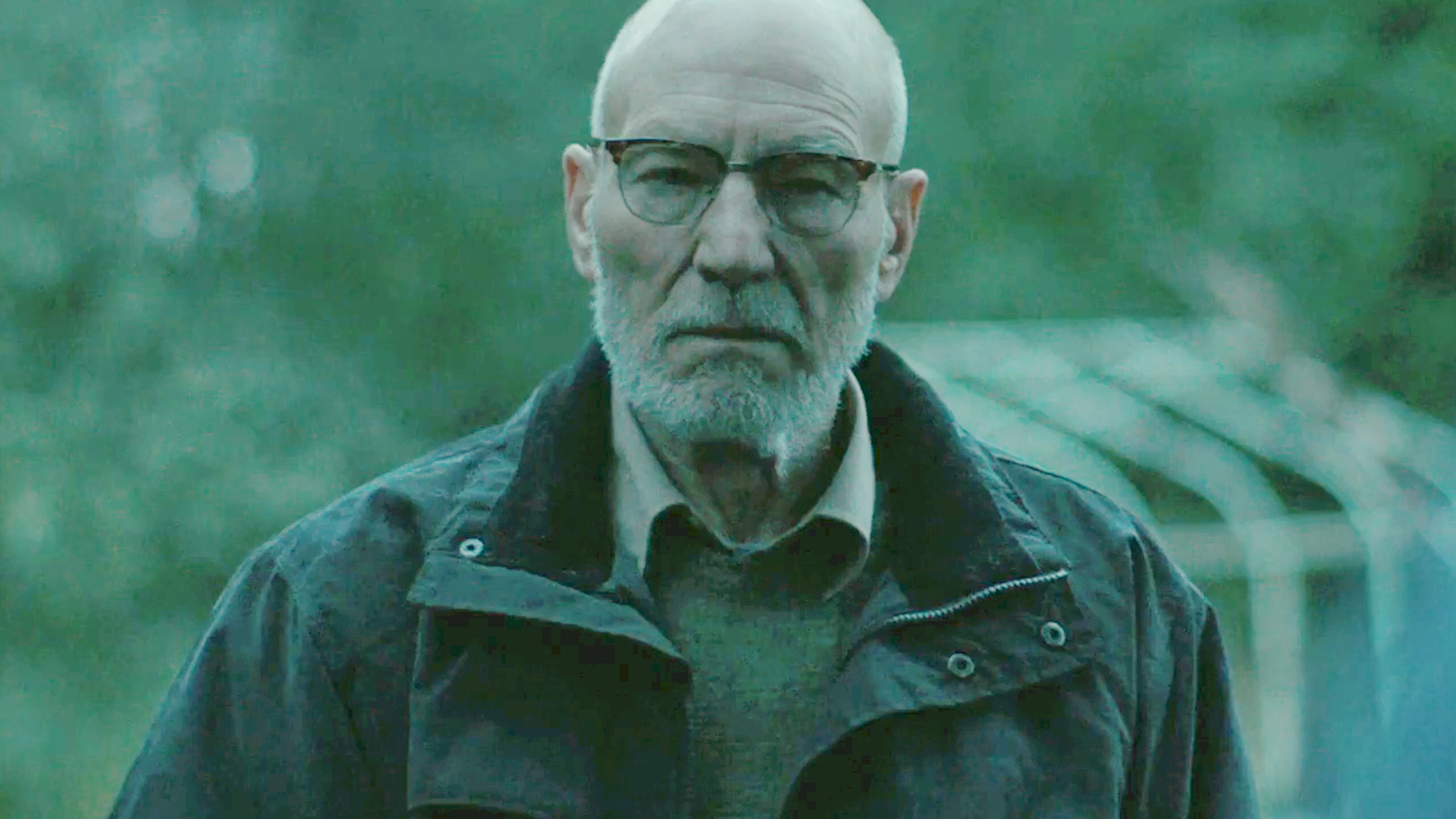
Darcy Banker: Remembering Patrick Stewart’s Terrifying Green Room Villain
There are some Hall of Killers inductions that are enormous fun to write. This one comes with considerably heavier hearts.
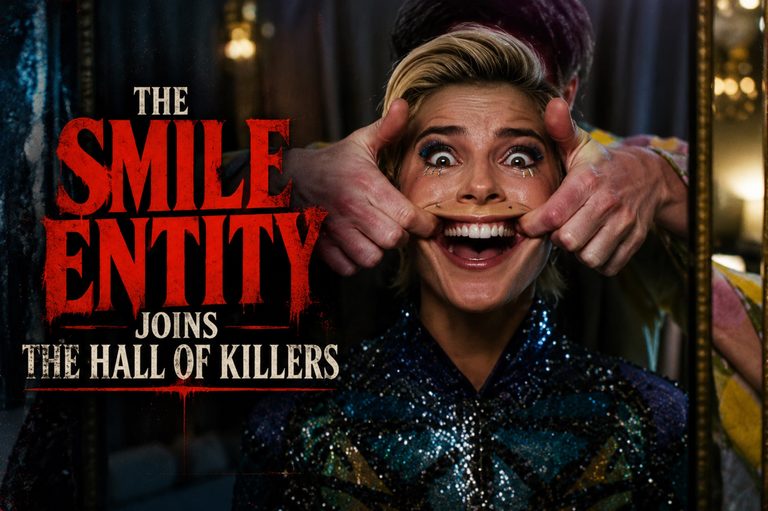
Following the death of Sir Patrick Stewart at the age of 86, Stalk & Slash is inducting one of his most wonderfully unexpected creations into our Hall of Killers. Darcy Banker, the quietly terrifying neo-Nazi leader from Jeremy Saulnier’s Green Room, officially enters our Second Class tier. It is our small way of commemorating an extraordinary actor who spent decades commanding starships, leading mutants, performing Shakespeare and, just to prove he could make absolutely anything frightening, calmly standing outside a room full of terrified punk musicians explaining why their situation was considerably worse than they realised.
Stewart’s casting in Green Room was a masterstroke precisely because audiences knew him so well. This was Captain Jean-Luc Picard. Professor Charles Xavier. A man whose voice sounded as though it should be negotiating intergalactic peace treaties or delivering Shakespeare, not overseeing a bunch of murderous skinheads in the Oregon wilderness. Yet Darcy Banker became frightening because Stewart refused to play him like a conventional movie psychopath. There is very little shouting, posturing or scenery chewing. Darcy doesn’t need any of it.
He simply needs everyone dead.
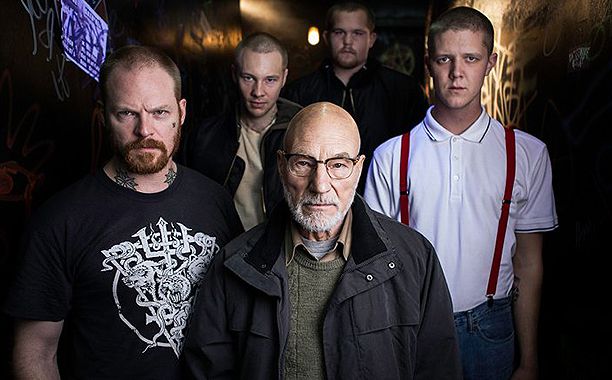
Darcy Banker Turns Green Room Into a Nightmare
Released in 2015, Green Room follows struggling punk band the Ain’t Rights, played by Anton Yelchin, Alia Shawkat, Joe Cole and Callum Turner, who accept a gig at an isolated club populated by neo-Nazi skinheads. After witnessing the aftermath of a murder backstage, they barricade themselves inside the green room with Amber, played by Imogen Poots, and suddenly discover that leaving the venue alive has become a considerably more complicated proposition.
Then Darcy arrives.
Darcy owns the club and leads the white supremacist operation surrounding it. The clever thing is that his arrival initially feels almost reassuring. Everyone else seems volatile, violent and barely under control, whereas Darcy appears calm, intelligent and practical. Here is the grown-up. Perhaps he can sort everything out. Unfortunately, Darcy’s definition of sorting everything out involves ensuring there aren’t any surviving witnesses left to explain what happened.
That calmness is exactly what makes him so effective. Darcy approaches murder like an unpleasant administrative problem. He assesses the situation, gives instructions and manipulates the trapped group while maintaining the tone of somebody dealing with a troublesome insurance claim. There is no theatrical villain speech announcing how evil he is because Darcy doesn’t appear to consider himself particularly extraordinary. People are obstacles, problems require solutions and violence is simply one of the tools available.
Stewart understood exactly why that was frightening. He said while promoting the film that an important part of the storytelling was allowing audiences to initially believe Darcy might make things all right. Stewart also revealed that the character made him think about a frightening encounter from his own younger years involving a man he knew who could become violent, and the terrifying realisation that rational conversation might not necessarily protect you from somebody dangerous. That understanding feeds directly into Darcy. He can communicate perfectly well. He simply has no moral interest in reaching the outcome you would like.
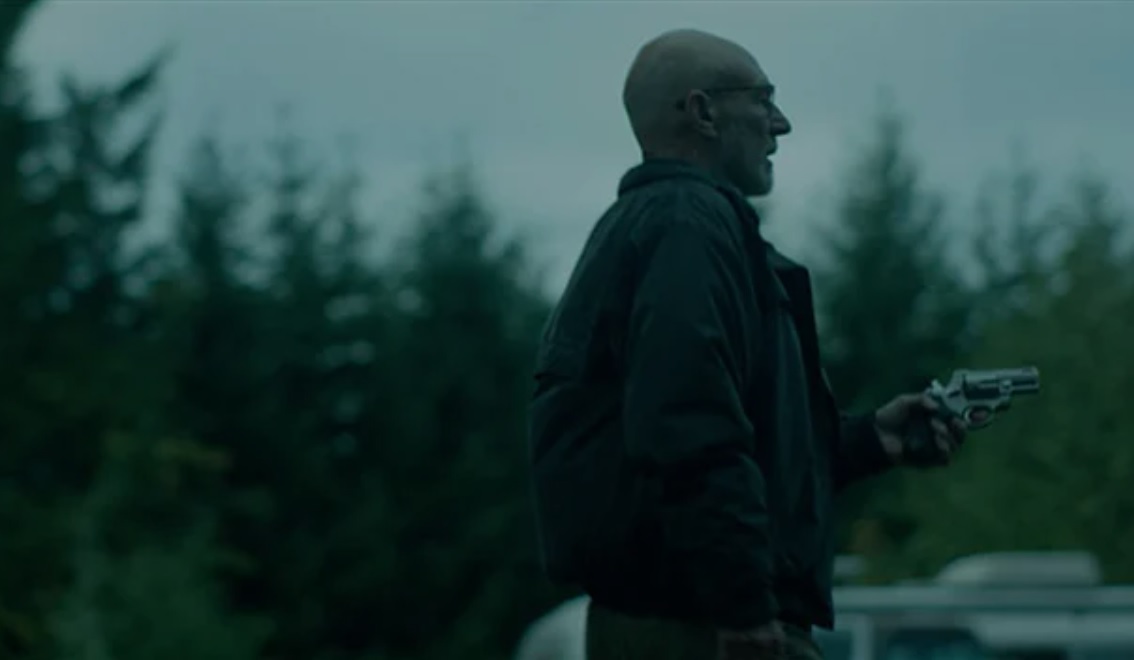
Even Stewart himself found Saulnier’s screenplay disturbing. He recalled reading around 30 pages before getting up to check that his doors and windows were secure, then continuing with a glass of Scotch. Most actors read a script and ask their agent whether the money is good. Patrick Stewart apparently conducted a home-security inspection and then decided he absolutely had to be in it.
Why Darcy Banker Belongs in Second Class
Darcy isn’t a Jason Voorhees-style killing machine, nor does he need supernatural powers, elaborate traps or an interesting collection of masks. His weapon is control. Other people carry out much of the physical violence, but Darcy is the intelligence directing it, and that makes him every bit as responsible for the nightmare surrounding the green room.
Second Class therefore feels exactly right. Darcy doesn’t have the body count or franchise longevity required for the upper reaches of our increasingly overcrowded establishment, but as a human horror villain he is horribly effective. Stewart takes everything audiences associated with him, authority, intelligence, composure and that magnificent voice, and turns those qualities against us.
It also helps that Green Room itself remains such a ferocious piece of filmmaking. Writer-director Jeremy Saulnier followed Blue Ruin with a siege thriller in which violence feels sudden, ugly and genuinely damaging. Nobody shrugs off injuries because the screenplay needs another action sequence. When somebody gets hurt, Green Room makes absolutely certain you feel it.
At the centre of that chaos sits Stewart, barely raising his temperature.
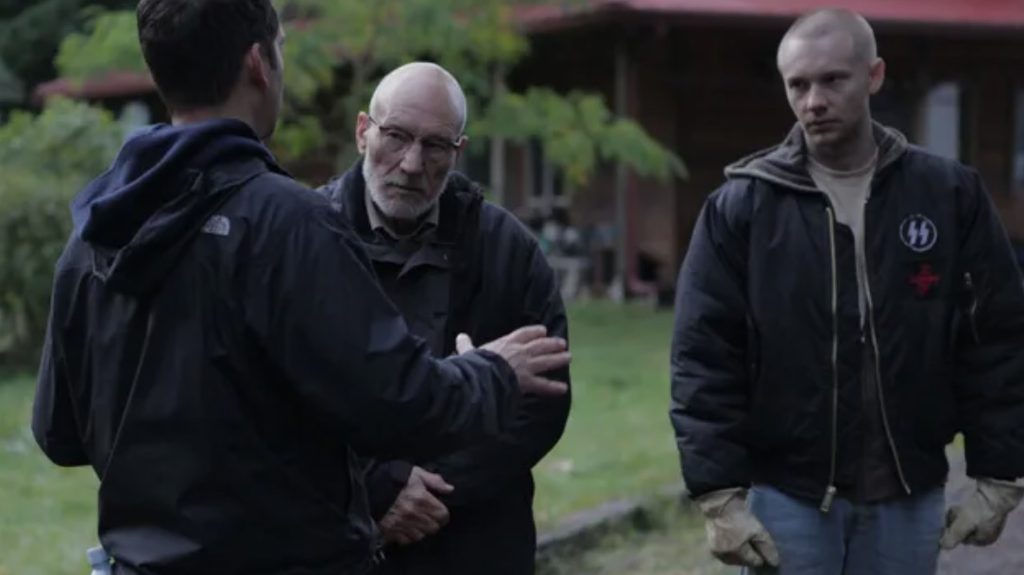
Darcy Banker and the Extraordinary Patrick Stewart
Of course, Darcy represents only a tiny, unusually nasty corner of an enormous career. Stewart spent 14 years with the Royal Shakespeare Company before global fame arrived through Captain Jean-Luc Picard in Star Trek: The Next Generation. Beginning in 1987, Picard transformed Stewart into an international star, and he would return to the character across four feature films and eventually Star Trek: Picard.
Another generation knew him as Professor Charles Xavier, beginning with X-Men in 2000 and continuing through multiple films, including the deeply moving Logan. Horror fans can also find Stewart in Tobe Hooper’s gloriously unrestrained Lifeforce, where he played Dr Armstrong, while his wider filmography stretched from John Boorman’s Excalibur and David Lynch’s Dune to comedy, animation, television and voice work. He was knighted in 2010 for services to drama.
Yet Darcy Banker showed something particularly delightful about Stewart as an actor. After decades spent playing men audiences instinctively trusted, he understood exactly how powerful it would be to weaponise that trust. Green Room asks us to look at Patrick Stewart and expect wisdom, decency and reassurance. Darcy looks back and calmly demonstrates what a terrible mistake we’ve made.
Sir Patrick Stewart leaves behind an extraordinary body of work spanning more than six decades, and the tributes from friends, colleagues and audiences since his death demonstrate just how deeply loved he was. For horror fans, Darcy Banker will remain one of those performances that arrived unexpectedly and immediately felt unforgettable.
So today there are no jokes about Darcy being shown to his table or complaining about the quality of accommodation in Second Class. Instead, we’ll simply open the doors of the Hall of Killers and make room for one of Patrick Stewart’s darkest creations.