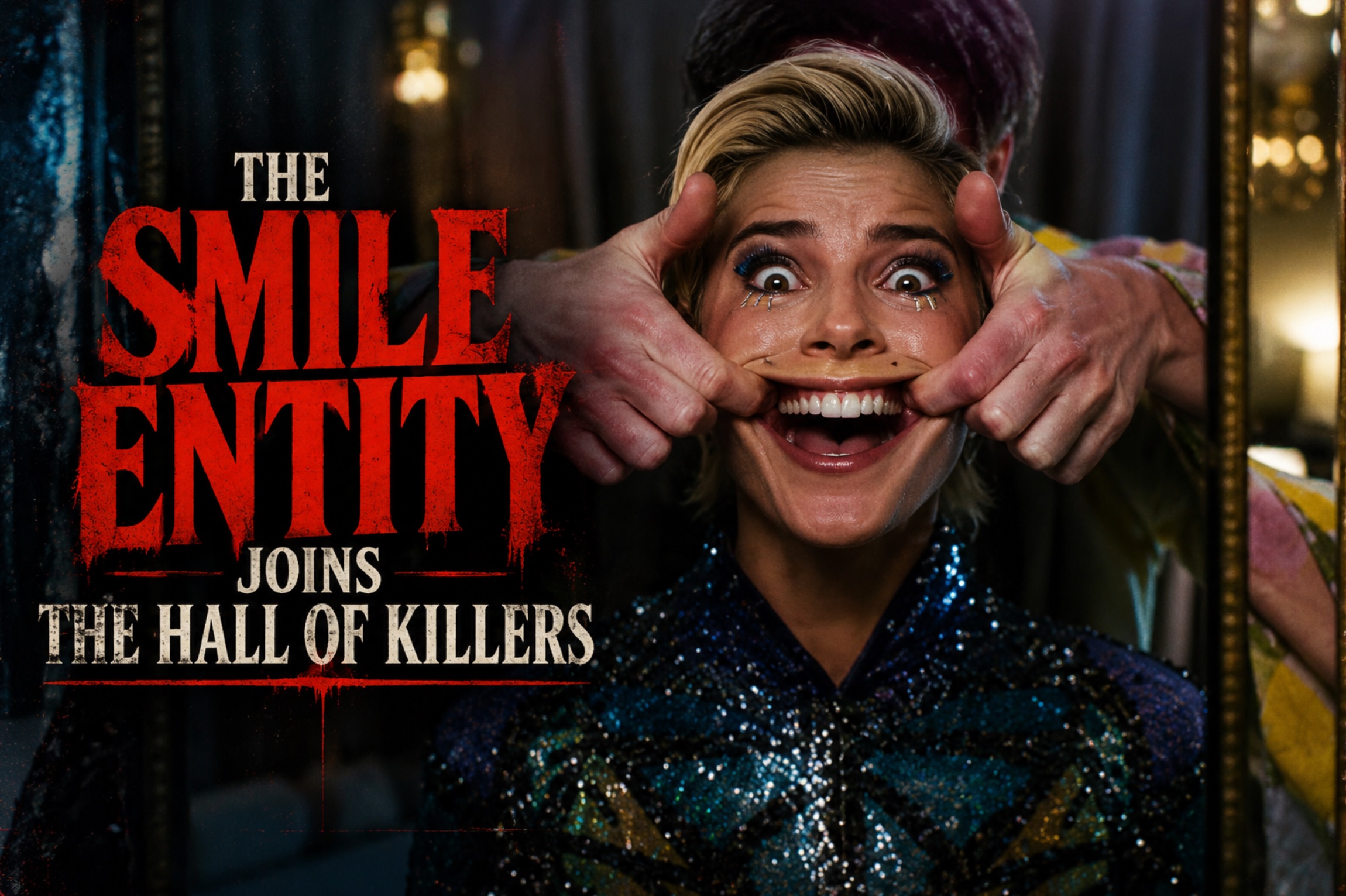
Say Cheese: The Smile Entity Grins Its Way Into the Hall of Killers
Some horror villains require machetes, chainsaws, elaborate traps or an apparently bottomless supply of replacement kitchen knives. The Smile Entity just needs somebody to look unusually pleased with themselves. Introduced in Parker Finn’s Smile, the supernatural parasite has managed to turn one of humanity’s friendliest expressions into a perfectly reasonable reason to leave the building immediately. If somebody across the room starts grinning at you without blinking, don’t ask whether they’re all right. Don’t investigate. Don’t attempt to help. Simply accept that whatever appointment you had that afternoon is no longer important and start running. For making smiling significantly less reassuring than it was before 2022, the Smile Entity is entering the Second Class Tier of the Hall of Killers.
The creature’s first feature-length reign of misery begins in Smile when psychiatrist Rose Cotter, played by Sosie Bacon, witnesses the horrifying death of patient Laura Weaver. Laura has been experiencing terrifying visions of smiling people before dying by suicide in front of Rose while wearing that same deeply unnatural grin. Unfortunately, witnessing the death effectively places Rose next in line. She begins seeing people smiling at her, experiences increasingly disturbing hallucinations and gradually discovers that other victims have followed the same pattern. It is essentially a supernatural chain letter, except deleting it doesn’t work and nobody promises you’ll meet the love of your life by Thursday.
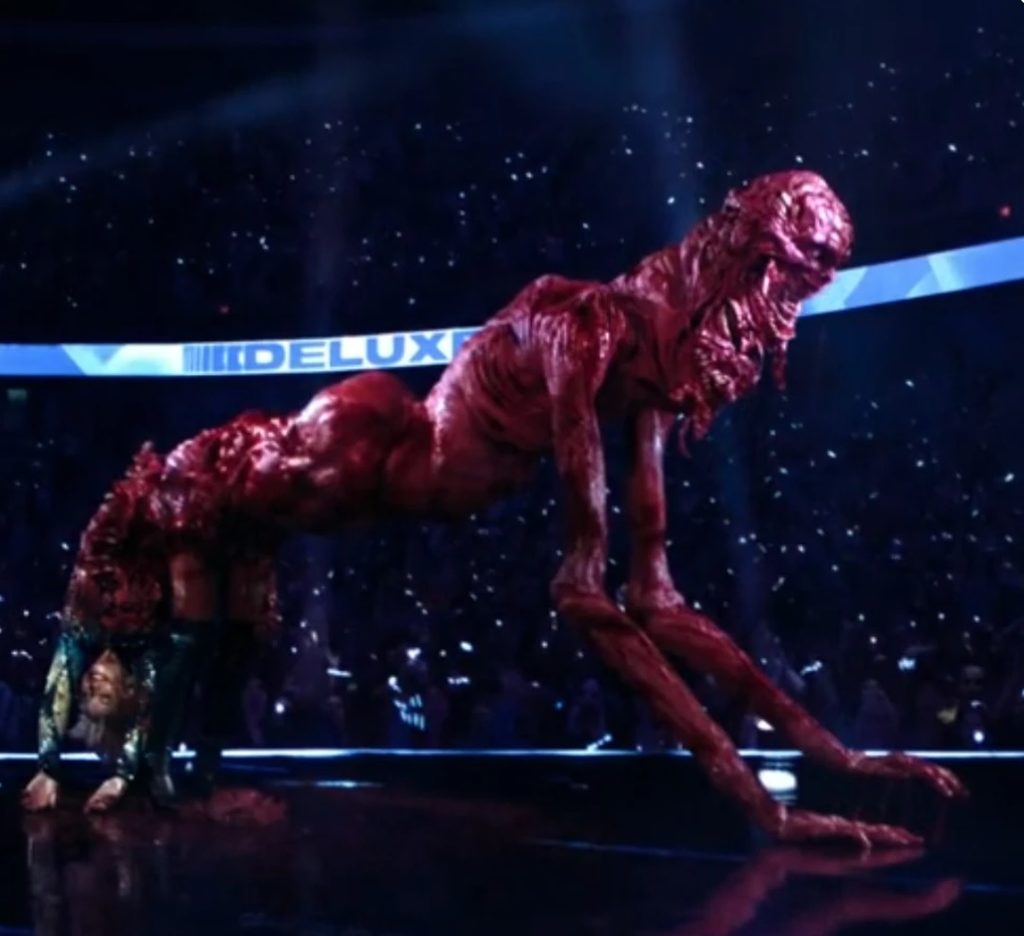
With help from her former boyfriend Joel, Rose uncovers a succession of deaths linked by witnesses who subsequently become victims themselves. The Entity doesn’t merely appear and start throwing furniture around. It attacks psychologically, manipulating perception and appearing as familiar people while making its victim increasingly uncertain about what is actually happening. This is particularly unfair because most classic horror villains have the courtesy to remain physically present. If Michael Myers is standing behind your sofa, there is definitely a problem behind your sofa. With the Smile Entity, the sofa might not exist, Michael might actually be your sister and you may discover you’ve spent the previous ten minutes arguing with a lamp.
Rose eventually attempts to isolate herself and confront the trauma connected to her mother’s death, believing that depriving the Entity of another witness could break the cycle. Instead, the creature reveals a monstrous form, towering over Rose before peeling apart its face to expose a grotesque series of nested mouths. It then forces itself inside her. Joel arrives too late and witnesses Rose, under the Entity’s control, set herself on fire while smiling at him. The curse therefore passes to Joel, proving that arriving to check whether your ex is okay remains dangerous even when the relationship ended some time ago.
Smile 2 picks up with Joel desperately trying to rid himself of the curse. He attempts to pass it on through a witnessed murder, but his plan goes disastrously wrong and he is killed shortly afterwards. The curse ultimately reaches drug dealer Lewis Fregoli, whose death is witnessed by global pop star Skye Riley, played by Naomi Scott. This turns out to be an excellent career move for the Entity. Why spend your supernatural existence haunting psychiatrists individually when you can attach yourself to someone whose occupation involves standing in front of several thousand potential victims every night? Somewhere in the supernatural realm, somebody has clearly attended a marketing seminar.
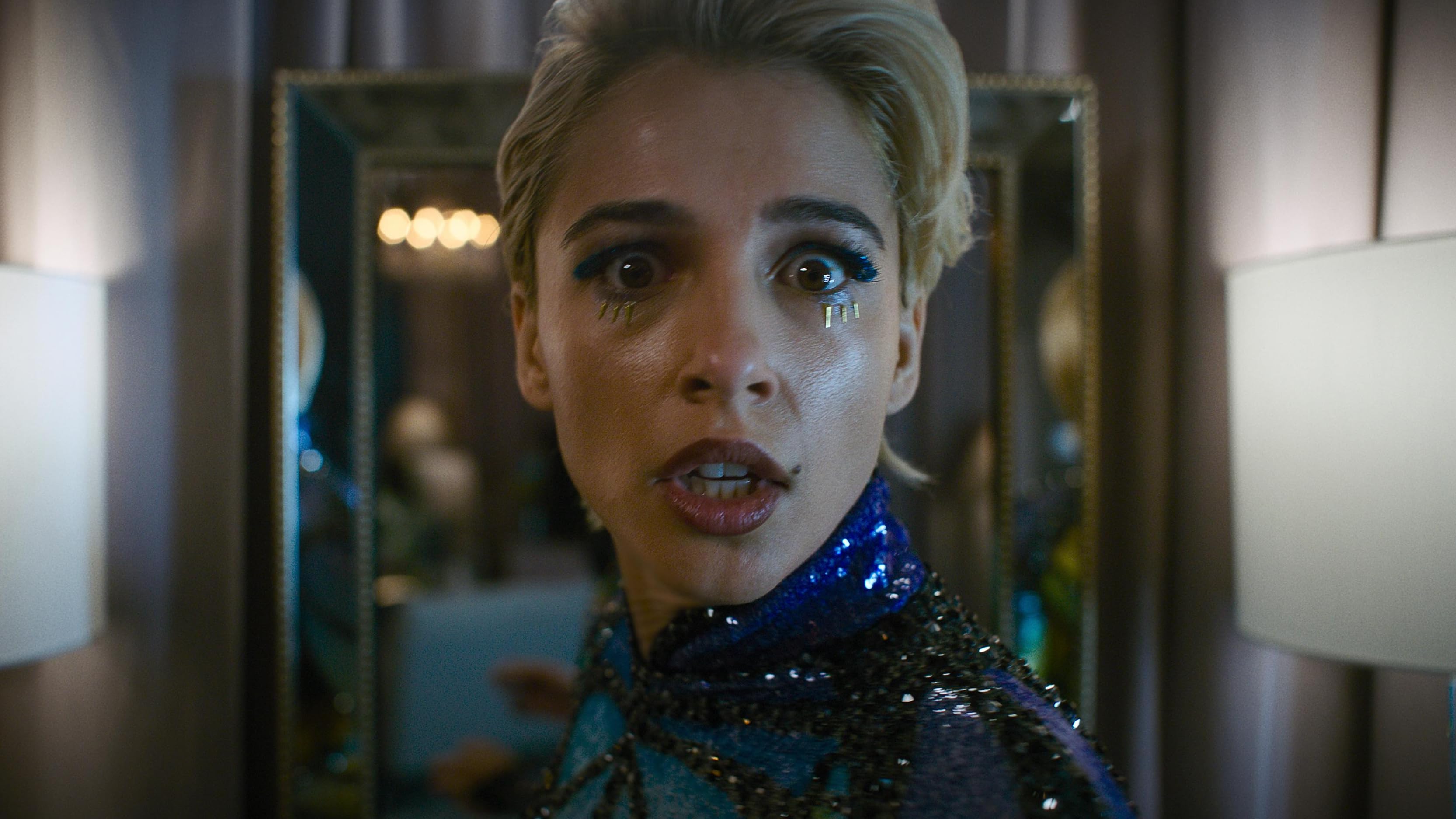
Skye is already dealing with considerable emotional and physical trauma following the car crash that killed her boyfriend Paul and seriously injured her, making her particularly vulnerable as the Entity begins dismantling her perception of reality. The smiling figures return, but the sequel expands what the creature can apparently make its victim experience. One of its most memorable attacks involves Skye’s dancers silently filling her apartment before moving towards her as a grinning human mass. Most pop stars would consider a house full of backup dancers an encouraging sign that rehearsals are going well. Skye understandably reaches a different conclusion.
The Entity’s greatest weapon remains uncertainty. It doesn’t simply scare Skye, it repeatedly makes her believe events have occurred before revealing that her understanding of reality cannot be trusted. By the final act, neither Skye nor the audience can reliably determine where the hallucination ends. The film eventually places her onstage at Madison Square Garden in front of a huge audience, where she sees the Entity emerge in its monstrous form before possessing her. Skye then dies by suicide in front of the crowd, apparently leaving potentially thousands of witnesses exposed to whatever comes next. The first film ended with the Entity finding one new customer. The second ends with it apparently discovering wholesale.
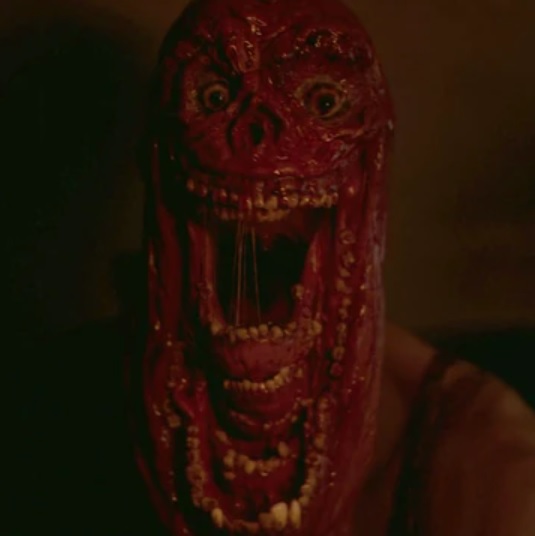
That escalation is one reason the Smile Entity has become such an effective modern horror creation. It doesn’t require a particular town, house, lake or conveniently irresponsible summer camp. It can follow the chain wherever it goes. Its appearance can also constantly change because the smiling people tormenting its victims are manifestations created using other faces. Freddy needs the jumper and glove. Jason needs the hockey mask. The Smile Entity can borrow your mum, your friend, a complete stranger or apparently half your dance company. Its costume department must be delighted.
The creature also works because Parker Finn hasn’t explained every detail about it. We understand the cycle, its connection with trauma, its ability to manipulate perception and the importance of witnessing a victim’s death, but the Entity hasn’t been given a neat biography explaining where it was born, what year it started smiling or whether an ancient monk accidentally summoned it after telling a particularly successful joke. Some monsters become less frightening the moment somebody produces a leather-bound book explaining them. The Smile Entity remains considerably more unsettling because we know enough to understand the danger without receiving its supernatural LinkedIn profile.
Two films have already given it memorable deaths, an increasingly nasty mythology and one of modern horror’s simplest visual signatures. A smile requires no elaborate special effect, yet after these films it can immediately make a perfectly ordinary person look profoundly wrong. That is an impressive achievement in a genre that has spent decades searching for new masks, weapons and monsters.
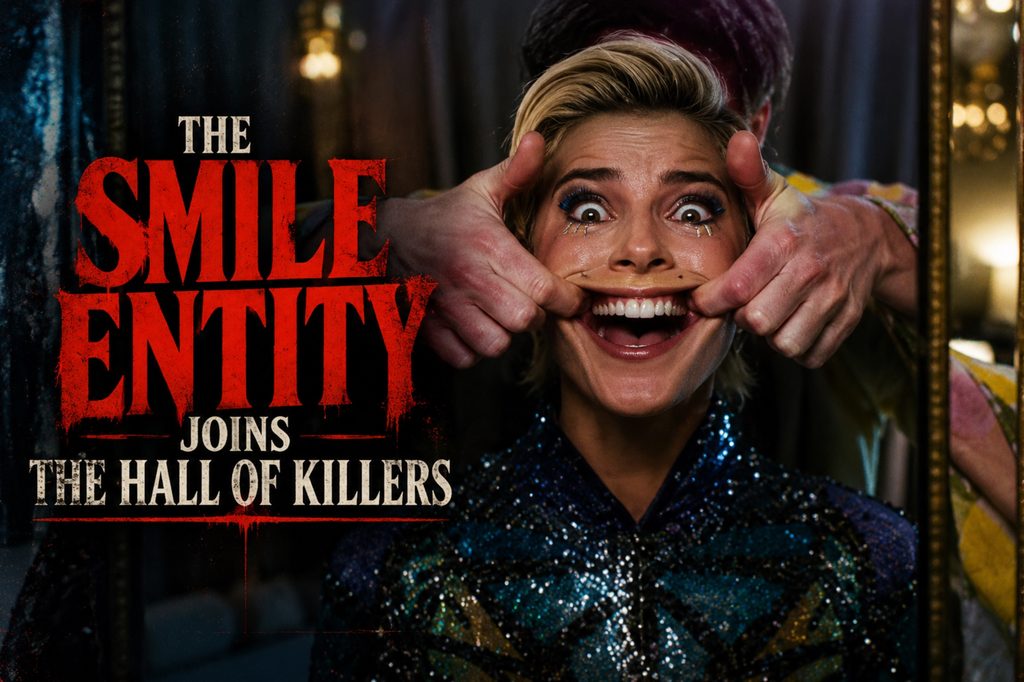
The Second Class Tier therefore feels exactly right. The Smile Entity hasn’t been around long enough to sit alongside horror’s oldest royalty, but it has already established an identity strong enough to be recognised without even having one permanent face. Few recent horror creations have made such an ordinary human expression feel so threatening.
So welcome to the Hall of Killers, Smile Entity. Your place in Second Class is waiting.
We’d tell you to look happy about it, but frankly we’d rather you didn’t.