Demon Dancer: Sua/Nara Review: Ballet, Demons and a Heroine Who Kicks Everything
If somebody pitched Demon Dancer: Sua/Nara as “a ballerina allows a demon to possess her so she can hunt other demons while incorporating ballet into martial arts”, we’d probably assume they’d recently watched Ballerina, Buffy the Vampire Slayer and several anime series during a particularly aggressive caffeine binge. Yet that is essentially the playground writer-director Attila Korosi has constructed for his 94-minute action-horror fantasy, and subtlety has very sensibly been left outside with the coats.
Demon Dancer begins with the quote, “No matter how many people you may lose, you have no choice but to go on living”, attributed on screen to an anime proverb. It’s an unexpectedly thoughtful sentiment considering we’re only moments away from somebody introducing us to a saw called Benny.
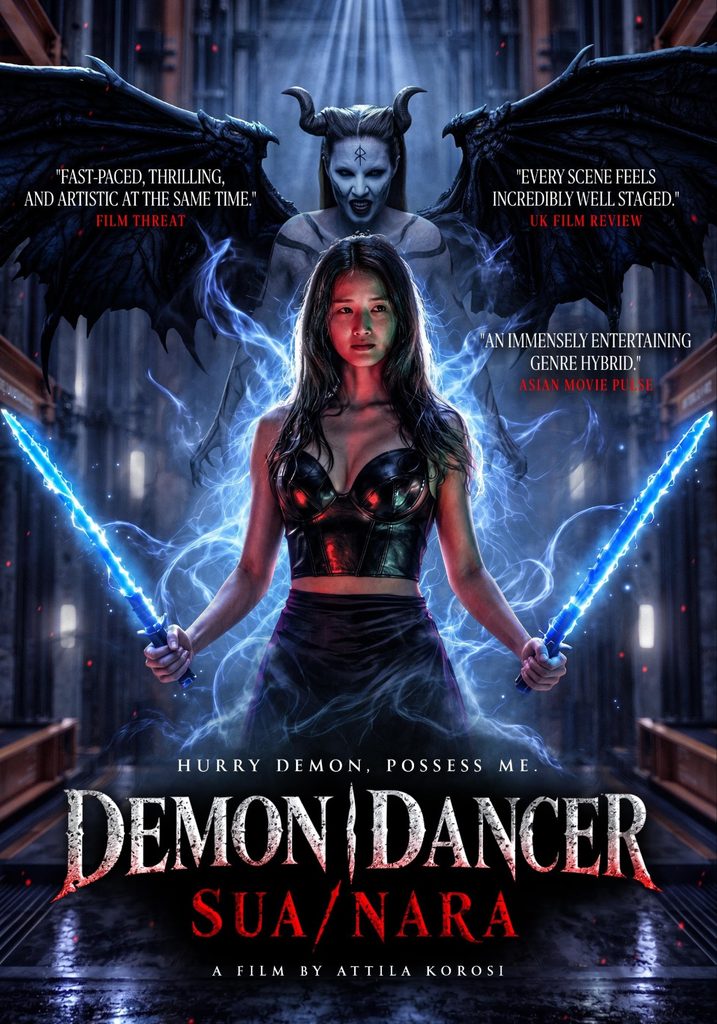
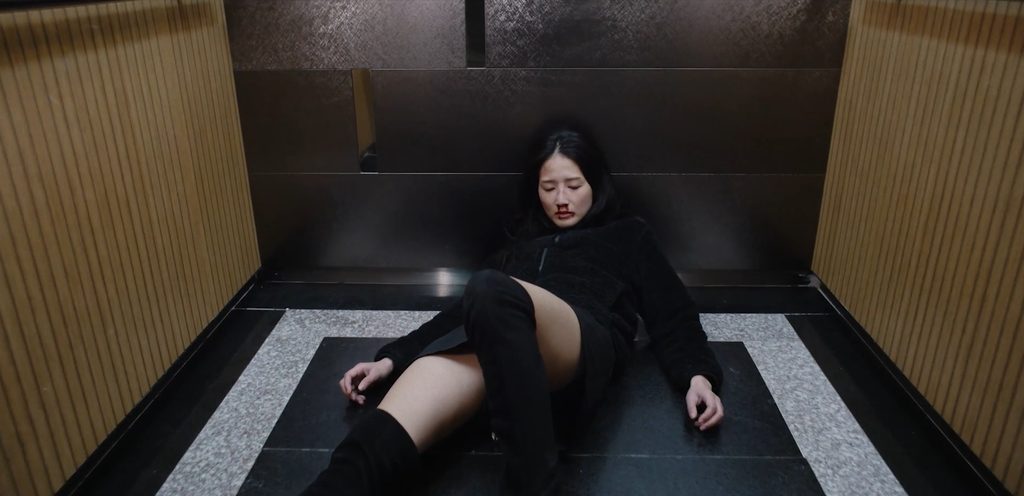
Sua (Jiyeon Han) is strapped to a table while a man caresses her stomach, records her on his phone and prepares to demonstrate his preferred approach to interpersonal communication. Benny comes out, Sua loses a finger, and somewhere beyond the normal world a demonic woman named Nara (Anita Korosi) desperately wants to be released. Nara has wings, sinister makeup and strategically positioned coverings over her breasts, because apparently even the demonic realm has standards regarding public decency.
The makeup is terrific, though, immediately giving Nara an effective supernatural appearance without requiring expensive digital effects. Sua’s captor explains that extreme pain eventually prevents people from screaming, removes her gag and waits for his theory to be proven. Instead, Sua says one word: “Nara.” This turns out to be considerably worse for him than screaming.
The frightened prisoner disappears almost instantly. Sua’s severed finger magically reconnects itself, her restraints break and she becomes an expressionless killing machine with Nara looming behind her. Glowing blue weapons materialise in Sua’s hands and the unfortunate owner of Benny discovers that abducting ballerinas containing supernatural entities is a surprisingly poor long-term career strategy.
Then comes a gorgeous red title card featuring a ballerina between the words Demon Dancer: Sua/Nara. Whatever concerns might subsequently arise about the film, Korosi certainly understands presentation.
Demon Dancer Lets Jiyeon Han Off the Leash
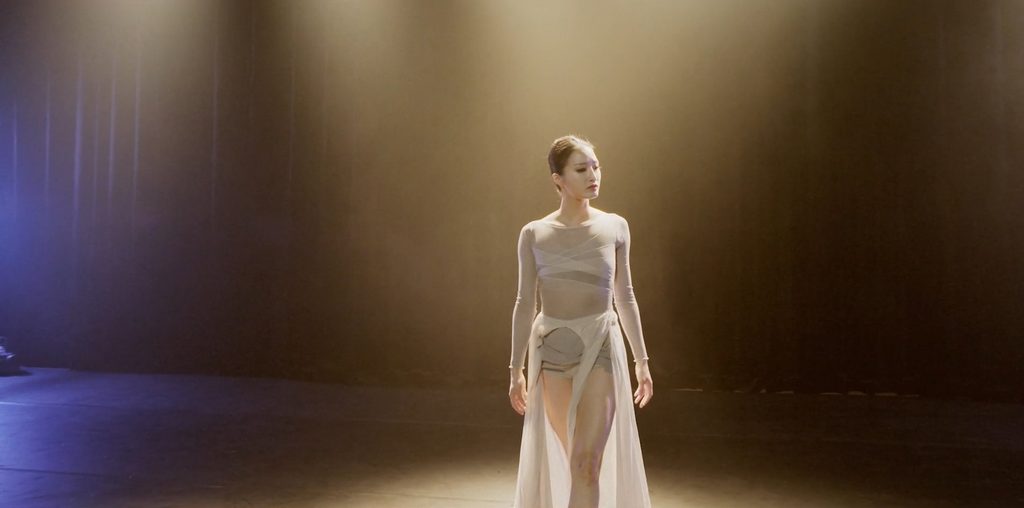
Once Sua gets moving, the film reveals its biggest asset: Jiyeon Han. According to the credits and production information supplied with the film, Han is also a ballet dancer and serves as an executive producer. Demon Dancer marks a striking introduction to her as an action lead because her physical abilities immediately distinguish her from somebody who has simply spent several weeks learning choreography before shooting.
Sua explains that she hates demons and intends to eliminate them. Nara can manifest in human form and, despite being the supernatural creature currently sharing Sua’s personal space, becomes her ally. Their relationship eventually involves Nara inhabiting Sua’s body, granting her the confidence and abilities required for her mission.
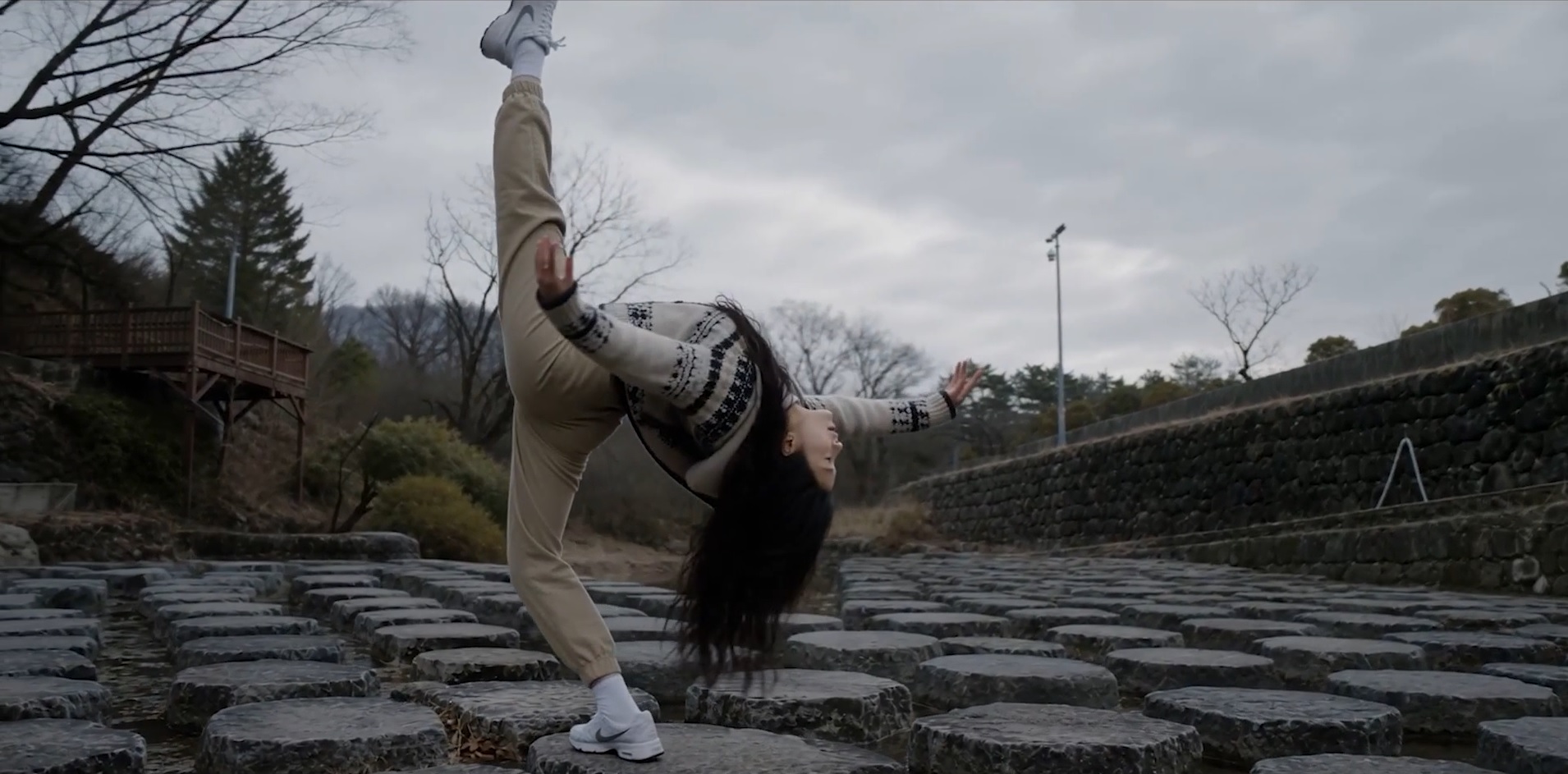
Think Peter Parker discovering the symbiote suit in Spider-Man 3, except instead of pointing finger guns at women on the pavement, Sua can kick somebody through next Thursday. There is even time for her to walk along a corridor, casually raise one leg until it’s practically vertical against the wall and perform the splits. Does this advance the plot? Not particularly. Would most of us require an ambulance after attempting it? Absolutely. As my gran always said, if you’ve got it, flaunt it.
Conveniently, some men arrive immediately afterwards so Sua can demonstrate that the flexibility isn’t merely decorative. What follows is one of Demon Dancer’s best sequences. The perspective shifts into Sua’s point of view as fists and feet fly towards the camera and she charges through opponents with impressive speed. Parkour enters the equation too, transforming the sequence into something reminiscent of Hardcore Henry, except our protagonist could probably perform Swan Lake immediately afterwards without needing to stretch.
The choreography is excellent and the first-person camerawork gives the fighting a physical immediacy that the film doesn’t always achieve elsewhere. Gui-Duck Kwon is credited as stunt coordinator, and the production notes identify him as the action choreographer whose previous credits include The Villainess and Carter.
Things become even more impressive when Sua battles opponents on a descending automated parking system. According to the filmmaker’s production notes, the sequence was performed practically without visual effects. Knowing that makes an already effective scene considerably more impressive, because people are actually throwing themselves around on a moving mechanical structure rather than enjoying the considerably safer experience of pretending in front of a green wall.
Han absolutely sells it. She’s fast, flexible and physically convincing, and there’s a genuine screen presence to her during the action sequences. It’s far too early to start crowning anyone the next Michelle Yeoh or Cynthia Rothrock, but Demon Dancer certainly makes us interested in seeing what Han could do with another action role and a larger production behind her. Unfortunately, once everybody stops kicking each other, the film becomes considerably less assured.
There’s Actually a Story Between All the Kicking
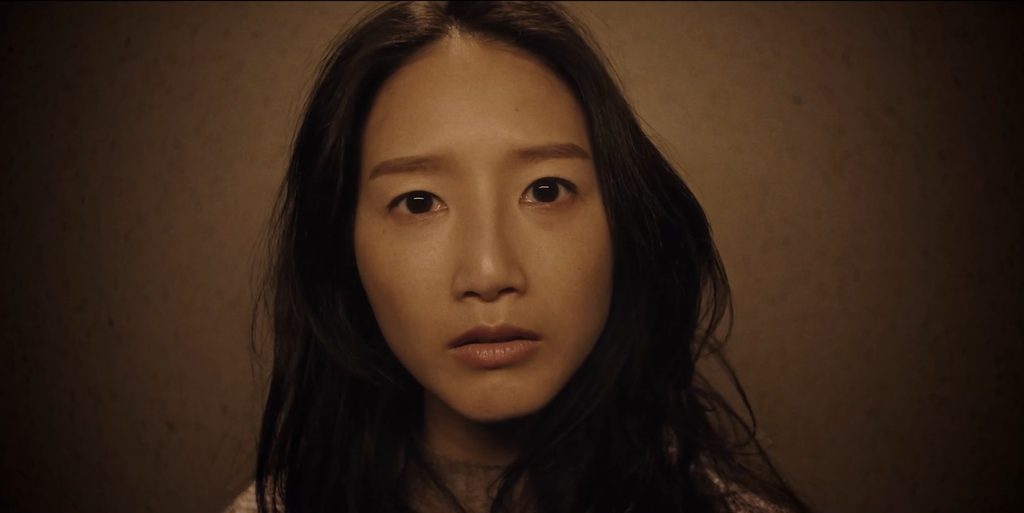
Demon Dancer isn’t merely 94 minutes of Sua repeatedly entering rooms and reducing their occupancy, although there are moments when it appears determined to test that possibility. The relationship between Sua and Nara gradually reveals the emotional motivation behind all this supernatural violence. Sua was a ballerina who fell in love with Jack, played by Attila Korosi. Their meet-cute is certainly memorable because she hits him with her car. Romance is alive and well.
Fortunately Jack is fine and even has roses handy, having been an admirer who attended one of Sua’s ballet performances. Their relationship progresses to marriage, and we eventually discover that Jack became afflicted by a demonic curse. Sua was forced to kill the man she loved, leaving her desperate to discover who was responsible and why.
That grief explains her decision to allow Nara into her body. Rather than accidentally becoming possessed and spending the film trying to perform an exorcism, Sua essentially hires a demon as supernatural investigative software. Nara can give her the abilities required to fight other demons while helping her trace the source of the curse that destroyed her husband.
It’s a strong premise, and certainly more interesting than simply having Sua wake up one morning with superpowers. Korosi structures the story non-linearly, with memories gradually filling in Sua’s history while the present-day action continues. At one point Nara uses Sua’s memories of Jack to reconnect her with the reason she keeps fighting. That gives the barrage of martial arts some emotional foundation, although the film occasionally buries that foundation beneath another incoming delivery of disposable opponents.
The ballet component also prevents Sua from becoming just another martial-arts protagonist. Her physicality informs the action, with flexibility and movement naturally fitting the character rather than being bolted onto her because somebody thought ballerinas fighting demons sounded cool. It does sound cool, admittedly, but at least there’s some internal logic behind it.
There’s also a skull-like mask involved. Nara tells Sua that they’re strongest while wearing it, and once placed over her face it transforms and seemingly merges with her. Between the mask, demonic possession, glowing weapons and supernatural enemies, Demon Dancer enthusiastically embraces its anime influences without ever worrying that somebody might ask it to calm down. Nobody should ask it to calm down, although somebody might ask it to occasionally sit down.
Ninety-Four Minutes of Adrenaline Can Be Hard Work
The biggest problem with Demon Dancer is that its greatest strength eventually starts working against it. There are a lot of fights. Sua fights somebody, moves somewhere else, fights several more people, receives some information, remembers something, finds another location and fights another collection of people. Eventually the rhythm becomes predictable, and even well-choreographed action loses some impact when the audience hasn’t had enough time to miss it.
The underground rave is a good example. Sua and Nara arrive at a warehouse-like space packed with people swaying beneath the lights, and it immediately evokes the grimy energy of The Prodigy’s No Good (Start the Dance) video. Naturally there are demons present because apparently even Satan’s workforce needs somewhere to go on a Friday night.
Sua encounters one and starts fighting. Then more arrive. The surrounding ravers remain remarkably committed to their evening and largely continue dancing while supernatural violence unfolds nearby. Perhaps the drinks were expensive and everybody was determined to get their money’s worth.
Han is impressive again, but by this stage we’ve already seen her demonstrate that she’s impressive several times. Another fight confirms something we already know rather than necessarily escalating it. That’s where the 94-minute running time becomes noticeable. Demon Dancer has enough mythology for a feature and enough action for approximately three of them, but the balance isn’t always right. The opening is so energetic that later fights have to work increasingly hard to provide something we haven’t already experienced.
A little more restraint could have made the best sequences feel even better. If you eat one doughnut, it’s magnificent. Eat twelve consecutively and somewhere around number seven you begin questioning both the doughnuts and the decisions that brought you here. The same applies to action cinema.
The nonlinear storytelling doesn’t always help the pacing either. Flashbacks, memories, ballet sequences and conversations with Nara interrupt the forward movement, while the constant return to combat then sends everything racing again. The result can feel simultaneously frantic and oddly stretched.
Jiyeon Han Carries Demon Dancer
Performances are another area where the film is inconsistent. Han is easily the standout, particularly when the role depends on physical storytelling. She’s most convincing when Sua is fighting, dancing or simply carrying herself with the confidence of somebody who knows she could introduce your forehead to her ankle without spilling her drink.
Her quieter material is less effortless, but this is an ambitious leading role and the physical demands alone are considerable. The film asks Han to carry ballet, martial arts, horror, fantasy, romance and grief while frequently acting opposite a supernatural character inhabiting her own body. That’s quite a shopping list for a feature debut.
The supporting performances vary considerably more. Anita Korosi has a memorable visual presence as Nara, especially in demonic form, but elsewhere the acting can feel stiff, with some dialogue delivered without the natural rhythm needed to sell the film’s more emotional moments.
Attila Korosi’s appearances as Jack are similarly uneven. There’s sincerity in the relationship with Sua, but some moments don’t feel entirely natural, including a wedding sequence where Jack’s enthusiastic waving almost threatens to become the ceremony’s most supernatural event.
This matters because Sua’s grief over Jack is supposed to drive everything that follows. The stronger we believe in that relationship, the more weight her mission carries. When performances or dialogue don’t quite sell those memories, the film has to rely on Han and the action to pull us back in.
Technically, however, Demon Dancer frequently punches well above what appears to be its independent weight. Gareth Taylor’s cinematography gives the film a polished visual identity, particularly when neon colours dominate the frame. There are blues, reds and saturated lighting throughout, while camera movement helps prevent fights from becoming a succession of bland wide shots. The grading complements that heightened world nicely, making the film feel closer to a live-action graphic novel or anime adaptation than straightforward low-budget horror.
The effects fluctuate more noticeably. Some visual effects work very well within the film’s heightened style, while other moments reveal the limitations of the production. That’s perhaps inevitable when your screenplay demands demons, supernatural weapons, bodily transformations and an apparently unlimited supply of people requiring a kicking.
The practical makeup fares particularly well. Nara’s demonic appearance is immediately memorable, and the film isn’t afraid of some gruesome imagery when required. The makeup department includes Kim Dohyun and Kim Doyeon on special makeup effects, with So Jihun heading the department and Lee Seonmin credited as makeup artist.
Demon Dancer Is Messy, Exhausting and Rather Good Fun
There is an obvious audience for Demon Dancer: Sua/Nara. If Buffy the Vampire Slayer, John Wick, Ballerina, martial-arts cinema, anime and supernatural horror all occupy neighbouring shelves in your collection, Attila Korosi has essentially thrown those shelves into a blender and pressed the button marked “maximum violence”.
That doesn’t mean everything survives the blending process. At 94 minutes, the film could use tighter pacing. The sheer number of fights becomes taxing rather than increasingly exciting, supporting performances don’t consistently match Han’s physical charisma, and the production can jump from something genuinely spectacular to something noticeably constrained by its resources within minutes.
Yet ambition counts for something in independent cinema, particularly when there’s visible evidence of that ambition actually reaching the screen. Demon Dancer doesn’t merely talk about being an action fantasy. It puts its lead performer onto a real descending parking system and choreographs a fight there. It throws the camera into first-person combat. It combines ballet with martial arts, practical makeup with digital effects, demons with glowing weapons and grief with supernatural revenge.
Sometimes it looks fantastic. Sometimes it looks cheap. Occasionally it looks completely bonkers. We’d still rather have that than boring.
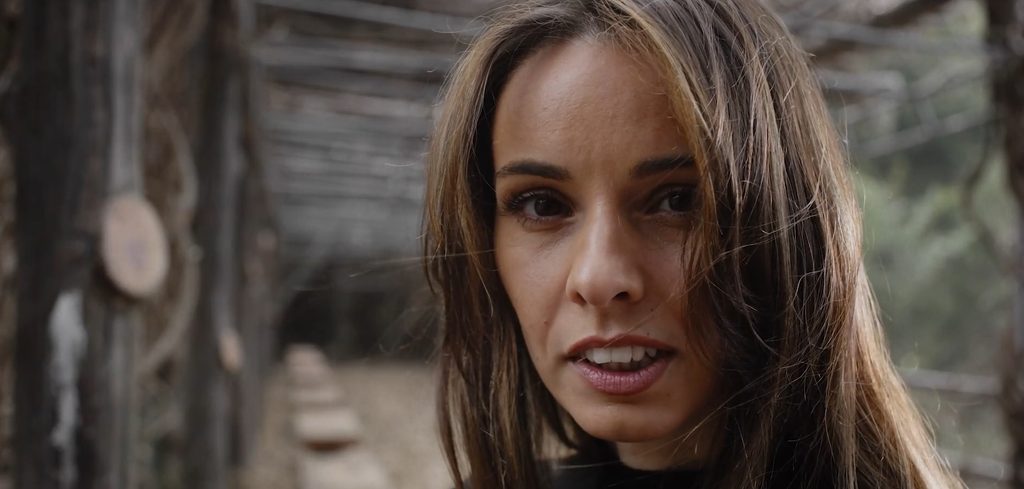
Most importantly, Demon Dancer introduces Jiyeon Han as someone worth watching. The film might surround her with too much mythology, too many fights and performances of wildly varying effectiveness, but whenever Sua starts moving, those problems temporarily disappear.
Korosi has created something messy but distinctive, and there’s enough impressive action filmmaking here to make its rough edges easier to forgive. Cut some of the repetition, give the story more room to breathe and surround Han with performers capable of matching her presence, and there could be something seriously exciting in this concept.
As it stands, Demon Dancer: Sua/Nara is an energetic, neon-soaked supernatural action film that occasionally exhausts itself trying to prove how much it can do. But when you’ve got demons, ballet, martial arts, glowing weapons, severed fingers and a heroine capable of putting her foot above her own head, being accused of doing too much feels considerably better than being accused of doing nothing. And remember: if you’ve got it, flaunt it. Preferably before kicking a demon through a wall.