Clarence Boddicker Blasts His Way Into the Hall of Killers
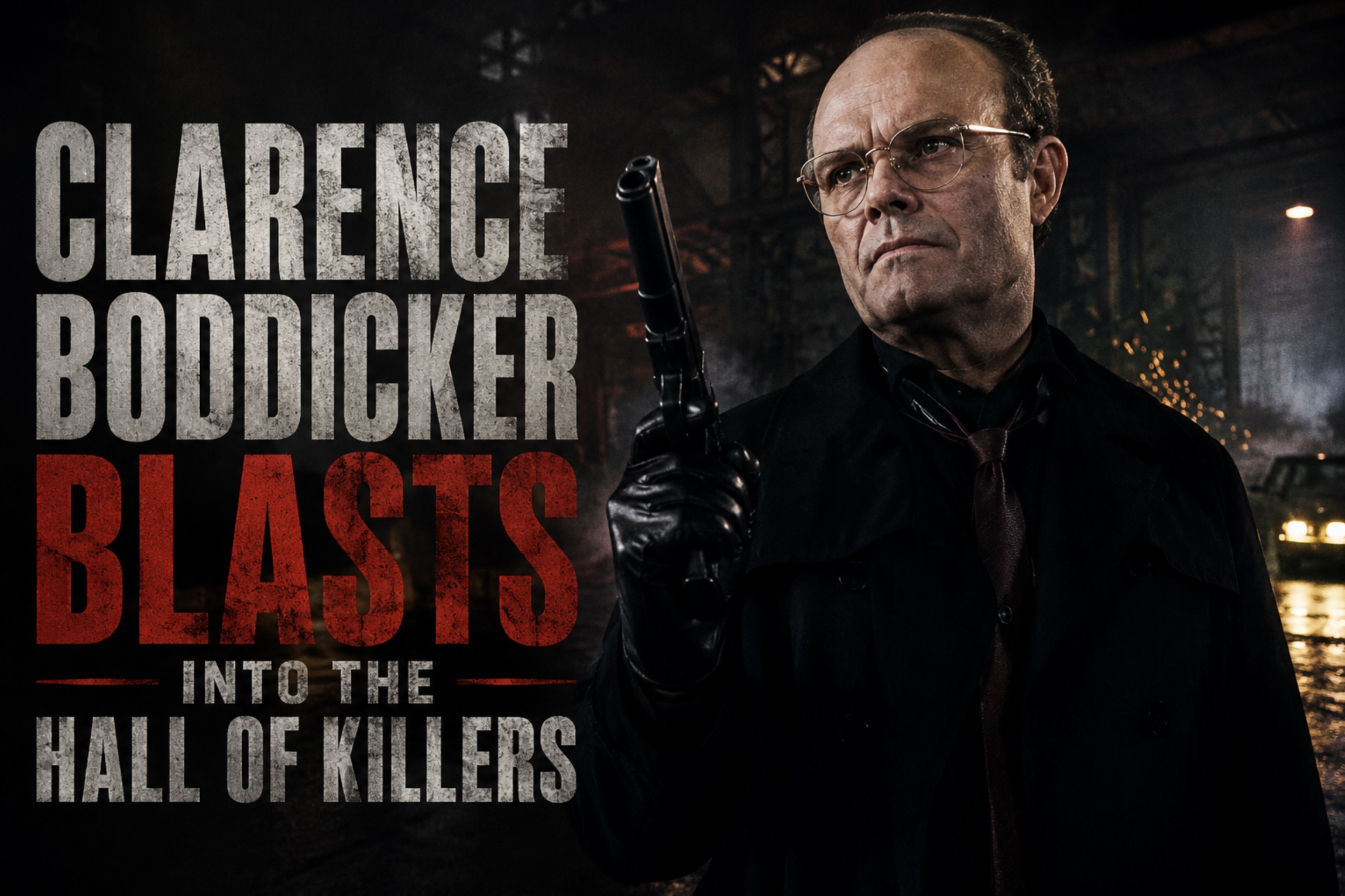
There are killers who stalk campsites, killers who invade dreams and killers who spend an extraordinary amount of time standing silently behind hedges. Then there is Clarence Boddicker, a man who looks like he should be asking why the quarterly sales figures are down before casually blowing somebody’s kneecaps off. The RoboCop crime boss has officially been inducted into the Stalk & Slash Hall of Killers, taking his rightful place in the Second Class Tier, and before anyone starts complaining that RoboCop isn’t technically a horror film, we invite them to rewatch Alex Murphy’s death, Emil Antonowsky’s encounter with toxic waste and what subsequently happens to him when Clarence’s car arrives. We’ll wait.
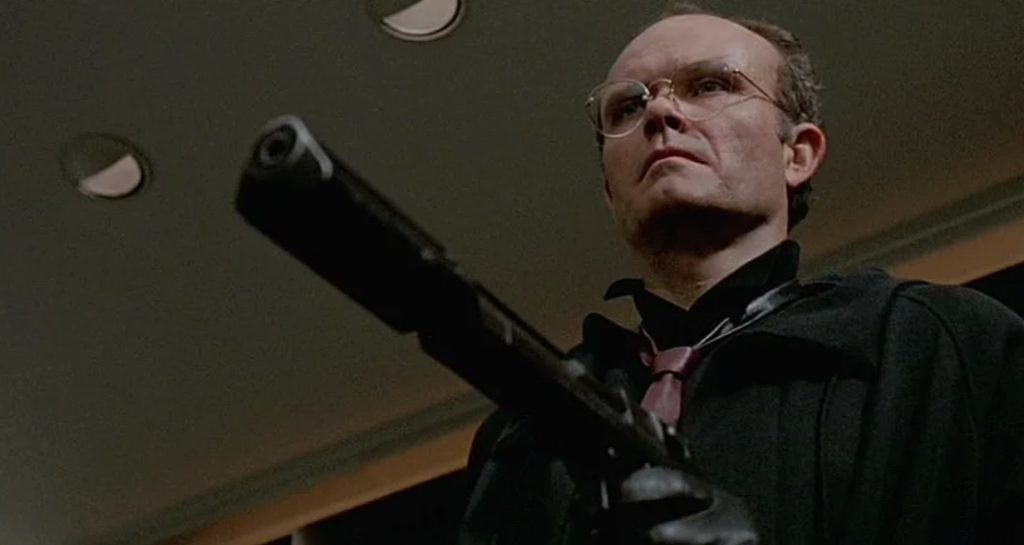
Clarence might not wear a mask, possess supernatural powers or have an elaborate origin involving an unfortunate childhood at summer camp, but he really doesn’t need any of that. What he has instead is a gang of psychopaths, friends in extremely high places and the relaxed demeanour of a man who could order a coffee and somebody’s execution using precisely the same tone of voice. He’s cruel, intelligent, funny, completely without remorse and responsible for creating RoboCop by making the fairly significant tactical error of murdering Alex Murphy. Welcome to the Hall, Clarence. We’d normally explain the rules to new inductees, but in this particular case we’ve decided they’re more what you’d call guidelines.
The Man Who Created RoboCop by Murdering Him
Introduced in Paul Verhoeven’s magnificent 1987 science-fiction action satire RoboCop, Clarence Boddicker is played by Kurtwood Smith, and it remains one of the great pieces of villain casting. Clarence doesn’t look like the archetypal 1980s crime lord. There’s no enormous physique, ridiculous designer suit, facial scar or private island containing a shark tank. He’s a balding bloke with glasses who could conceivably turn up to repair your boiler, explain that you need a new thermostat and then murder everyone in the kitchen.
Clarence leads a vicious Detroit gang consisting of Emil Antonowsky, Leon Nash, Joe Cox and Steve Minh, and collectively they’re not exactly candidates for Employee of the Month. They rob, murder and terrorise their way around the city with very little concern about being caught, partly because Clarence knows something most ordinary criminals don’t: he has corporate protection. That relationship becomes crucial later, but our introduction to just how monstrous Boddicker really is comes through the murder that changes the entire course of the film.
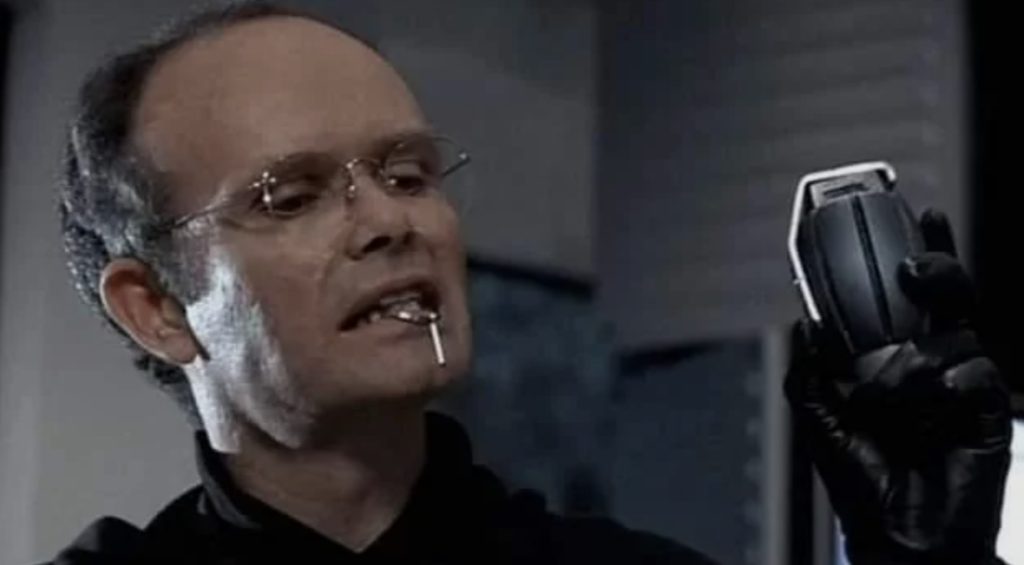
After police officers Alex Murphy and Anne Lewis pursue the gang to an abandoned industrial complex, Murphy becomes separated from Lewis and finds himself surrounded. What follows remains extraordinarily brutal even by the standards of a film famous for its violence. Clarence and his men don’t simply kill Murphy; they make an event out of it, laughing and taunting him while systematically destroying his body with sustained shotgun fire. Clarence eventually delivers the final devastating shot, leaving Murphy mortally wounded. It’s sadistic, prolonged and deliberately unpleasant, and it establishes Boddicker as something far worse than a criminal simply doing what is necessary to escape.
Unfortunately for Clarence, there is one tiny flaw in the plan. He has just murdered the man who is about to become RoboCop, which in retrospect is the sort of workplace mistake that probably deserves its own training video.
Congratulations, Clarence. You Played Yourself
Murphy’s ruined body becomes the basis for Omni Consumer Products’ RoboCop programme, transforming the murdered police officer into the heavily armoured cyborg law enforcer that Clarence really could have done without. Initially, much of Murphy’s identity appears to have been erased, but memories gradually begin resurfacing, and wouldn’t you know it, being horrifically murdered by four laughing lunatics and their bespectacled boss is apparently the sort of thing that sticks with you.
As Murphy begins rediscovering who he was, RoboCop starts dismantling Clarence’s operation and eventually storms a cocaine factory where Boddicker is conducting business. Their confrontation also exposes the wider conspiracy running through RoboCop. Clarence isn’t merely an unusually enthusiastic freelance psychopath; he works for OCP executive Dick Jones, acting as an unofficial enforcer whenever Jones requires a problem to disappear without appearing on the corporate expense report.
It’s one of the cleverest elements of RoboCop. Clarence represents the obvious criminal violence destroying Detroit, while Jones represents something far more respectable-looking but no less corrupt. One operates from warehouses surrounded by armed criminals; the other operates from an executive office surrounded by people who probably describe mass unemployment as “restructuring”. The film makes it increasingly clear that the distance between them isn’t nearly as great as society would like to pretend.
Clarence also proves that he’s considerably smarter than the maniacs working beneath him. When RoboCop arrests him, he immediately understands that revealing his connection to Dick Jones gives him leverage. Jones subsequently gets him released and supplies the gang with Cobra Assault Cannons, weapons powerful enough to turn a normal vehicle into something resembling an Airfix kit somebody has stamped on. Clarence gets another opportunity to kill RoboCop, although given how well the first attempt ultimately worked out for him, perhaps somebody should have suggested a different career path.
One of Cinema’s Most Cheerfully Horrible Bastards
What makes Clarence such an effective villain isn’t simply the amount of violence surrounding him. RoboCop contains plenty of violent people, and Detroit as depicted in the film isn’t exactly troubling the tourist board. What distinguishes Boddicker is how completely comfortable he seems with everything he does. Kurtwood Smith rarely plays him as somebody struggling to control his temper. Clarence jokes, smiles, negotiates and murders people with almost the same emotional temperature throughout.
The murder of Murphy demonstrates that sadism particularly clearly. Murphy is already helpless, so there is no practical reason to prolong what happens. Clarence and his gang do it because they enjoy having power over him. Violence isn’t simply part of Clarence’s profession; Clarence likes violence, and the casualness with which Smith communicates that makes him far more disturbing than a villain constantly screaming about how insane he is.
Yet Clarence isn’t merely reckless. He’s organised, observant and fully aware of the system protecting him. He knows when violence will solve a problem and when information is more valuable. He understands Dick Jones’ position within OCP and immediately uses that knowledge when RoboCop threatens to bring his criminal empire crashing down. In other words, he’s a professional. Admittedly, his chosen profession appears to be Being Absolutely Fucking Awful, but nobody can accuse him of lacking commitment.
Yes, We’re Counting RoboCop
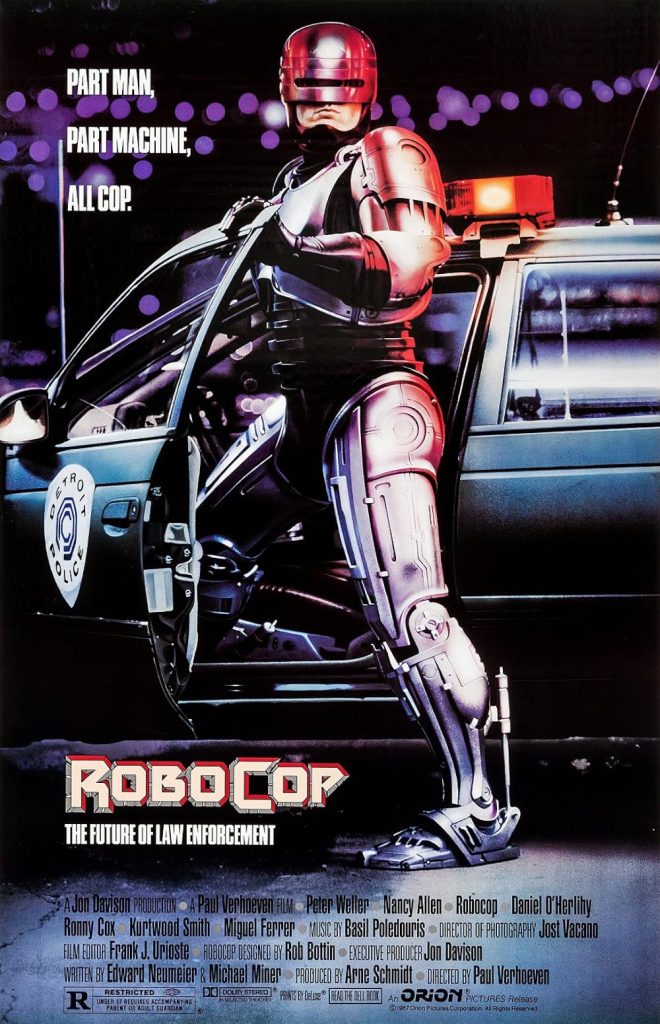
Before the genre police arrive carrying clipboards and a 900-page definition of what technically constitutes horror, nobody is suggesting RoboCop suddenly becomes a slasher film because Clarence Boddicker has entered the Hall of Killers. It is principally science fiction, action and vicious social satire, but Verhoeven’s film also contains imagery that comfortably crosses into horror territory.
Murphy’s death is effectively a sequence of bodily destruction. RoboCop himself has obvious Frankenstein echoes: a dead man reconstructed through technology by a powerful institution that regards what remains of his humanity as corporate property. The horror comes not merely from what happened to Murphy’s body but from the idea that even death hasn’t stopped a company from finding a way to own him.
Then there’s Emil Antonowsky, whose late-film encounter with toxic waste produces one of the most gloriously disgusting moments in mainstream 1980s cinema. After crashing into a container of toxic chemicals, Emil emerges grotesquely disfigured, his body deteriorating as he staggers around desperately asking for help. Clarence then drives towards him and, before he can react, Emil explodes across the windscreen in a spectacular shower of liquefied henchman. It’s difficult to watch that sequence and argue that RoboCop doesn’t occasionally wander into body horror, wipe its feet and make itself comfortable.
Clarence fits perfectly within that darkness because underneath all the futuristic technology and satirical exaggeration he is completely human. There is no curse to explain him, no demonic possession and no childhood trauma offered as an excuse. He is simply a cruel man who has discovered that a corrupt system rewards people like him.
Kurtwood Smith Makes Glasses Terrifying
A huge part of Clarence’s lasting impact comes from Kurtwood Smith, who understood that the character didn’t need theatrical villainy to dominate the film. Smith’s relatively ordinary appearance works brilliantly against expectations. Clarence could pass for a teacher, businessman or somebody’s slightly grumpy neighbour right up until he starts discussing murder.
Smith gives him intelligence, humour and a wonderfully dry delivery, allowing Clarence to be funny without ever making him harmless. That’s an important distinction. Audiences enjoy watching him because he’s charismatic and unpredictable, but RoboCop never asks us to forget that we’re watching a sadistic murderer. His jokes don’t redeem him; if anything, the fact that he can find humour in horrific situations makes him worse.
Of course, another generation would later know Smith primarily as Red Forman in That ’70s Show, which gives revisiting RoboCop an additional and slightly surreal quality. Imagine Red Forman deciding that threatening to put his foot somewhere unpleasant simply isn’t getting results anymore, so he acquires a cocaine operation, several heavily armed criminals and military-grade weaponry. Suddenly Eric Forman leaving the basement light on doesn’t seem quite so serious.
The Worst Rematch Clarence Could Possibly Have Requested
Everything eventually comes full circle at the abandoned steel mill, where Clarence and his gang hunt the damaged RoboCop using the Cobra Assault Cannons supplied by Jones. By this point, however, Murphy has reclaimed enough of himself that the confrontation carries considerably more weight than a standard hero-versus-villain showdown. RoboCop is effectively confronting the man who murdered him, while Clarence is facing the physical consequence of a killing he assumed had been completed.
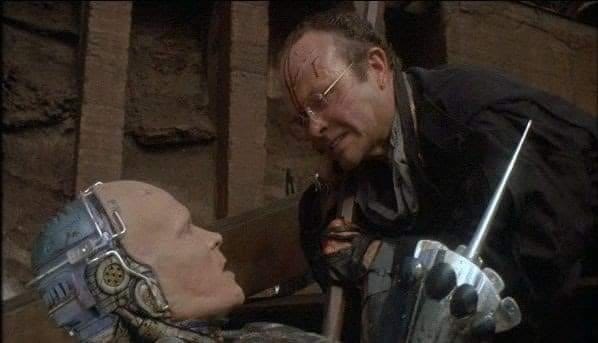
Clarence comes surprisingly close to doing it twice. With RoboCop badly damaged, Boddicker attacks him with a metal spike and appears to have the advantage. Unfortunately, Clarence has overlooked one fairly important feature of RoboCop’s equipment: Murphy has a long, sharp data interface spike built directly into his hand. RoboCop drives it into Clarence’s throat, finally killing the man responsible for his original death.
There is something wonderfully appropriate about Clarence’s downfall. His entire existence in the film revolves around believing violence solves everything because powerful people will protect him from the consequences. He murders Murphy because he can, assumes the problem has disappeared and carries on with business. Instead, Murphy comes back armoured, armed and considerably less vulnerable to shotguns. Clarence essentially creates the one opponent capable of destroying his gang and exposing the corporate corruption keeping him safe. For a supposedly intelligent criminal mastermind, that is an impressively catastrophic own goal.
Why Clarence Boddicker Belongs in the Hall of Killers
The Hall of Killers cannot consist exclusively of supernatural slashers and masked maniacs because that would exclude some of cinema’s greatest human monsters. Clarence Boddicker absolutely qualifies. He’s responsible for one of the most brutal murders in mainstream genre cinema, commands a gang responsible for numerous deaths and acts as the murderous link between Detroit’s street-level crime and the corruption inside OCP.
More importantly, he remains enormously memorable nearly four decades after RoboCop was released. Clarence doesn’t have Freddy Krueger’s glove, Jason Voorhees’ hockey mask, Leatherface’s chainsaw or Michael Myers’ expressionless face. He has a pair of glasses, a deeply unpleasant personality and Kurtwood Smith delivering every line as though murder is merely another item he’s hoping to get crossed off before lunch. Somehow, that’s enough.
His importance to RoboCop also goes far beyond being the villain Murphy eventually needs to defeat. Clarence is responsible for destroying Alex Murphy’s human life and therefore indirectly responsible for creating RoboCop. Dick Jones may represent the larger institutional evil within the story, but Clarence makes everything personal. He’s the face buried inside Murphy’s returning memories and the tangible connection between the man he once was and the machine OCP turned him into.
Second Class Tier
Clarence enters the Hall of Killers in the Second Class Tier, and that’s exactly where he belongs. He doesn’t have the enormous franchise body count or horror-specific cultural legacy required to sit alongside the absolute giants at the top of the Hall, but his sadism, intelligence, longevity and importance to one of the greatest genre films of the 1980s make him far too significant for the lower reaches.
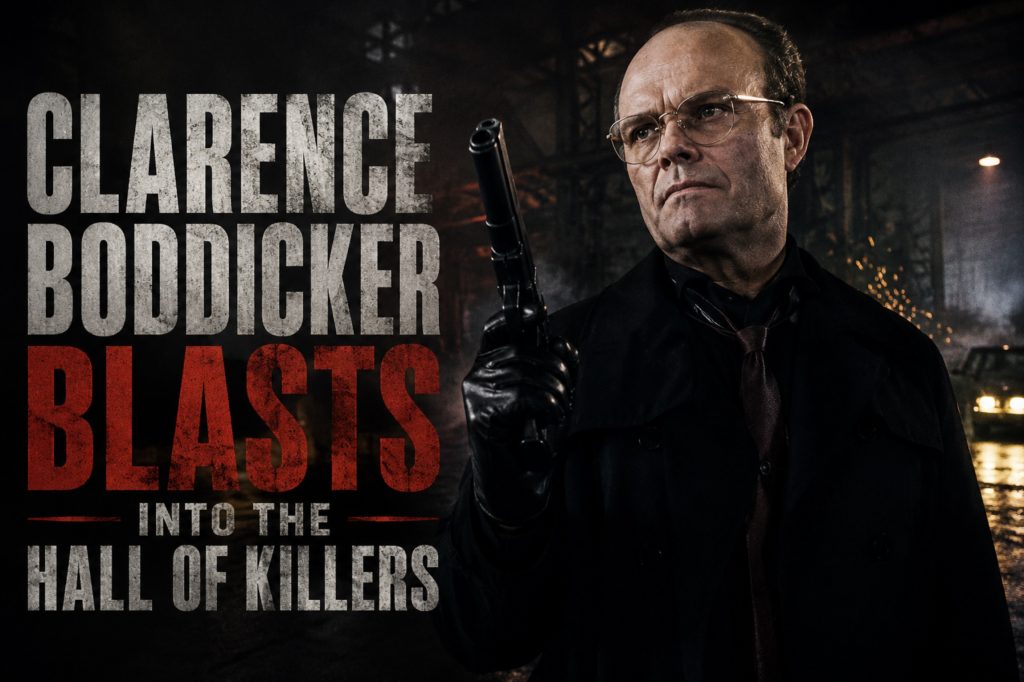
He’s also responsible for creating one of cinema’s greatest heroes entirely by accident. Had Clarence simply left Alex Murphy alone, Murphy would have remained a Detroit police officer. Instead, Clarence murdered him, OCP rebuilt him, RoboCop came looking for him and Clarence eventually discovered that shooting somebody to pieces becomes significantly less clever when they return as a heavily armoured cyborg with perfect aim and a massive spike hidden in their hand.
So welcome to the Stalk & Slash Hall of Killers, Clarence Boddicker. Your place in the Second Class Tier is ready, your fellow killers have been informed that you’re arriving, and we’ve carefully prepared the standard induction paperwork. We were going to ask you to sign it, but after reviewing your employment history we’ve decided we’ll just tick the box ourselves and stay out of your fucking way.