They Follow Wraps Filming as Maika Monroe Returns to the Nightmare That Made It Follows a Modern Horror Classic
More than a decade after something began walking towards Jay Height and simply refused to stop, Maika Monroe has completed filming on They Follow, the long-awaited sequel to David Robert Mitchell’s It Follows. Production company Curious Gremlin has confirmed that principal photography has wrapped, bringing the follow-up another substantial step closer to the screen after years of discussion surrounding a possible continuation.
The sequel reunites Monroe with writer-director David Robert Mitchell, who created one of the simplest and most unnerving horror concepts of the last decade with the original film. They Follow also brings back several important members of the creative team behind It Follows, including cinematographer Mike Gioulakis, editor Julio C. Perez IV and composer Disasterpeace, whose electronic score became inseparable from the atmosphere of Mitchell’s original nightmare. Mitchell has previously stressed the importance of Disasterpeace’s involvement, saying he would not have wanted to make the sequel without him.
Exactly what Jay will be facing this time remains deliberately hidden. Plot details for They Follow have not been officially revealed, although the story is reported to take place around ten years after the events of It Follows. Mitchell has described the screenplay as its own unique story while remaining connected to the first film, but beyond that, the filmmakers are keeping the central idea under wraps. Even the plural title has inevitably encouraged questions about whether the nature or scale of the threat has changed, but until Mitchell or the production confirms what They Follow actually means, anything beyond the title itself remains speculation.
What has been confirmed is a considerably expanded cast. Joining Monroe are Naomi Ackie, Jackie Earle Haley, Justine Lupe, Michael Gandolfini, Anna Mirodin, Jayne Taini, Tom Pecinka, Melora Walters, Ben Krieger, Natalie Shinnick and Jan Hoag, with further casting information emerging as production moved forward. The characters many of those actors are playing remain undisclosed, giving audiences very little indication of where Mitchell intends to take Jay after the events of the first film.
Why It Follows Still Gets Under Your Skin
The prospect of returning to this world carries considerably more weight because It Follows wasn’t simply another successful supernatural horror film. Mitchell’s second feature arrived with an idea so straightforward that it could be explained in seconds, yet the execution turned it into a film capable of making an audience suspicious of virtually anybody walking slowly in the background.
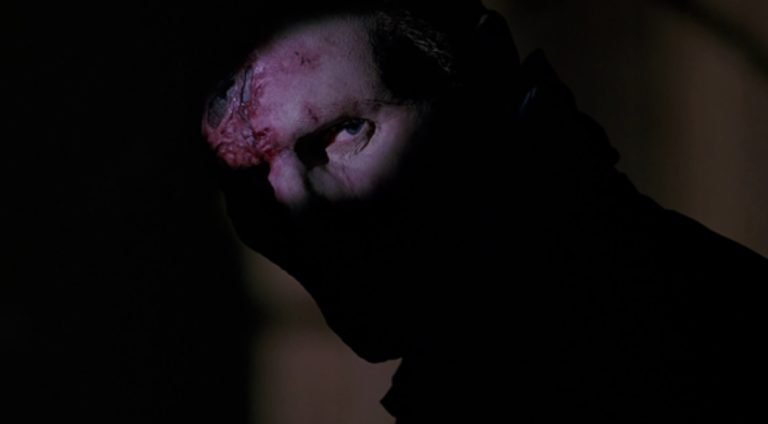
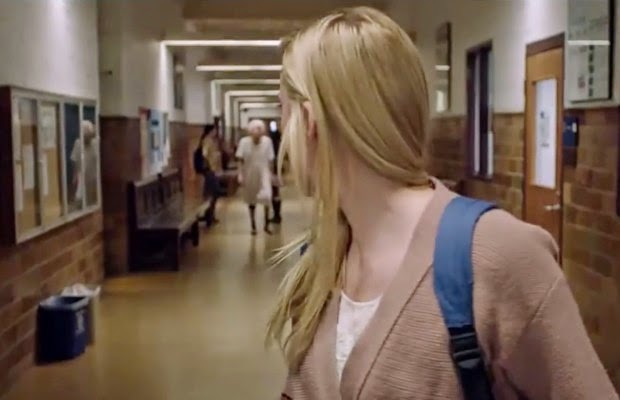
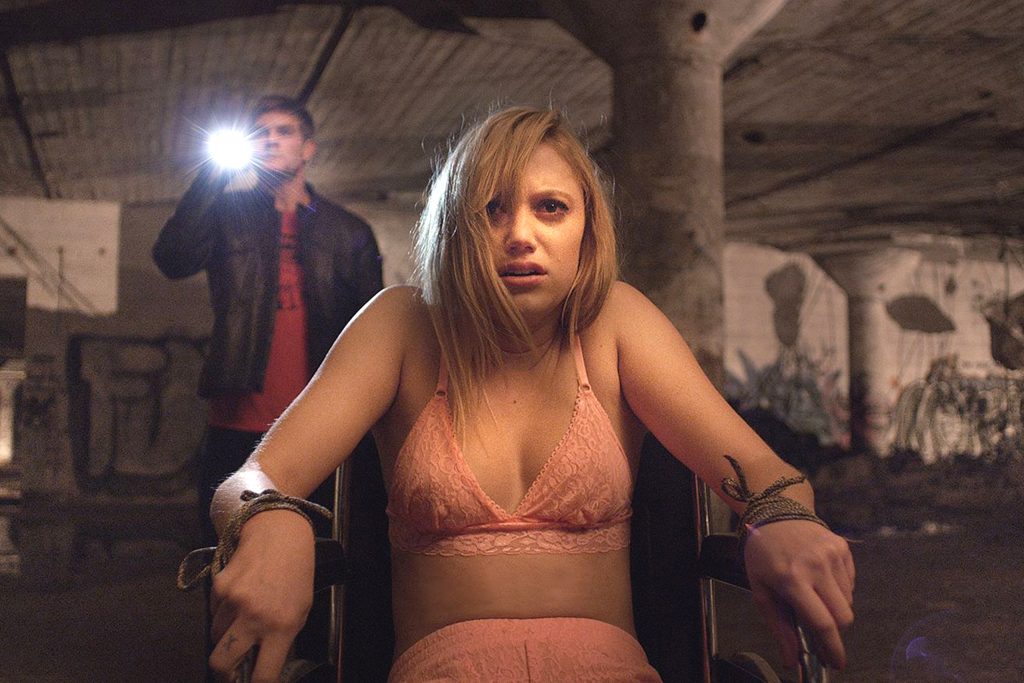
Monroe plays Jay Height, a 19-year-old living in suburban Michigan who sleeps with her new boyfriend Hugh, played by Jake Weary. Afterwards, Hugh reveals that he has passed something on to her. An entity will now pursue Jay relentlessly, walking towards her wherever she goes and assuming the appearance of different people. Sometimes it looks like a stranger. Sometimes it takes a familiar form. Only those who have carried the curse can see it, and although it never runs, it never stops either. The only apparent way to escape is to have sex with somebody else and pass the entity to them, but if it kills that person, it begins working its way backwards through the chain.
That rule gave Mitchell an extraordinarily effective horror device. Most movie monsters announce themselves through music, movement or elaborate entrances. The creature in It Follows can simply be somebody at the opposite end of the street. Once the audience understands the rules, practically every wide shot becomes a threat. You start searching the background before looking at the characters in the foreground, wondering whether that distant pedestrian is merely walking home or whether Jay needs to start moving.
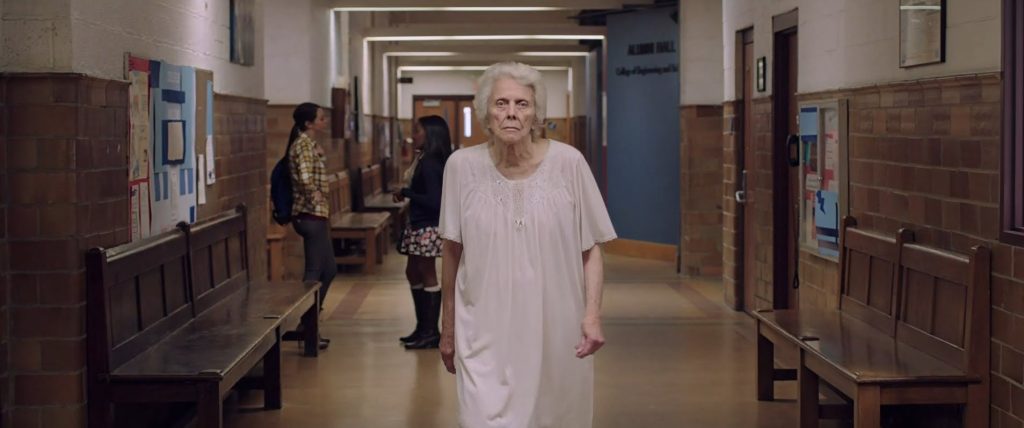
Mitchell repeatedly exploits that anxiety. The entity doesn’t need to sprint towards Jay because time is on its side. She can drive miles away, sleep somewhere else or surround herself with friends, but eventually something will appear on the horizon and begin walking towards her again. There is no roaring monster announcing its arrival and no safe room where the threat can be permanently locked outside. Its ordinary human appearance is precisely what makes it so unsettling.
The film’s refusal to explain exactly what the entity is adds another layer to that unease. It Follows establishes enough rules for the characters to attempt to survive, but Mitchell never provides a mythology lesson explaining where the thing came from, how long it has existed or why it operates this way. Audiences were consequently left to interpret the film through ideas involving sex, mortality, adulthood, disease, trauma and the inevitability of death, without the movie reducing its monster to one definitive metaphor.
Then there is the world surrounding Jay. Mitchell deliberately makes the period difficult to pin down. Older cars and televisions coexist with technology that doesn’t quite belong to any recognisable moment, including Yara’s distinctive shell-shaped electronic reader. That lack of a clear period gives It Follows the quality of a half-remembered nightmare, while the suburban Detroit locations frequently appear empty enough to make Jay and her friends seem isolated even when they are supposedly somewhere familiar.
Disasterpeace’s score pushes that atmosphere even further. Heavy electronic pulses and distorted sounds accompany Mike Gioulakis’ patient cinematography, creating something that can feel simultaneously contemporary and indebted to earlier American horror. The camera is frequently allowed to observe rather than frantically cut, which means viewers have plenty of time to examine the frame and convince themselves that somebody in the distance is moving in the wrong direction.
That approach was recognised immediately when the film began appearing on the festival circuit. It Follows received its world premiere in competition at Cannes Critics’ Week in 2014, where it emerged as a critical success before securing US distribution through Radius.
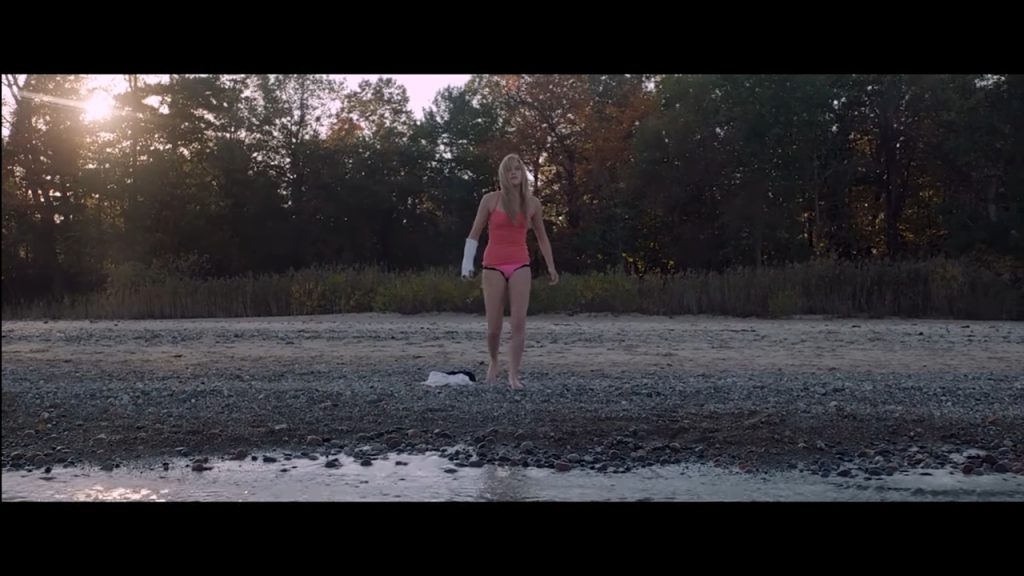
Its reputation only grew as the theatrical rollout expanded. The film initially opened in just four US cinemas in March 2015, averaging around $40,000 per location. The response persuaded Radius to abandon its more limited release strategy and expand the film substantially, with It Follows eventually reaching more than 1,600 cinemas during its US run. Its domestic theatrical gross ultimately reached approximately $14.7 million, a considerable result for a production reported at the time to have cost under $2 million.
The critical response was even stronger. More than a decade later, It Follows holds a 95% critics score on Rotten Tomatoes from more than 270 reviews, while Metacritic records a score of 83 from 37 critics, placing it in the site’s “Universal Acclaim” category. Contemporary reviews repeatedly highlighted its atmosphere, originality and ability to generate fear without depending entirely on conventional jump scares.
Much of the film’s lasting effectiveness comes from what happens after you’ve watched it. Plenty of horror movies provide a monster that becomes less frightening the longer you look at it. It Follows does almost the opposite. Because its threat can resemble virtually anyone, Mitchell leaves audiences with an incredibly mundane image to worry about: a person walking towards you.
There is also something horribly clever about the entity’s speed. If it ran, the characters could measure themselves against it. If it appeared only at night, they could prepare for darkness. If it remained in one form, they could recognise it. Instead, it walks. You can escape it easily today, perhaps tomorrow and maybe for weeks afterwards, but living normally becomes almost impossible when somewhere out there something is continuously closing the distance.
Jay Height Is Back
That makes Monroe’s return particularly interesting. Jay survived the original film, but It Follows deliberately avoided offering the kind of clean resolution that would allow her to forget what happened. Its final moments retain the uncertainty that runs through the entire story, leaving the audience to continue looking over the characters’ shoulders even when the immediate danger appears to have passed.
More than ten years later, They Follow has the opportunity to explore what living with that knowledge actually does to somebody. Whether Mitchell chooses to deal directly with the intervening years remains unknown, but bringing Monroe back as Jay rather than simply transferring the premise to an unrelated group of characters establishes a direct connection between the two films.
The return of Disasterpeace is equally significant. His music was not merely accompaniment in It Follows. The abrasive electronic score could transform an otherwise ordinary suburban street into something threatening before the entity had even appeared, while quieter passages contributed to the strange melancholy running beneath the horror. With Gioulakis and Perez also returning, They Follow retains several of the filmmakers responsible for establishing the visual rhythm, sound and peculiar atmosphere of the original.
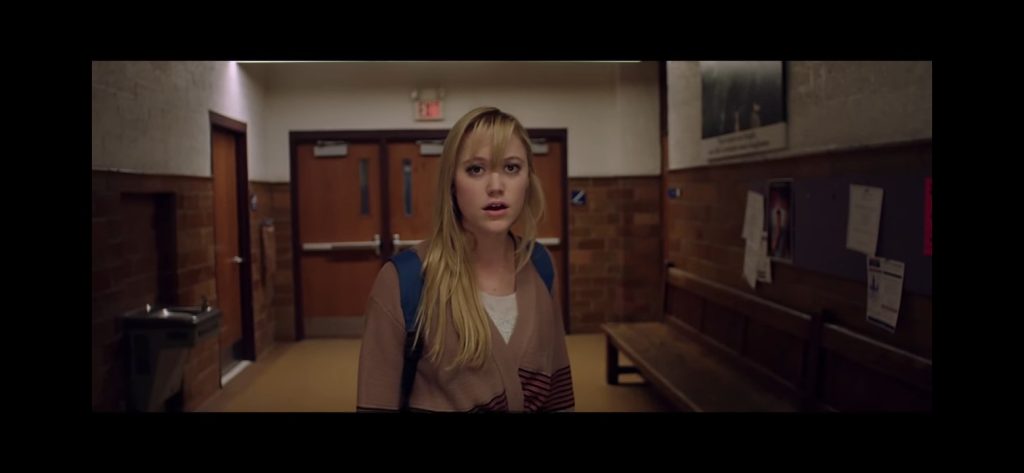
Mitchell himself has travelled a considerable distance since making It Follows. He followed the film with the ambitious Los Angeles mystery Under the Silver Lake, starring Andrew Garfield, before moving into much larger-scale filmmaking. Returning to Jay and the entity more than a decade later therefore isn’t simply a case of immediately producing another instalment after the first became successful. Mitchell has had years to develop whatever idea finally convinced him to revisit the story.
For the moment, however, the most important development is also the simplest: the cameras have stopped rolling. Principal photography on They Follow is complete, Maika Monroe is back as Jay Height, Mitchell is once again behind the camera and Disasterpeace is returning to provide the music. A release date has not yet been officially announced.
The first film taught us that the worst thing you can do is stop paying attention to whatever might be walking towards you in the distance. More than a decade after It Follows made audiences nervously inspect the background of every shot, something is walking towards Jay again.