Resident Evil Smashes Franchise Box Office Record with $60 Million Opening
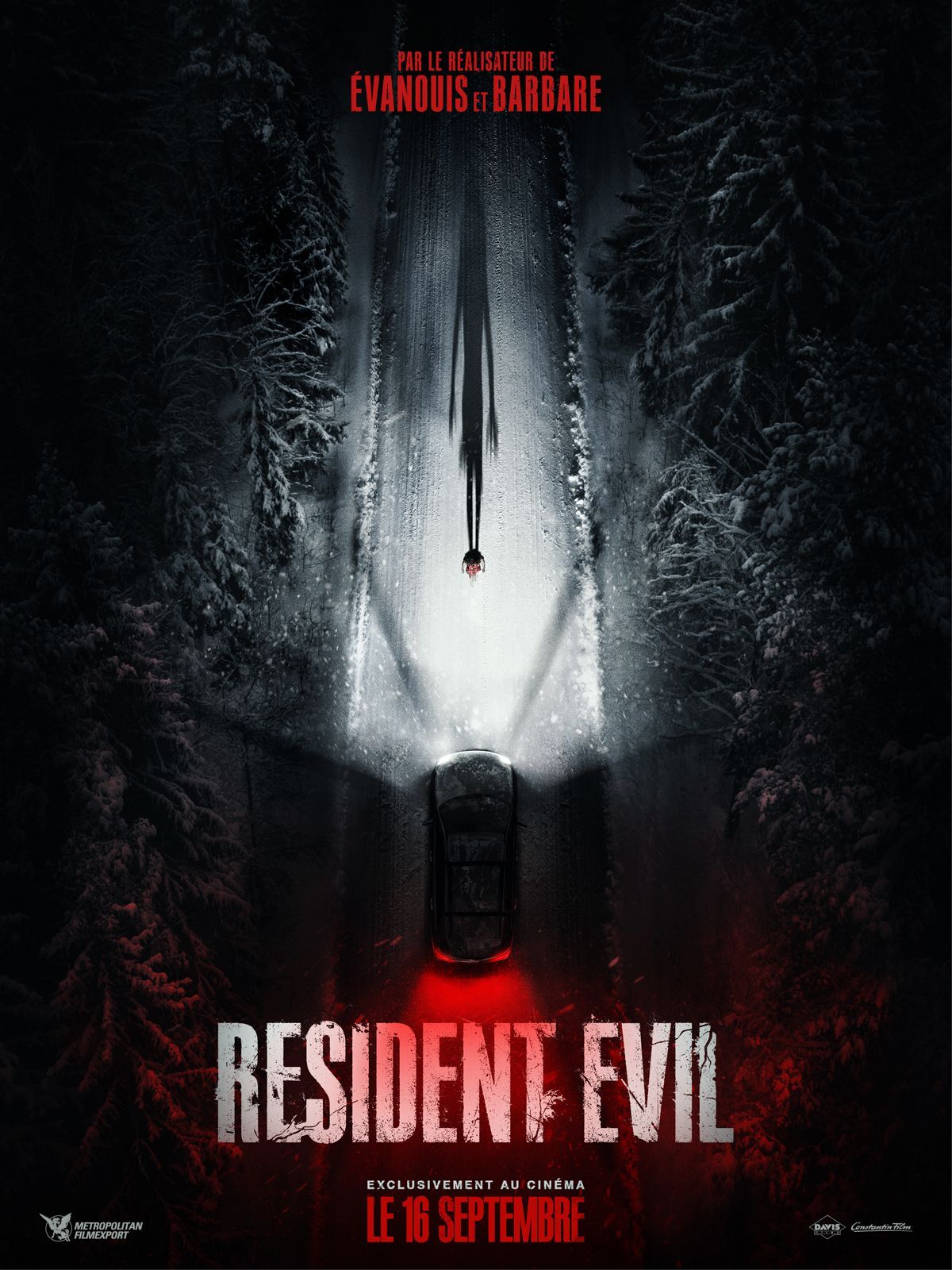
Zach Cregger has successfully brought Resident Evil roaring back to cinemas, with his new film delivering the biggest opening weekend in the history of the long-running horror franchise.
Resident Evil opened with an estimated $60 million from 3,684 cinemas across the United States and Canada, comfortably setting a new opening-weekend record for the series. The film added another $48.3 million internationally for a worldwide debut of approximately $108.3 million.
That domestic figure absolutely demolishes the previous record held by Resident Evil: Afterlife. Released in 2010, the fourth instalment of the original film series opened with $26.65 million in North America before eventually reaching $60.1 million domestically. Cregger’s film has therefore managed in a single weekend what Afterlife took its entire North American theatrical run to achieve.
It represents a remarkable cinematic resurgence for an IP that was looking considerably less healthy on the big screen only five years ago.

Resident Evil Returns to the Top of the Box Office
Resident Evil began life as a Capcom video game released in 1996, helping establish the survival-horror formula that would become synonymous with the series. Thirty years later, it remains one of gaming’s biggest horror properties.
The franchise has repeatedly reinvented itself, moving from the claustrophobic corridors of the Spencer Mansion to the more action-oriented Resident Evil 4, before returning to a more intimate horror experience with Resident Evil 7 biohazard. Capcom has also successfully revisited earlier games through its modern remake series.
That continued popularity has translated into extraordinary sales. As of June 30, 2026, Capcom reported that the Resident Evil games had surpassed 213 million units sold worldwide. The latest mainline game, Resident Evil Requiem, was released in February 2026 as the franchise celebrated its 30th anniversary, while Capcom has already announced Resident Evil Veronica, a remake of Resident Evil Code: Veronica, for 2027.
Hollywood’s relationship with Resident Evil has been rather more complicated.
Paul W.S. Anderson wrote and directed the first Resident Evil movie in 2002, with Milla Jovovich starring as Alice, a character created specifically for the films rather than taken directly from the games. That first movie subsequently developed into a six-film series comprising Resident Evil, Resident Evil: Apocalypse, Resident Evil: Extinction, Resident Evil: Afterlife, Resident Evil: Retribution and Resident Evil: The Final Chapter.
Anderson remained a major creative force throughout that run, writing all six films and directing four of them, while Jovovich remained the central figure from beginning to end. The movies increasingly moved away from the survival-horror atmosphere associated with the early games and towards large-scale science-fiction action, but commercially the series proved remarkably durable.
Afterlife delivered the previous franchise-best North American opening of $26.65 million, while The Final Chapter became the biggest Resident Evil movie globally, finishing with approximately $312 million worldwide. That remains the worldwide figure Cregger’s new film will need to surpass if it is to claim another franchise record.
After the Jovovich era ended, Sony and Constantin Film attempted to start again with Johannes Roberts’ Resident Evil: Welcome to Raccoon City in 2021. That film drew much more directly from the games, incorporating characters and locations familiar to players, but its theatrical performance was disappointing. Released during the pandemic period, it opened with only $5.3 million domestically and ultimately grossed $41.9 million worldwide.
Five years later, Cregger has produced a very different result.
Zach Cregger Takes Resident Evil Back to Survival Horror
Rather than continuing the previous films or simply recreating one of Capcom’s games scene by scene, the new Resident Evil tells an original story within the world of the franchise.
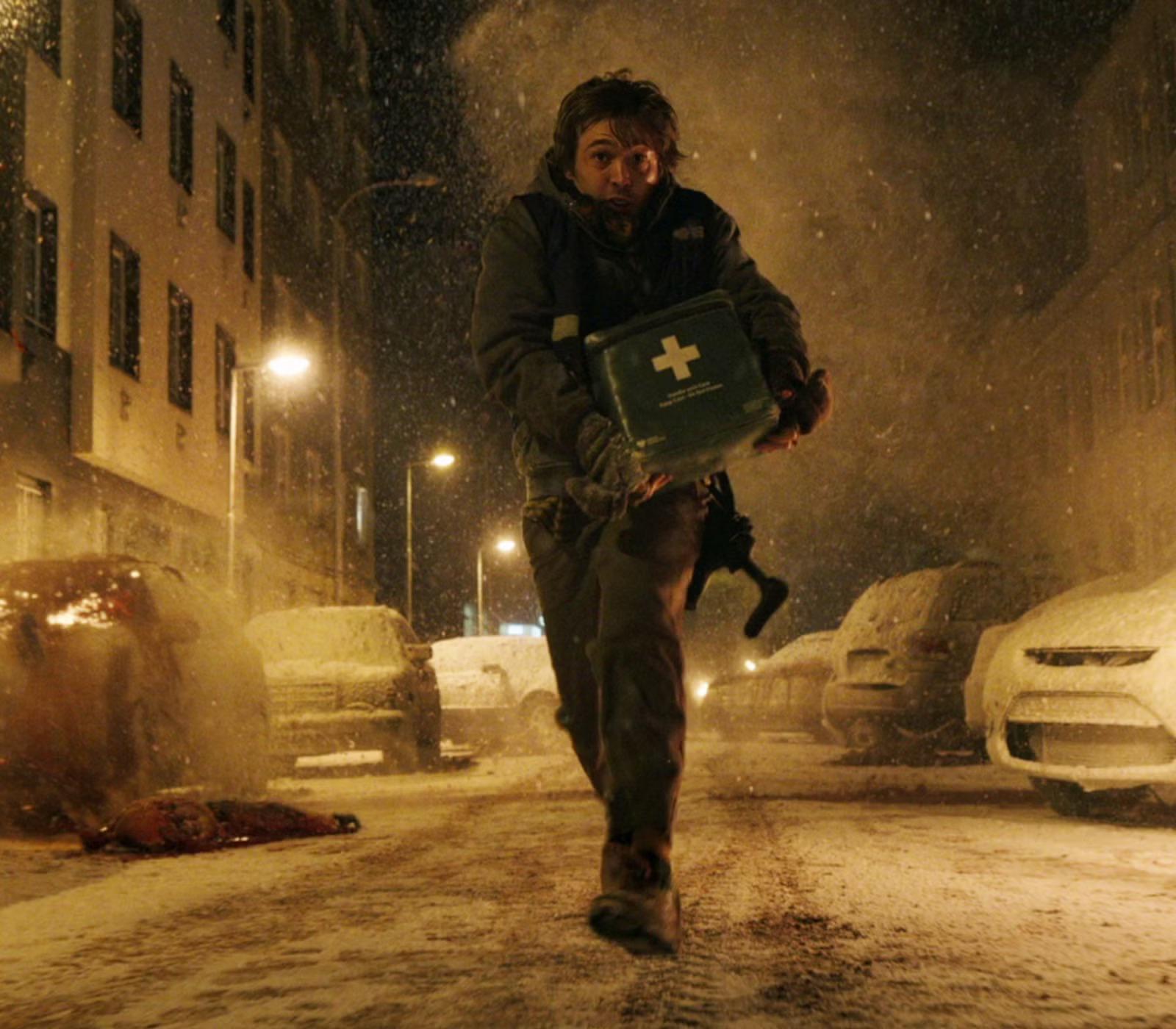
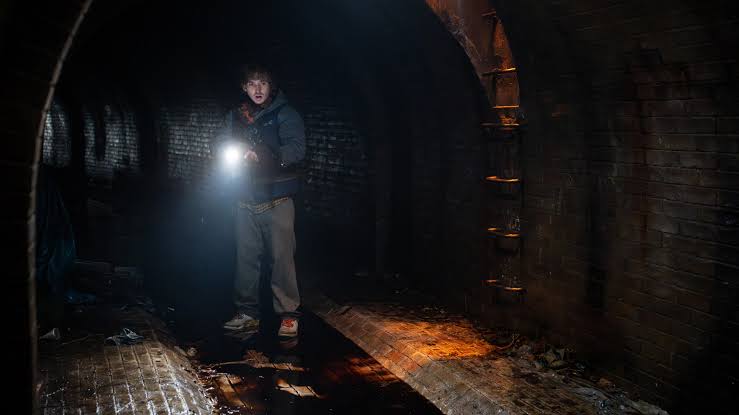
Austin Abrams, who previously worked with Cregger on Weapons, stars as Bryan, a medical courier who finds himself trapped in an increasingly nightmarish race for survival as one horrifying night descends into chaos. Zach Cherry, Kali Reis and Paul Walter Hauser also star. Cregger directed the film and co-wrote the screenplay with Shay Hatten.
Cregger has spoken about being a long-time fan of the games despite having never watched the previous Resident Evil movies. His approach was instead informed by the experience of actually playing Resident Evil, including progression through dangerous environments and the escalating struggle to survive as circumstances continually change around the protagonist.
That distinction could be important. Resident Evil has always occupied an unusual position among video game adaptations because its previous films became successful largely by establishing their own mythology rather than closely reproducing the games. Cregger appears to have taken another route, creating new characters and circumstances while attempting to capture the survival-horror experience that made Capcom’s games famous.
Audiences have clearly responded.
The film’s estimated $75 million production budget makes this a significantly larger undertaking than Cregger’s breakthrough horror film Barbarian, but a $108.3 million worldwide opening puts Resident Evil in a strong early position. It has already earned more globally during its opening weekend than the 2002 Resident Evil managed across its entire worldwide theatrical run.
Critical reception has also been unusually strong for the franchise. Resident Evil currently sits at 95% on Rotten Tomatoes, while opening-weekend audiences awarded the film a B+ CinemaScore.
The numbers are particularly striking when placed alongside the previous films. The original Resident Evil opened with $17.7 million domestically in 2002, Resident Evil: Apocalypse managed $23 million, Extinction reached $23.7 million, Afterlife climbed to $26.65 million and Retribution opened with $21.1 million. The Final Chapter managed $13.6 million before Welcome to Raccoon City’s $5.3 million opening marked the low point for the live-action theatrical series.
Cregger’s $60 million debut isn’t simply a narrow franchise record. It is more than twice the opening of any previous Resident Evil movie.
The timing couldn’t be much better for Capcom either. The games have entered their fourth decade in remarkably strong health, Resident Evil Requiem has continued the success of the modern series, and the forthcoming Resident Evil Veronica will once again revisit one of the franchise’s most celebrated earlier chapters.
The big question now is whether the film can maintain that momentum.
Resident Evil: The Final Chapter’s approximately $312 million worldwide total remains the franchise benchmark, and one opening weekend doesn’t guarantee that Cregger’s movie will ultimately surpass it. What can already be said, however, is that Resident Evil has achieved something at the cinema that seemed considerably less certain following Welcome to Raccoon City.
Thirty years after Capcom first invited players into a mansion filled with zombies, monsters and locked doors, Resident Evil remains one of horror gaming’s most recognisable names. With a franchise-record $60 million North American opening and more than $108 million worldwide in its first weekend, Zach Cregger has now given its cinematic counterpart a spectacular new beginning.