The Unmade: Freddy vs. Jason vs. Ash – The Horror Crossover That Nearly Became Freddy vs. Jason 2
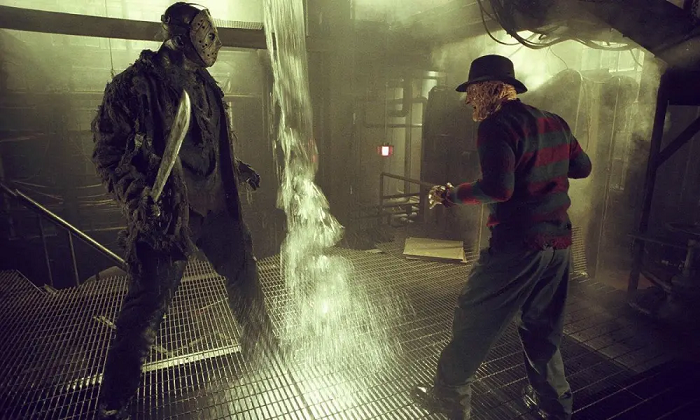
For the better part of two decades, horror fans waited for Freddy Krueger and Jason Voorhees to finally tear chunks out of each other. When Freddy vs. Jason eventually arrived in August 2003, it wasn’t merely a novelty that had somehow escaped years of development hell. Ronny Yu’s crossover was a genuine commercial success, opening at number one in North America and ultimately grossing more than $116 million worldwide against a reported production budget of around $30 million. Robert Englund returned as Freddy, Ken Kirzinger took over as Jason, and after almost 100 minutes of dreams, machetes, claws and teenage casualties, Jason emerged from Crystal Lake carrying Freddy’s severed head. Freddy then winked at the audience, making it perfectly clear that neither monster was going anywhere permanently.
For New Line Cinema, the obvious question was what to do next. Simply putting Freddy and Jason through another rematch risked repeating the trick, so attention turned towards adding somebody else to the equation. Michael Myers, Pinhead and other horror characters were among names considered in discussions surrounding potential future crossovers, but one possibility developed considerably further than most: Bruce Campbell’s Ash Williams from The Evil Dead, Evil Dead II and Army of Darkness. It sounds like the sort of fantasy match-up created by horror fans arguing in a video shop, but Freddy vs. Jason vs. Ash became a genuine development project. Jeff Katz, who worked at New Line and had been involved with Freddy vs. Jason, wrote a treatment for the proposed sequel, New Line executives explored making it, and negotiations took place with the Evil Dead side.
This is what makes Freddy vs. Jason vs. Ash such a perfect candidate for The Unmade. It wasn’t a film that reached casting or pre-production, and it would be misleading to suggest cameras were ever close to rolling. But it wasn’t an internet rumour either. A story was developed, a treatment existed, the rights holders discussed making it and the negotiations continued long enough for the project to become considerably more than an amusing hypothetical. When those negotiations eventually collapsed, something even more unusual happened: the proposed movie didn’t completely disappear. Its story was resurrected several years later as a comic-book series.
The Necronomicon Was Already Waiting at Crystal Lake
The cleverest part of the proposed crossover was that Katz didn’t need to invent an entirely new connection between the three franchises. One had inadvertently been waiting inside the Voorhees house for a decade. Jason Goes to Hell: The Final Friday, released by New Line in 1993, included the Necronomicon Ex-Mortis, the Book of the Dead from the Evil Dead films, among the objects visible in the Voorhees home. Director Adam Marcus has subsequently discussed his intention behind using the book and his own idea that Jason could be connected to the Deadites, although that should not be confused with the three franchises officially sharing a continuity at the time the film was made.
For Katz, however, the Necronomicon provided a wonderfully convenient bridge. His proposed sequel could connect Freddy vs. Jason to Evil Dead using something audiences had already seen within a Friday the 13th movie. Freddy had ended the previous film decapitated but still very much conscious, while Jason had carried his head out of Crystal Lake. Katz’s story would have Freddy trapped within Jason’s subconscious, weakened and searching for a way to restore himself. The Necronomicon could provide precisely the supernatural power Freddy needed, giving him a reason to manipulate Jason once again.
Ash, meanwhile, had spent much of his cinematic existence dealing with exactly the sort of trouble the Necronomicon creates. Bringing him into the story therefore required considerably less narrative gymnastics than attempting to explain why another unrelated slasher had suddenly wandered into Crystal Lake. Ash would be searching for the book while Freddy wanted to use it, with Jason once again caught in the middle of somebody else’s supernatural plan. The same object could therefore naturally connect all three characters without pretending that Freddy, Jason and Ash had secretly inhabited one carefully planned cinematic universe all along.
Katz’s treatment also embraced Ash’s wonderfully mundane professional life. Ash was associated with S-Mart, the retail chain for which he worked in Army of Darkness, and the proposed crossover would have brought that world to the Crystal Lake area. One of the ideas Katz subsequently discussed involved Ash battling Jason in the sporting-goods section of an S-Mart. Other concepts included Ash encountering Freddy’s sinister jump-rope girls and even Ash’s severed hand from Evil Dead II turning against him while wearing Freddy’s glove. The proposed movie was clearly not intended to approach its three-way crossover with solemn restraint.
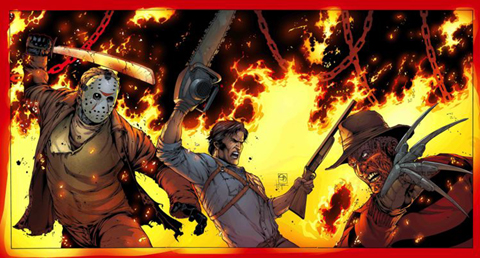
Ash Wasn’t Going to Be Another Monster
An internal New Line memo from 30 October 2003, later published by Bloody Disgusting after Jeff Katz rediscovered it, provides unusually strong evidence of just how seriously Ash was being considered. Titled “ROUND TWO: FREDDY VS. JASON – ‘Why Ash Works'”, the document laid out the argument for introducing Ash rather than simply adding another horror villain. Other genre characters had been considered as possibilities, but Ash presented a fundamentally different dynamic because he wasn’t another supernatural murderer. He was the hero who could stand between them.
That changed the basic structure of the crossover. Freddy vs. Jason had faced the obvious commercial problem of deciding which valuable horror franchise should lose. The finished movie neatly avoided giving either side a completely decisive victory. Jason walks out of Crystal Lake carrying Freddy’s head, suggesting he has won the physical battle, only for Freddy to wink at the audience. Both monsters remain viable, and fans of either character can argue about the result until everybody else leaves the room.
Freddy vs. Jason vs. Ash was conceived differently. Katz has repeatedly discussed the idea that Ash would actually defeat Freddy and Jason. Rather than adding Ash as a referee while the two slashers continued their feud, the proposal gave the crossover a human protagonist capable of bringing the conflict to a conclusion. Katz saw the movie as potentially providing a grand finale for the versions of Freddy and Jason audiences had followed for years, with Ash being one of the few horror characters fans might accept as the man capable of putting them down.
The proposed ending was therefore far more decisive than the conclusion of Freddy vs. Jason. Katz has described Ash defeating both monsters before heading away towards the possibility of another Evil Dead adventure. Precisely how every element might have changed had the treatment proceeded through screenplay rewrites and production is unknowable, but the central concept is well documented. Ash wasn’t being introduced simply to provide another name for the poster. He was intended to win.
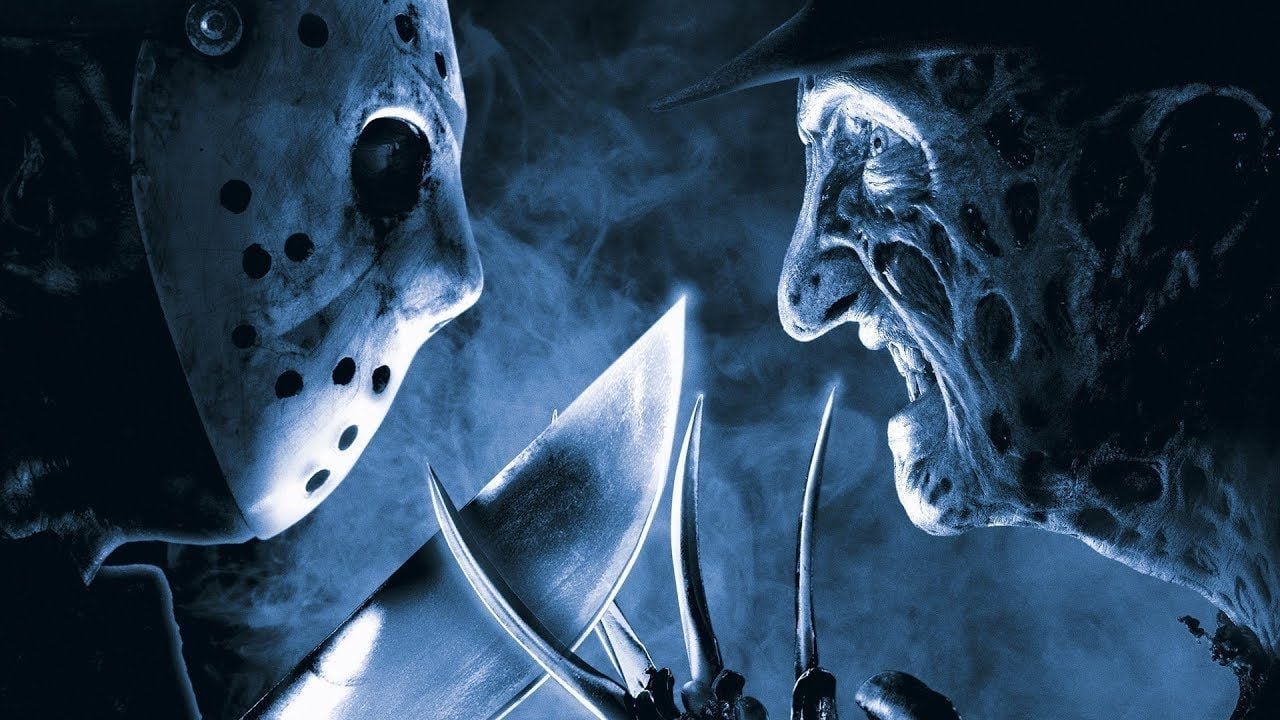
Why the Movie Fell Apart
This is also where the history becomes more complicated, because the people involved have offered overlapping but not entirely identical explanations for why Freddy vs. Jason vs. Ash failed to happen. It would be too simplistic to say that Bruce Campbell personally rejected the movie, just as it would be inaccurate to claim that one disagreement immediately killed the project. The evidence points towards a genuine period of negotiations involving New Line and the Evil Dead side, with questions surrounding creative control, character outcomes, rights and financial arrangements all becoming factors.
Campbell has subsequently explained that one problem was the limited control the Evil Dead side would have possessed over the finished crossover. They could protect and make decisions concerning Ash, but Freddy and Jason remained somebody else’s characters. Campbell questioned the attraction of entering a project where his side couldn’t determine what happened to the other two major participants. He has also discussed the practical difficulty of dividing revenue and satisfying multiple rights holders when several franchises are combined in one production.
The question of who won also mattered. Campbell has recalled that the Evil Dead position was essentially that, if Ash was going to fight Freddy and Jason, Ash should be allowed to kill them. Robert Englund has similarly discussed the abandoned project and recalled that Sam Raimi wanted Ash to emerge victorious. Those recollections fit the ending Katz had developed, although the surviving accounts differ in some details about precisely where resistance to the idea arose. Rather than pretending there is one definitive version of a private negotiation, the safest conclusion is that the parties never reached an agreement that satisfied everyone creatively and commercially.
Katz’s recollections make clear that this wasn’t merely a couple of exploratory phone calls. He has described the attempt to make the crossover as serious and said that efforts continued for roughly two years. New Line executives Robert Shaye and Michael Lynne supported pursuing the project, while discussions involved figures on the Evil Dead side including Campbell and producer Rob Tapert. Katz has recalled periods when an agreement appeared possible before negotiations ultimately failed.
The timing also coincided with an important change for Sam Raimi and the Evil Dead team. Raimi had become one of Hollywood’s biggest directors following Spider-Man, while Ghost House Pictures scored a major commercial success with the American version of The Grudge in 2004. Reports at the time connected the collapse of the crossover negotiations with the Evil Dead side considering its own future for the franchise. Because some of those details originated from industry reporting and unnamed sources rather than a jointly issued account from every party, they shouldn’t be treated as a definitive single explanation for the cancellation.
What can be said with certainty is simpler. The necessary deal was never completed. No production began, no director was hired to make Freddy vs. Jason vs. Ash, and there was never a finished screenplay moving towards a shooting date that subsequently collapsed at the final moment. What existed was a serious sequel proposal, Katz’s treatment, internal support at New Line and negotiations intended to make the three-franchise crossover possible.
The Sequel Had an Enormous Act to Follow
The fact that New Line was willing to explore something so complicated isn’t difficult to understand when looking at the performance of Freddy vs. Jason. The 2003 film was the culmination of a crossover that itself had spent years trapped in development, passing through numerous writers and concepts before Freddy and Jason finally reached the screen. The project demonstrated that decades of fan speculation could be transformed into a successful theatrical event rather than merely an expensive gimmick.
Ronny Yu directed from a screenplay credited to Damian Shannon and Mark Swift, with Robert Englund returning as Freddy Krueger and Ken Kirzinger playing Jason Voorhees. Monica Keena played Lori Campbell, with Jason Ritter as Will Rollins. The story found Freddy weakened because the people of Springwood had largely forgotten him, leading him to manipulate Jason into murdering teenagers and restoring fear of Freddy among the town’s young people. Inevitably, Jason proved considerably more difficult to control than Freddy anticipated.
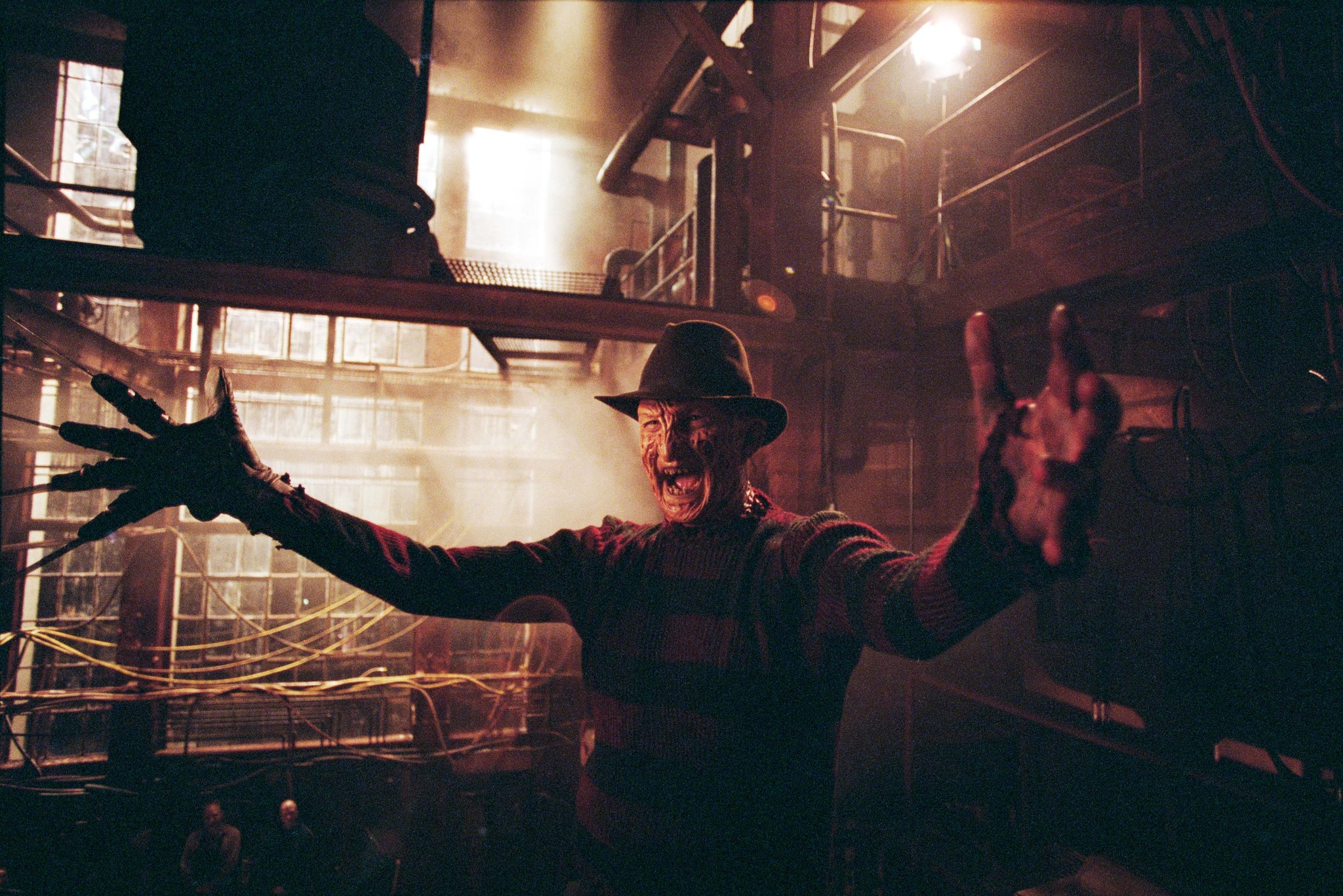
The resulting conflict allowed the movie to play with the strengths and weaknesses of both characters. Freddy dominated within dreams while Jason was overwhelmingly powerful in the physical world, giving the filmmakers a way of allowing each killer to temporarily gain the advantage. Their final confrontation moved from Freddy’s dream world to Camp Crystal Lake, where the fight became increasingly brutal before Lori and Will became involved in bringing Freddy into reality.
Its ending was deliberately ambiguous. Jason rose from Crystal Lake carrying Freddy’s severed head, but Freddy’s final wink ensured New Line hadn’t permanently killed its most recognisable Nightmare on Elm Street character. For audiences who had spent years wondering which monster would win, the film managed to provide a huge fight without permanently answering the question. For a studio thinking about a sequel, however, simply arranging another round risked feeling like more of the same.
Ash solved that problem. Instead of Freddy vs. Jason 2 being another battle between the same two monsters, the sequel could change the dynamic completely by introducing a hero who had already spent three films fighting supernatural evil. Freddy could talk. Ash could talk back. Jason didn’t need to say anything because a machete tends to communicate intent perfectly well.
There was just one substantial problem. Adding a third franchise also added another group of people who needed to agree on what happened.
What the Movie Might Have Looked Like
The surviving material provides considerably more information about the proposed story than exists for many abandoned horror sequels. Katz’s treatment formed the foundation, with the Necronomicon becoming the object that connected everything. Freddy’s predicament following Freddy vs. Jason would lead him towards the book, while Ash’s experience with the Necronomicon would naturally pull him into the conflict.
The Crystal Lake area was to have changed since the events of the previous film, with redevelopment providing an opportunity to introduce S-Mart and place Ash in Jason’s territory. Katz wanted the crossover to have genuine horror and violence while recognising that putting Freddy Krueger and Ash Williams together naturally created comedy. Both characters are famous for talking their way through horrific situations, although their personalities couldn’t be much further apart. Jason would remain the largely silent physical force caught between two men almost pathologically incapable of keeping their mouths shut.
The Necronomicon also provided a way of escalating Freddy’s supernatural abilities beyond what audiences had seen in the first crossover. The proposed story could draw upon the mythology of Evil Dead without needing to transform Jason or Freddy permanently into characters from Raimi’s universe. Most importantly, the book gave the movie an objective beyond simply arranging increasingly elaborate fights until the closing credits.
Not every idea discussed by Katz should automatically be treated as something that definitely would have appeared in the finished movie. Treatments change, screenplays are rewritten and expensive sequences disappear once budgets and production realities enter the equation. Because the project stopped before that process could produce a finished feature, there is no definitive theatrical version of Freddy vs. Jason vs. Ash against which every proposed scene can be measured. What survives is effectively the blueprint for the movie New Line wanted to explore.
Then the negotiations failed, and that blueprint appeared destined to become another fascinating piece of horror development history.
From Abandoned Movie to Comic Book
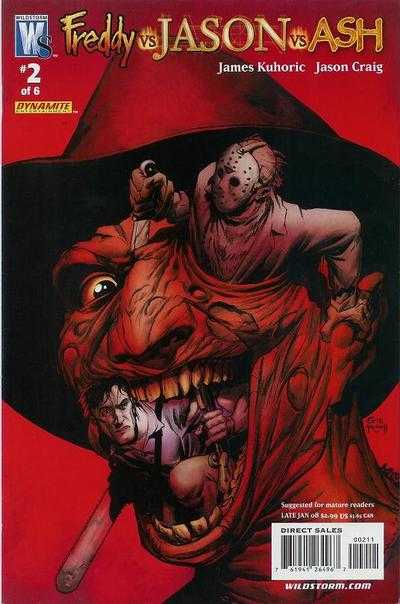
Unlike most films covered by The Unmade, however, Freddy vs. Jason vs. Ash eventually escaped development hell in another form. In November 2007, WildStorm and Dynamite Entertainment began publishing a six-issue Freddy vs. Jason vs. Ash comic-book limited series. It ran until March 2008, with James Kuhoric writing and Jason Craig illustrating, and was specifically based upon Jeff Katz’s treatment for the proposed movie.
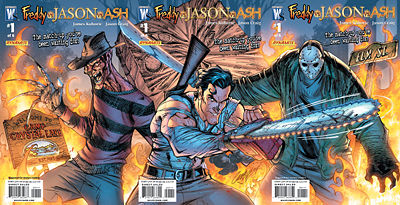
That connection is important. The comic wasn’t simply an unrelated publisher independently deciding years later that Freddy, Jason and Ash would look good fighting on a cover. Katz’s abandoned film story provided its foundation, meaning readers were finally able to experience a version of the sequel that New Line had tried to develop. The comic could naturally make alterations and expand ideas in ways appropriate to a different medium, but the DNA of the unmade movie remained firmly inside it.
The story is set five years after the events of Freddy vs. Jason. Survivors Lori Campbell and Will Rollins return to Crystal Lake looking for closure after what they endured, only to encounter Jason once again. Their return doesn’t last particularly long. Jason kills them, immediately severing one of the most obvious connections to the human protagonists of the previous film and clearing the way for a very different hero.
Freddy, meanwhile, has been left trapped and powerless inside Jason’s mind following the events of Freddy vs. Jason. There he learns about the Necronomicon hidden within the old Voorhees home and sees an opportunity to restore himself. Appearing alongside a false version of Pamela Voorhees, Freddy manipulates Jason into retrieving the book by promising that its power could make him a “real boy”.
Ash arrives in the area because a new S-Mart has opened near Crystal Lake and he has been brought in to lend his retail expertise to its employees. Naturally, Ash doesn’t get to spend very long worrying about stock rotation. When murders begin occurring around the area, his experience with Deadites leads him to suspect supernatural activity, eventually sending him towards the Voorhees house and the Necronomicon.
Freddy Gets the Book
The crossover escalates when Jason obtains the Necronomicon and Freddy uses its power to restore himself. The book also allows Freddy to increase Jason’s intelligence, altering the familiar relationship between them. Once Ash and the surviving S-Mart employees become involved, Freddy begins attacking them through their dreams, finally providing the confrontation that had made the proposed movie so attractive in the first place.
The comic could push the premise considerably further than a live-action film budget necessarily would have allowed. Freddy’s access to the Necronomicon gives him reality-altering powers, while Jason eventually turns against him and attempts to take the book for himself. The Voorhees home becomes part of Freddy’s nightmare landscape, and the conflict expands beyond three characters simply trading blows.
One of the biggest ideas arrives during the final confrontation, when Freddy resurrects Jason’s previous victims as Deadites and uses them against Jason and Ash. It is exactly the kind of enormous piece of franchise fan service that demonstrates what the comic format could accomplish once the restrictions of a live-action production had disappeared. The story could raid the history of Friday the 13th, A Nightmare on Elm Street and Evil Dead without worrying about the cost of physically staging every element.
Eventually the confrontation reaches the frozen Crystal Lake, preserving the setting and imagery associated with Katz’s proposed climax. Ash manages to defeat the villains and uses the Necronomicon to open a portal. Freddy is banished to the Deadite world, while Jason and the Necronomicon end up beneath the frozen lake.
The fundamental idea behind the abandoned movie therefore survived.
Ash doesn’t merely participate in the fight. He beats them. It is one of the reasons the comic remains so fascinating for anyone interested in the film that never happened. While it cannot be treated as a frame-for-frame representation of a movie that never reached production, it gives us something much closer to that abandoned project than fans normally receive.
The Nightmare Continued
The success of the concept on the page resulted in another crossover. In 2009, WildStorm and Dynamite launched the six-issue Freddy vs. Jason vs. Ash: The Nightmare Warriors, with James Kuhoric and Jason Craig returning. Rather than simply arranging another rematch, the sequel broadened the concept by incorporating characters from the histories of the Nightmare on Elm Street and Friday the 13th franchises.
The comic medium allowed the creators to build the sort of sprawling horror universe that would have been considerably more difficult to organise as a movie. Rights, actor availability, salaries, production schedules and the simple economics of recreating characters from decades of films weren’t obstacles in quite the same way. The crossover that had proven too complicated to make as a feature could become even bigger once it existed on paper.
It also means Freddy vs. Jason vs. Ash occupies a strange position among Hollywood’s abandoned horror projects. We know far more about what it might have been than we do with many unproduced sequels because its central story eventually became publicly available. Fans don’t have to reconstruct the entire project from scattered interviews and fragments of production material. They can actually read a completed version of the concept.
What they cannot do is watch Robert Englund, Bruce Campbell and Jason Voorhees share the screen.
The Chainsaw That Never Reached Crystal Lake
The timing makes that particularly painful. Robert Englund was still playing Freddy Krueger when the project was conceived. Bruce Campbell was still more than a decade away from returning to television as Ash in Ash vs Evil Dead. Sam Raimi had transformed from the filmmaker behind The Evil Dead into the director of one of Hollywood’s biggest franchises with Spider-Man. Jason had just returned to cinemas in a movie that proved audiences would turn out for a crossover built around characters who had already existed for more than 20 years.
There was also a wonderful simplicity beneath all of the complicated rights negotiations. Freddy was the supernatural showman who could manipulate dreams and never stop talking. Jason was the silent tank who could walk through almost anything placed in front of him. Ash was the exhausted, arrogant, chainsaw-wielding idiot hero who had somehow survived everything the Necronomicon had thrown at him. You didn’t need a cinematic universe containing 15 interconnected films to understand why putting those three personalities together might be entertaining.
But making movies requires considerably more than a good poster. New Line could develop the treatment and negotiate for Ash, but it couldn’t simply take another company’s character and decide what happened to him. The Evil Dead side had its own interests, its own future plans and its own ideas about what Ash should be allowed to do. A movie intended to celebrate three horror franchises therefore required three sets of interests to align.
They never did.
New Line eventually went in a different direction. Freddy Krueger was subsequently rebooted in 2010 with Jackie Earle Haley replacing Robert Englund, while Jason received his own reboot in 2009. The Evil Dead franchise eventually returned with the 2013 film before Bruce Campbell finally picked up the chainsaw again for Ash vs Evil Dead in 2015. By then, the particular moment when the three characters might realistically have collided had passed.
That is what makes Freddy vs. Jason vs. Ash more tantalising than a crossover somebody merely suggested in an interview. New Line genuinely explored it. Jeff Katz wrote the treatment. Internal documents argued the case for Ash. Negotiations took place with the people behind Evil Dead. A story had been devised that connected the franchises through the Necronomicon, and there was even an intended answer to the question printed across the imaginary cinema poster.
Ash would win.
The deal couldn’t be made, so the chainsaw never reached Crystal Lake and Robert Englund never got the opportunity to trade insults with Bruce Campbell on the big screen. Four years after the proposed film fell apart, however, Katz’s story finally escaped into the world as a comic.
For most entries in The Unmade, we’re left imagining the movie that might have existed. Freddy vs. Jason vs. Ash is different. We were eventually allowed to see what New Line had been planning.
We just had to read it one panel at a time.