Pulse Is Being Reimagined Again as Smile Director Parker Finn Produces New Take on the J-Horror Classic
One of the most unsettling films of the Japanese horror boom is heading back to Hollywood. Sony’s Screen Gems and Spyglass are developing a new reimagining of Kiyoshi Kurosawa’s 2001 techno-horror masterpiece Pulse, also known as Kairo, with Dave Boyle attached to direct and Smile filmmaker Parker Finn among the producers. The news comes via an exclusive scoop from Deadline, which reports that Boyle will also take a pass at a screenplay originally written by Luke Piotrowski. Finn and Jonathan Fass will produce through Bad Feeling, the company behind the Smile films, alongside Spyglass.
Before anybody experiences an unpleasant flashback to Hollywood’s first attempt at remaking Pulse, this is being described as a new reimagining rather than a continuation of the 2006 American film. Deadline reports that plot details and even the location are currently being kept secret, but the film will take place in the modern era and centre on a new group of characters. That makes a certain amount of sense for a story so deeply concerned with technology, isolation and the strange ways people communicate through screens. The technology of 2001 has changed almost beyond recognition, but the loneliness at the heart of Kurosawa’s film arguably hasn’t.
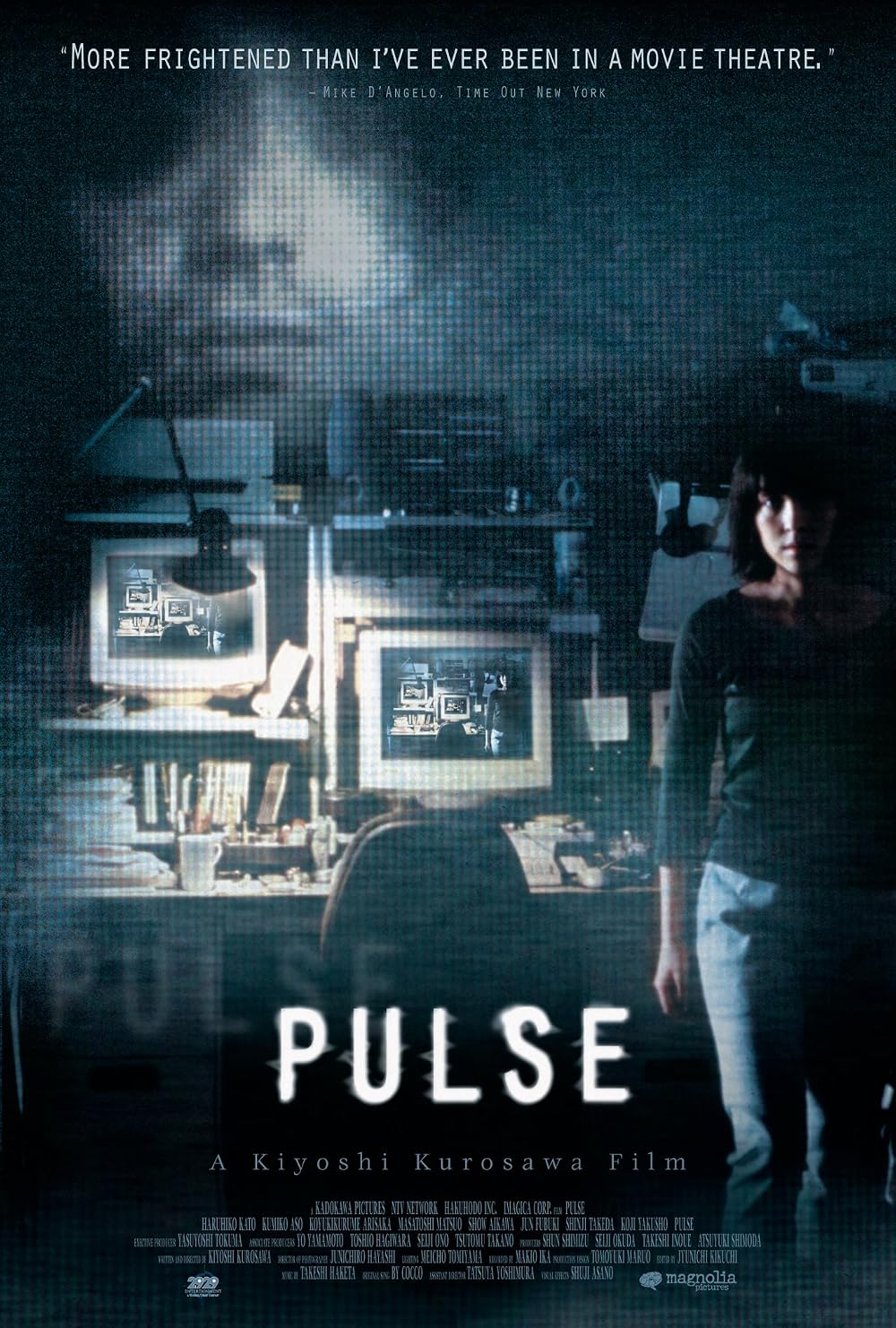
Before Social Media Took Over the World, Pulse Was Already Worried About It
Released in Japan in 2001, Pulse was written and directed by Kiyoshi Kurosawa and followed two initially separate groups of characters as disturbing supernatural events began spreading through Tokyo. In one storyline, plant-shop worker Michi Kudo becomes concerned when colleague Taguchi disappears while working on a computer disk. She visits his apartment and finds him behaving strangely before he suddenly hangs himself. What initially appears to be an isolated tragedy soon leads to disturbing images on computer screens, mysterious rooms sealed with red tape and people disappearing while leaving dark stains behind.
Running alongside Michi’s story is university student Ryosuke Kawashima, whose computer begins accessing a mysterious website without his involvement. The site displays images of solitary people sitting inside dark rooms, while attempts to simply unplug the computer don’t provide the reassuring solution one might hope for. Ryosuke eventually meets computer science postgraduate Harue Karasawa, and the pair become increasingly caught up in the phenomenon as a terrifying possibility emerges: the internet may have provided the dead with a route into the world of the living.
That description makes Pulse sound considerably more conventional than the film actually is. Kurosawa wasn’t particularly interested in turning the internet into a supernatural delivery system for a succession of jump scares. Instead, technology became part of a much bleaker examination of loneliness, depression, communication and whether increased connectivity was actually bringing human beings closer together. Characters stare into computer monitors and encounter other lonely people, but the connection offers no comfort. The ghosts themselves don’t necessarily solve loneliness by killing people. Their presence seems to spread it.
The scale gradually becomes apocalyptic. Disappearances spread throughout Tokyo until streets that should be packed with people become almost completely empty, while Michi and Ryosuke attempt to escape a city that appears to be losing its population. Eventually they discover that what is happening isn’t confined to Tokyo at all. The supernatural invasion has become a worldwide event, taking a story that begins with a missing colleague and a strange computer disk and quietly expanding it towards the end of civilisation.
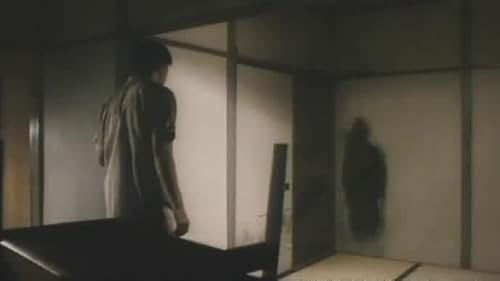
One of J-Horror’s Most Famous Ghost Scenes
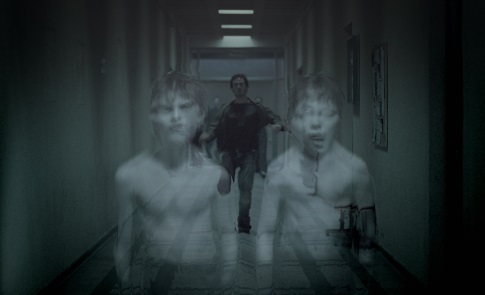
For all of the film’s ideas about technology and isolation, one of Pulse’s most enduring sequences is remarkably simple. Yabe enters one of the forbidden rooms marked by red tape and encounters a ghost. There is no frantic monster attack and no barrage of loud noises designed to make the audience jump. The figure simply approaches in a slow, unnatural manner, briefly stumbling before regaining its balance, while Yabe attempts to hide.
It has become one of the most discussed sequences in modern Japanese horror precisely because Kurosawa allows the audience to watch it happen. The scene’s reputation has endured for more than two decades, with The A.V. Club’s Scott Tobias describing it as arguably the signature sequence in J-horror. It is an extraordinary example of creating fear through movement, framing, silence and anticipation rather than relying on a conventional jump scare.
Pulse was part of the international wave of Japanese horror that flourished around the turn of the millennium, although its sensibility was distinctly its own. Hideo Nakata’s Ring had become a phenomenon, Takashi Shimizu’s Ju-On was developing into another major franchise and Japanese filmmakers were finding new nightmares within technologies that had become part of everyday life. Pulse took that technological anxiety somewhere unusually existential. Its ghosts were frightening, but the possibility of an entire society becoming disconnected, isolated and eventually absent was considerably worse.
The film screened in Un Certain Regard at the 2001 Cannes Film Festival and subsequently developed a cult following internationally. Its reputation has continued to grow, with critics frequently returning to its themes as online life has become dramatically more pervasive than it was when Kurosawa made the film.
There is something particularly eerie about watching Pulse now. Kurosawa made the film when home internet access was still primitive compared with today’s permanently connected world. Facebook did not exist. Neither did YouTube, Twitter, Instagram, TikTok or the modern smartphone. Pulse wasn’t literally predicting those inventions, and claiming otherwise would be giving the film supernatural powers of its own. What it did recognise remarkably early was the contradiction at the centre of digital communication: technology could connect people across enormous distances while still leaving individuals profoundly alone.
Hollywood Has Tried This Before
This won’t be the first American attempt to reinterpret Kurosawa’s film. Dimension Films acquired remake rights following the original’s international emergence, eventually producing an English-language Pulse released in 2006. Directed by Jim Sonzero and starring Kristen Bell, Ian Somerhalder and Christina Milian, the film originated from a screenplay associated with Wes Craven before undergoing changes during development.
The American remake retained the central idea of supernatural forces spreading through communications technology but substantially reworked Kurosawa’s story and approach. It was poorly received critically, but nevertheless spawned two direct-to-video sequels, Pulse 2: Afterlife and Pulse 3. The existence of that earlier remake creates an additional challenge for the new film. Screen Gems and Spyglass aren’t simply revisiting a Japanese horror classic. They are revisiting one that Hollywood has already remade once, and doing so means comparisons with both versions will be unavoidable. The original source confirms the 2006 remake received a negative reception and subsequently became its own short-lived franchise.
The difference this time is that more than 25 years will have passed since Kurosawa made Pulse, and the technological world surrounding the story has transformed completely. A contemporary version therefore has an obvious question available to it: what does the central idea of Pulse mean when almost everyone carries a permanently connected computer in their pocket?
Whether the filmmakers actually pursue that idea remains unknown. Deadline’s report only confirms a modern setting and new characters, so anything involving social media, smartphones, artificial intelligence or other contemporary technology would currently be speculation. The new film could head in an entirely different direction.
Parker Finn and Dave Boyle Take On Pulse
The involvement of Parker Finn will certainly attract horror fans. Finn broke through with Smile, developing the feature from his short film Laura Hasn’t Slept, and subsequently returned for Smile 2. His company Bad Feeling is also producing Paramount’s new version of Andrzej Żuławski’s 1981 film Possession. On Pulse, however, Finn is producing rather than directing, with that job going to Dave Boyle. Deadline reports that Finn and Jonathan Fass will produce for Bad Feeling alongside Spyglass.
Boyle arrives at the project with considerable experience telling stories connected to Japan. His previous work includes Man from Reno, Surrogate Valentine, Daylight Savings and Netflix’s House of Ninjas, while he also produced Tokyo Cowboy. His latest directorial feature, supernatural horror film Never After Dark, won the Midnighter Audience Award at SXSW earlier this year and is due to be released in the United States by Magnolia Pictures on 25 September 2026. Deadline specifically notes Boyle’s history of stories either set in Japan or revolving around Japanese characters when discussing his hiring for Pulse.
Luke Piotrowski, whose existing screenplay Boyle will work on, also has significant horror experience. His credits include co-writing David Bruckner’s The Night House and Netflix’s Hellraiser with Ben Collins, as well as writing the screenplay for A Complete Unknown director James Mangold’s forthcoming Swamp Thing project.
There is no announced cast, production date or release date yet, and Deadline’s report makes clear that the project’s actual story remains under wraps. For now, the most intriguing element is simply that somebody is attempting Pulse again.
Kurosawa’s original is a difficult film to remake because its power isn’t really contained in a monster, a mythology or even its internet premise. It is contained in an atmosphere of overwhelming loneliness and the creeping feeling that people can disappear from one another long before they physically vanish. Twenty-five years after Pulse first asked whether technology was connecting us or leaving us even more isolated, that question certainly hasn’t gone away.
If anything, it might be more uncomfortable now than it was in 2001.