
Aliens at 40: Why James Cameron’s Sequel Is Still Untouchable
Some films become classics because critics tell us they are. Others earn that title because generation after generation refuses to let them fade away. Forty years after bursting into cinemas on 18 July 1986, James Cameron’s Aliens comfortably sits in the second category. It isn’t simply one of the greatest science-fiction films ever made, or one of the greatest action films ever made. It is one of the greatest horror films ever made, one of the greatest sequels ever made, and, if we’re being completely honest, one of the greatest films ever made. There, I said it. If that upsets anyone, they can take it up with the Alien Queen. I’ll wait over here behind a reinforced blast door.
Following Ridley Scott’s Alien should have been impossible. The original had already cemented itself as a masterpiece of slow-burning terror, introducing audiences to H.R. Giger’s nightmare creation while proving that science fiction could be genuinely frightening. Hollywood has never exactly been overflowing with sequels that surpass iconic originals. More often than not, they simply make everything louder, bigger and considerably worse. Cameron, however, understood something that many filmmakers still don’t. He didn’t try to remake Alien. Instead, he respected everything that made the first film brilliant before steering the franchise in an entirely different direction.
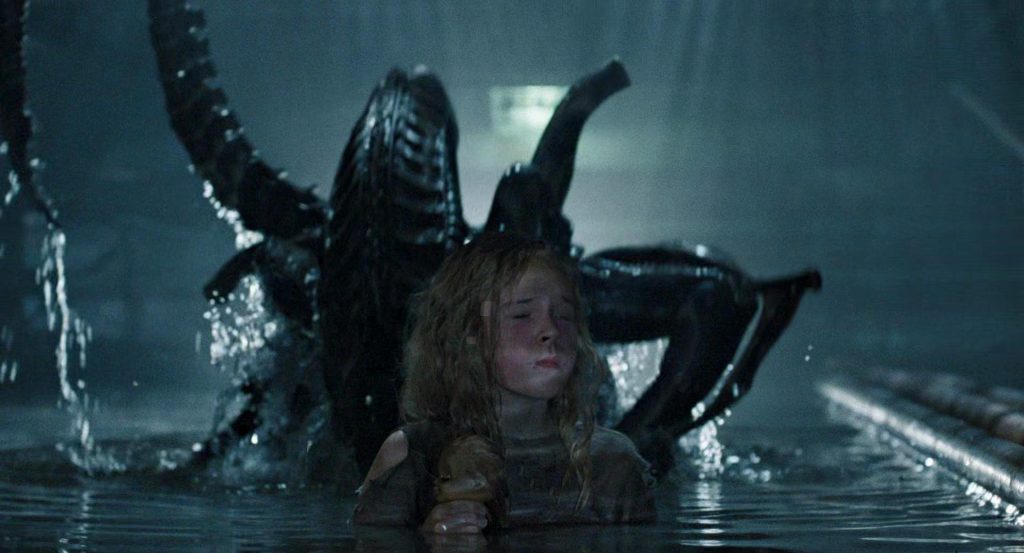
His simple idea was to replace one monster stalking seven people with hundreds of monsters hunting an army.
It sounds ridiculously obvious now, but in 1986 it was a gamble of enormous proportions.
What’s perhaps even more remarkable is that James Cameron wasn’t yet the filmmaking titan we know today. Although he had recently completed The Terminator, it had yet to establish him as one of Hollywood’s leading directors, and many of the predominantly British crew at Pinewood Studios had either never seen it or weren’t convinced this relatively inexperienced Canadian filmmaker was the right person to follow Ridley Scott. Several had worked on the original Alien and viewed it as something of a sacred text. Cameron even arranged screenings of The Terminator in an effort to demonstrate his abilities, but many crew members simply didn’t turn up. Production became notoriously difficult, with clashes over working practices, long shooting days and Cameron’s relentless perfectionism. At one point he famously remarked that what kept him going was the knowledge that one day he’d drive out of Pinewood and never come back, while “you sorry bastards would still be here”. Thankfully, relations eventually improved, with Sigourney Weaver helping bridge the divide, and the difficult production ultimately produced one of cinema’s greatest achievements.
What Cameron delivered wasn’t just another Alien film. He quietly invented an entirely new genre template. Before Aliens, horror sequels generally meant repeating the same formula with diminishing returns. Cameron instead fused horror, military action, science fiction and genuine character drama into something audiences had never quite seen before. You can trace its DNA through countless films and games that followed, from Starship Troopers and The Descent to Halo, Dead Space, Gears of War and Alien: Isolation. Even today, developers and filmmakers continue borrowing ideas from Aliens, usually hoping nobody notices. We notice.
One of Cameron’s smartest decisions was understanding that if audiences were going to spend over two hours with the Colonial Marines, they’d better actually like them. Lesser films introduce military characters simply to provide cannon fodder. Aliens somehow manages to make nearly every member of the squad memorable. Sgt. Apone commands instant respect. Drake barely says much, yet everyone remembers him. Frost feels like someone you’ve known for years despite his limited screen time. Vasquez remains one of the toughest characters ever committed to film, proving long before modern Hollywood started announcing “strong female characters” every five minutes that all you actually need is… well… a strong character. Then there’s Hudson, who begins the mission convinced he’s invincible before transforming into cinema’s greatest panic merchant. Bill Paxton somehow makes his complete emotional collapse absolutely hilarious without ever undermining the danger around him. “Game over, man!” has become so ingrained in pop culture that even people who’ve never seen Aliens somehow know the line.
Perhaps the secret behind that chemistry lies in Cameron’s unusual shooting schedule. Rather than filming the Marines’ introduction first, he deliberately shot many of those early camaraderie scenes much later in production, after months of filming together. By then, the cast genuinely felt like a unit, and it shows in every exchange, every insult and every piece of banter. You believe these people have served together long before the audience met them.
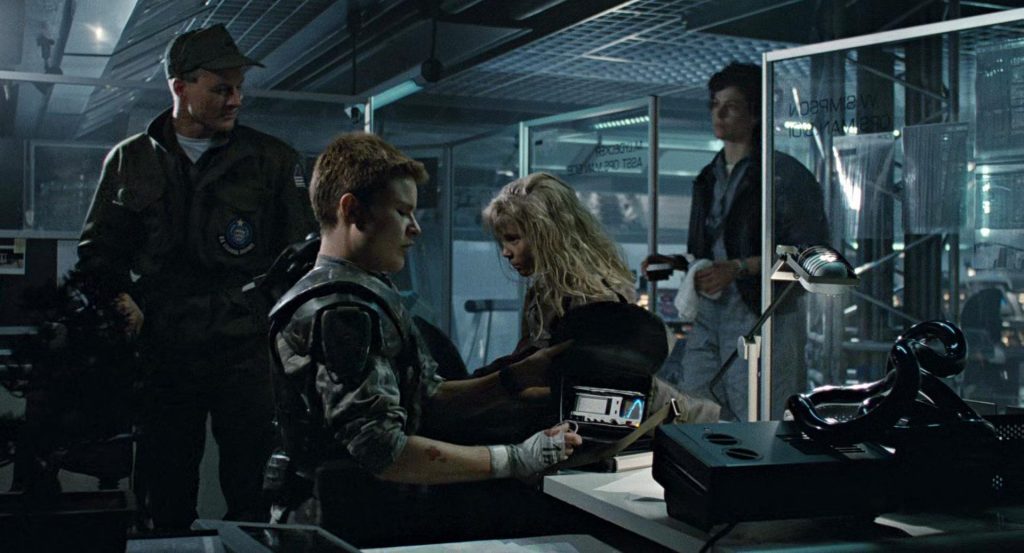
Then there’s Corporal Hicks.
Michael Biehn rarely receives the credit he deserves for this performance. Hicks isn’t loud, flashy or constantly trying to prove how tough he is. He simply gets on with the job. Calm, intelligent and quietly reassuring, he becomes the kind of leader you’d instinctively follow if six-foot acid-bleeding nightmares suddenly appeared in the ventilation system. What’s remarkable is that Biehn almost wasn’t in the film at all. James Remar had originally been cast before leaving the production, meaning Biehn was flown to England at the last minute after already campaigning for the role. It’s impossible to imagine anyone else wearing Hicks’ armour.
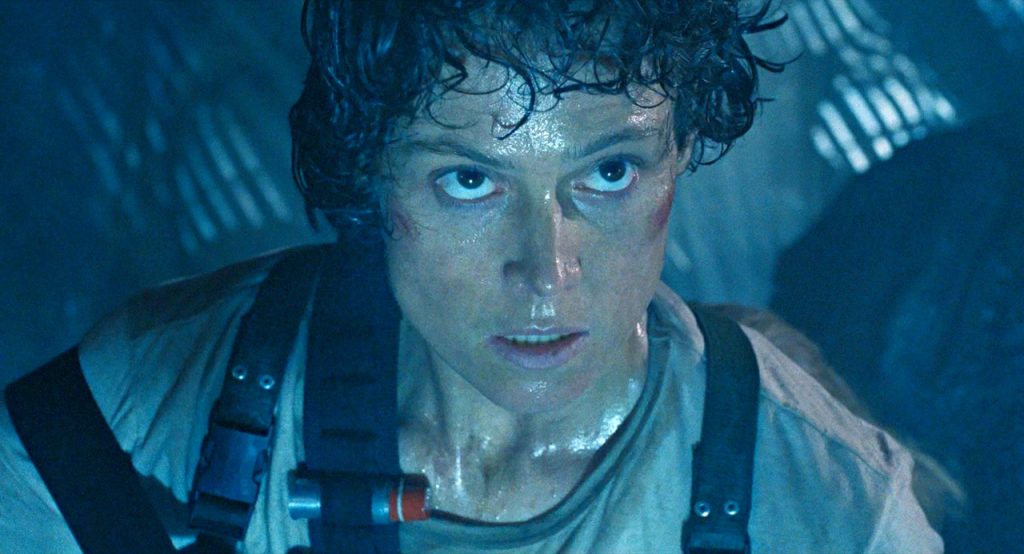
At the centre of everything stands Ellen Ripley.
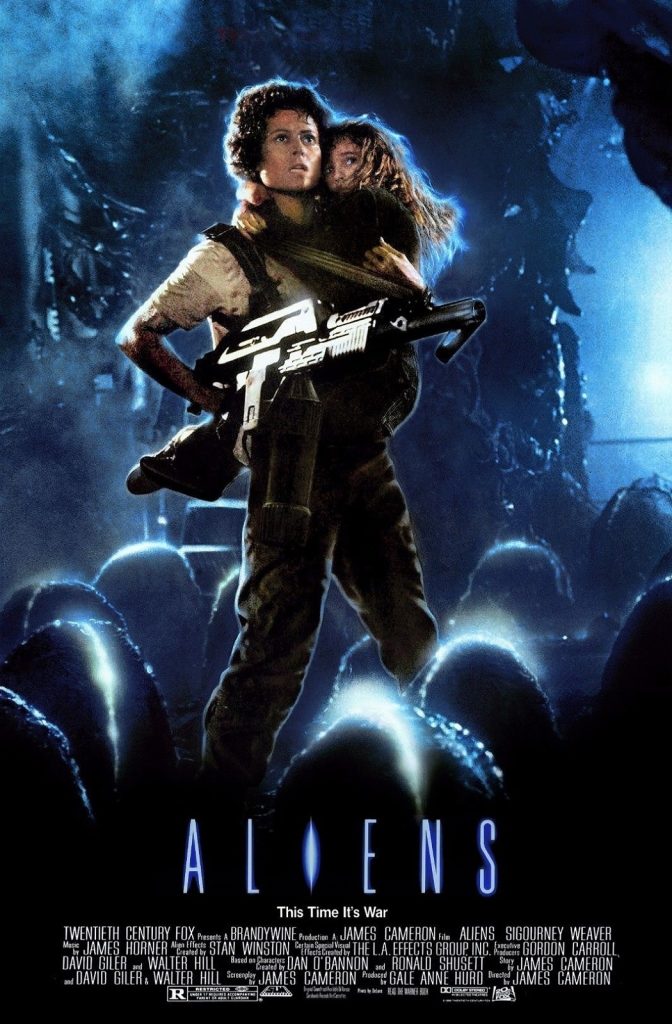
Sigourney Weaver had already created one of horror’s greatest survivors in Alien, but Aliens transformed Ripley into something even more remarkable. She isn’t fearless. She isn’t indestructible. She isn’t the sort of action hero who walks away from explosions without looking back because it makes them appear cool. Ripley is traumatised. She has every reason to stay as far away from LV-426 as humanly possible, yet she returns because nobody else truly understands what they’re dealing with. Weaver’s performance remains extraordinary, balancing vulnerability, determination, grief and sheer bloody-minded courage in a way very few action heroes ever achieve. Her work earned an Academy Award nomination for Best Actress, something virtually unheard of for a science-fiction horror film at the time, and one that was richly deserved.
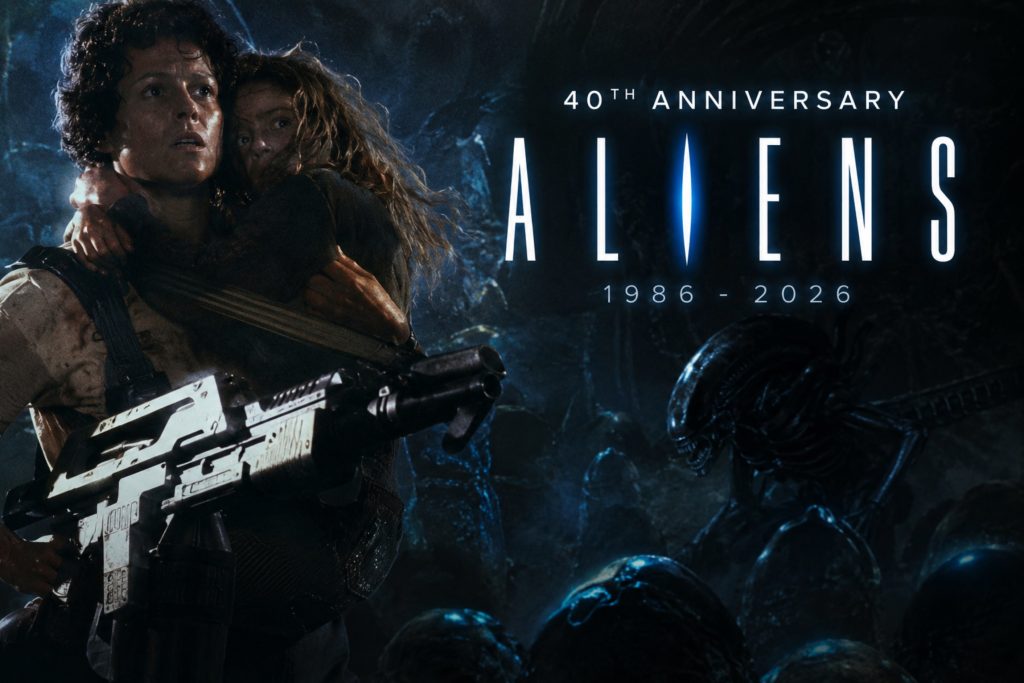
If there is one sequence that perfectly sums up why Ripley remains one of cinema’s greatest heroes, it’s her decision to go back for Newt.
Think about it.
She has escaped.
She has survived.
Nobody would blame her for leaving.
Instead, armed with little more than a pulse rifle, a flamethrower and enough determination to frighten the devil himself, she willingly walks back into the hive. No superhero speech. No stirring orchestral fanfare. Just one woman marching into hell because a frightened little girl needs her. Every parent watching understands it. Every horror fan cheers. It’s one of the greatest acts of heroism ever put on film, and it still gives me goosebumps every single time.
Watching that sequence as a kid in the late 1980s absolutely blew my mind. I don’t think I’d ever experienced a film that made me feel so many emotions at once. I wanted to be one of the Marines. I wanted a pulse rifle. I wanted to drive the APC. I also wanted every light in the house left on for the next fortnight because absolutely no chance was I walking upstairs in the dark after watching those Xenomorphs crawl through ceilings. Aliens somehow made me fall in love with cinema while simultaneously scaring the living daylights out of me. Forty years later, it still has exactly the same effect.
And then there are the motion trackers.
Honestly, whoever decided that a tiny electronic beeping noise should become one of the most anxiety-inducing sounds in film history deserves some sort of award.
The genius is that the tracker rarely tells the characters anything useful. It simply confirms they’re about to have a very bad day. Every beep increases the tension. Every faster beep makes your stomach tighten. By the time somebody inevitably mutters, “They’re everywhere,” you’re already mentally preparing the funeral arrangements. Few films have understood suspense through sound design quite like Aliens, and even after four decades that simple electronic pulse can still send a shiver down your spine.
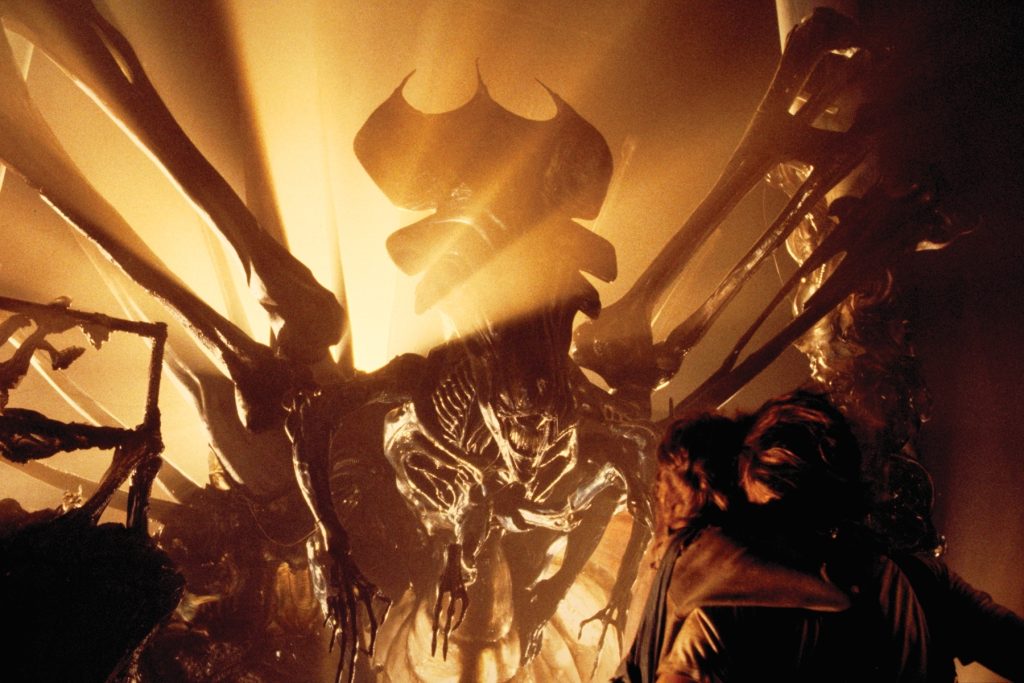
Then Cameron decides that dozens of terrifying aliens somehow aren’t enough and casually introduces the Alien Queen.
Good luck topping one of the greatest creature reveals in cinema history.
Designed by Stan Winston and brought to life using an astonishing combination of hydraulics, puppetry, miniature work and performers hidden inside the enormous creation, the Queen reportedly required around fifteen crew members to operate effectively. The result still looks astonishing today because it’s physically there. It casts shadows. It has weight. It occupies the same space as the actors. Modern CGI can create almost anything, yet forty years later the Alien Queen remains more convincing than creatures produced with budgets ten times larger.
The practical effects throughout the film continue to age beautifully for exactly the same reason. The colony feels like a real industrial complex. The APC looks like it weighs several tonnes because it actually does. The dropship feels mechanical, grimy and functional rather than computer generated. Even the hive itself was so impressive that after filming finished it remained standing and was later transformed into the Axis Chemicals factory for Tim Burton’s Batman. That’s the kind of craftsmanship that simply doesn’t happen very often anymore.
What’s equally astonishing is how close audiences came to seeing a very different film. Sigourney Weaver hadn’t actually signed on when Cameron wrote the screenplay, and negotiations became so difficult that Cameron reportedly bluffed the studio by suggesting he could simply remove Ripley from the story altogether. The gamble worked, Weaver returned, and cinema history was made. It’s genuinely difficult to imagine Aliens existing without her because, despite all the pulse rifles, dropships and exploding Xenomorphs, this is ultimately Ripley’s story from beginning to end.
The finished film was completed so close to release that there wasn’t even time for traditional public test screenings before it reached cinemas. It didn’t matter. Audiences embraced it immediately, critics praised it, and even Ridley Scott later admitted Cameron had done an excellent job following his original. That’s perhaps the highest compliment imaginable. When the man who made Alien tells you your sequel is outstanding, you’ve probably done something right.
Happy 40th Birthday to Aliens
Forty years later, Aliens hasn’t merely survived; it has become the benchmark by which almost every action-horror film is judged. Its influence is impossible to escape, its dialogue endlessly quoted, its characters endlessly loved and its set-pieces endlessly copied. You can throw all the digital effects in the world at modern blockbusters, but very few generate the same excitement as a handful of exhausted Marines nervously pointing pulse rifles into the darkness while a motion tracker insists something is getting closer.
Maybe that’s why Aliens feels timeless. Beneath the spectacle, the explosions and the iconic one-liners is a brilliantly crafted film about ordinary people facing something utterly extraordinary. It’s frightening, funny, thrilling, emotional and endlessly rewatchable. Most sequels spend decades living in the shadow of the original.
Aliens spent forty years standing proudly beside it.
And if you still don’t agree…
Well… game over, man. Game over.