
First Appearance: Alien (1979)
Portrayed by: Bolaji Badejo (original), Tom Woodruff Jr., Ian Whyte, and various stunt performers and digital artists
Estimated Kill Count: Hundreds (across films, comics, and games)
What Is the Xenomorph?
The Xenomorph is the ultimate killing organism — a parasitic, biomechanical nightmare designed to evolve, adapt, and destroy. Born from a living host, its form reflects its prey, but always retains its signature black exoskeleton, elongated skull, acid blood, and double-jawed bite. It kills with speed, precision, and instinct — not rage or joy. It doesn’t stalk for satisfaction — it exists to survive, and survival means eliminating everything in its path.
Created by artist H.R. Giger and introduced by Ridley Scott, the Xenomorph is both beautiful and horrific — a perfect organism, as cold and emotionless as space itself.
Film Appearances (In-Depth)
Alien (1979)

Xenomorph Type: Classic Adult (Drone)
Portrayed by: Bolaji Badejo
The original Xenomorph is a singular terror. Hatched from a facehugger that attacks Kane, it bursts from his chest and quickly matures into a two-meter-tall nightmare. This version is stealthy, sleek, and methodical, picking off the crew of the Nostromo one by one in confined industrial corridors.
What makes this Xenomorph iconic is its presence — rarely seen in full, it blends into the ship, appearing from the shadows or striking from above. It doesn’t roar or posture — it waits. Its kills are silent, and it uses the environment like a predator in its natural habitat. The final confrontation with Ripley cements it as the most terrifying creature in sci-fi horror history.
Aliens (1986)

Xenomorph Type: Warriors and Queen
Portrayed by: Tom Woodruff Jr. and stunt team
James Cameron’s sequel unleashes dozens of Xenomorphs, showing their hive structure and introducing the Xenomorph Queen — a towering, egg-laying behemoth protected by warrior drones. These aliens are faster, more aggressive, and coordinated — almost insectoid in their swarm behavior.
The film emphasizes their hive mind and resilience. They use vents to outflank marines, swarm in total darkness, and even retreat when sensing danger. The Queen is intelligent, enraged, and shows maternal instinct — going toe-to-toe with Ripley in a power loader in one of cinema’s most iconic battles. The aliens in this film are not just monsters — they’re a species fighting a war.
Alien 3 (1992)

Xenomorph Type: Dog (or Ox) Alien — “Runner”
Portrayed by: Tom Woodruff Jr.
This Xenomorph emerges from a quadruped host, resulting in a sleeker, faster, more animalistic creature. It crawls on walls and ceilings, hunting prisoners in a decaying refinery on Fury 161. With no weapons and no escape, the men are left to face it with only torches and fear.
This alien feels different — more primal, more sadistic. It kills with efficiency but also holds back, sometimes seemingly toying with prey. Most notably, it refuses to harm Ripley when it senses she’s carrying a Queen embryo. The Runner Xenomorph is a loner, but no less deadly.
Alien: Resurrection (1997)

Xenomorph Type: Cloned Warriors and the Newborn
Portrayed by: Multiple practical and digital artists
This film introduces cloned Xenomorphs derived from Ripley’s DNA — creating a psychic link between her and the hive. These aliens retain the terrifying design but are more fluid, emotional, and aware. They communicate, even sacrifice one of their own to escape containment.
The most disturbing addition is the Newborn — a human/Xenomorph hybrid born from the cloned Queen. It is grotesque, confused, and deeply tragic — affectionate toward Ripley, but violently unstable. The Newborn represents the perversion of nature, and its death in the vacuum of space is equally sad and horrifying.
Alien vs. Predator (2004)

Xenomorph Type: Classic Warriors and Queen
Portrayed by: Ian Whyte, CGI
Here, the Xenomorphs are faster, more feral, and bred specifically for Predator hunting rituals. They overwhelm Scar (the Predator) and his comrades, showing hive intelligence and sheer aggression. The Queen, chained deep within a temple, breaks free and leads an all-out assault.
Though this film leans more into action, the Xenomorphs are still terrifying — relentless, quick, and capable of taking down even advanced extraterrestrial hunters. This film reinforces that humans are just collateral in the war between two superior predators.
Aliens vs. Predator: Requiem (2007)

Xenomorph Type: Predalien and classic Warriors
Portrayed by: Tom Woodruff Jr., stunt team
Set in a small American town, this film unleashes the Predalien — a hybrid born from a Predator host. It’s larger, stronger, and uses both brute force and reproductive mutation — forcibly implanting embryos into pregnant women.
The standard Xenomorphs here are particularly vicious and savage, cutting through civilians, cops, and soldiers alike. The film emphasizes hopelessness, as the military ultimately nukes the town to contain the outbreak. The Xenomorphs in Requiem are less elegant — but more feral than ever.
Prometheus (2012)

Xenomorph Type: Trilobite, Deacon (pre-Xeno forms)
While Prometheus doesn’t feature a traditional Xenomorph, it lays the genetic and mythological groundwork for their eventual creation. Here, we see earlier evolutionary forms — including the Trilobite, a massive facehugger-like creature, and the Deacon, a tall, thin proto-Xeno born from Engineer DNA. These creatures are unrefined, but clearly precursors to the perfect organism.
The film also introduces the black goo — a mutagenic pathogen that mutates, infects, and reconfigures DNA, leading to monstrous results. The horror in Prometheus is more abstract and existential, but the intent is clear: the Xenomorph’s design is not an accident of evolution — it’s an engineered weapon, the result of meddling gods and failed experiments.
Alien: Covenant (2017)
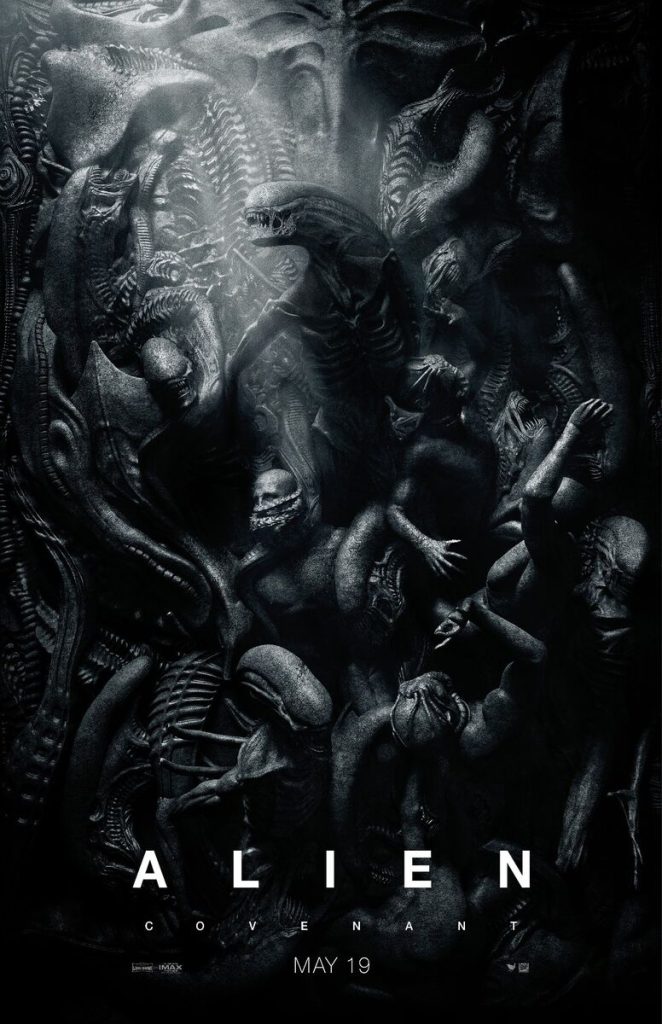
Xenomorph Type: Neomorphs, Protomorphs (early Xenomorphs)
Alien: Covenant brings the classic terror back — this time as the culmination of android David’s obsession with creation. After annihilating the Engineers with the black goo, David begins conducting experiments, splicing DNA from the creatures seen in Prometheus. The result: Neomorphs, pale and erratic monsters born through back-bursting and throat-bursting — and eventually, Protomorphs, the earliest recognizable Xenomorphs.
These Xenomorphs are fast, intelligent, and horrifyingly elegant. They gestate rapidly and kill even quicker. David treats them as art — perfecting their biology to eliminate flaw. In Covenant, we witness the birth of the classic Xeno form, not as a natural evolution but as a deliberate, chilling act of bioengineering. And worse — it’s not alien intelligence that created them. It was ours.
Alien: Romulus (2024)

Set between the events of Alien (1979) and Aliens (1986), Alien: Romulus returns the franchise to its horror roots — with a new crew of young scavengers encountering the Xenomorph aboard a derelict space station orbiting a backwater colony world.
In this standalone chapter, the Xenomorph is once again isolated, primal, and terrifying — a far cry from the action-heavy versions seen in later sequels. Director Fede Álvarez (known for Evil Dead and Don’t Breathe) emphasizes claustrophobic tension and practical effects, allowing the creature to shine as a relentless apex predator.
Key elements:
- The alien appears to hunt with intent, taking its time, cornering victims in vents, labs, and zero-gravity environments.
- Scenes echo the feel of the original Nostromo encounters — dim corridors, slow dread, and visceral kills.
- While exact lifecycle details are still being unraveled, the film explores a new hybrid of corporate research and alien containment, possibly implying evolution or experimentation.
Though the full lore impact of Romulus is still developing, the Xenomorph returns here as a perfect organism — cold, calculating, and more dangerous than ever.
Behavior & Traits
- Hive Mentality: Xenomorphs operate like ants or bees, obeying Queens, defending nests, and retrieving hosts for propagation.
- Extreme Adaptability: Their form changes based on the host species (human, dog, Predator, etc).
- Biological Perfection: Acid blood, inner jaw strike, stealth, wall-climbing, and heat resistance.
- No Empathy, No Language: The Xenomorph doesn’t negotiate. It only kills or breeds.
Other Media & Legacy
- Video Games:
- Alien: Isolation — Survival horror classic; one unkillable Xenomorph stalks you with AI learning.
- Aliens: Fireteam Elite — Squad shooter battling different Xeno variants.
- AVP series — Playable Xenomorphs with wall-running, stealth kills, and tail strikes.
- Comics & Crossovers:
- Fought Batman, Superman, Judge Dredd, and even Archie (yes, really).
- Marvel now publishes Alien comics following Disney’s acquisition of Fox.
- Figures & Merchandise:
- NECA and Hot Toys produce countless Xenomorph variants: Big Chap, Queen, Runner, Predalien, and more.
- Masks, plushes, replicas, and dioramas make the Xeno one of horror’s most collected creatures.
- Legacy:
- The Xenomorph is arguably the most iconic alien in cinema, combining sci-fi, horror, and primal fear into a single, unforgettable design.
- It influenced generations of horror, video games, and creature design — and still appears across media, from memes to tattoos to fan films.
League Placement
Infamous Class
Silent. Perfect. Unstoppable.
The Xenomorph is not evil. It is not cruel.
It is nature’s most efficient endgame.