Big Trouble in Little China at 40: John Carpenter’s Wildest Adventure Is Still Pure Magic
This week marks 40 years since Big Trouble in Little China first arrived in cinemas, and four decades later we are still trying to work out exactly what John Carpenter put into this film. Action? Absolutely. Comedy? Definitely. Martial arts? Plenty. Monsters? Of course. Ancient sorcerers? Naturally. Floating eyeballs? Why wouldn’t there be? Kurt Russell in a vest delivering dialogue with the confidence of a man who understands approximately 14% of what is happening around him? Now we’re talking.
Released in July 1986, Big Trouble in Little China was not the enormous success that its makers hoped it would be. In fact, its original theatrical run was a disappointment. Time, however, has been extraordinarily kind to John Carpenter’s magnificent genre cocktail. Home video gave the film another life, audiences discovered it, word spread, and eventually Jack Burton and the Pork-Chop Express found the appreciation they deserved.
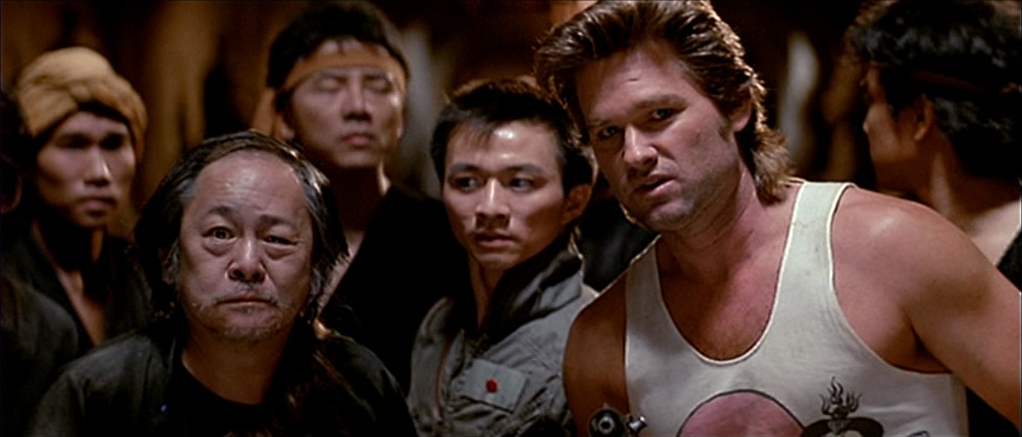
Forty years later, Big Trouble in Little China is a genuine cult classic. It is endlessly quotable, ridiculously entertaining and almost impossible to classify. It is also one of our favourite films here at Stalk & Slash, and frankly, if somebody tells us they do not like it, we immediately begin wondering whether they have been replaced by an evil supernatural duplicate.
Everybody Relax, We’re Here
The story begins with truck driver Jack Burton arriving in San Francisco and becoming involved in what he initially believes is a relatively straightforward kidnapping. This being a John Carpenter film, the situation quickly escalates into underground kingdoms, warring martial arts societies, ancient curses, green-eyed women, enormous monsters and a 2,000-year-old sorcerer named David Lo Pan. You know. Standard truck driver stuff.
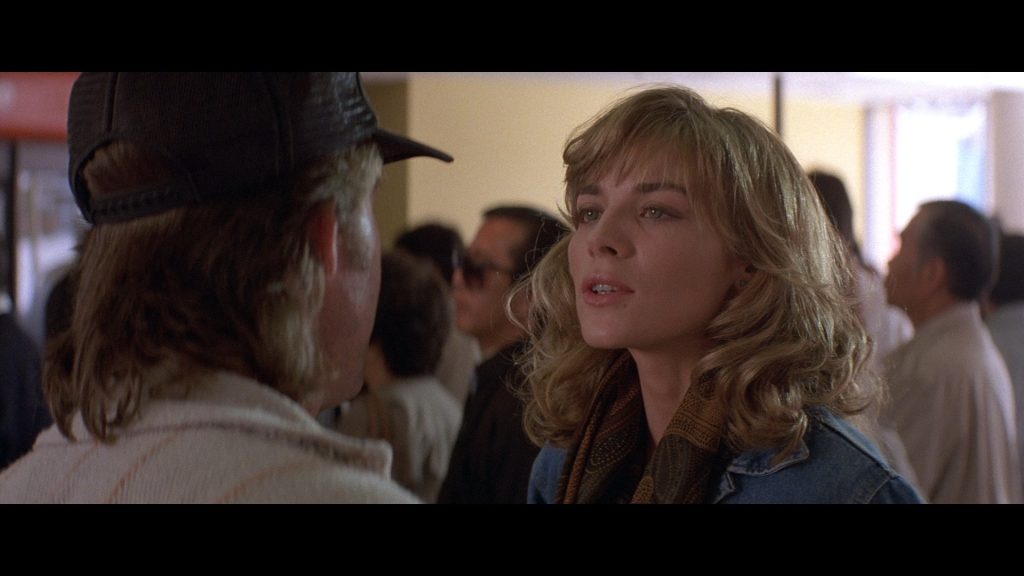
Jack’s friend Wang Chi, played by Dennis Dun, is trying to rescue his kidnapped fiancée Miao Yin from Lo Pan, the wonderfully theatrical villain played by James Hong. Jack goes along for the ride, joined by lawyer Gracie Law, played by Kim Cattrall, and Egg Shen, played by Victor Wong. The brilliance of the film is that Jack thinks he is the hero, when the evidence presented by the film repeatedly suggests otherwise.
One of the great jokes running throughout Big Trouble in Little China is that Jack Burton believes he has wandered into an Indiana Jones movie in which he is Indiana Jones. In reality, he is frequently confused, occasionally useless and often several minutes behind everyone else in understanding the situation. Wang Chi is the great martial arts hero charging into battle to save the woman he loves, while Jack is the American sidekick who accidentally shoots chunks of ceiling onto his own head and knocks himself unconscious before a major fight has properly started.
Carpenter deliberately built the film around that reversal, positioning Wang as the capable hero and Jack as the loudmouth comic foil, even if Jack himself has absolutely no idea that this is the arrangement. It is one of the cleverest elements of the entire film and something that the studio itself reportedly struggled to understand.
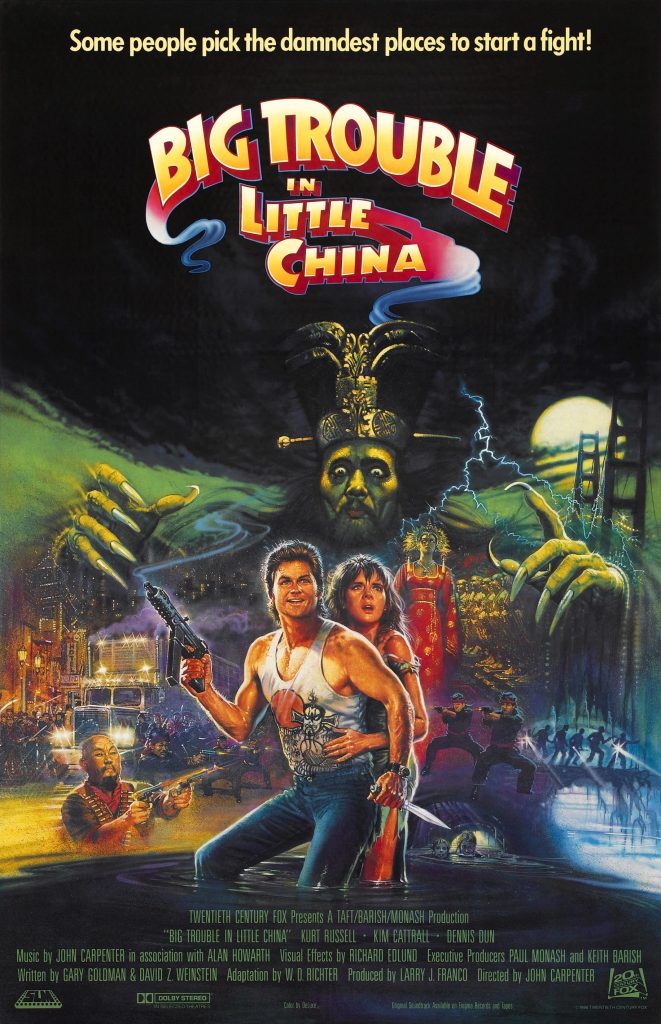
Kurt Russell Gives Us Jack Burton, Whether the World Is Ready or Not
There is an argument to be made that Jack Burton is Kurt Russell’s greatest performance. Yes, we know. Snake Plissken exists. So does R.J. MacReady. Russell has Wyatt Earp, Elvis Presley, Stuntman Mike and a filmography packed with memorable characters, but Jack Burton might be the most Kurt Russell that Kurt Russell has ever been.
The swagger, the timing, the facial expressions and the complete confidence while saying something utterly ridiculous all combine to create a unique kind of action hero. Jack walks into every situation as though an invisible camera crew is following him around making a documentary about the world’s greatest man, while everyone else in the film is far too busy fighting supernatural evil to notice.
Jack’s radio conversations aboard the Pork-Chop Express are essentially podcasts recorded for an audience of nobody. He drives through terrible weather dispensing wisdom to the empty air, announces himself to villains who do not care who he is, carries a knife like a man who has spent years practising dramatic knife poses in the mirror, and frequently looks delighted with himself immediately before something goes catastrophically wrong.
Russell reportedly based elements of Jack’s voice and mannerisms on John Wayne, but the performance becomes something much funnier: the myth of the invincible American action hero walking into a Chinese fantasy adventure and discovering that nobody has received the memo telling them he is supposed to be the main character. Russell had initially been uncertain about taking the role, but eventually embraced Jack as a deeply flawed hero and a blowhard who imagines himself as an Indiana Jones type despite circumstances repeatedly proving too much for him.
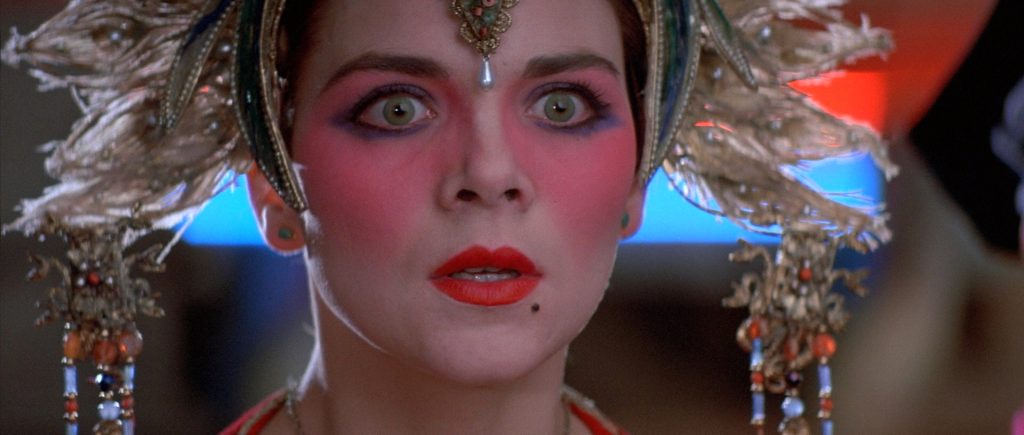
That understanding is essential to the performance. Jack is never played as knowingly stupid; he genuinely believes he is brilliant. Then, occasionally, he actually is. His final confrontation with Lo Pan contains one of the greatest action hero payoffs of the decade precisely because the film has spent so much time watching Jack fall over, misunderstand things and get himself into trouble.
After all, it is all in the reflexes.
Carpenter Throws Everything at the Screen
By the time Big Trouble in Little China arrived, John Carpenter had already directed Halloween, The Fog, Escape from New York, The Thing, Christine and Starman. That is a frankly ridiculous run of films, and with Big Trouble in Little China, Carpenter appeared to decide that choosing one genre was for cowards.
The film begins like a truck-driving comedy, moves into an urban kidnapping thriller, crashes into a gang war and then disappears underground into a supernatural martial arts fantasy populated by sorcerers, monsters and elemental warriors. Most films attempting this many tonal changes would collapse before the halfway point. Carpenter somehow makes the madness feel completely natural.
Of course there is a floating monster covered in eyeballs. Why are you asking questions? We have a wedding to stop.
The film’s spectacular genre mixture was partly responsible for the difficulty the studio reportedly had in selling it. Carpenter and Russell later discussed how successful test screenings had created expectations that the film could become a major hit, only for its theatrical marketing campaign to struggle with communicating exactly what the film was. It eventually found the audience it deserved through home video, where its reputation continued to grow.
Perhaps the film was simply ahead of its time. Modern audiences are accustomed to stories mixing genres and cultures, but in 1986, a major studio film filled with martial arts, Chinese mythology, screwball comedy, practical creature effects and a deliberately incompetent white leading man was an unusual proposition. It still feels unusual now.
From a Western to the Pork-Chop Express
One of the most fascinating pieces of the film’s history is that Big Trouble in Little China was originally conceived as a period Western set in the 1880s. In the early version, Jack Burton was a cowboy and it was his horse, rather than his beloved truck, that was stolen. W.D. Richter later carried out an extensive rewrite that brought the story into contemporary San Francisco while retaining the supernatural elements surrounding Lo Pan.
We are sure that version could have been entertaining, but we refuse to live in a universe without the Pork-Chop Express.
The modern setting is part of the film’s charm. Carpenter places an ordinary, familiar 1980s America directly alongside an ancient supernatural world hidden beneath Chinatown. Jack can drive a truck into the story, lose it somewhere between dimensions and then spend much of the film periodically remembering that somebody still owes him money.
The original concept may have been a Western, but the finished film still contains the spirit of one. Jack is essentially a wandering cowboy whose horse has eighteen wheels and a CB radio, although we suspect most traditional Western heroes spent considerably less time accidentally knocking themselves unconscious.
The Three Storms Changed Pop Culture
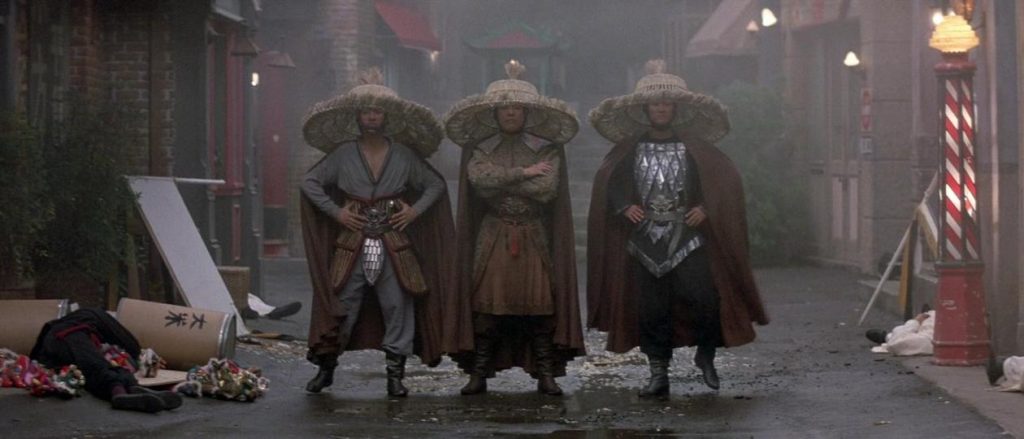
Then there are the Three Storms: Thunder, Rain and Lightning. Few henchmen have ever made an entrance quite like these three, and with their enormous hats, supernatural powers and complete lack of interest in subtlety, the Storms remain among the film’s most instantly recognisable creations.
Their influence extended beyond cinema, with Mortal Kombat co-creator Ed Boon citing the Storms as inspiration for Raiden, while Lo Pan helped inspire the archetype behind Shang Tsung. Once you know it, you cannot unsee it.
The martial arts action itself was created with a combination of practical choreography, trampolines, mechanical wires and other physical techniques. Carpenter worked with martial arts coordinator James Lew to embrace the energy and visual language of Hong Kong cinema, packing the film’s battles with movement, spectacle and deliberate martial arts movie tropes.
Dennis Dun was particularly well suited to the physical demands of Wang Chi, having martial arts experience from childhood and a background that included Chinese opera. The result is another reason the film works so well: while Jack is busy performing the role of Action Hero Jack Burton inside his own head, Wang is actually getting the job done.
David Lo Pan Is Still One of the Great Movie Villains
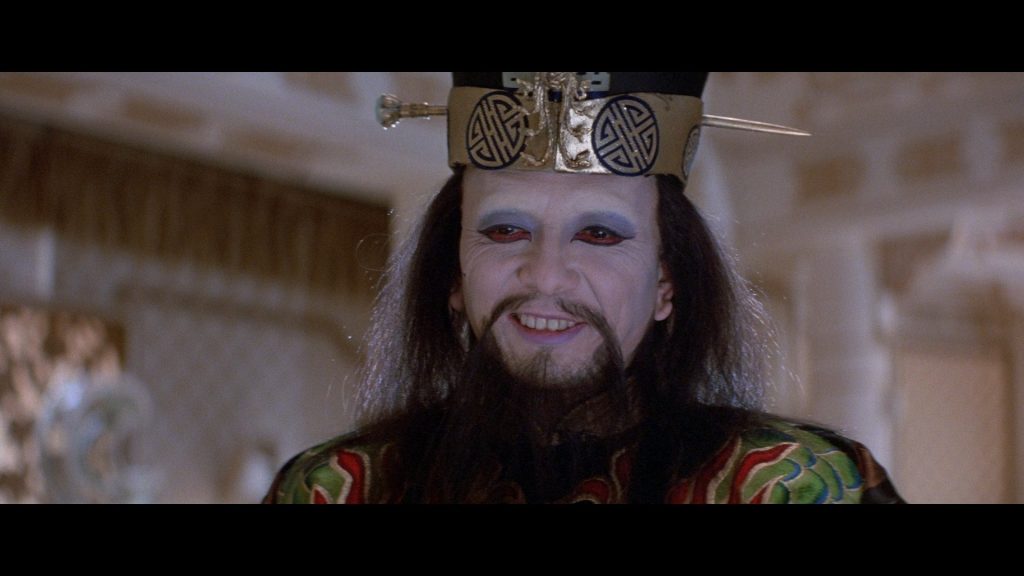
A hero is only as good as his villain, and fortunately Big Trouble in Little China has James Hong. His performance as David Lo Pan is magnificent, balancing menace, humour and theatrical grandeur in a way that ensures the ancient sorcerer is every bit as memorable as Jack Burton himself.
Lo Pan exists in two forms: a frail old man and a towering supernatural figure who looks as though he has personally spent 2,000 years planning the most elaborate wedding ceremony in human history. He could easily have become a generic fantasy villain, but Hong fills him with personality. Lo Pan does not merely explain his evil plan; he performs it.
One particularly wonderful piece of production trivia concerns the wedding sequence, where Hong wore huge platform lifts beneath his ceremonial robes while descending an escalator. The costume created a genuinely difficult physical challenge, with Hong later recalling the danger involved in making the descent while trying to maintain Lo Pan’s intimidating presence.
This somehow makes the scene even better. Lo Pan looks terrifying, while James Hong was apparently concentrating on not becoming the first ancient supernatural sorcerer to fall down an escalator. That is acting.
The Monsters Still Have More Personality Than Most CGI Armies
One of the greatest pleasures of returning to Big Trouble in Little China today is the physicality of its world. The creatures have weight, the sets have texture and the underground environments feel like places that people could actually walk through, even if those people might immediately be attacked by something with too many eyes.
Production designer John J. Lloyd and the filmmaking team created extensive Chinatown streets, underground corridors and other environments across multiple studio soundstages. The film’s action could then be filled with practical pyrotechnics, physical stunt work and creature effects, helping to give the entire adventure a tactile quality that remains enormously enjoyable four decades later.
The Guardian, the grotesque floating eyeball creature, was an especially complicated creation. The practical puppet required a large team of puppeteers and sophisticated compositing work to bring it into the film’s environments. Today, somebody would probably make it on a laptop during their lunch break. In 1986, an army of people had to stand behind a screen pulling cables to make thirty eyeballs behave themselves. Cinema.
Even the Studio Didn’t Quite Understand Jack Burton
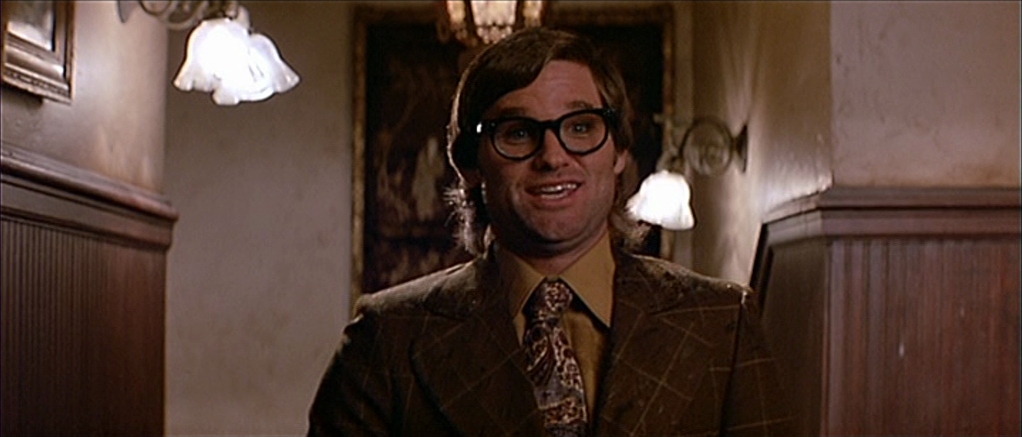
One of the funniest stories surrounding the production is that the opening scene with Egg Shen was reportedly added after studio concerns that Jack Burton did not seem heroic enough. This was, of course, the entire joke.
The studio wanted audiences reassured that Jack Burton was a great hero. Carpenter had intentionally made a film in which Jack Burton believes he is a great hero while Wang Chi is doing most of the actual heroism. The prologue was added to frame Jack in more traditionally heroic terms before the film begins.
Imagine trying to explain Jack Burton to a room full of executives in 1985. He is the hero, except he is actually the sidekick, except he does not know that he is the sidekick, and the real hero is his friend. Meanwhile, Kurt Russell is on the poster and spends part of the climactic battle unconscious.
We imagine there was a long silence followed by somebody asking whether Jack could be made more like Rambo.
A Box Office Disappointment That Won the Long Game
Big Trouble in Little China deserved better in 1986. The film arrived in a crowded summer marketplace and was released shortly before Aliens, while Carpenter and Russell later expressed frustration over a marketing campaign they felt did not properly support the film. Despite strong reactions at test screenings, it struggled theatrically before home video transformed its fortunes.
VHS was the film’s revenge. Rental shops and television broadcasts allowed people to discover it without needing a studio marketing department to explain what it was. One person watched it and told another person. Kids discovered it. Their parents watched it with them. Those kids grew up, bought it again on DVD, then Blu-ray, then 4K, and will presumably buy it once more when somebody invents a disc format that projects Jack Burton directly into the living room.
Some films become classics because they are treated as important from the moment they arrive, while others earn that status one viewer at a time. Big Trouble in Little China belongs firmly in the second category, and its popularity today feels like a victory won through decades of people enthusiastically forcing friends to watch it.
The Carpenter and Russell Partnership
The film was another major collaboration between Carpenter and Russell after Elvis, Escape from New York and The Thing, with Escape from L.A. eventually following in 1996. It remains one of cinema’s great director and actor partnerships because each project shows us a completely different side of Russell.
Snake Plissken is ice cold, while MacReady is exhausted, suspicious and increasingly desperate. Jack Burton, meanwhile, cannot enter a room without mentally imagining his own theme music.
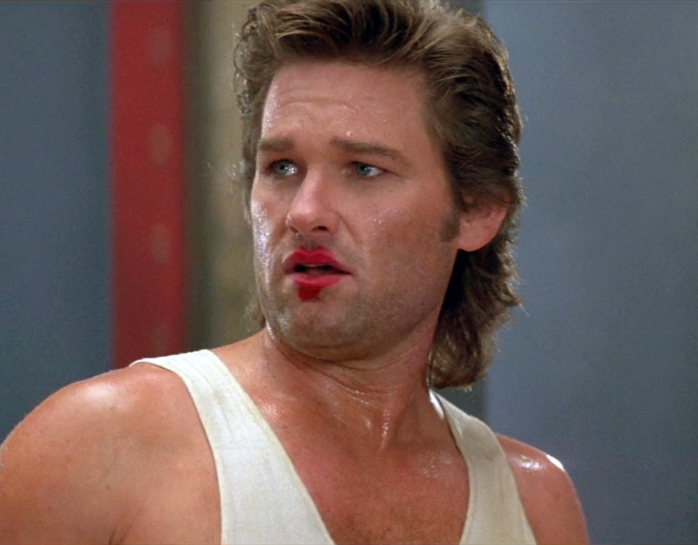
Carpenter understood Russell’s ability to be both a legitimate movie star and completely ridiculous. That second quality is important. Plenty of leading men can look heroic while holding a gun, but fewer are willing to wear lipstick smeared across their face, fall over, get confused, miss important events because they are unconscious and still somehow remain effortlessly charismatic.
Russell understood the assignment. Possibly better than Jack Burton ever understood anything.
Forty Years Later, It Hasn’t Aged a Day
Well, perhaps it has aged a few days. It is 40 years old, after all, but remarkably few.
What makes Big Trouble in Little China endure is not nostalgia alone. The film is still fast, funny and inventive. Carpenter directs the action with clarity, Dean Cundey’s cinematography gives the film scale and atmosphere, the practical effects remain enormously charming and the cast understands the exact strange frequency on which the film operates.
Most importantly, it never becomes embarrassed by itself. There is no apologetic wink to the audience. Carpenter commits completely to the world, while Jack Burton provides the comedy simply by being Jack Burton. The mythology matters, the danger is real and the characters care about what is happening. Jack just happens to be an idiot, albeit a magnificent idiot.
Forty years after its release, Big Trouble in Little China remains one of John Carpenter’s most purely entertaining films and one of Kurt Russell’s greatest performances. It is a film we love dearly, one we can return to again and again, and one that seems to become more enjoyable with every viewing.
Perhaps that is because there really is nothing else quite like it. Or perhaps it is because, somewhere out there on a dark and stormy night, Jack Burton is still driving the Pork-Chop Express, broadcasting completely unsolicited life advice to absolutely nobody.
And when some wild-eyed, eight-foot-tall maniac grabs your neck, taps the back of your favourite head up against a barroom wall and asks if you’ve paid your dues, you already know what Jack Burton says.
Yes sir, the cheque is in the mail.