
Horror Takes Over the Oscars as Sinners Shatters Records — But Does It Really Deserve 16 Nominations?
Against all expectations, horror didn’t just sneak into the awards conversation this year, it kicked the doors clean off their hinges. The Academy Award nominations have been announced, and Ryan Coogler’s Sinners has emerged as the undisputed frontrunner with a staggering sixteen nominations, the most ever received by a single film in Oscar history.
That isn’t “the most for a horror film.” It’s the most, full stop.

The film landed nominations across almost every major category, including Best Picture, Director, Actor, Supporting Actress, Supporting Actor, Original Screenplay, Costume Design, Casting, Makeup and Hairstyling, Original Score, Cinematography, Editing, Production Design, Sound, Visual Effects, and Original Song. If there were an award for Best Use of Candlelight in a Vampiric Bar, Sinners would probably have been nominated for that too.
It’s undeniably historic, but it also raises an uncomfortable and unavoidable question. Does Sinners really deserve to break the all-time nominations record?
For context, this is a massive win for horror as a genre. The Academy has spent decades treating horror like an embarrassing relative, occasionally tolerated, rarely celebrated, and almost never taken seriously. When horror does break through, it is usually reframed as something else entirely. Elevated. Prestigious. “Not really horror.” As if fear itself is something to apologise for.
This year, that long-standing barrier finally cracked. Alongside Sinners, genre-leaning films like Frankenstein, Weapons, Bugonia, KPop Demon Hunters, and even The Ugly Stepsister showed up across major categories. Perhaps most notably, Amy Madigan received a Best Supporting Actress nomination for Weapons, a reminder that strong performances do not suddenly stop being acting simply because blood is involved.
For horror fans, this is the kind of Oscar morning many never expected to see. It feels validating, overdue, and long fought for.
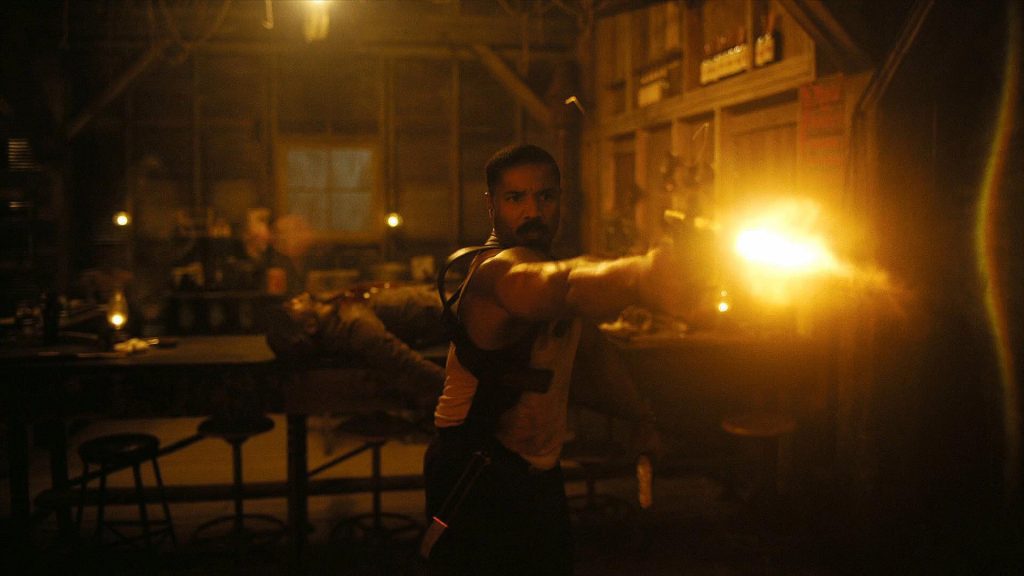
Where things get more complicated is in the sheer scale of Sinners’ dominance. The film is good, sometimes very good. It is confident, stylish, well-acted, and thematically engaged, blending vampire mythology with racial history and social commentary. But it is also difficult to ignore that large portions of it feel deliberately indebted to genre predecessors, wearing its From Dusk Till Dawn DNA proudly rather than disguising it.
That is not a flaw in itself. Horror thrives on remixing and reinterpretation. The issue arises when a film operating within familiar genre frameworks racks up more nominations than The Godfather, One Flew Over the Cuckoo’s Nest, or The Lord of the Rings: The Return of the King. Those films did not simply dominate awards seasons. They fundamentally reshaped cinema, performance, and storytelling in ways that still ripple outward today.
Sinners, strong as it is, does not quite operate on that level of cultural or technical revolution. Sixteen nominations feels less like precise recognition and more like the Academy collectively overcorrecting in real time, eager to prove it finally understands what it has spent decades ignoring.
In that sense, this does not feel like the Oscars crowning Sinners as the greatest film of all time. It feels more like a long-overdue course correction. Horror has been sidelined for so long that when a film arrives that is serious, socially conscious, well made, and directed by a respected filmmaker, the response swings dramatically in the opposite direction. Instead of measured acknowledgement, it receives overwhelming endorsement.
Sinners is not just being rewarded for what it is, but for what the genre has historically been denied. It is carrying the accumulated frustration of decades of snubs, dismissals, and genre prejudice on its shoulders.
Even with that caveat, this remains a moment worth celebrating. Horror is finally being judged alongside prestige dramas, epics, and biopics without having to pretend it is something else. Performances are being taken seriously. Craft categories are embracing genre excess instead of penalising it. Studios are paying attention.
Will this suddenly open the floodgates for slashers, creature features, and unapologetic genre cinema at the Oscars? Probably not. The Academy rarely changes overnight. But it may make it harder to dismiss horror as unserious moving forward.
If Sinners had to slightly overachieve to crack that door open, that is a price most horror fans will gladly accept. Sixteen nominations may be excessive. The recognition itself is not.
For once, horror isn’t just crashing the party. It’s being asked to stay.