Dino Velvet Didn’t Kill Anyone. He Just Made It Profitable
There are killers who stalk alleyways with knives, killers who haunt dreams, and killers who refuse to die no matter how many times you shoot them. And then there’s Dino Velvet, a man who doesn’t even bother getting his hands dirty because he’s far too busy counting money and calling murder “content.”
With that, Dino Velvet from 8mm officially slithers his way into the Third Class Tier of the Hall of Killers, not because he racks up an on-screen body count himself, but because he represents something far colder, uglier, and more realistic than most cinematic monsters.
Dino Velvet and the Horror of 8mm
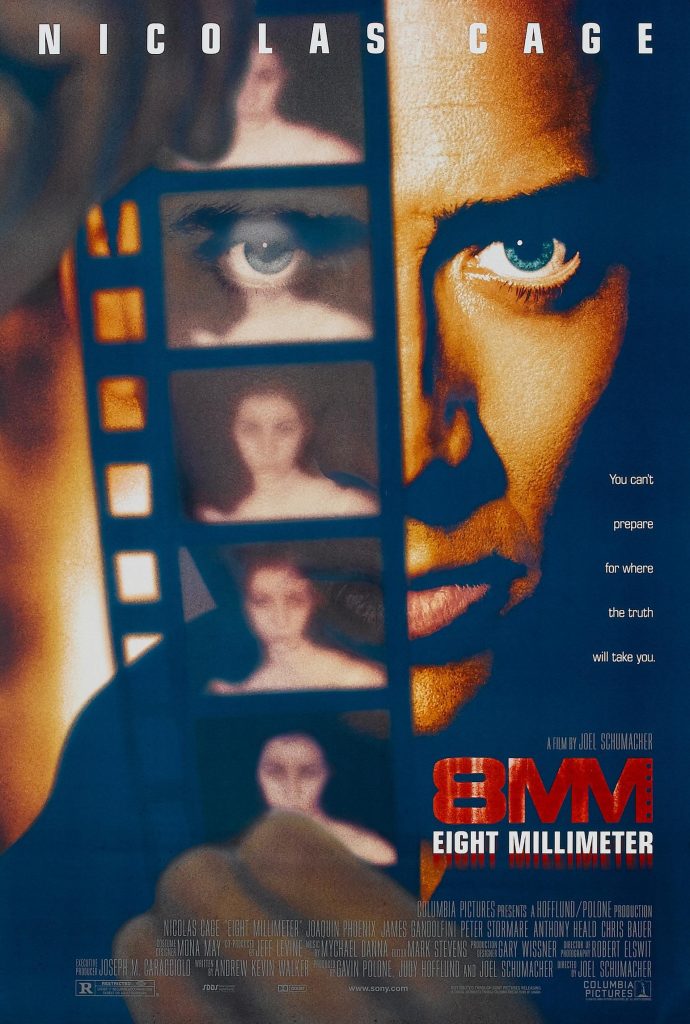
Directed by Joel Schumacher, 8mm is not a fun watch. There are no winks, no ironic needle drops, and no crowd-pleasing carnage. It is a grim, oppressive descent into exploitation, pornography, and the idea that if something is profitable enough, someone will eventually decide it’s acceptable.
Dino Velvet sits right at the rotten center of that idea.
Velvet is not the masked figure committing murder on camera. That role belongs to Machine, his loyal executioner and human tripod of doom. Velvet is worse. He is the producer. The organiser. The man who turns rape and murder into a boutique product for wealthy degenerates who want their violence filmed in high definition.
Peter Stormare’s Most Unsettling Performance
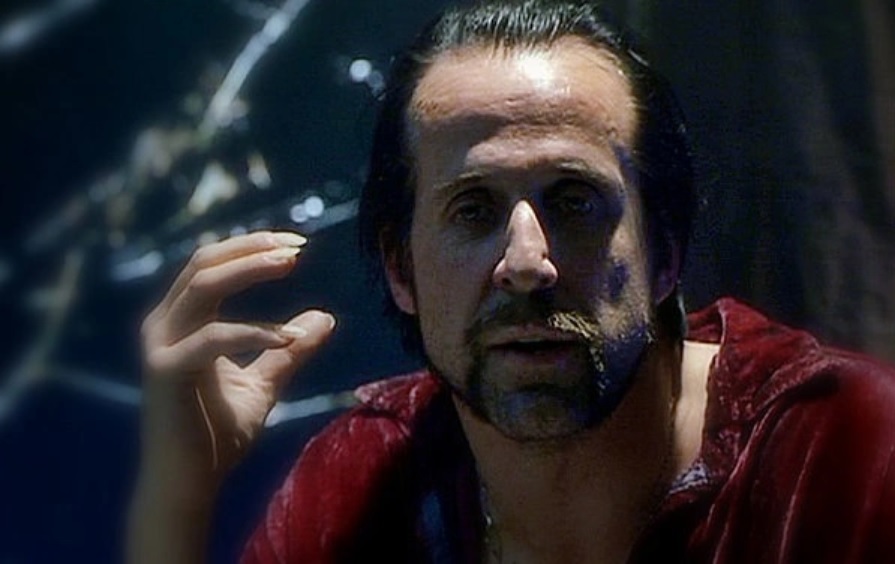
Played with deeply unsettling relish by Peter Stormare, Velvet is theatrical, vulgar, and grotesquely confident. He dresses like a man who thinks excess is a personality. He talks like someone who believes money makes him untouchable. And for most of the film, he’s terrifyingly right.
Velvet operates entirely from the shadows of the black market. He doesn’t stumble into evil, he systemises it. Victims are sourced. Crimes are planned. Films are distributed. Payments are processed. Lawyers are retained. It’s exploitation horror with a business model, which somehow makes it even more nauseating.
The Villain Who Believes He’s Right
When private investigator Tom Welles begins digging into the origins of a supposed snuff film, Velvet doesn’t panic. He mocks him. He toys with him. He treats Welles’ moral outrage like an amusing character flaw.
To Dino Velvet, suffering is a commodity and conscience is for people without offshore accounts.
This is what makes him such an effective villain. He doesn’t rant. He doesn’t justify himself with ideology. He doesn’t believe he’s misunderstood. He believes he’s correct. And worse, he believes the world quietly agrees with him as long as the right people are paying.
Machine vs Dino Velvet: Violence vs Exploitation
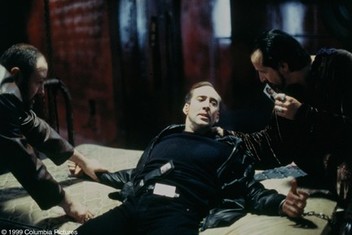
Velvet’s relationship with Machine is key. Machine is the brute force, the physical horror, the figure audiences instinctively recoil from. Velvet is the reason Machine exists at all.
Without Velvet, there is no snuff operation. No infrastructure. No market. No product.
Machine is violence. Velvet is exploitation industrialised.
When Velvet’s operation begins to collapse, the flamboyant confidence drains away. What remains is pure pragmatism. People are killed not out of rage, but necessity. Loyalty only lasts as long as it remains useful.
Why Dino Velvet Belongs in the Third Class Tier
Dino Velvet earns Third Class status because he isn’t supernatural, unstoppable, or iconic in the traditional slasher sense. He is something more disturbing.
He is believable.
He represents the horror of systems rather than impulses. The idea that the worst monsters don’t chase you. They invoice you. They exploit. They profit. They stay clean while others bleed.
His death is not operatic or poetic. Shot through the throat, bleeding out while clinging to the monster he created, Velvet dies exposed, terrified, and very much mortal. It’s ugly, mundane, and fitting.
A Killer Who Made Murder Profitable
Peter Stormare’s performance ensures Dino Velvet lingers long after the film ends. You don’t remember him because he killed people. You remember him because he made killing profitable.
That’s why Dino Velvet earns his place in the Hall of Killers. Not as the man holding the weapon, but as the man who made sure it was well-lit, properly framed, and sold to the highest bidder.