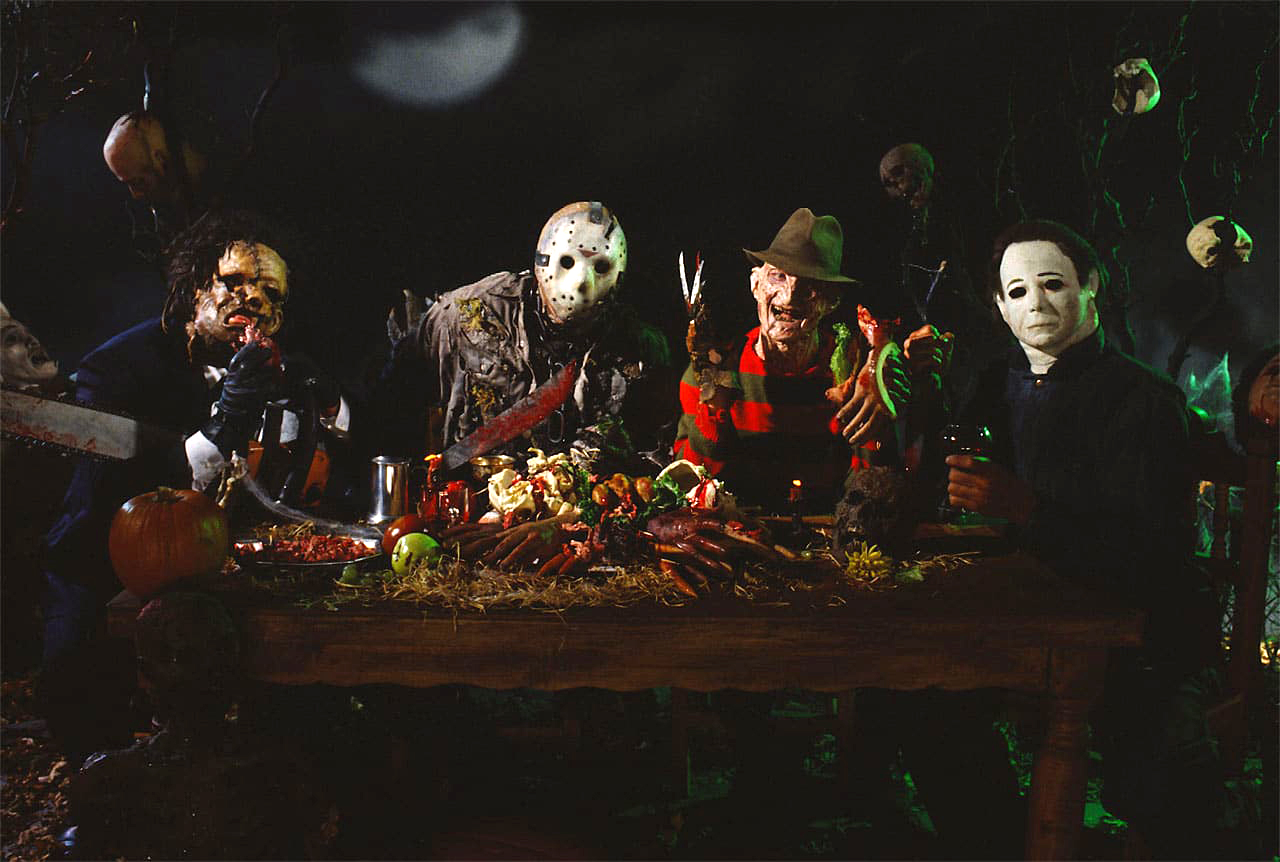
That Time People Magazine Brought Together Four Horror Icons for the Ultimate Monster Mash
Imagine being a horror-obsessed kid in the late 1980s. Every trip to the video store felt like sneaking into a forbidden cathedral. The aisles were lined with VHS tapes boasting wild cover art and gruesome stills on the back — masked killers, dripping knives, and taglines that promised the most terrifying experience of your life. Sure, those boxes were marked 18, and you were nowhere near old enough to rent them, but just standing there staring at Freddy’s scorched grin or Jason’s hockey mask felt like a dangerous thrill.
There was no internet. No YouTube, no horror websites, no podcasts, no forums filled with people debating who would win in a fight between Michael Myers and Leatherface. All you had were movies, magazines, and your imagination, and for one glorious moment in 1988, People Magazine gave horror fans something they never thought they would see: a proper gathering of the genre’s biggest villains.
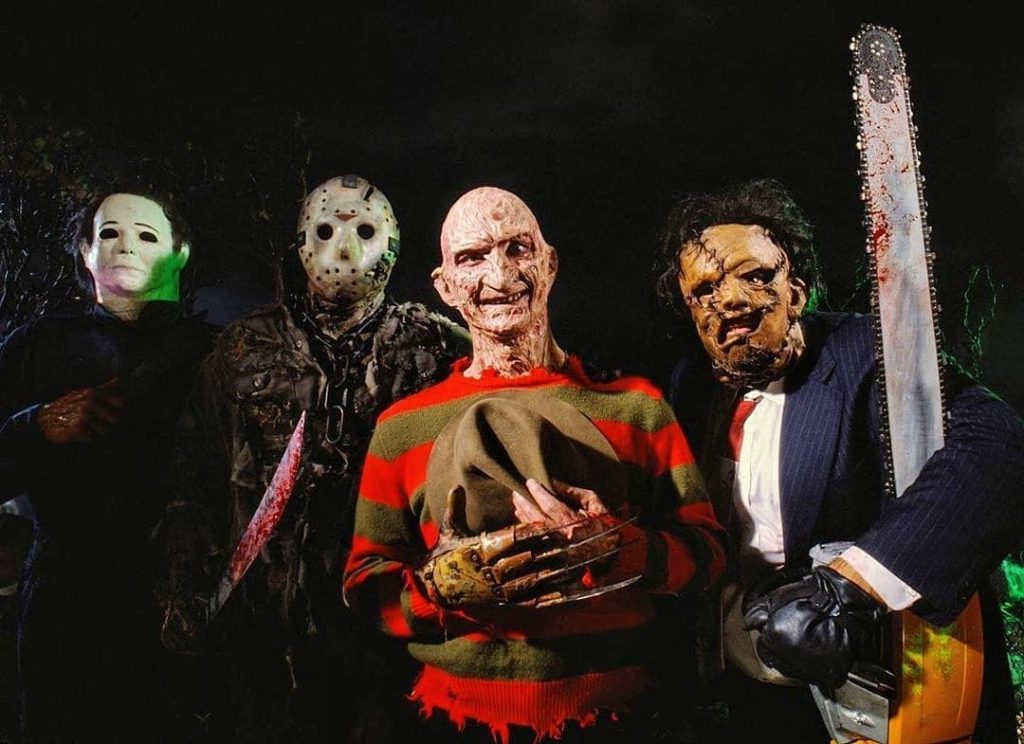
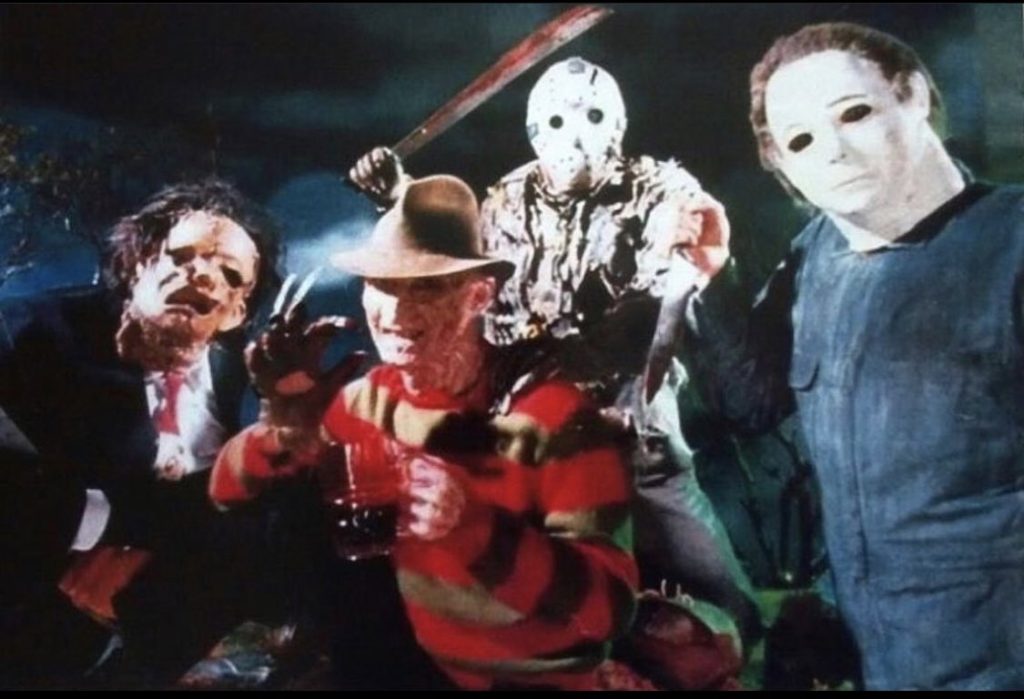
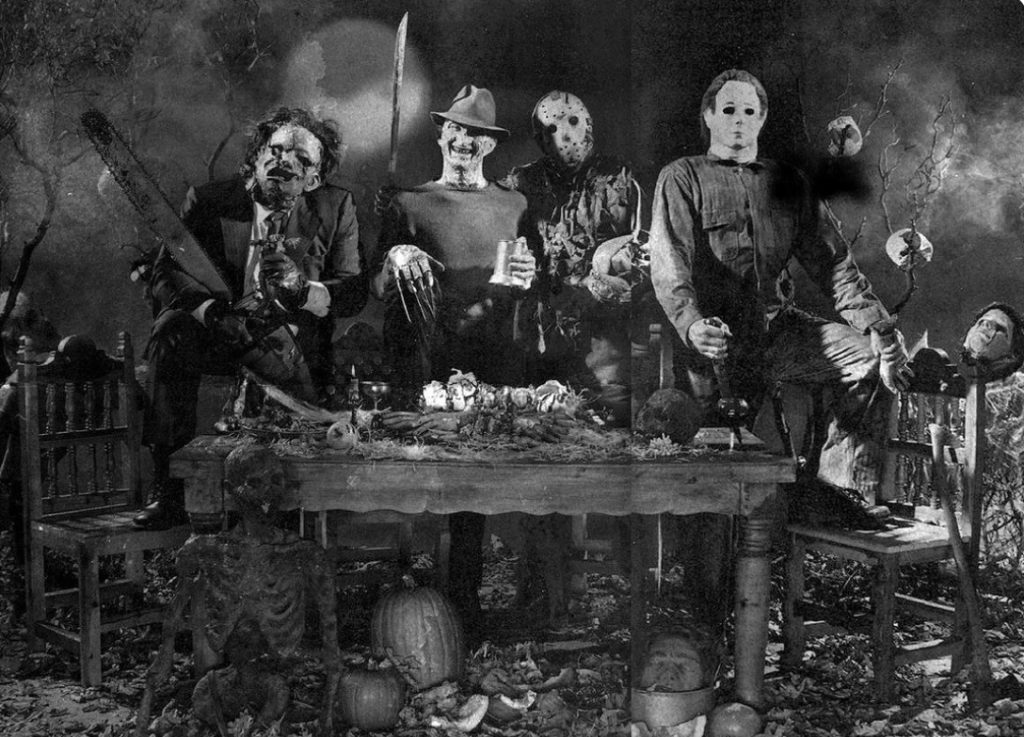
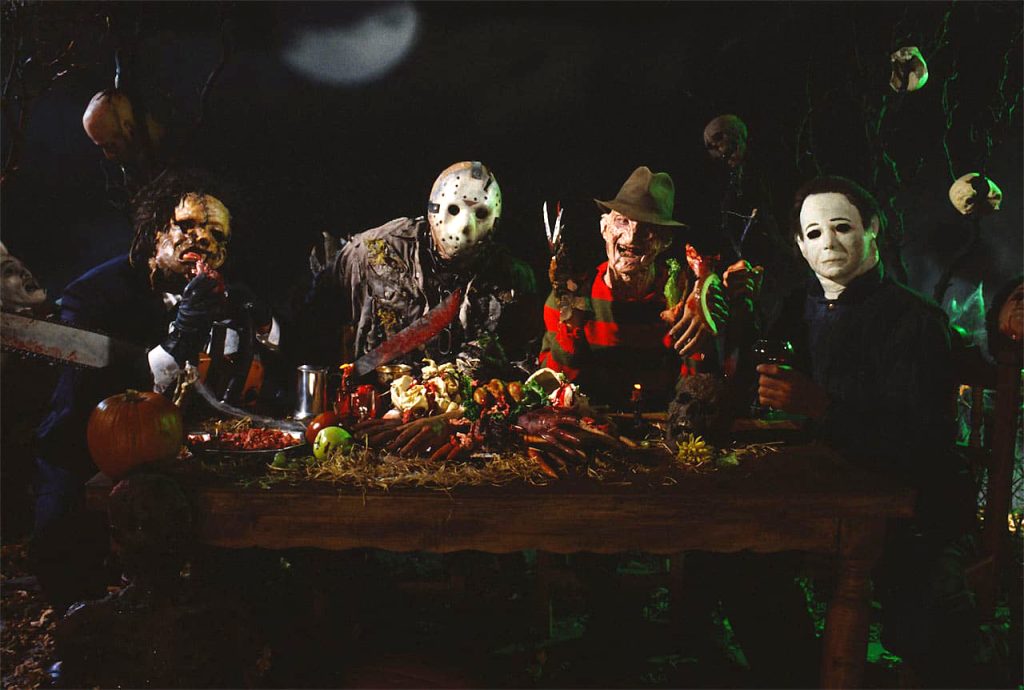
That year, People published an extraordinary spread featuring the unholy slasher trinity Freddy Krueger, Jason Voorhees, and Michael Myers, alongside the cannibal chainsaw connoisseur himself, Leatherface. Together, they posed like the dark Mount Rushmore of horror, glaring beside a dinner table that looked straight out of hell’s banquet hall. For young genre fans, it was like Christmas morning with a body count.
The shoot brought together four legends of fright: Robert Englund as Freddy Krueger, Kane Hodder as Jason Voorhees, George P Wilbur as Michael Myers, and Bob Elmore as Leatherface. It was the first and only time this particular lineup of maniacs was photographed together, and sadly, we will never see it again, as Wilbur passed away in 2023.
The People issue hit stands on November 7, 1988, the same week Baby Jessica was featured on the cover after being rescued from a well, and frankly, surviving something scarier than any of these monsters could dream up. Inside, the article celebrated the peak of the slasher craze. Halloween 4: The Return of Michael Myers, A Nightmare on Elm Street 4: The Dream Master, and Friday the 13th Part VII: The New Blood were all fresh in theaters, while The Texas Chainsaw Massacre 2 was still wreaking havoc on video store shelves.
This was the golden age of horror fandom. It was the kind of time where you could walk into a newsstand and see your favorite killers treated like rock stars instead of societal scourges. Just a few years earlier, the media had been screaming about how horror movies were corrupting youth and feeding into Satanic Panic nonsense. But by 1988, these villains were pop culture royalty. Freddy had a TV show, Jason had action figures, and Michael Myers had a decade’s worth of nightmares under his belt.
In the People piece, the magazine gave readers a surprisingly cheeky look behind the masks. They described the four icons as “the reason Hollywood accountants sleep well at night and American teens don’t.” Collectively, their movies had made over 500 million dollars, a figure that horror producers still salivate over to this day.
Jason’s man behind the mask, Kane Hodder, recalled how rough his role could get, complaining that during the climax of The New Blood, a collapsing porch dumped 700 pounds of debris right onto his head. “Kind of rang my bell,” he joked. George P Wilbur, freshly revived as Michael Myers after his ten-year coma in Halloween 4, could not even count his kills, shrugging, “A minimum of fifteen. I have got a massive body count on this one.”
Meanwhile, Bob Elmore, the man beneath Leatherface’s mask in The Texas Chainsaw Massacre 2, reminisced about the extreme conditions of filming. “It was 170 degrees,” he said. “But I destroyed a Mercedes, killed lots of people, and cut a guy’s head off, so that was real nice.”
And then there was Robert Englund, the only actor to have played his monstrous alter ego in every Elm Street film. He toasted the occasion in true Freddy fashion, skewering apple slices on his knife glove and raising a wine glass: “This blood’s for you, sucker.”
Looking back now, that People Magazine spread feels almost sacred, a snapshot from a time when horror was dangerous, thrilling, and strangely glamorous. These killers were not just movie villains; they were cultural icons. They scared parents, delighted teenagers, and turned VHS aisles into temples of terror.
Somewhere, many of us still wish we had that magazine tucked away in a closet, its pages worn from being read a thousand times. Because in 1988, long before hashtags and streaming services, one glossy magazine managed to bring horror’s greatest legends to the same table, and that, for fans, was pure magic.