KLAUS WORTMANN EATS HIS WAY INTO THE HALL OF KILLERS THIRD CLASS
Most people faced with an apparently deserted Greek island would probably have a few questions. Where has everybody gone? Why is the place so quiet? Should we perhaps get back on the bloody boat before the enormous wild-eyed man covered in filth discovers us? Unfortunately, horror films are rarely populated by people who choose that final option, and in Antropophagus, that proves to be a particularly unfortunate oversight.
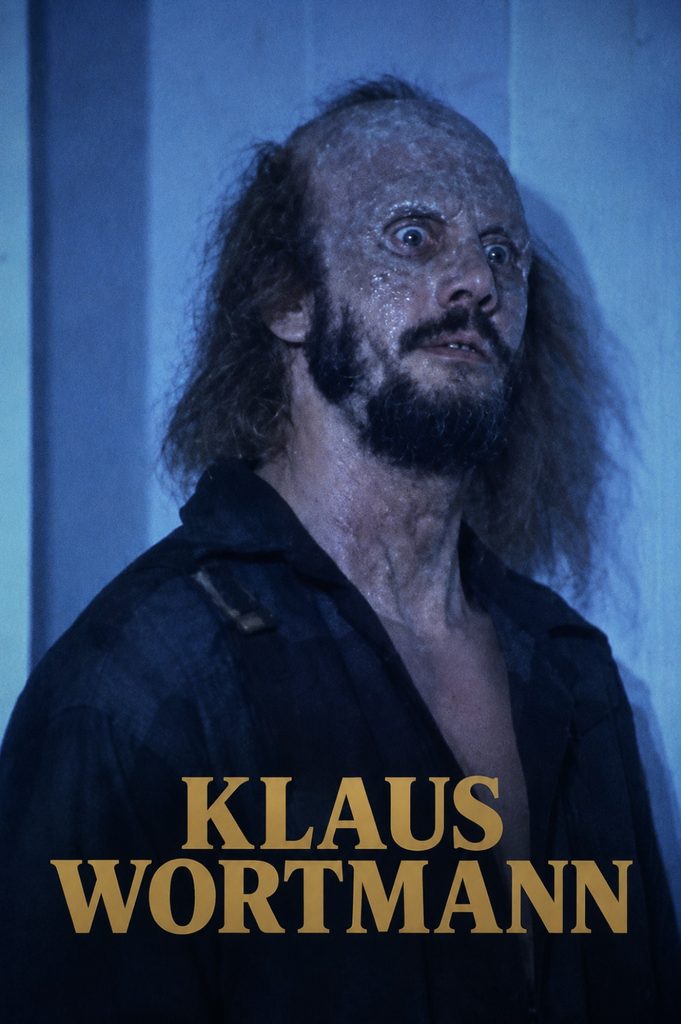
The enormous wild-eyed man in question is Klaus Wortmann, the cannibalistic nightmare at the centre of Joe D’Amato’s notorious 1980 Italian horror film. Played by George Eastman, Klaus has spent more than four decades giving audiences several excellent reasons to reconsider island holidays, pregnancy and, in one especially memorable case, the wisdom of leaving your own intestines within biting distance. Now this spectacularly unpleasant gentleman has officially been inducted into the Hall of Killers Third Class. We considered holding a ceremony, but then somebody mentioned catering and the whole thing was immediately cancelled.
WELCOME TO THE ISLAND. PLEASE DON’T FEED KLAUS
Antropophagus follows a group of travellers who arrive on a Greek island and discover that the place is suspiciously deserted. Rather than recognising this as the universe providing them with a fairly substantial hint and getting back on the boat, they begin investigating. The holiday consequently deteriorates at impressive speed when they discover that the island isn’t quite as uninhabited as it first appeared.
Waiting for them is Klaus, a man whose relationship with food has become somewhat problematic. His backstory reveals that he was once an ordinary family man before becoming stranded at sea with his wife and child. Faced with starvation after tragedy struck, Klaus resorted to cannibalism, an experience from which his remaining sanity apparently never recovered. By the time the visitors encounter him, whatever remained of the ordinary Klaus Wortmann has disappeared and a murderous cannibal is prowling the island instead.
George Eastman’s extraordinary physical presence does much of the work in making Klaus intimidating. Eastman was an exceptionally tall actor, and Joe D’Amato takes full advantage of that imposing frame by presenting Klaus as a huge, filthy and dishevelled figure emerging from darkened rooms and stalking his victims through the deserted surroundings. Personal hygiene appears to have slipped quite some distance down Klaus’s list of priorities, although in fairness the man has considerably bigger problems than remembering to buy shampoo.
Klaus also doesn’t need an elaborate costume or particularly complicated mythology to make an impression. Put George Eastman in filthy clothes, give him the expression of a man who has just discovered the all-you-can-eat buffet closes in five minutes, and point him towards the cast. Sometimes horror really can be that straightforward.
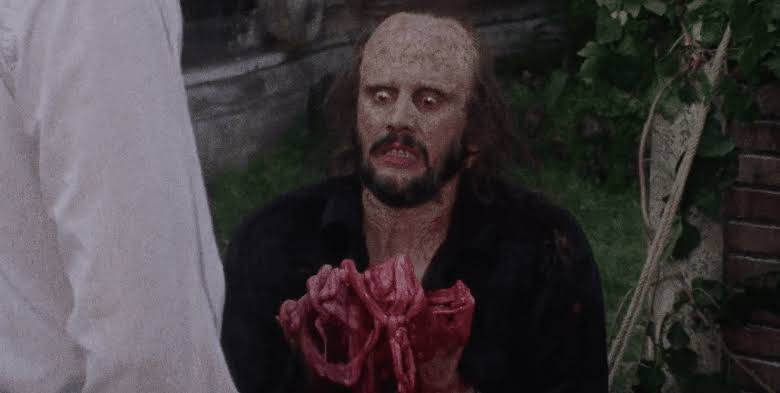
GEORGE EASTMAN: WRITER, ACTOR, PROFESSIONAL LUNCH RUINER
One of the particularly enjoyable details behind Klaus Wortmann is that George Eastman wasn’t merely the actor asked to stagger around the island looking hungry. Born Luigi Montefiori, Eastman was also a prolific screenwriter and co-wrote Antropophagus with director Joe D’Amato, meaning he was partly responsible for creating the lunatic he subsequently had to play. If Klaus made audiences feel physically ill, Eastman therefore deserves credit from both sides of the camera.
The character also feels perfectly suited to Eastman’s imposing screen presence. There is absolutely nothing sophisticated about Klaus’s particular approach to cannibalism. Nobody is getting out the expensive wine, polishing the silverware or debating which sauce best complements a human kidney. Klaus looks like he’d eat the waiter before anybody had finished handing out the menus, then become visibly irritated when told there wasn’t a dessert trolley.
Antropophagus certainly doesn’t become shy when demonstrating exactly what sort of film audiences have wandered into. Its most infamous sequence sees Klaus attack a pregnant woman and appear to pull out and eat her unborn child. The notorious effect was achieved using a skinned rabbit, a behind-the-scenes fact that somehow makes explaining the scene only marginally less horrifying. It remains the moment most commonly associated with the film’s reputation for extreme violence and helped ensure Antropophagus would never become anyone’s preferred choice for relaxed family viewing.
Even after that, Klaus isn’t finished finding inventive ways to ruin everyone’s appetite. During the climax he is mortally wounded and left with his intestines exposed, at which point most people would probably consider the evening officially over. Klaus instead notices that there is apparently one final item available on the menu and bites into his own intestines. There is commitment to a lifestyle, and then there is Klaus Wortmann.
KLAUS COMES TO BRITAIN
If Klaus had simply remained on his island murdering unfortunate visitors, Antropophagus would probably still have developed a cult reputation among devotees of Italian exploitation cinema. Britain, however, helped give the film another layer of notoriety when it became caught up in the “video nasties” controversy of the early 1980s. Released on UK video as Anthropophagous: The Beast, its graphic violence made it precisely the sort of material likely to attract attention during a period of intense public and political concern over horror films entering homes through the rapidly expanding video market.
The film became one of the titles successfully prosecuted under the Obscene Publications Act during the video-nasty era. Its reputation was therefore no longer based solely upon what Klaus was doing to unfortunate people on a Greek island. Anthropophagous: The Beast became part of a notorious collection of horror and exploitation titles associated with censorship, seizures, prosecutions and the moral panic surrounding home video in Britain.
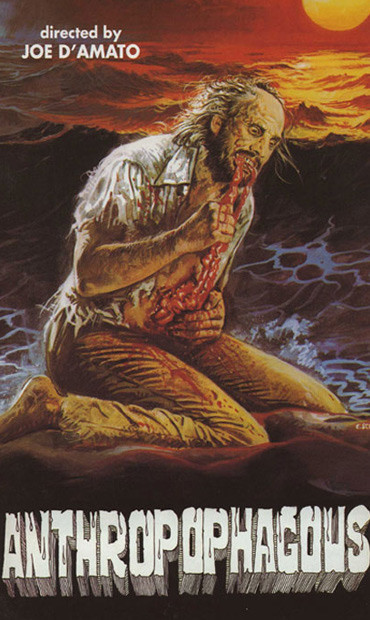
For horror fans, telling people that a film was considered so outrageous that authorities didn’t want them watching it was also approximately the greatest unofficial advertising campaign anyone could have devised. The notoriety surrounding these films encouraged generations of viewers to seek them out, and Antropophagus eventually became one of the best-known titles associated with that period. Klaus was no longer merely an unpleasant bloke wandering around an island with serious dietary issues. He had become part of British horror folklore.
That controversy remains an important reason why the film continues to be discussed decades later, although Antropophagus has long since been able to circulate more freely than it did during the height of the video-nasty panic. The forbidden reputation inevitably softened with time, but Klaus remained exactly where audiences left him: enormous, filthy, hungry and absolutely useless around pregnant dinner guests.
THIRD CLASS MATERIAL
So why does Klaus enter the Third Class rather than immediately being escorted towards the expensive seats? Because eating practically everybody within walking distance does not automatically qualify you for an upgrade. The Hall of Killers has standards, although admittedly those standards become increasingly difficult to defend whenever somebody asks us to explain them.
Klaus has a comparatively limited screen legacy on which to build his reputation, and Antropophagus remains considerably better known among cult, exploitation and Italian horror audiences than among the wider public. He isn’t a character who has accumulated decades of extensive mythology or endless reinventions. His reputation rests overwhelmingly on one film, one extraordinary performance and several sequences capable of making somebody put down a sandwich halfway through eating it.
What Klaus does possess is impact. Mention Antropophagus to somebody familiar with Italian exploitation cinema and there is a reasonable chance they’re already picturing George Eastman’s enormous cannibal, the notorious pregnancy sequence or that extraordinary intestinal finale. Klaus may not require much psychological analysis, but sometimes a seven-foot nightmare eating things that should never under any circumstances be eaten is quite sufficient.
There is also something refreshingly uncomplicated about his motivation. Klaus doesn’t require seventeen paragraphs explaining an ancient curse, a demonic bloodline or why somebody’s great-grandmother accidentally opened a portal to Hell while rearranging the furniture in 1643. Klaus is hungry, you are made of meat, and the administrative side of the arrangement practically takes care of itself.
WELCOME TO THE HALL, KLAUS
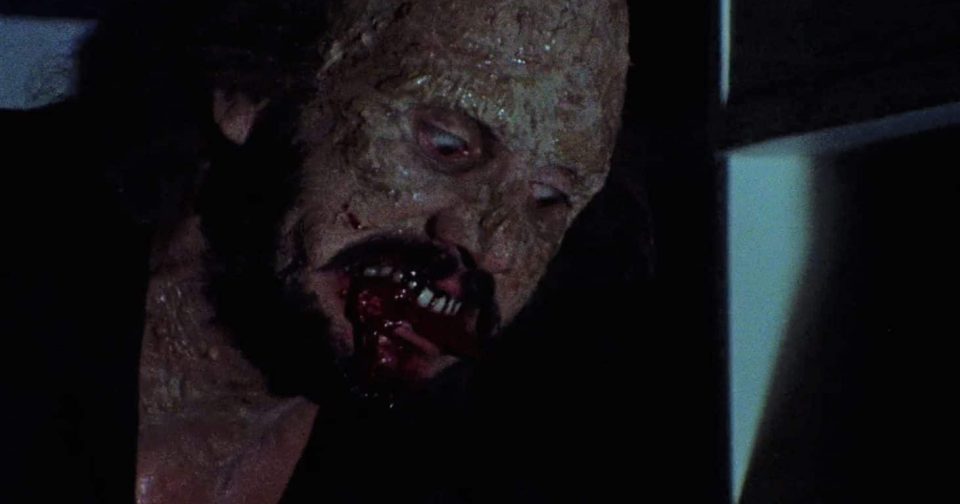
More than four decades after Antropophagus first unleashed him, Klaus Wortmann remains one of the great grotesques of Italian horror. He is nasty, physically imposing and visually unforgettable, while the film surrounding him achieved a level of notoriety that ensured both character and actor became permanently associated with the more extreme reaches of European horror cinema.
The Hall of Killers isn’t simply about characters recognised by everybody who has ever wandered through the horror section. It is also about the strange, nasty and unforgettable figures who carved out their own peculiar corner of genre history, and Klaus certainly managed that. Very few killers can claim to have terrorised a deserted Greek island, become entangled in Britain’s video-nasty controversy and finished their evening by eating themselves.
Klaus Wortmann therefore takes his rightful place in the Hall of Killers Third Class, where we’ve prepared him a seat, polished the plaque and arranged a modest reception to welcome our latest inductee. Unfortunately, Klaus has already asked who prepared the refreshments and why the person serving them appears to have such delicious-looking arms, so attendance at the ceremony has fallen rather dramatically.
Welcome to the Hall of Killers, Klaus. We’re delighted to have you, but under absolutely no circumstances are you being allowed anywhere near the staff canteen.