Noblestone Review: A Strange, Uneven Curiosity Made on Sheer Determination
There are independent films made with small budgets, and then there are films made with practically nothing at all. Noblestone belongs firmly in the latter category. The 94 minute British independent feature was written, directed, produced, photographed, edited and scored by Albert Goya, who completed the film at just 19 years old after working on it for two years without a budget. His sister, Lucia Goya Betts, is the only credited performer, taking on both of the film’s principal roles. Whatever problems we might have with the finished result, nobody can accuse the pair of taking the easy route.
Described as a slow, atmospheric comedy, Noblestone is a difficult film to neatly categorise. There is comedy here, certainly, but also drama, psychological unease and increasingly sinister elements that edge the film towards territory likely to interest Stalk & Slash readers. It’s deliberately peculiar, sometimes funny, sometimes uncomfortable and occasionally so odd that you’re not entirely sure how you’re supposed to react. That tonal uncertainty can work against the film, but it also gives Goya’s feature a personality that is unmistakably its own.
The opening immediately establishes that something isn’t quite right. Accompanied by ominous strings and choral music, a woman looks through patio doors while a voice recounts a bizarre encounter beside a railway line. She remembers hearing what sounded like an animal screaming before encountering a distressed woman searching for a friend whose face she can no longer remember. It’s an intriguing beginning, particularly because Goya resists immediately explaining what any of it means. The story then moves to rural Spain and the secluded home of an unnamed artist, also played by Goya Betts.
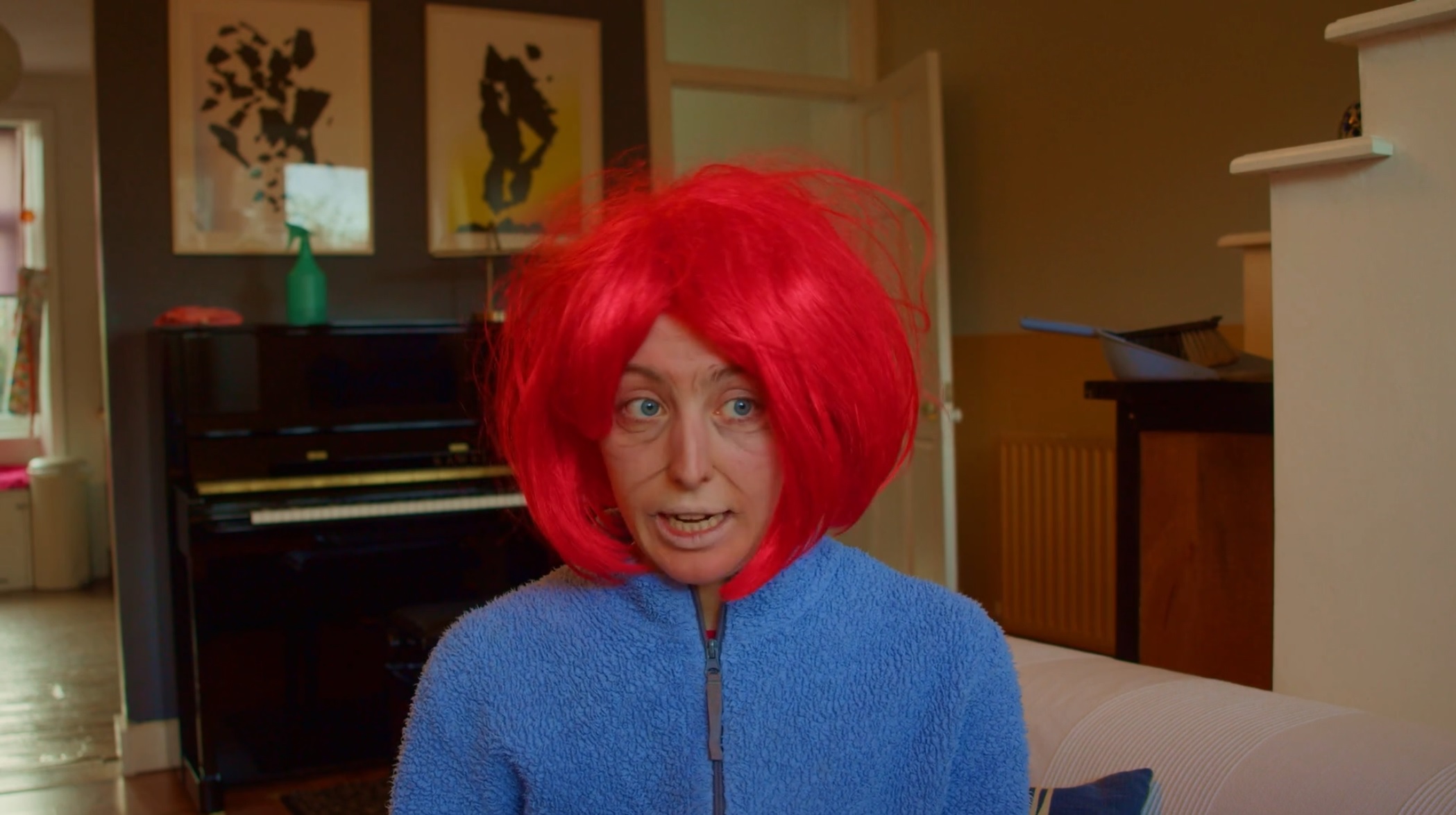
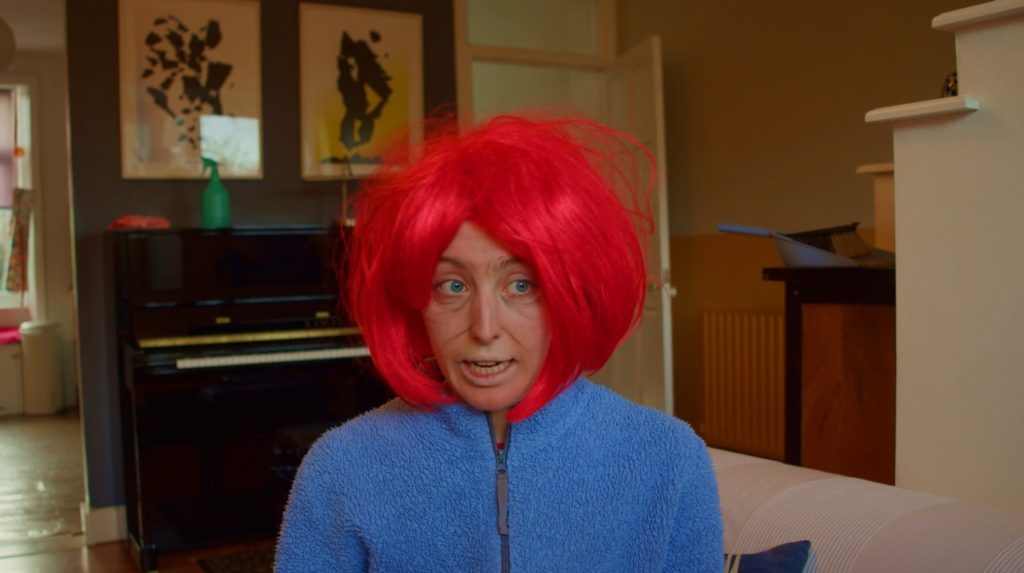
Into her quiet existence comes Karen, again played by Goya Betts, who has arrived to interview for a job as the artist’s live in housemaid. The difference between the two women could hardly be greater. The artist is reserved, cultured and self absorbed, although her confidence in her own artistic abilities isn’t necessarily supported by the paintings she produces. Karen arrives sporting an enormous bright red wig and possessing a personality that makes subtlety appear to be something that happens to other people. She’s loud, strange, socially awkward and immediately unpredictable.
The two begin living together, and Noblestone spends a considerable amount of time simply allowing them to talk. Their conversations move through art, morality, criminal justice, human behaviour and the assumptions people make about one another. Karen believes criminals deserve harsher punishment, while her employer questions whether morality can really be reduced to something so simple, raising issues of circumstances, compassion and the more animalistic impulses hidden within people. As their conversations continue, it becomes increasingly apparent that the artist regards Karen as intellectually and culturally beneath her, even while becoming strangely fascinated by her.
There is a potentially interesting relationship developing here. Karen may initially appear to be the ridiculous one, but the artist isn’t exactly presented as somebody whose judgement should automatically be trusted. She considers herself cultured and sophisticated, yet struggles to finish her work and appears deeply insecure about her abilities. Karen’s lack of refinement begins exposing some of the pretension underneath her employer’s carefully maintained identity, and the question of which woman should actually make us uncomfortable becomes less straightforward as the story progresses.
One of the best sequences in the film occurs when Karen sits at a piano and performs a beautiful piece of music that she claims to have composed herself. Rather than concentrating on Karen, Goya keeps his attention on the artist and allows us to watch her reaction. She’s clearly moved by what she’s hearing, perhaps more than she would ever comfortably admit, and it briefly upends the balance between the two women. The supposedly unsophisticated housemaid has apparently created something capable of deeply affecting the woman who considers herself the real artist.
It doesn’t last. The artist later hears the same composition playing on the radio and realises Karen lied about creating it. On its own, that might seem relatively trivial, but by this stage mistrust is already beginning to creep into their relationship. The artist is keeping a diary about Karen and becomes suspicious that her housemaid has been reading it, while Karen’s behaviour becomes increasingly intrusive. When the artist retreats to another house, Karen’s unexpected appearance there makes their relationship considerably more unsettling. A moved diary, Karen’s lies and the destruction of a drawing all contribute to a situation gradually sliding away from eccentric companionship and towards confrontation.
It’s here that Noblestone becomes most relevant to a horror focused audience. Don’t go into this expecting bloodshed, conventional scares or a traditional psychological thriller. Goya is far more interested in creating discomfort. Karen can be funny, but there’s also something unnerving about her, particularly when she silently watches her employer or suddenly appears where she isn’t expected. As the final section becomes increasingly dreamlike, the film begins folding back towards the strange railway imagery with which it opened.
There are good ideas buried within all of this, but Noblestone frequently struggles to shape them into a consistently engaging feature. The biggest problem is pacing. At 94 minutes, it feels considerably longer, largely because conversations are allowed to continue after they’ve already communicated their point. The philosophical discussions can be interesting in isolation, but there are too many of them, and they sometimes feel as though they’re trying very hard to announce the film’s intellectual intentions. Cutting some of these exchanges down would have made the growing tension between Karen and the artist considerably more effective.
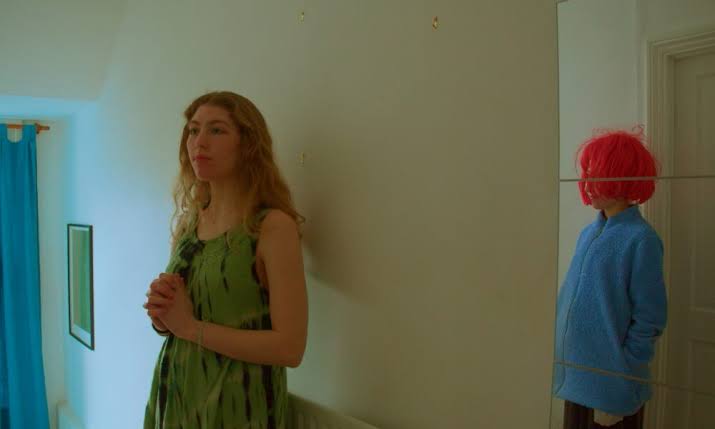
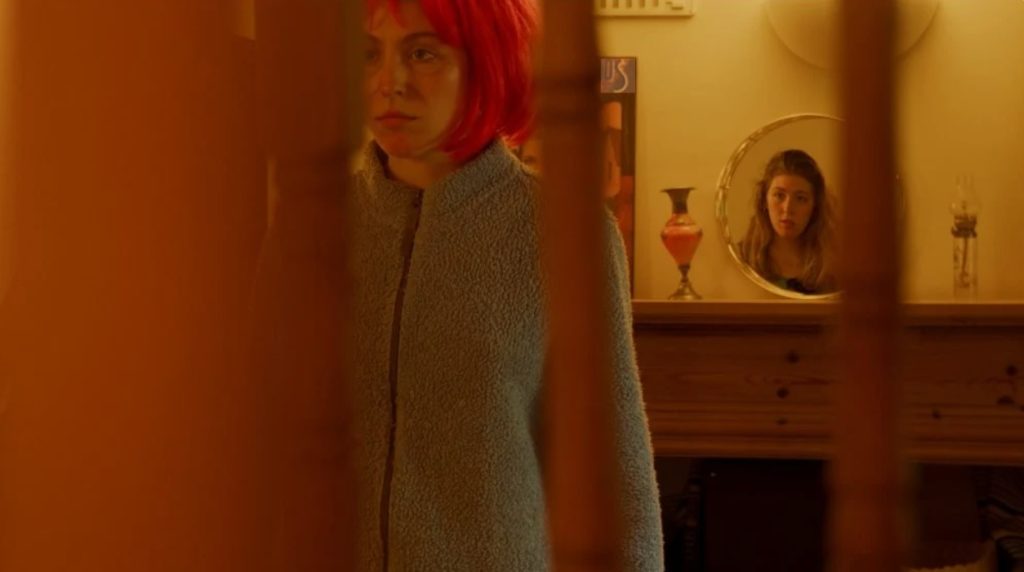
The unusual casting arrangement presents another challenge. Lucia Goya Betts plays both women, meaning Goya has to construct scenes around the obvious impossibility of having his sole performer physically interact with herself. Editing, reflections, stand ins and carefully selected angles are used to create the illusion that Karen and the artist occupy the same space, and considering the complete absence of a budget, there are moments where it works surprisingly well.
Unfortunately, the restriction also becomes increasingly noticeable. Dialogue sequences frequently have to cut backwards and forwards depending upon which character is speaking, limiting the ways Goya can stage conversations and contributing to the static quality of the film. Had these characters been played by two performers, the camera could have observed them sharing the frame, reacting to each other and physically negotiating the space between them. Here, the filmmaking is constantly having to work around the central casting experiment.
Noblestone Is Ambitious, But Its Rough Edges Show
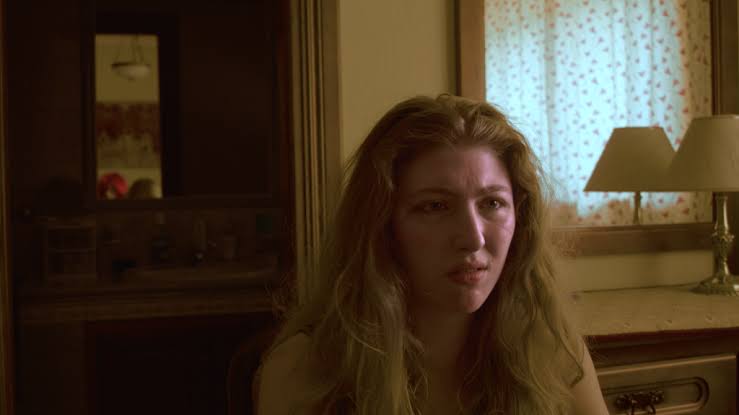
Goya Betts deserves credit for attempting two very different characters, particularly given that she isn’t a professional actress. Her performance as the unnamed artist is the stronger of the two, benefiting from a restrained quality that suits the character’s aloof personality and growing uncertainty. Karen is deliberately much broader. The wig, voice, facial expressions and physical mannerisms immediately separate her from the artist, and nobody is going to watch Noblestone without knowing which character they’re looking at.
The difficulty is that Karen occasionally becomes too broad. Her shrieking voice and exaggerated behaviour can push beyond eccentricity into caricature, and because we spend so much of the film listening to these two characters talk, the performance can become tiring. There are moments when Karen’s peculiar manner is genuinely funny and others when it makes her effectively unsettling, but greater restraint would have made those sudden bursts of strangeness considerably more powerful.
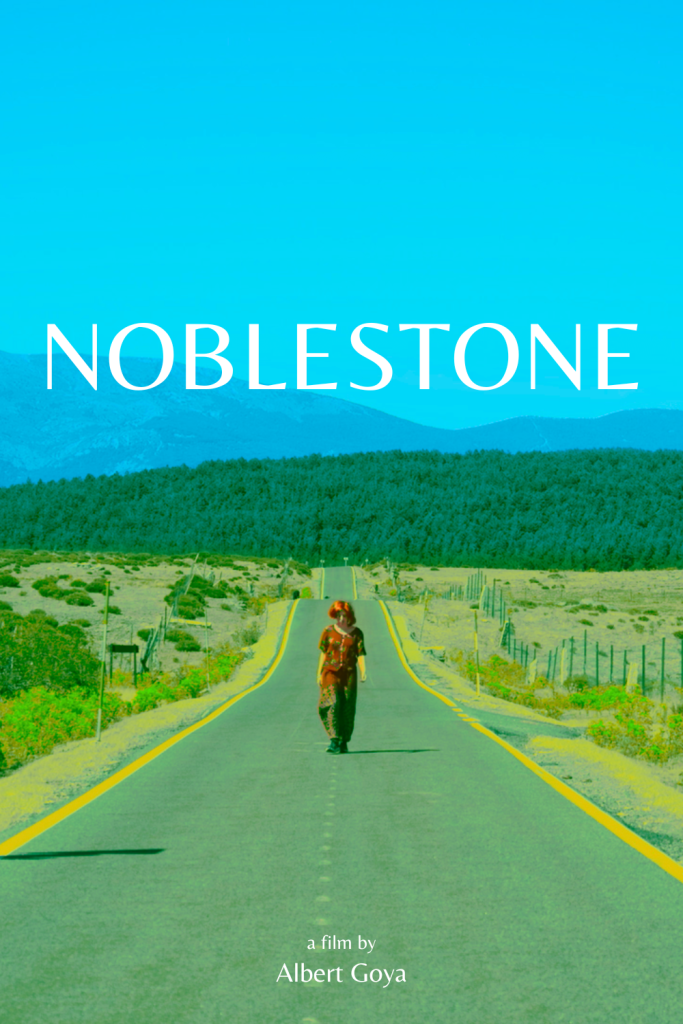
Visually, this is unmistakably a zero budget production. There are some attractive images, particularly when Goya takes advantage of the Spanish countryside, and the striking pink house surrounded by almost unnaturally vivid green vegetation creates a memorable contrast. Certain uses of reflections are inventive too, and Goya occasionally manipulates colour to give scenes involving Karen a strange, heightened quality.
We wouldn’t go as far as calling Noblestone a consistently impressive looking film, though. The framing is frequently basic and sometimes awkward, while interior scenes can appear flat and closer to home video than cinema. Some sequences rely on largely static compositions, and there are moments where the film almost resembles a succession of photographs rather than moving images. The attractive locations provide natural production value, but they can’t completely disguise the technical restrictions under which the film was made.
The sound causes more significant problems because Noblestone is so dependent upon dialogue. Volume levels can be inconsistent, particularly between Karen’s much louder delivery and the quieter artist, and there are moments where the soundtrack competes with rather than supports the dialogue. On a film constructed around extended conversations, being able to comfortably hear those conversations is essential. It’s an area where greater attention on future productions could make an enormous difference to Goya’s work.
Goya’s music fares better. The score can feel surprisingly grand compared with the tiny scale of the production, particularly during the opening and some of the film’s quieter passages. The strings and choral elements give Noblestone an atmosphere its visuals aren’t always capable of providing on their own, and the music becomes an important part of establishing that vague feeling that something darker may be waiting underneath Karen and the artist’s unusual domestic arrangement.
It’s important, however, to judge what’s on screen rather than simply awarding points because of the circumstances in which it was made. Being 19, having no budget and using a single performer explains many of Noblestone’s limitations, but it doesn’t make those limitations disappear for the audience. The film needs tighter editing, more consistent sound, stronger visual composition and greater discipline with its dialogue. Its shifting tone could also use refinement. At times the combination of absurd comedy, philosophical drama and psychological unease is intriguingly unpredictable, while elsewhere it feels as though the film itself hasn’t entirely decided what response it wants from us.
At the same time, those rough edges shouldn’t obscure what Goya actually accomplished. He didn’t make a five minute short with his sister and call it a day. He spent two years constructing a 94 minute feature while taking responsibility for an extraordinary number of production roles, and he attempted something far stranger than the resources available to him might reasonably suggest. Noblestone has ideas about class, artistic pretension, morality, judgement, insecurity and the strange relationships people form with those they initially consider beneath them. Not all of those ideas are successfully developed, but the ambition is unquestionably there.
That’s ultimately what makes Noblestone easier to appreciate than it sometimes is to enjoy. There are scenes that drag, technical shortcomings that can’t be ignored and a central performance choice that creates almost as many problems as it solves. Yet there are also moments when everything briefly clicks: the piano sequence, the more unsettling interactions between Karen and the artist, the ominous opening, the unusual use of colour and the increasingly strange final stretch all hint at a filmmaker still discovering what he’s capable of.
Albert Goya isn’t there yet, but at 19 years old, nobody should reasonably expect him to be. What matters is whether the foundations are visible, and they are. Better sound, tighter scripts, more confident framing, a broader cast and the willingness to ruthlessly cut material that isn’t serving the story could make his future work considerably stronger.
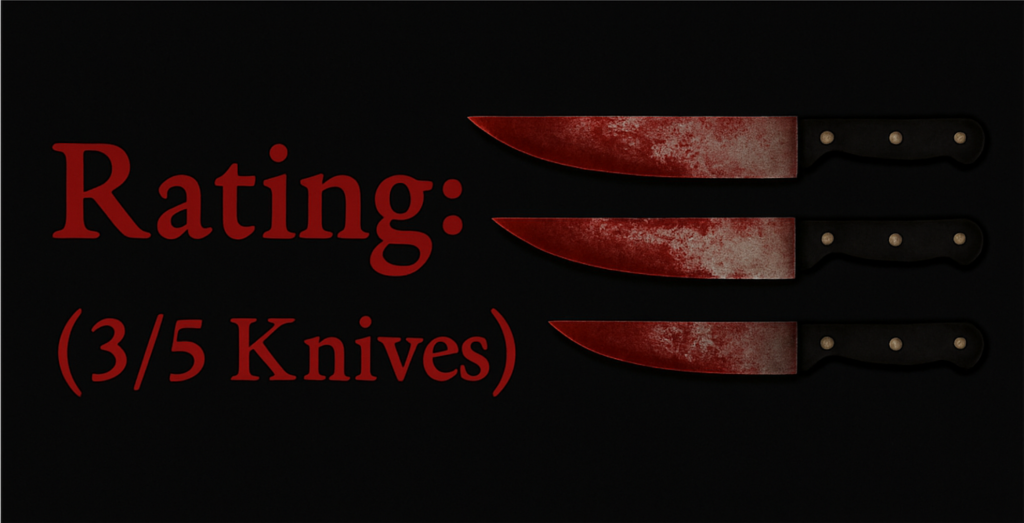
Noblestone is therefore a difficult film to enthusiastically recommend to a general horror audience, particularly anyone expecting conventional genre thrills. It’s slow, strange, technically rough and sometimes frustrating. But for viewers interested in truly independent filmmaking, there is something compelling about watching a young director stretch virtually nonexistent resources as far as he possibly can.
It may be an imperfect curiosity rather than a hidden gem, but we’d much rather see an emerging filmmaker take risks, make mistakes and attempt something genuinely peculiar than play everything safe. Noblestone has plenty of growing pains, but it also has personality, ambition and just enough flashes of something more accomplished to make us curious about what Albert Goya does next.