The Phantom Killer Creeps Into the Hall of Killers
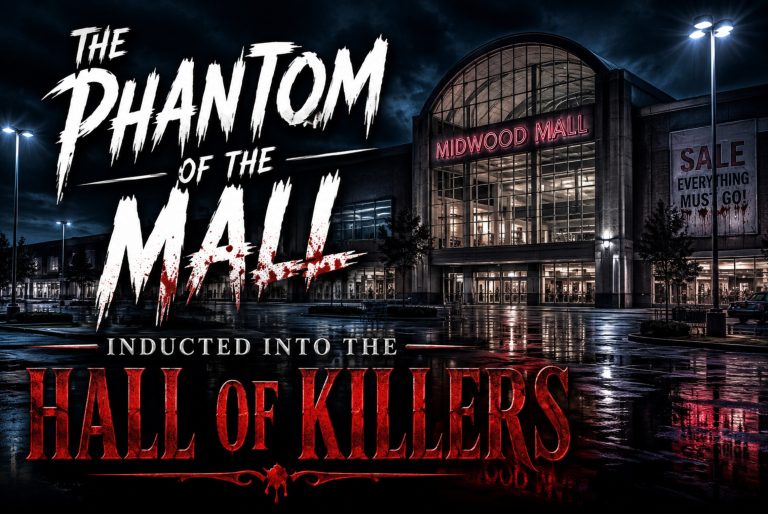
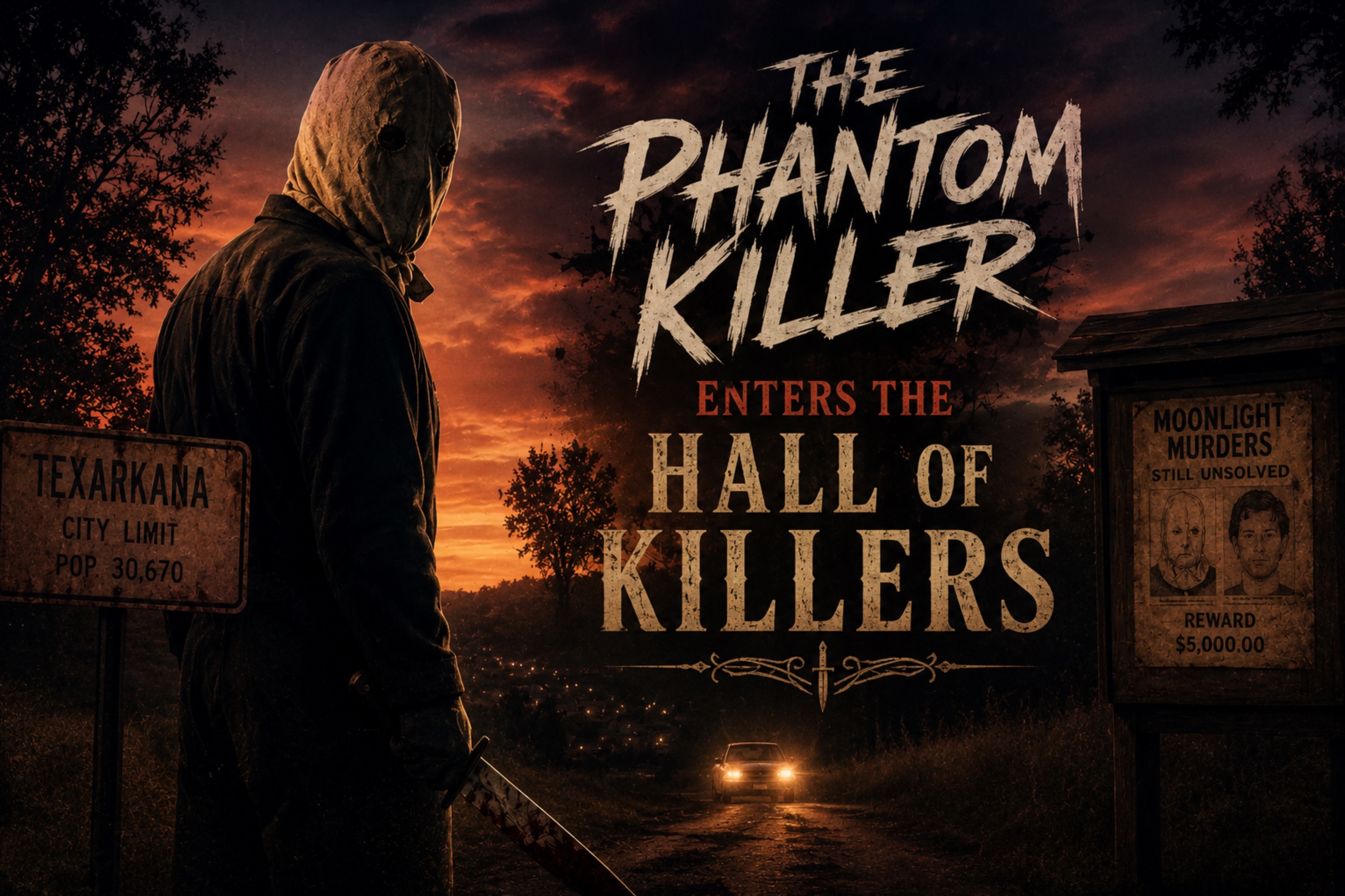
When horror fans discuss the greatest masked killers of all time, the conversation usually turns to the obvious suspects. Michael Myers gets mentioned within seconds. Jason Voorhees inevitably lumbers into the discussion shortly afterwards. Freddy Krueger starts cracking jokes from the corner, while Leatherface revs up a chainsaw for attention. Yet long before many of those legends carved their names into horror history, there was another masked murderer stalking terrified victims under the cover of darkness. He wore a crude sack over his head, haunted lonely lovers’ lanes, and was based on a real-life killer who was never caught. Today, the Phantom Killer from The Town That Dreaded Sundown takes his rightful place in the Second Class Tier of the Hall of Killers.
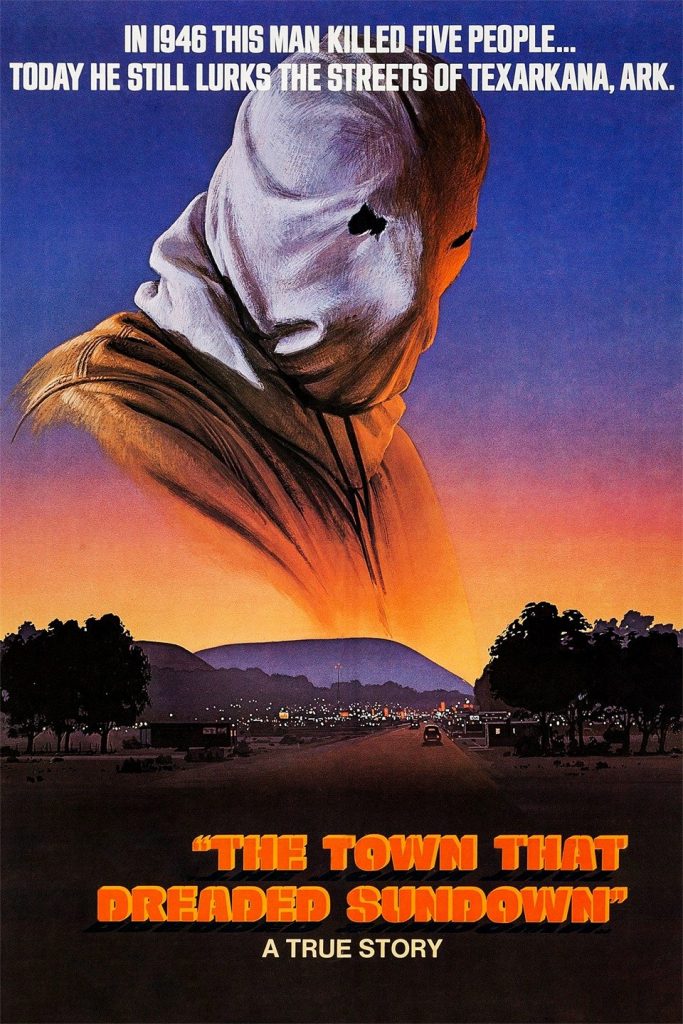
Part of what makes the Phantom Killer so fascinating is that he occupies a unique place in horror history. Unlike most slasher villains, he was not entirely invented by a screenwriter sitting behind a typewriter trying to dream up creative ways of terrifying audiences. The character was inspired by the infamous Texarkana Moonlight Murders, a real series of attacks that took place in 1946 around the twin cities of Texarkana, Texas and Texarkana, Arkansas. The attacks left a community paralysed by fear as a mysterious assailant targeted young couples in secluded locations. Several people were murdered, others survived, and despite extensive investigations, the killer was never conclusively identified. That lingering mystery hangs over The Town That Dreaded Sundown like a storm cloud, giving the film an unsettling authenticity that few slashers can match.
Released in 1976 and directed by Charles B. Pierce, The Town That Dreaded Sundown arrived before the slasher genre truly exploded. John Carpenter’s Halloween was still two years away. Jason Voorhees had not yet picked up his machete. Freddy Krueger was still lurking somewhere in Wes Craven’s imagination. Looking back now, it is remarkable just how many slasher ingredients are already present. There is a masked killer. There are attacks on young couples. There is a terrified community. There are police investigations, manhunts and a constant sense that nobody is safe. The film feels like a rough blueprint for much of what would dominate horror cinema throughout the late seventies and eighties.
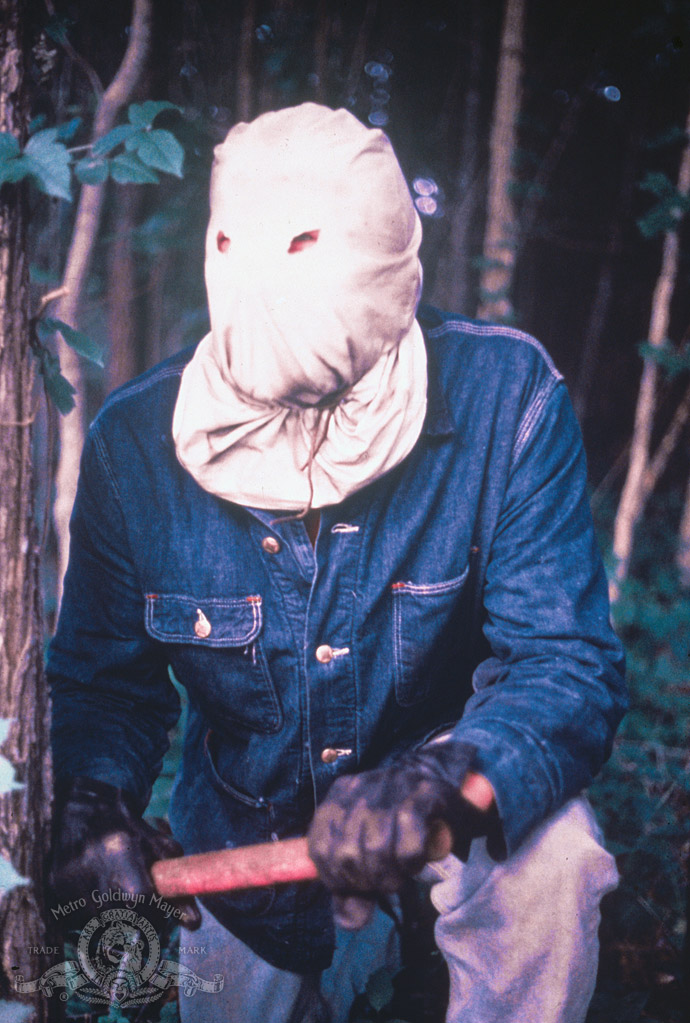
The Phantom himself is terrifying precisely because he lacks the larger-than-life qualities of later horror icons. He is not supernatural. He cannot teleport through dreams. He does not rise from the grave every few years to continue slaughtering teenagers. He is simply a man. A violent, unpredictable and deeply disturbed man, but a man nonetheless. That realism gives him a frightening edge. The audience never gets the comfort of dismissing him as fantasy. The Phantom feels plausible. He feels like somebody who could genuinely exist, which is a large part of why the film continues to get under viewers’ skin nearly fifty years later.
His appearance deserves special praise as well. Horror history is packed with iconic masks, but there is something deeply unnerving about the Phantom’s simple sack mask. It lacks the clean design of Michael Myers’ pale face or the intimidating look of Jason’s hockey mask. Instead, it feels improvised and crude, as though somebody grabbed the first thing they could find and cut eyeholes into it. The result is strangely effective. It transforms an ordinary human face into something anonymous and unsettling. Even now, decades later, it remains one of horror’s most distinctive images. It also serves as a reminder that sometimes the simplest designs are the most memorable. Hollywood has spent millions creating elaborate monsters over the years, yet a man wearing what essentially looks like a pillowcase remains nightmare fuel.
Of course, no discussion of the Phantom Killer would be complete without mentioning the infamous trombone murder. If there is one scene that has guaranteed the character a permanent place in horror history, it is this one. After killing Roy Allen, the Phantom ties Peggy Loomis to a tree and attacks her using a knife attached to the slide of her trombone. It is one of the strangest kill sequences ever committed to film. It is horrifying, bizarre and oddly surreal all at once. The scene is so unusual that it has become legendary among horror fans. Somewhere out there is a trombone player who watched that scene and immediately decided to switch instruments. One can only imagine the sales boost enjoyed by the triangle afterwards.
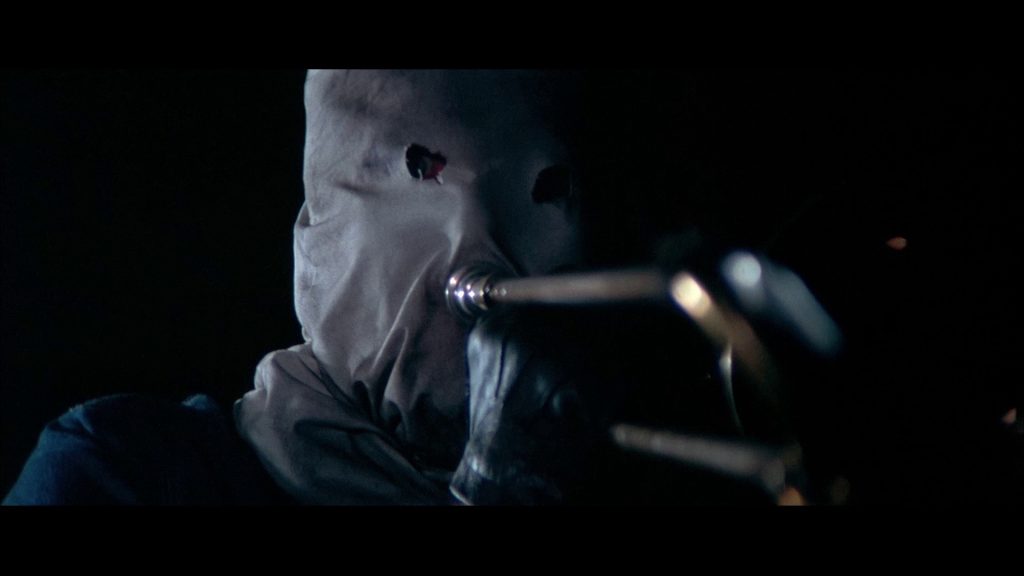
The Phantom’s body count may not be enormous by slasher standards, but numbers have never been the point. His effectiveness comes from atmosphere rather than excess. The attacks feel random and unpredictable. Victims survive some encounters while others do not. The police never seem fully in control of the situation. There is a constant feeling that the killer could strike at any moment. That uncertainty creates genuine tension, something many later slashers struggled to replicate once audiences became accustomed to formulaic kill counts and increasingly elaborate murder scenes.
The 2014 sequel deserves credit for understanding why the Phantom Killer remained relevant. Rather than simply remaking the original film, it treated the 1976 movie as an actual film within its own universe. The Phantom became part urban legend, part true crime figure and part horror icon. The sequel explored how stories evolve over time and how communities continue to be haunted by crimes long after they occur. In doing so, it reinforced what had always made the Phantom interesting. He is not just a killer. He is a mystery. The fact that the real Texarkana murderer was never definitively identified means there is always a lingering sense that the story remains unfinished.
The Phantom Killer and The Town That Dreaded Sundown
The Town That Dreaded Sundown itself has become a cult classic, appreciated for its eerie atmosphere, documentary-style approach and unique place within horror history. While it occasionally mixes in moments of humour that can feel unusual to modern audiences, its influence on the slasher genre is undeniable. Without films like this helping to establish the template, many of the horror classics that followed might have looked very different. The Phantom Killer may not enjoy the same mainstream fame as Michael Myers or Jason Voorhees, but his fingerprints can be found all over the genre.
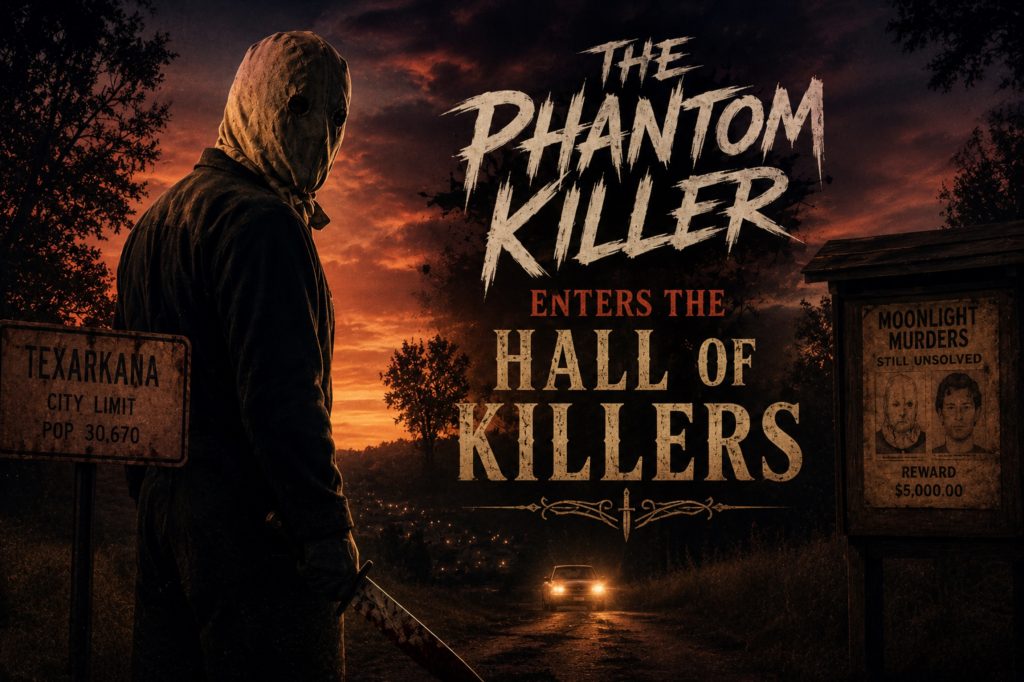
That is ultimately why he belongs in the Second Class Tier. He lacks the cultural dominance of the absolute elite horror icons, but his importance to the genre cannot be ignored. He helped lay the groundwork for the slasher boom, delivered one of horror’s most unforgettable kill scenes, and remains tied to one of America’s most chilling unsolved murder cases. More importantly, he continues to be frightening because he feels real. There are no magical powers, no demonic possessions and no elaborate mythology required. Just a masked figure emerging from the darkness with murderous intent.
And sometimes that is far scarier than any monster.