Holy Terror in a Yellow Raincoat: Mrs. Tredoni Joins the Third Class Tier of the Hall of Killers
Every now and then, the Hall of Killers committee has to sit down, look at the candidates, and collectively say, “Right… this one is going to make people uncomfortable.” Not in a fun, popcorn, jump-scare way. Not in a “he’s got a machete and a cool mask” way. No, this is the kind of discomfort that lingers. The kind that makes you side-eye church benches and anyone stirring tea a bit too slowly.
Welcome, then, to Mrs. Tredoni. Housekeeper. Devout Catholic. Walking sermon of absolute dread.
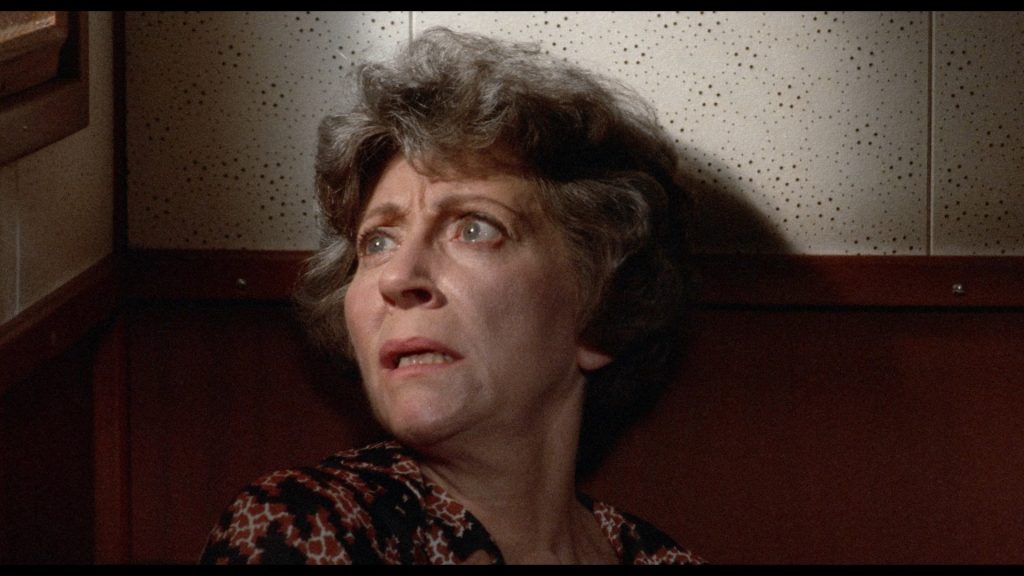
Officially entering the Third Class Tier, Mrs. Tredoni might not have the sprawling mythology of a franchise icon, but what she does have is far worse. She has intent. She has belief. And most terrifyingly of all, she thinks she’s doing the right thing.
First introduced in Alfred Sole’s Alice, Sweet Alice from 1976, Mrs. Tredoni operates in a world that feels grimy, grounded, and just a bit too real for comfort. Set in 1961 Paterson, New Jersey, the film plays like a fever dream of religious guilt, family dysfunction, and simmering dread. It’s often described as an American take on giallo, and rightly so, with its masked killer, shocking violence, and creeping atmosphere. But what sets it apart is how deeply personal and suffocating it all feels.
At the centre of the chaos is the Spages family. Young Karen is preparing for her First Communion, while her older sister Alice is already seen as troubled and difficult. So when Karen is brutally murdered, suspicion falls almost immediately on Alice.
Except Alice didn’t do it.
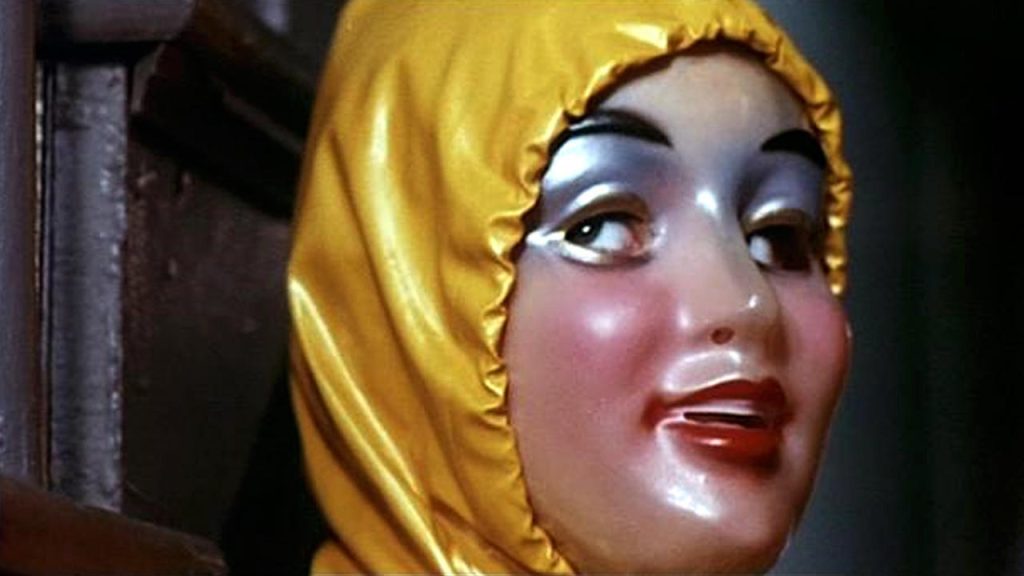
That honour belongs to Mrs. Tredoni, who takes one look at the family situation and decides that divine punishment is overdue. After losing her own child, she develops a warped belief that children suffer for the sins of their parents. And Catherine Spages, being divorced and having conceived Alice before marriage, might as well have put up a sign saying “Please smite us.”
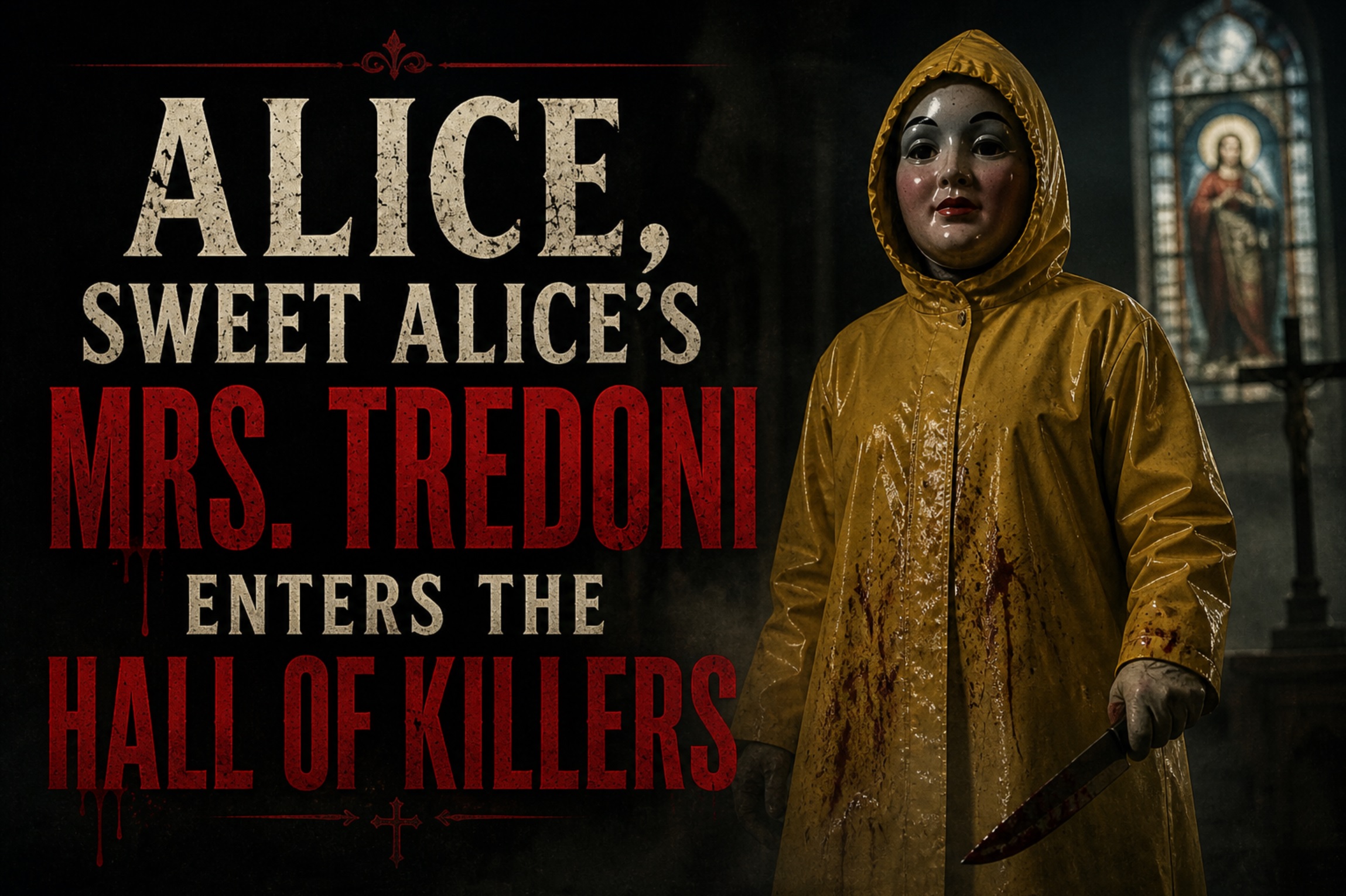
Now, most people deal with grief in relatively healthy ways. Talking. Therapy. Maybe a long walk. Mrs. Tredoni chooses to don a yellow raincoat, slap on a translucent mask that looks like it was designed by nightmares, and start murdering children in churches.
Her first kill is as shocking now as it was back then. Disguised to resemble Alice, she strangles Karen moments before her First Communion. It’s a scene that perfectly captures everything disturbing about the film. The innocence of the setting, the brutality of the act, and the calculated cruelty of framing a child for the crime. She then steals the crucifix and hides the body in a church bench, later burning it. Casual.
And that disguise. Let’s talk about it. The yellow raincoat and that eerie, almost expressionless mask create one of the most unsettling visuals in 1970s horror. It’s not flashy. It’s not designed to look “cool.” It’s designed to look wrong. Like something pretending to be human and not quite getting it right. Which, coincidentally, is also a good description of Mrs. Tredoni’s entire worldview.
As the film progresses, she continues her campaign of what she believes to be righteous punishment. She attacks Annie, murders Dominick Spages after delivering a moral lecture that nobody asked for, and kills the landlord Mr. Alphonso when he mistakes her for Alice. That last one feels almost like a bonus round. Wrong place, wrong time, wrong assumption. Classic slasher logic, but delivered with a deeply unsettling calm.
What makes Mrs. Tredoni particularly effective is how she manipulates perception. By disguising herself as Alice, she allows suspicion to build around an already vulnerable child. It’s not just murder. It’s social sabotage. It’s gaslighting on a lethal level. If she had access to social media, she’d be running three fake accounts and starting neighbourhood arguments for sport.
Then comes the finale, and it is pure nightmare fuel.
At St Michael’s Cathedral, during Mass, Mrs. Tredoni prepares for further violence. When Father Tom denies her communion and attempts to guide her away, she reacts in the only way she knows how. By stabbing him in the throat in front of a horrified congregation. It’s chaotic, brutal, and completely in line with her character. In her mind, she’s not committing a crime. She’s enforcing divine justice. She just happens to be very enthusiastic about it.
Portrayed by Mildred Clinton, Mrs. Tredoni is a masterclass in restrained horror. There’s no grand monologue. No over-the-top theatrics. Just a quiet, simmering intensity that makes every action feel deliberate and deeply wrong. She doesn’t feel like a movie villain. She feels like someone who could exist, which is infinitely more terrifying.
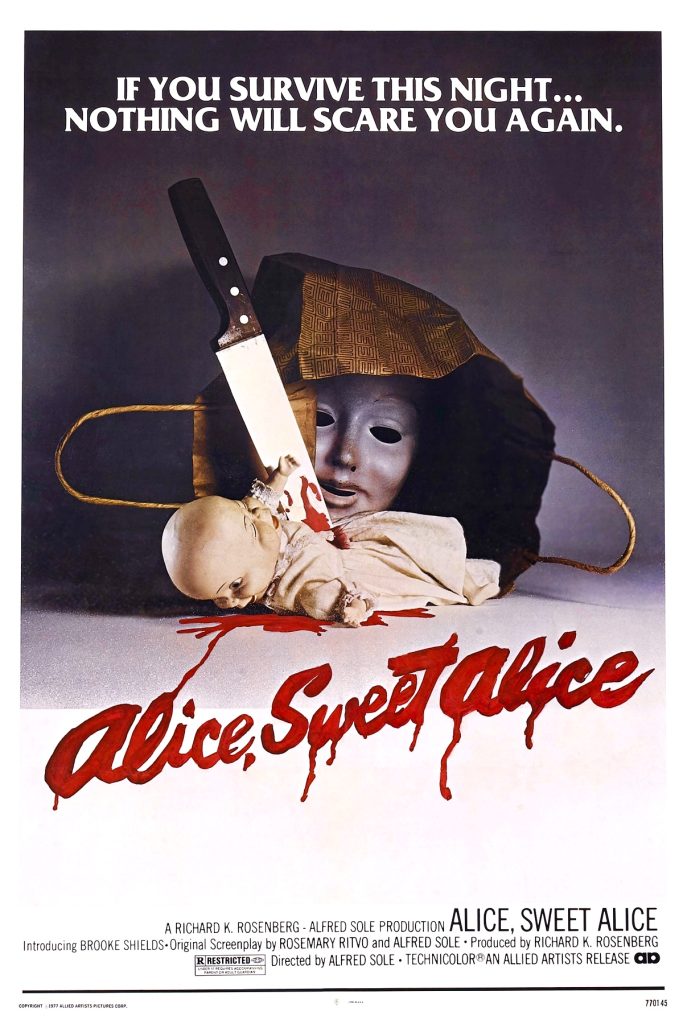
Alice, Sweet Alice itself has grown into a respected cult classic over the years. Originally released under different titles including Communion and Holy Terror, it gained notoriety for its violence, its religious themes, and its deeply uncomfortable tone. It also features an early appearance from Brooke Shields, which adds another layer of curiosity for modern audiences revisiting the film.
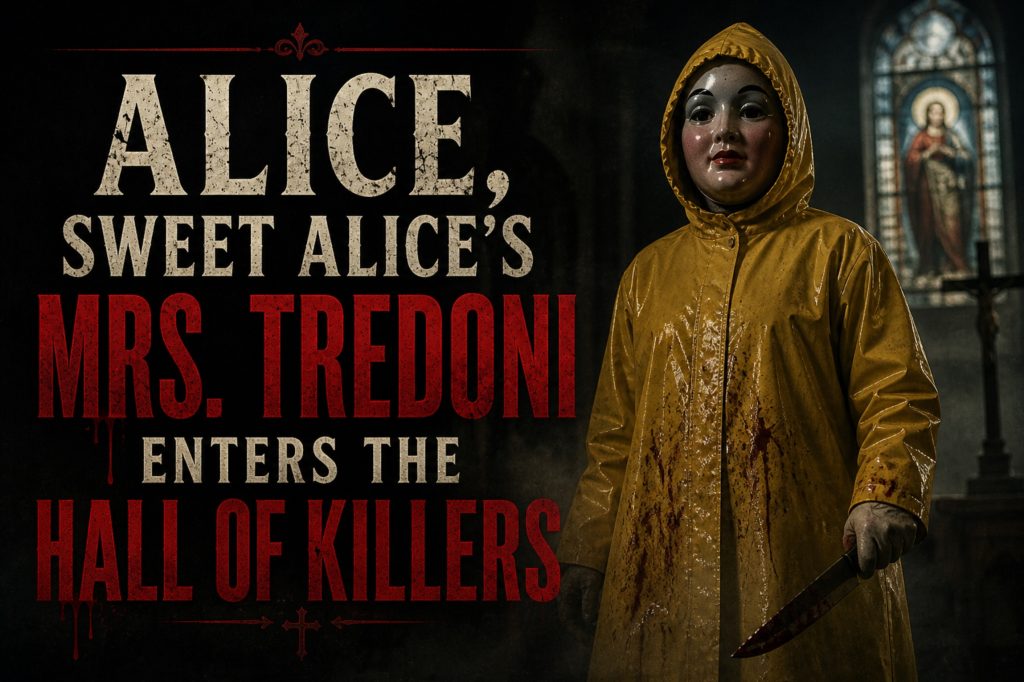
Boutique restorations have helped cement its legacy, with releases bringing new clarity to its grim visuals while introducing Mrs. Tredoni’s unique brand of horror to a new generation. And trust me, once you’ve seen that mask in motion, it sticks with you.
So why Third Class Tier?
Because while she doesn’t have the longevity or mainstream recognition of the top-tier icons, Mrs. Tredoni absolutely earns her place through impact alone. She represents a different kind of horror. Not spectacle, but psychology. Not chaos, but conviction. She doesn’t chase. She judges. And then she acts.
Also, let’s be honest. Anyone who can turn a First Communion into a crime scene deserves some form of recognition, even if it’s slightly reluctant.
Welcome to the Hall of Killers, Mrs. Tredoni. Please keep your distance from the refreshments. And absolutely no tea stirring.