
Curry Barker Directing New Texas Chainsaw Movie For A24
Leatherface is sharpening the chainsaw once again. A brand new Texas Chainsaw Massacre film is officially in development at A24, adding yet another chapter to one of horror’s most enduring and influential franchises. The news comes via Variety, which reports that filmmaker Curry Barker has been tapped to direct the project, described as a “reimagining” of the iconic property.
Plot details are currently being kept tightly under wraps, but the film will once again centre on Leatherface, the chainsaw-wielding killer, and the unfortunate group of victims who cross his path. That much is a given. Beyond that, Barker’s specific approach to the material has not yet been revealed, though expectations are already high given A24’s reputation for backing bold, filmmaker-driven horror.

The production team behind the new film includes Roy Lee and Steven Schneider of Spooky Pictures, alongside Stuart Manashil and Exurbia Films’ Pat Cassidy, Ian Henkel, and Kim Henkel. Ben Ross of Image Nation will serve as executive producer. Kim Henkel’s involvement is particularly notable, as he co-wrote the original 1974 film, ensuring a direct creative link back to the franchise’s origins.
This new film is part of a larger plan from A24, which secured the rights to The Texas Chainsaw Massacre earlier this year after a competitive bidding process. In addition to the film, a television series is also in development, spearheaded by JT Mollner, known for Strange Darling and as the screenwriter of The Long Walk. Actor Glen Powell is attached as an executive producer on the series, signalling a significant push to expand the franchise across multiple formats.
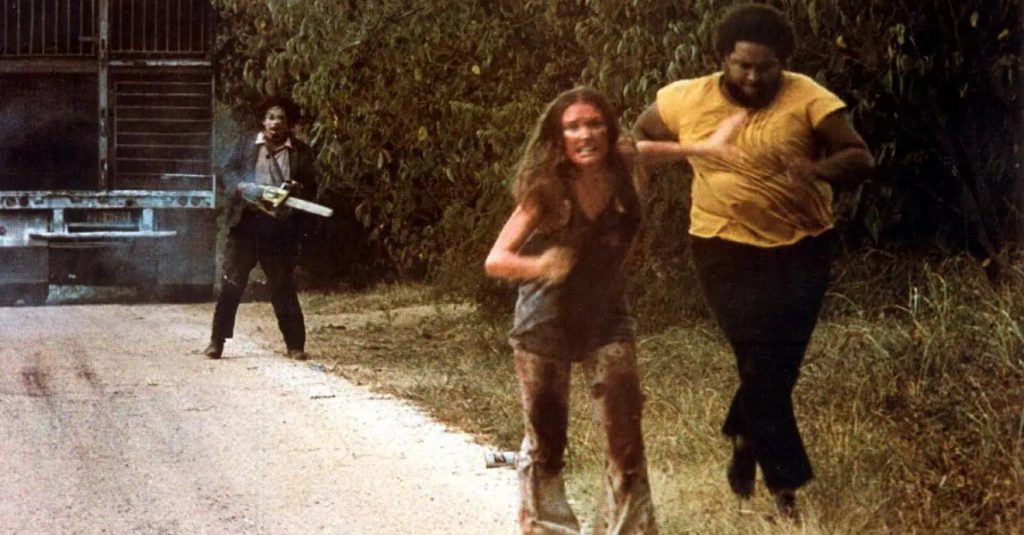
The original The Texas Chain Saw Massacre, directed by Tobe Hooper and co-written by Hooper and Kim Henkel, was released in 1974 and quickly became one of the most influential horror films ever made. Despite its relatively modest budget, the film’s raw, documentary-like style and relentless sense of dread left a lasting impact on the genre. The story followed a group of young travellers who encounter a cannibalistic family in rural Texas, led by the now-iconic Leatherface, whose mask of human skin and brutal methods turned him into a horror legend.

Over the decades, the franchise has seen numerous sequels, prequels, remakes, and reboots, each taking a slightly different approach to the material. Tobe Hooper himself returned for The Texas Chainsaw Massacre 2 in 1986, which leaned more into dark humour and excess, while later entries such as the 2003 remake and its 2006 prequel reintroduced the story to a new generation with a more polished and graphic style. More recent instalments have experimented with direct sequels and alternate timelines, with varying degrees of success.
What has remained consistent throughout is the core concept. Isolation, family, and brutality. Unlike many horror villains, Leatherface is not a supernatural force. He is human, which arguably makes him more unsettling. The horror comes not from the impossible, but from the idea that something like this could exist just out of sight.
Curry Barker’s involvement marks an interesting step forward for the franchise. He first gained attention with the low-budget horror project Milk & Serial, which built an audience online and showcased his ability to create tension with limited resources. That led to him directing Obsession for Focus Features, signalling a move into more traditional studio filmmaking. With Texas Chainsaw Massacre, Barker now steps into one of horror’s most recognisable and challenging properties.
A24’s involvement also suggests that this reimagining may lean into a more atmospheric or character-driven direction, rather than simply revisiting familiar ground. The studio has built a reputation for supporting distinctive voices in horror, often favouring tone and theme over straightforward repetition.
For now, details remain scarce, but one thing is certain. Every generation eventually gets its own version of Leatherface. The question is not whether he will return, but how.
And, more importantly, how loud that chainsaw is going to be this time.