Tarman From Return of the Living Dead Is Officially in the Hall of Killers
Some horror villains glide. Some stalk. Some loom in shadows looking photogenic and mysterious. Tarman looks like a science experiment that fell down the back of a radiator and kept going out of spite.
The tar soaked, brain obsessed poster corpse of The Return of the Living Dead has now been inducted into the Hall of Killers Third Class tier, which feels exactly right for a creature who is both legendary and built like a damp bin bag full of resentment.
Tarman is not sleek. He is not fast. He is not the kind of killer who plans three moves ahead. What he is, however, is one of the most unforgettable zombies in horror history and one of the key reasons the undead stopped groaning vaguely and started asking very specifically for brains.
The Walking Biohazard That Changed Zombie Rules
When The Return of the Living Dead hit in 1985, it did not just give us punk rock energy and gallows humour. It quietly rewired zombie logic. These were not Romero rules. Destroying the brain did not work. Reasoning definitely did not work. Fire mostly made things worse.
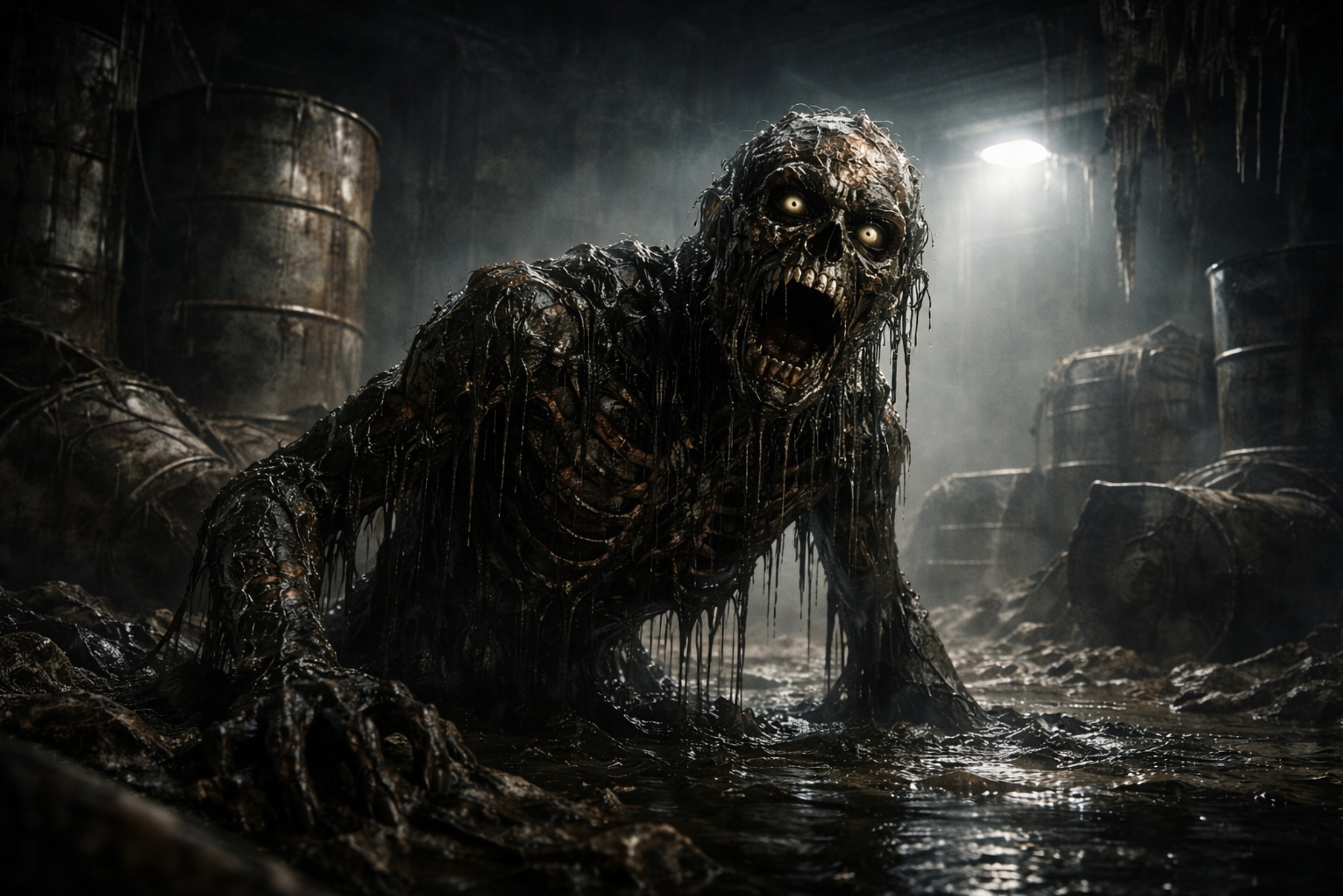
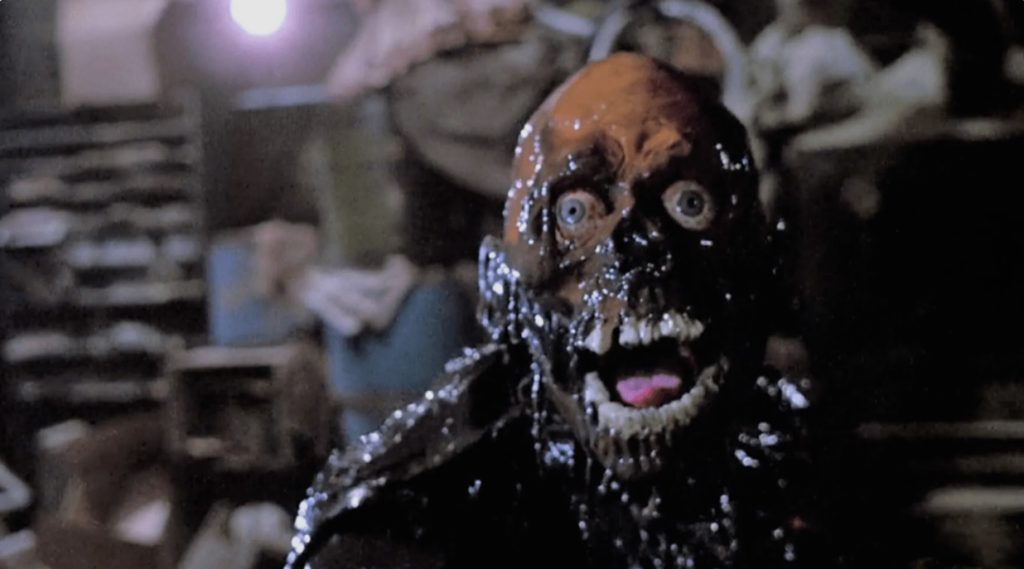
Tarman, a corpse reanimated by the military chemical Trioxin, embodied that shift perfectly. He emerges from a leaking drum in a medical supply warehouse basement looking like someone tried to deep fry a skeleton and gave up halfway through. Skin melted. Muscles exposed. Everything glistening in ways nothing should glisten.
And then he talks.
That croaky, gurgling “braaains” is not just funny. It is genre altering. From that point on, zombies were not just mindless flesh eaters. They had a culinary focus. Tarman helped cement that in pop culture forever, which is an absurd sentence, but also completely true.

Disgusting, Yes. Also Weirdly Competent
At first glance, Tarman seems like the least athletically gifted killer in the Hall. He moves like gravity is a personal attack. But the film makes it very clear that Trioxin zombies are not just gross, they are a nightmare to stop.
They do not die the usual way. They keep coming. They organise. Tarman even rigs up equipment to try to open a locker where Tina is hiding, which is the moment the film quietly informs you that these things are not just hungry, they are thinking. Not well, but enough to be deeply inconvenient.
By the time the authorities decide that the correct response is to nuke the town, the film has already committed to the bit. Nuclear fire does not solve the problem. It spreads it. Fantastic work, everyone.
Why Tarman Is Third Class and Not Higher
So why does a slime coated icon only land in Third Class?
Because Tarman is situational terror. In a confined space, during a Trioxin outbreak, with multiple undead roaming around, he is a serious problem. In an open car park with decent lighting and a mild jogging ability, you should be fine.
He is not a master strategist. He is not unstoppable across all environments. His power comes from the chaos around him and the chemical rules of his universe, not from personal dominance.
That is exactly what Third Class represents. Deeply disturbing, culturally important, lethal in the right setting, but not universally unstoppable.
The Legacy of Horror’s Filthiest Star Corpse
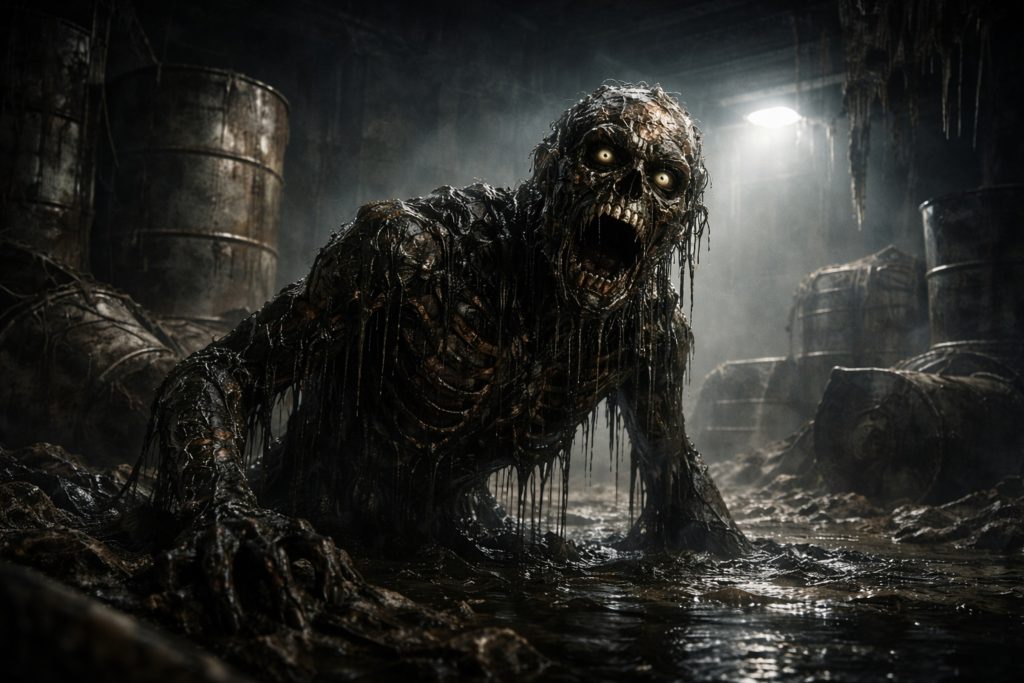
Tarman returned in later Return of the Living Dead entries in various forms, but the original 1985 incarnation remains the gold standard of slime based performance art. The practical effects, the design, and that voice combine into one of the most iconic zombie images of the 1980s.
He is not elegant horror. He is not elevated horror. He is trashy, sticky, glorious horror. The kind that leaves a stain on the genre in the best possible way.
And for helping redefine zombies, traumatising a generation, and making “brains” a permanent part of horror vocabulary, Tarman proudly oozes his way into the Hall of Killers Third Class tier.
Just do not ask what that smell is.