A Nightmare on Elm Street 2: Freddy’s Revenge Turns 40 – The Weird, Wild, and Wonderfully Gay Sequel That Refused to Die
It begins the way all nightmares should: with a yellow school bus full of unsuspecting teenagers slowly realizing their driver is none other than Freddy Krueger. The bus barrels off the road, into a desolate wasteland, and ends up teetering over a fiery pit that looks like the mouth of hell itself. Freddy grins. The camera pans. The ground collapses. Welcome to A Nightmare on Elm Street 2: Freddy’s Revenge.
This week marks forty years since the film first hit cinemas on November 1, 1985. Back then, many horror fans didn’t know what to make of it. Today, it’s regarded as one of the most fascinating and unintentionally brilliant horror sequels ever made. It is a film so bizarre and so subtextually rich that it transformed Freddy Krueger from a dream-stalking maniac into a pop culture legend.
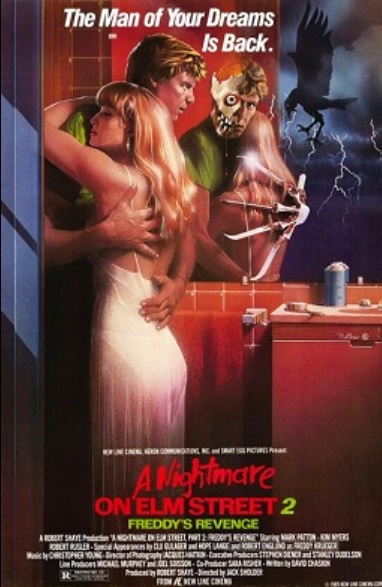
After Wes Craven’s original A Nightmare on Elm Street redefined slasher cinema in 1984, New Line Cinema wasted no time planning a sequel. There was only one problem: Craven wanted nothing to do with it. He hated the script, hated the direction, and probably hated the idea of Freddy possessing a teenager like some burnt-faced demon from The Exorcist. So New Line moved on without him, and handed the reins to director Jack Sholder, best known for the cult sci-fi hit The Hidden.
The story follows Jesse Walsh, played by Mark Patton, who moves into Nancy Thompson’s old house only to discover that Freddy never really left. The dream demon wants to use Jesse as his vessel to escape into the real world, turning the poor boy into an unwilling accomplice to murder. It was an unusual twist for a slasher sequel and one that immediately divided fans. Freddy was supposed to kill people in their dreams, not wander into pool parties like a barbecue crasher with claws.
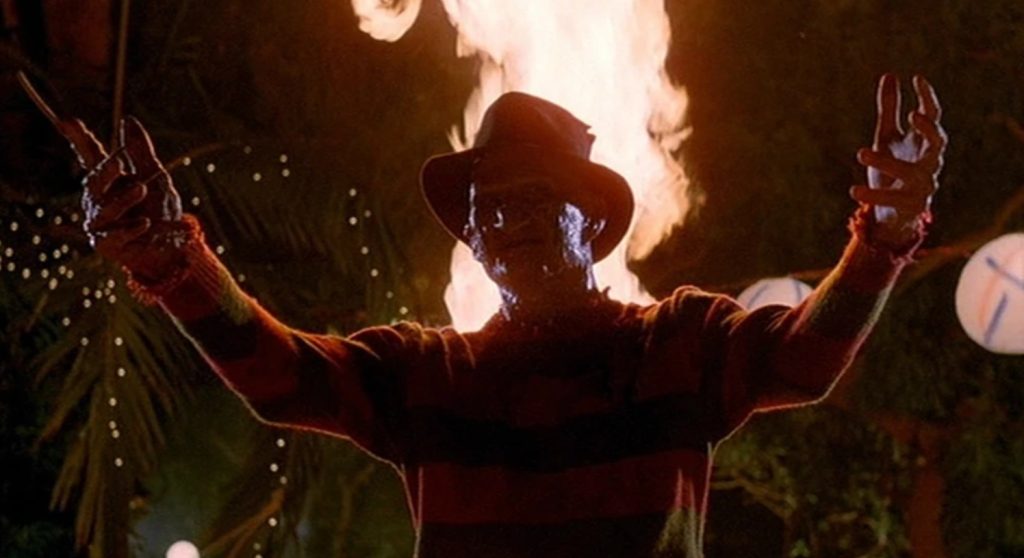
Yet for all its rule-breaking, Freddy’s Revenge quietly reinvented the franchise. Freddy’s possession of Jesse paved the way for later entries like The Dream Child and Freddy vs. Jason, where he would freely blur the line between dream and reality. This was also the film that refined Freddy’s look. His make-up became more witch-like, his eyes turned red, and his clawed hand appeared to merge with his flesh. Even his famous red and green sweater grew stripes down the sleeves for the first time.
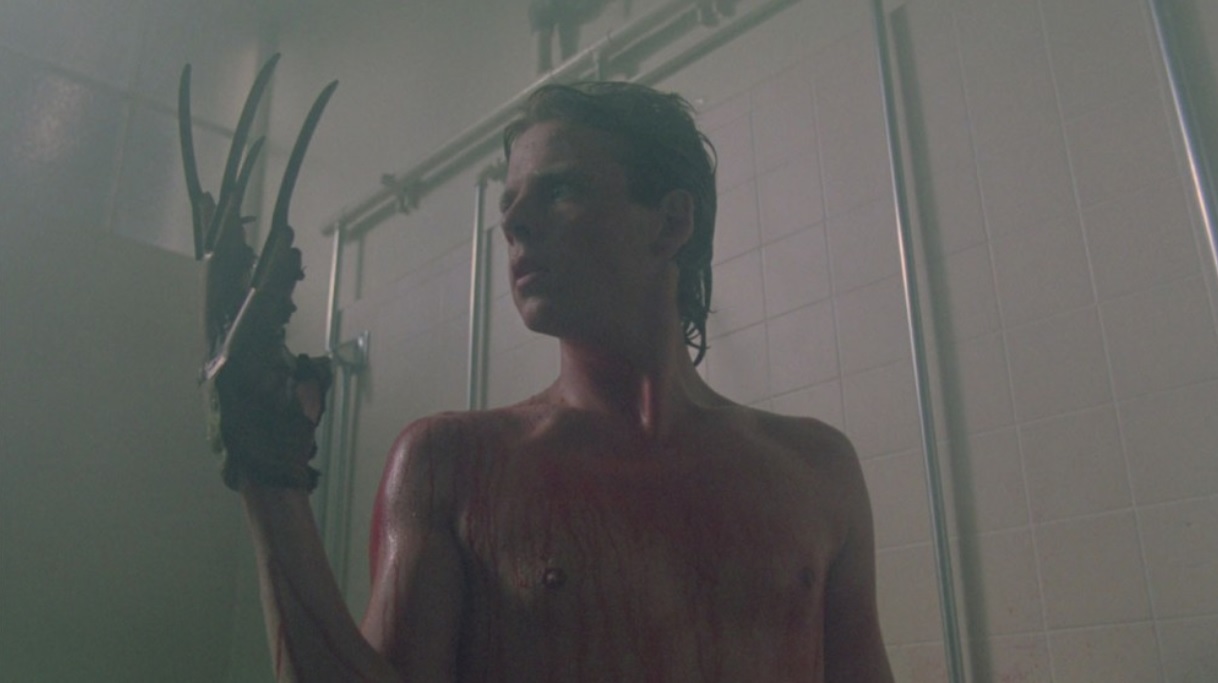
Behind the scenes, things were just as chaotic as they were onscreen. New Line Cinema initially refused to pay Robert Englund a raise to reprise his role as Freddy. Convinced that “any guy in a mask” could do it, they hired a stuntman instead. Unfortunately, the stuntman in question had the build of a nightclub bouncer and the neck of a professional wrestler. After two weeks of footage that looked more like Freddy the Bodybuilder, producer Robert Shaye realized his mistake, fired the stuntman, and finally met Englund’s pay demands.
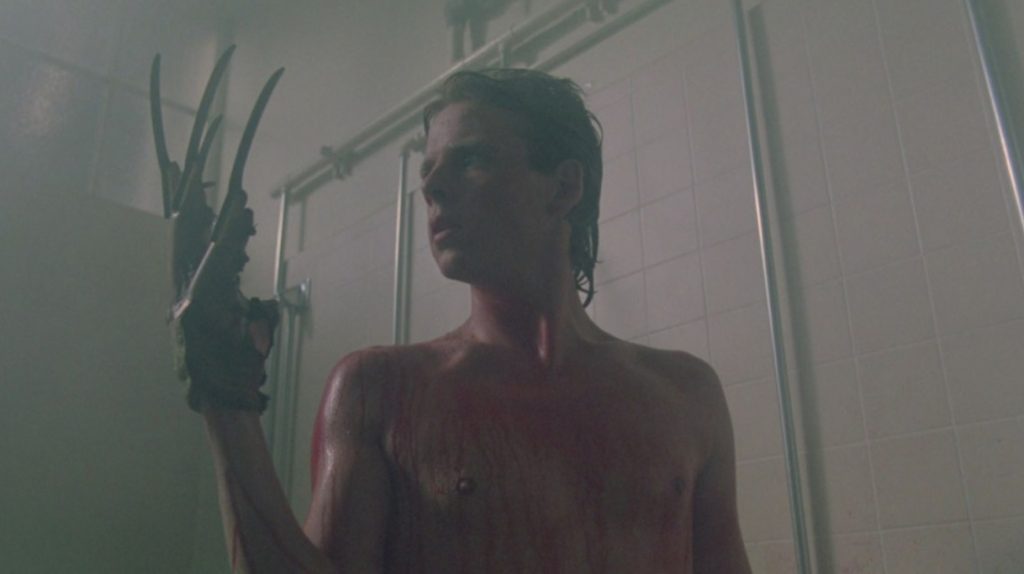
Ironically, the unknown stunt performer still appears in the finished film during the infamous shower scene with the gym coach, played by Marshall Bell. That entire sequence was never reshot. So yes, somewhere out there is a man who can proudly say he once towel-whipped a coach to death while pretending to be Freddy Krueger.
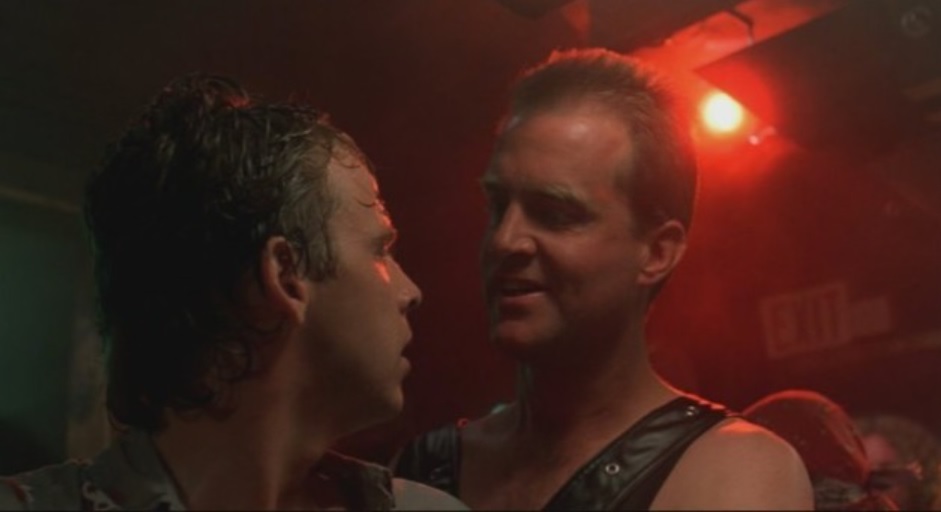
The film’s reputation, of course, comes not just from its production woes, but from its unmistakable queer subtext. Jesse’s relationship with his friend Grady (Robert Rusler) and his encounters with the leather-clad Coach Schneider are filled with homoerotic tension. One scene finds Jesse fleeing his girlfriend mid-makeout to spend the night shirtless in Grady’s bedroom. Another features Freddy hissing, “You’ve got the body, I’ve got the brain.” The film was practically begging to be analyzed, and audiences eventually obliged.
Director Jack Sholder insists he was simply making a movie about teen sexual anxiety, not a coded exploration of repressed homosexuality. Writer David Chaskin, however, eventually admitted he had written the script as a gay panic allegory. Poor Mark Patton, who was not publicly out at the time, ended up caught in the middle. Hollywood’s hostility toward gay actors was so severe that the film’s subtext was used against him, effectively ending his career for years.
Decades later, Patton returned to the spotlight through the acclaimed documentary Scream, Queen! My Nightmare on Elm Street, which explored how the film’s accidental queerness became a source of empowerment for LGBTQ horror fans. What was once seen as embarrassing is now celebrated as a groundbreaking portrayal of identity, repression, and self-acceptance — even if the filmmakers didn’t entirely realize what they were creating.
And yet, despite all the analysis, Freddy’s Revenge remains wildly entertaining. The pool party massacre is pure chaos as Freddy storms into the real world shouting, “You are all my children now!” The gym scene plays like Carrie meets Fifty Shades of Krueger. And who could forget Jesse’s bedroom dance sequence to Fonda Rae’s “Touch Me (All Night Long)”? It is camp perfection — a moment so gloriously awkward that it deserves to be in the Louvre under the heading “80s Subtext in Motion.”
The film also holds some fascinating trivia. Robert Englund appears briefly out of makeup as the bus driver in the opening dream sequence, one of the only a few times he’s seen without Freddy’s trademark burns. The original glove from the first movie appears here as well and later turns up in Evil Dead II as part of a friendly prank war between Wes Craven and Sam Raimi. That glove then vanished for decades before being rediscovered at auction by a fan in 2009. Kim Myers, who plays Lisa, was allegedly cast because of her resemblance to Meryl Streep — a fact that becomes increasingly uncanny once you notice it.
While Freddy’s Revenge was dismissed in 1985 as confusing, too strange, and too “different,” time has been kind. It now ranks among the top entries in the series for many fans, admired for its bold themes and dreamlike tone. The film has become a staple of queer film studies, regularly screened at festivals and universities. Its star, Mark Patton, is now recognized as one of horror’s most beloved cult figures, embraced by a new generation of fans who see in Jesse something that feels honest and human.
At forty years old, A Nightmare on Elm Street 2: Freddy’s Revenge stands as proof that sometimes the misunderstood sequels are the ones that last the longest. It may not have been the sequel Wes Craven wanted, but it gave us something even better: a film about fear, repression, and transformation, wrapped in blood, sweat, and neon lighting.
Freddy came back with claws sharpened and jokes ready, but Jesse Walsh came back with something rarer — the courage to face what truly haunts him. And maybe, in the end, that’s the real revenge.