Professor Franz Joins the Hall of Killers Third Class
Professor Franz has taken his place in our Hall of Killers third class, and the applause is tinged with nervous laughter. Anyone who has felt the clammy dread of Sergio Martino’s Torso knows why. This is not a loud killer. He is studious, patient, and far too comfortable with a scarf and a saw. In a genre that often celebrates operatic flourish, Franz is the cold breath on the back of your neck that you only notice after the lights go out.

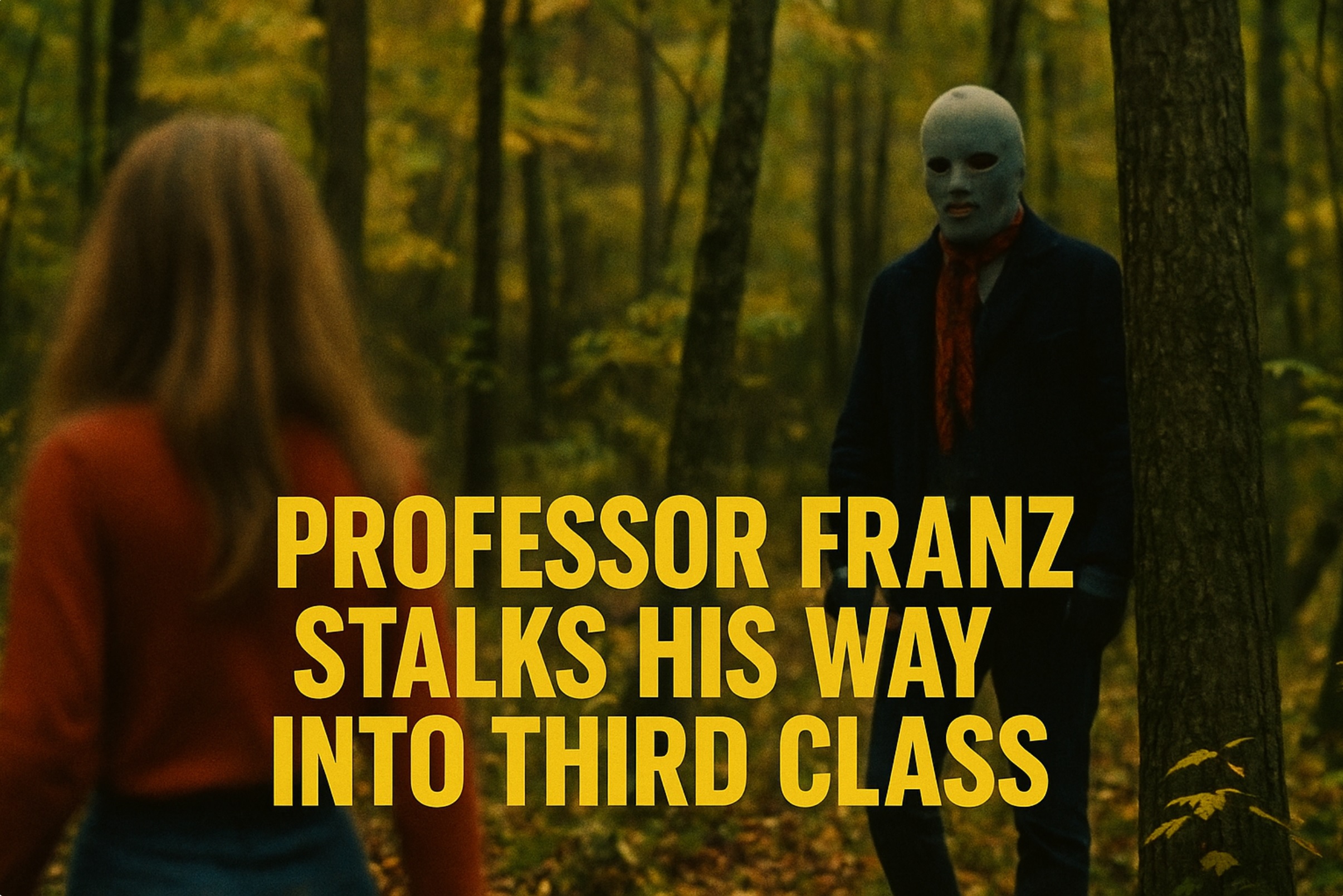
Torso arrived in the early seventies, when Italian cinema was perfecting the sinister grammar of giallo. Martino, already a dab hand with polished perversity, placed the story in and around a university town and a remote hilltop villa. A series of murders rattles a circle of students. Clues are thin, suspects are plentiful, and the police are busy penning their press statements. Enter the unnamed assailant with black gloves, a keen eye for isolation, and a favoured red and black scarf that tightens the air in your lungs before the screen cuts to black.
Professor Franz is not a masked ogre from the woods. He is a familiar face within the academic maze, a cultured figure whose lectures on medieval imagery slyly reveal a world view steeped in control and cruelty. That quiet intellectual sheen makes him more frightening, not less. You begin to suspect that every art slide is an alibi and every gentle correction hides a bone saw behind the smile.
The cast helps the fear settle into your bones. Suzy Kendall leads as Jane, the student who becomes the reluctant anchor of the final act. Tina Aumont brings a troubled edge to Daniela, caught in the slipstream of desire and danger. Luc Merenda, John Richardson, and a gallery of red herrings orbit the mystery while Guido and Maurizio De Angelis lay down a score that drifts between seductive and sickly. Giancarlo Ferrando’s photography frames bright Italian days that feel oddly unsafe, and nights that look like the shadows have teeth.

What sets Torso apart, and what earns Professor Franz this induction, is the exquisite cruelty of the villa sequence. Once the action tightens around Jane and her friends at the countryside retreat, Martino strips away chatter and leans on pure visual storytelling. Doors are locked. A body is hidden. A killer moves from room to room in workmanlike silence. Jane must play at being invisible, and for what feels like an eternity the film becomes a masterclass in sustained suspense. There is little in the way of grandstanding. Just breath, footsteps, and the realisation that you are trapped with someone who plans his evil like a home renovation.
Why the third class rather than the first wave of inductees There is a simple answer that has nothing to do with quality. Franz is a single film presence. He never starred in a string of sequels and his mask does not sit on supermarket shelves. Yet his legacy is etched into the slasher boom that followed. Torso arrived before the later American cycle took hold. Its blend of sexual anxiety, student life, whodunnit puzzle, and a long silent siege points straight toward the grammar that would make audiences scream for years. Many fans call it a proto slasher. Others just call it brilliant.
Torso has had a bumpy history in release. Prints were trimmed for gore in some territories, re titled for others, and sat on shelves next to lurid posters that promised more flesh than the censors would allow. That patchwork distribution did the film no favours, but it also gave Torso a strange mystique. If you saw it in a cinema, you may have seen a different cut than your friend in another city. Restorations over the last decade have been a blessing, letting the craft of Martino and his team shine through without the scissors.
Franz’s method is as important as his body count. The scarf stranglings feel intimate and cowardly. The later dismemberment is treated as a job to be done, not a spectacle. This is horror as routine, the way a meticulous neighbour might prune a hedge. It is that lack of theatre that makes the character stick in the mind. He is not a force of nature who bursts through doors. He is the man who already holds the keys.
Giallo lovers often debate their favourites with the zeal of football fans in a pub. Argento paints in neon nightmares. Fulci wallows in rot and dream logic. Martino sits somewhere between, immaculate and nasty, a stylist who never forgets the sting. Torso is his leanest and meanest work, and Professor Franz is the icicle at its heart. If you are new to Italian thrillers, this is a perfect gateway. If you are a veteran, you already know that the villa set piece has few equals.

So welcome, Professor. You never got a toy line and nobody chants your name at conventions, but your chill travels. The Hall of Killers is richer for your presence. If you plan to celebrate, do it with a scarf only as a fashion choice and keep the saws in the shed. We would like everyone to make it to the end credits.