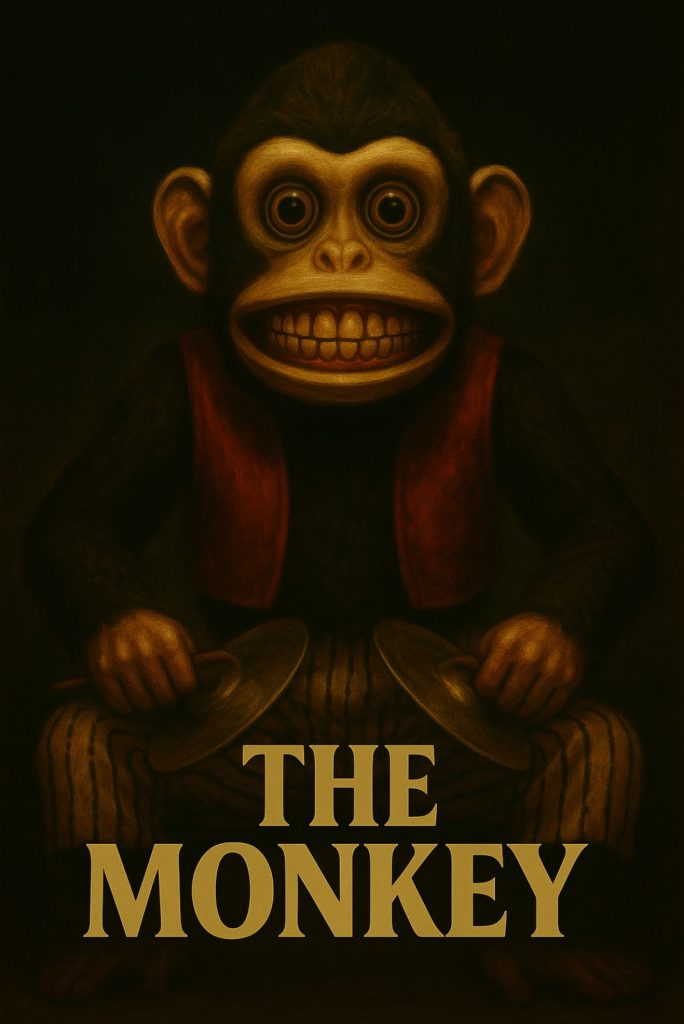
Also Known As: The Monkey, The Drum Monkey, The Cursed Toy
First Appearance: The Monkey (2025)
Most Iconic Form: A wind up drum playing toy monkey that triggers random and gruesome deaths when its key is turned
Kill Count: Numerous accidental and indirect deaths across decades
Created by: Based on Stephen King’s 1980 short story The Monkey
Tier: Third Class Tier
The Monkey (2025)
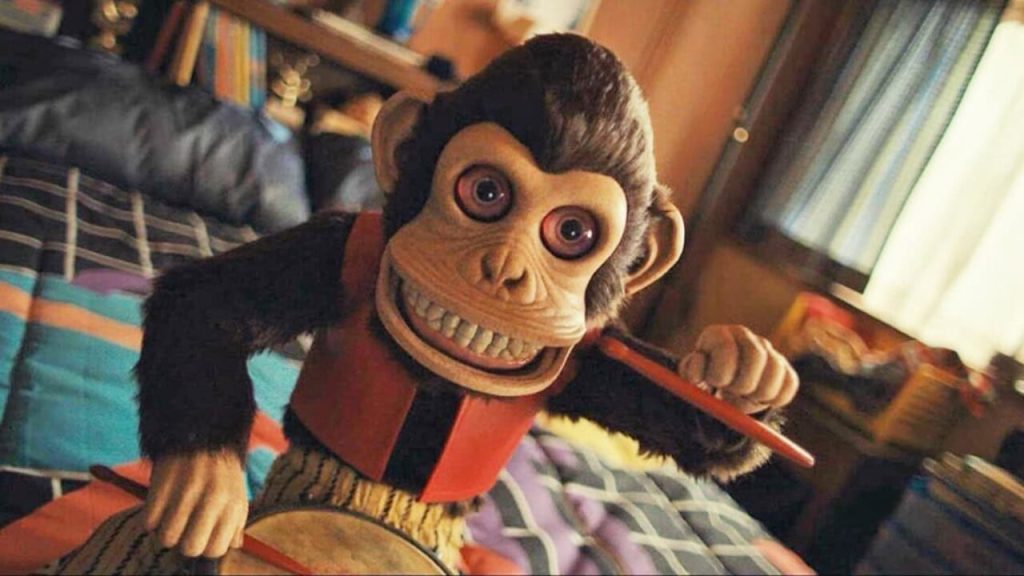
Written and directed by Osgood Perkins, The Monkey is a comedy horror adaptation of Stephen King’s short story that transforms a simple toy into an engine of chaos and mortality. The film centres on a cursed wind up drum playing monkey whose mechanical action triggers a chain reaction of horrific and unpredictable deaths around whoever activates it.
The story begins in 1999 when Captain Petey Shelburn attempts to return the toy to an antiques shop. When the monkey plays its drum, a lethal accident involving a harpoon gun kills the shop owner, immediately establishing the object as a supernatural catalyst rather than a physical killer. After Petey disappears, the toy is inherited by his twin sons Hal and Bill, who unknowingly activate it and set off further fatal incidents, including the decapitation of their babysitter during a restaurant accident.
Unlike traditional killers, the monkey does not directly attack victims. Instead, it causes elaborate and freak accidents that appear random but are always linked to the winding of its key. When Hal attempts to use it to kill his brother, the monkey instead causes their mother Lois to suffer a fatal aneurysm, reinforcing the central rule of the object: the deaths are indiscriminate and cannot be precisely controlled.
Twenty five years later, the monkey resurfaces after being discarded and sealed away, proving it cannot be permanently disposed of. A series of bizarre deaths occur in the town, including explosive accidents, electrical incidents, and sudden weapon discharges, all tied to the monkey’s continued activation. Bill eventually uses the toy out of resentment, repeatedly winding the key in retaliation against Hal, even though the resulting deaths strike random victims rather than the intended target.
The film’s climax reveals the true scale of the monkey’s destructive potential. When provoked, it drums uncontrollably, triggering widespread death and destruction across the town in rapid succession. Bill is ultimately killed in a sudden and absurdly violent accident, consistent with the monkey’s established pattern of arbitrary fatal outcomes. Hal and his son Petey accept that ownership of the monkey carries an ongoing burden, vowing to prevent the key from ever being wound again.
Nature and Rules of the Curse
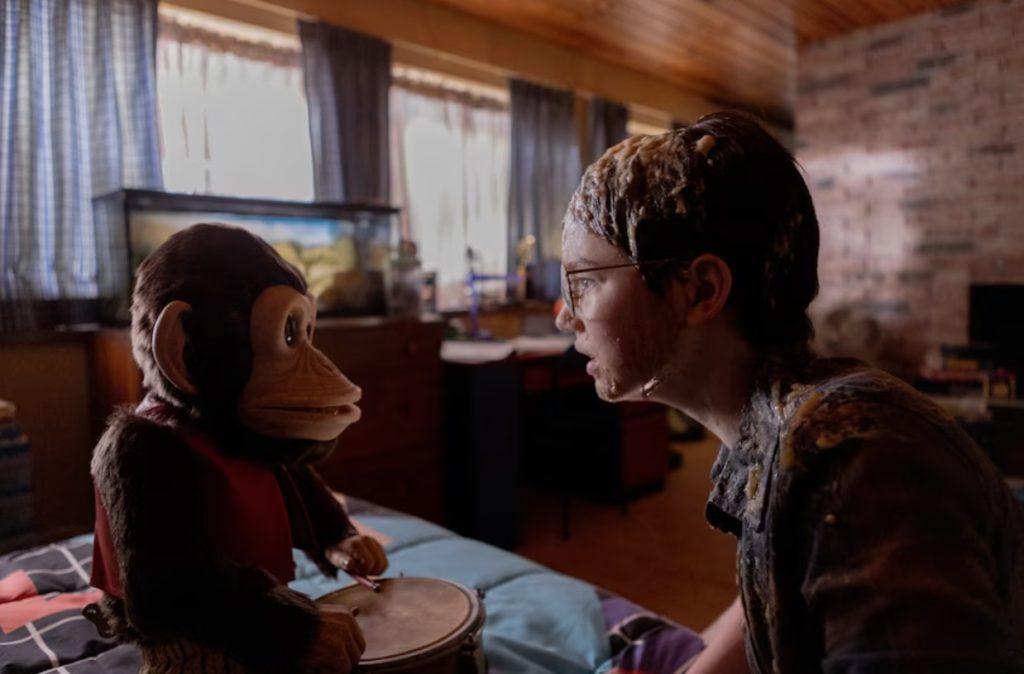
The Monkey is not sentient in a traditional sense, yet it operates under a strict supernatural logic. When its key is turned and the drum plays, someone will die in a gruesome accident. The person who winds the key is typically spared, but has no control over who the victim will be.
Its killings are defined by randomness and inevitability. Deaths range from freak medical events to environmental disasters, weapon accidents, and chain reactions of violence. This makes the monkey uniquely terrifying, as it weaponises chance itself rather than physical force.
Another defining trait is persistence. Attempts to discard, seal, or destroy the toy fail in the long term, as it repeatedly reappears in the lives of its owners. This cyclical return ties the object to themes of trauma, grief, and inherited fear, particularly within the Shelburn family.
Character and Symbolism
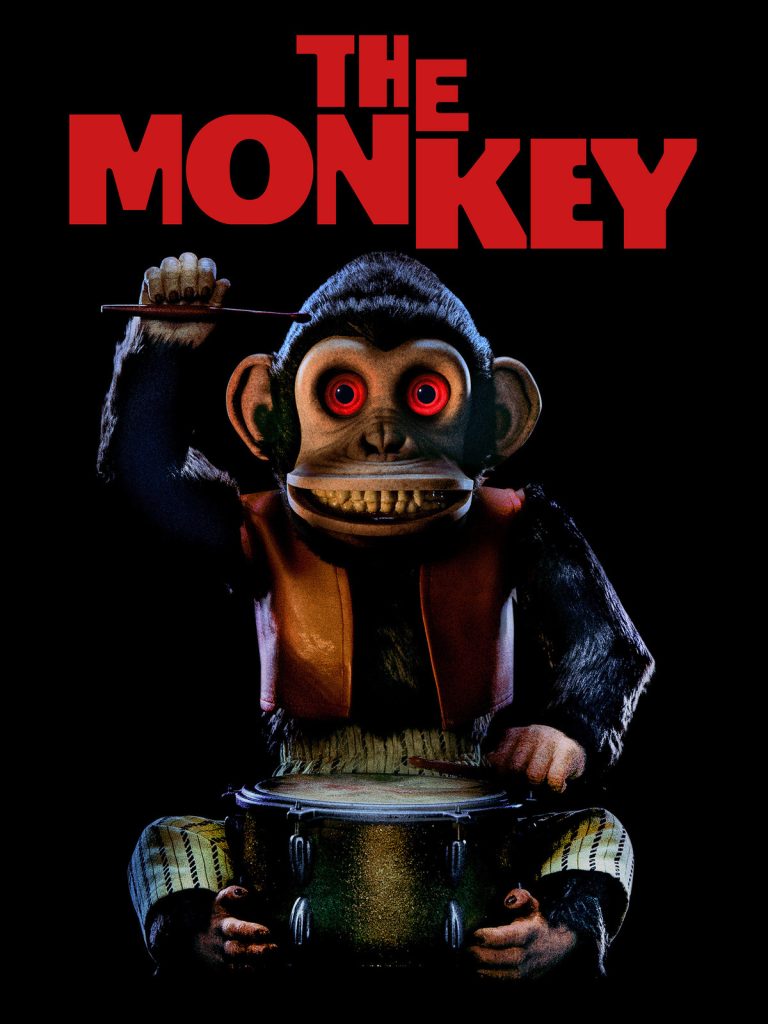
The Monkey represents the absurdity and unpredictability of death. Director Osgood Perkins deliberately leaned into dark comedy and extreme gore to emphasise how random and unfair mortality can be, a theme directly tied to the film’s tone and structure.
Adapted from Stephen King’s short story, the film replaces the original cymbal clashing toy with a drum playing monkey, but retains the core idea of a cursed object that brings death without motive. The monkey is less a villain with intent and more a supernatural mechanism that reflects the chaos of life and loss.
Its presence also functions as a metaphor for unresolved trauma. The twins’ lifelong fear of the toy, their fractured relationship, and their attempts to bury it all reinforce the idea that the monkey is an inherited curse that cannot simply be thrown away.
Legacy
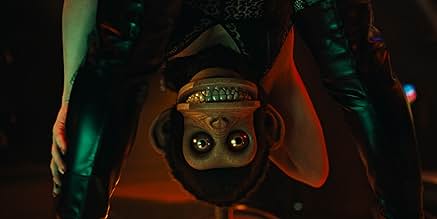
The Monkey quickly became a standout modern horror object antagonist following its 2025 release by Neon. The film received generally positive reviews and performed strongly at the box office, grossing around 68.9 million dollars worldwide against a modest budget, marking it as a successful horror adaptation.
Critics and audiences noted its blend of extreme gore, dark humour, and psychological themes, distinguishing it from more traditional possessed toy films. Its connection to Stephen King’s work and Osgood Perkins’ growing horror filmography, following Longlegs, further elevated its cultural presence.
King himself praised the film, and the marketing campaign gained attention for its high view counts and controversial violent imagery. The monkey toy has since become a recognisable modern horror icon, particularly for its mechanical drumming and unpredictable kill mechanism.
League Placement
The Monkey belongs in the Third Class Tier. It is an iconic cursed object with a unique killing mechanism and strong thematic impact, but it lacks the direct physical agency, mythic scale, or long running franchise dominance required for higher tiers.