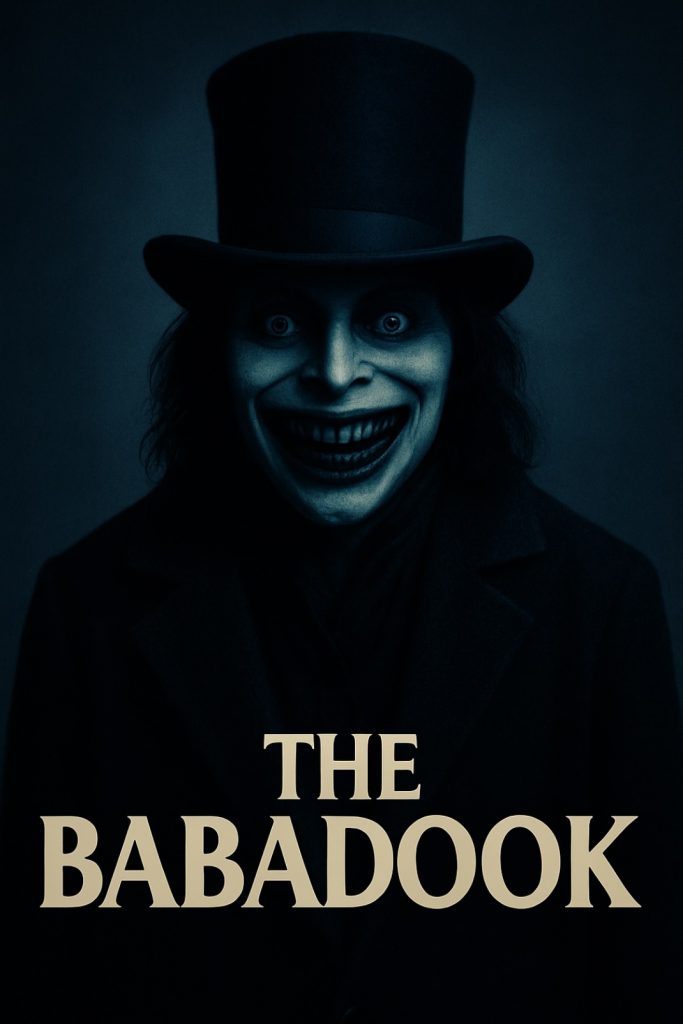
Also Known As: The Babadook, Mister Babadook, The Shadow Man
First Appearance: The Babadook (2014)
Most Iconic Form: A tall, shadowy figure with claw-like hands, a top hat, and a long black coat emerging from a mysterious pop-up book
Kill Count: None directly (psychological torment and possession)
Portrayed by: Tim Purcell
Tier: First Class Tier
The Babadook (2014)
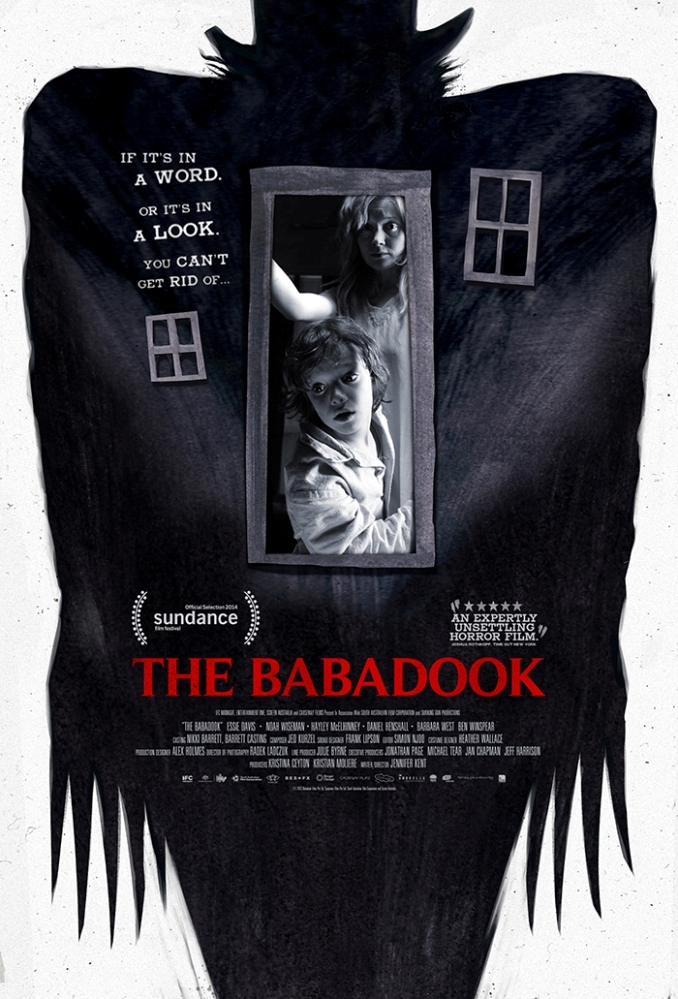
Written and directed by Jennifer Kent, The Babadook is a chilling exploration of grief disguised as a haunted-house story. The film follows Amelia Vanek, a single mother struggling to raise her young son Samuel after the violent death of her husband. One night, Samuel finds a strange pop-up book on his shelf titled Mister Babadook. As Amelia reads it aloud, she realises the story’s rhymes describe a sinister creature that enters homes once noticed, and never leaves.
Soon, strange events begin to plague the house. Doors open on their own, shadows move in the corners, and Amelia starts to hear the name whispered in the dark: “Ba-ba-dook… dook… dook.” The tension builds slowly, intertwining supernatural terror with emotional breakdown. The Babadook’s presence grows as Amelia’s grief and exhaustion worsen, blurring the line between haunting and psychosis.
Unlike conventional monsters, the Babadook is not an invader from outside but an embodiment of Amelia’s internal torment. Its top hat and grin feel both theatrical and ancient, its movements jerky and deliberate like those of a creature from an old silent film. It feeds on denial and despair, becoming stronger each time Amelia suppresses her pain.
By the film’s climax, the Babadook fully manifests, possessing Amelia and turning her maternal love into violence. When she nearly kills Samuel, she finally confronts the creature head-on, screaming at it to leave. Rather than destroying it, she acknowledges it. The act of recognition weakens the entity. In the end, the Babadook is not banished but confined — locked in the basement, where Amelia feeds it like a wild animal. The message is clear: grief cannot be destroyed, only managed.
The Nature of the Babadook

The Babadook is both symbol and spectre. It is born from pain, specifically the grief Amelia refuses to confront. Every aspect of its design reflects her emotional state. Its black coat and hat evoke the imagery of mourning, while its insect-like clicking mimics the panic of suffocating fear. The book that summons it serves as a literal manifestation of intrusive thoughts, a physical reminder that grief has a story of its own.
Unlike many horror entities, the Babadook does not seek souls or domination. It seeks recognition. It is the embodiment of Amelia’s trauma demanding to be acknowledged. In this way, the creature’s story is universal. It represents how unresolved sorrow can consume and control, but also how facing it allows survival.
Symbolism and Interpretation

Jennifer Kent crafted The Babadook as a story about motherhood, loss, and the stigma surrounding mental illness. The monster’s power lies in its ambiguity. Viewers can interpret it as a literal haunting or as a psychological manifestation. Its lack of a clear origin emphasises that it does not come from outside the home, it grows within it.
The basement, where Amelia traps the Babadook, symbolises the mind’s hidden space, where pain and guilt are buried but never erased. Feeding it represents the ongoing effort of managing grief rather than pretending it no longer exists.
The film also explores the horror of motherhood. Amelia’s exhaustion and isolation become fertile ground for the monster’s emergence. Her fear of her own resentment toward her son, combined with her unprocessed trauma, makes the Babadook both a tormentor and a mirror.
Cultural Impact
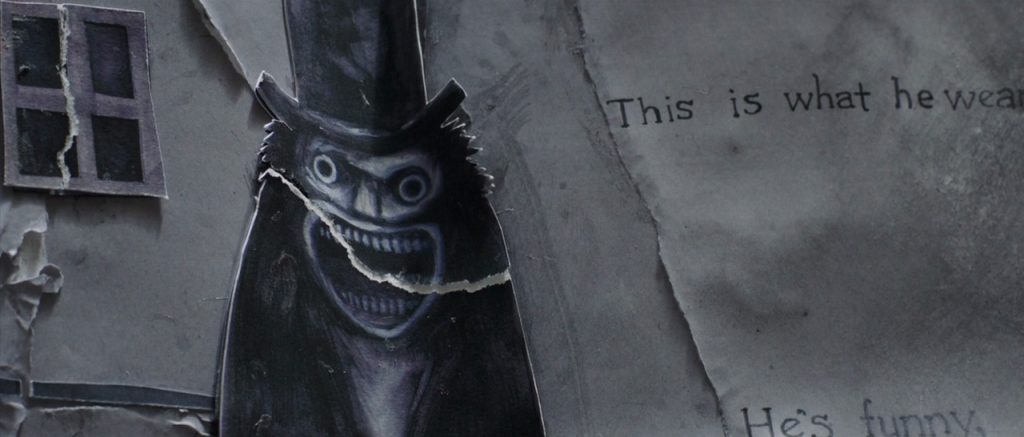
The Babadook received widespread acclaim upon release, praised for its intelligence, emotional depth, and subversion of horror tropes. Critics compared it to classics such as The Shining and Repulsion, citing its focus on psychological decay rather than physical violence.
The creature’s design, a cross between a shadow figure, a storybook villain, and a silent film ghoul, became instantly iconic. Its distinctive rhythm of speech and clawed silhouette were used widely in marketing, and over time, the Babadook took on unexpected cultural significance, even becoming an internet symbol of repressed identity and catharsis.
Jennifer Kent’s film continues to be studied for its portrayal of grief and trauma through the language of horror. The Babadook is often cited as one of the finest examples of psychological horror in the twenty-first century, proving that monsters are sometimes reflections of the self.
League Placement
The Babadook belongs in the First Class Tier. A creature of emotion rather than flesh, it is horror distilled into metaphor — a haunting of the heart and mind. It reminds us that monsters are rarely external, and that what we fear most often lives within.