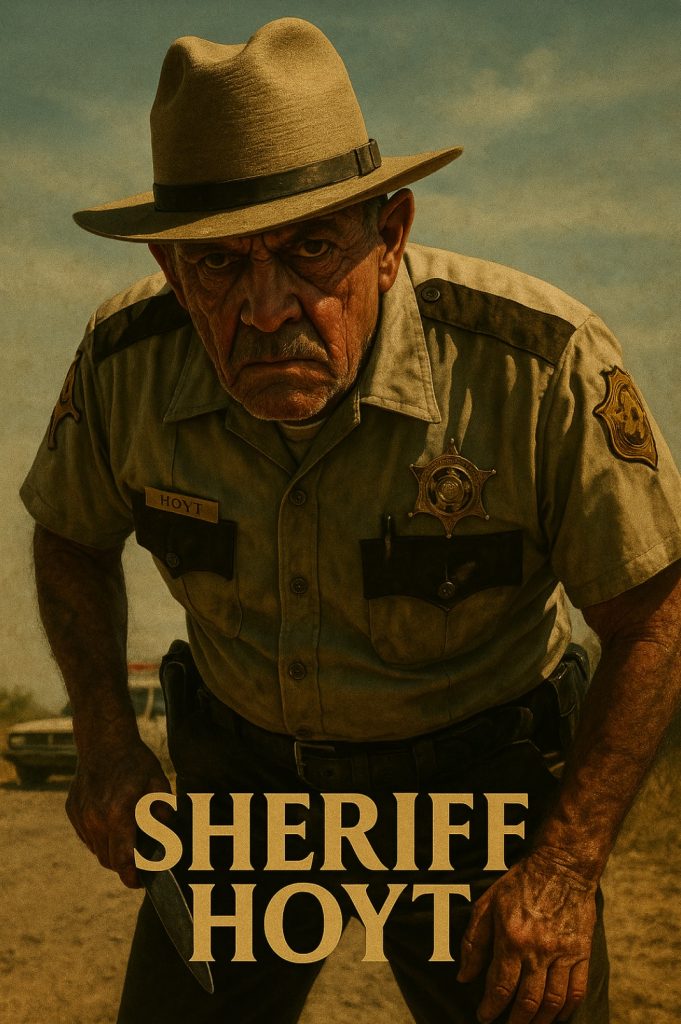
Real Name: Charlie Hewitt Jr.
Also Known As: Sheriff Hoyt, Sheriff Charlie, Uncle Charlie
First Appearance: The Texas Chainsaw Massacre (2003)
Most Iconic Form: A corrupt lawman in bloodstained uniform, chewing tobacco and enforcing his own sadistic version of justice
Kill Count: At least eight confirmed victims
Portrayed by: R. Lee Ermey
Tier: First Class Tier
The Texas Chainsaw Massacre (2003)
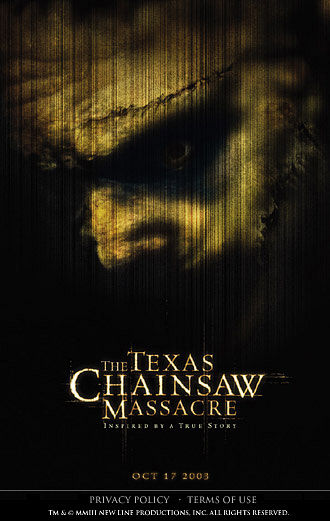
Directed by Marcus Nispel and produced by Michael Bay, the 2003 remake reimagined the Texas Chainsaw Massacre legend for a new generation. At its centre is Sheriff Hoyt, a man who uses authority as a weapon and cruelty as entertainment.
Unlike the original’s unhinged, chaotic Sawyer family, the Hewitts of the remake are organised under Hoyt’s command. He is not merely a participant in their crimes but the one who directs them. When a group of travellers stumble across the Hewitt family’s territory, it is Hoyt who first greets them — calm, grinning, and deceptively professional.
He arrives at the scene of a supposed suicide, mocking the victims while pretending to conduct an investigation. Within minutes, his mask of authority slips. He abuses his power to terrorise the survivors, forcing confessions at gunpoint, beating them, and calling on Leatherface to “clean up the mess.” Hoyt’s control is absolute. Where Leatherface is primal, Hoyt is rational. He kills not out of necessity but out of conviction that the world outside his family is corrupt and deserves punishment.
Ermey’s performance dominates the film. Every sneer, every barked command feels authentic, steeped in a lifetime of violence and entitlement. His charisma makes him more disturbing than any chainsaw. When he forces his victims to address him as “Sheriff” before killing them, it becomes clear that his uniform is both costume and creed — the symbol of order turned to madness.
The Texas Chainsaw Massacre: The Beginning (2006)
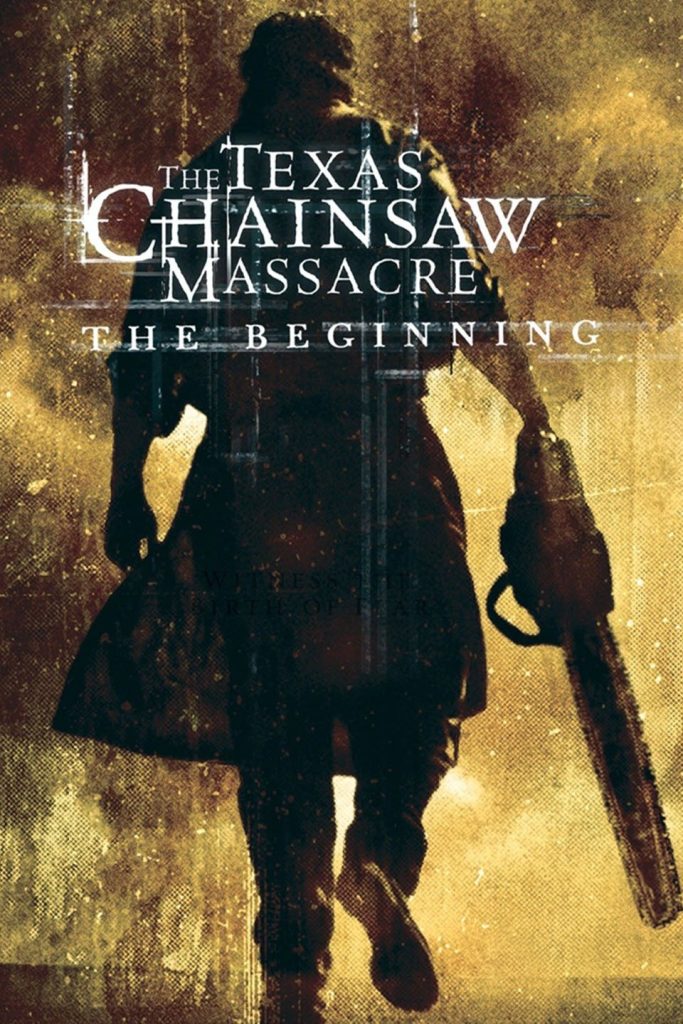
The prequel deepens Hoyt’s story, revealing the man behind the badge. Before the events of the first film, Charlie Hewitt Jr. works at the local slaughterhouse, already showing signs of cruelty. When the plant closes, the town collapses into poverty, leaving the Hewitts isolated and desperate.
After a confrontation with a real sheriff ends in violence, Charlie kills him and takes his identity, assuming the role of lawman permanently. From that moment, he is both executioner and judge, declaring his own authority in a world he believes has abandoned moral order.
The film explores his twisted sense of justice. He believes the outside world has failed, that civilisation has rotted, and that only through fear and control can his family survive. His brutality toward strangers becomes his way of maintaining power. Every interrogation, every staged arrest is an excuse to assert dominance.
The Beginning also shows Hoyt’s influence on Leatherface, guiding him into the role of executioner. He calls him “boy” and “son,” shaping his violence into ritual. In doing so, Hoyt becomes the architect of the Hewitt family’s legend — the man who turns madness into method.
His death at the hands of a victim in The Beginning is suitably brutal, but even in dying he leaves behind a philosophy that continues to define the family.
Psychology and Motivation
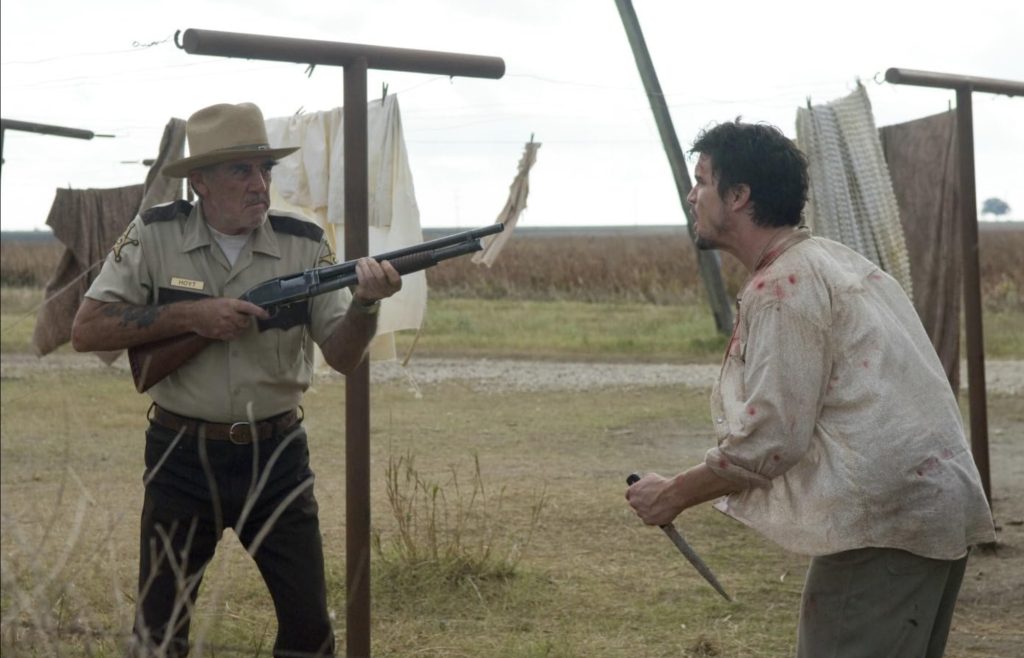
Sheriff Hoyt is a portrait of corrupted authority. His cruelty is not chaotic but disciplined. He believes in structure, routine, and punishment. His victims are not just prey; they are examples, used to reinforce his vision of control.
His uniform provides legitimacy for his sadism. He wears it like armour, using it to disguise his crimes and manipulate others. The sheriff’s badge allows him to do what ordinary men cannot, turning law itself into a weapon.
Unlike many killers, Hoyt is not motivated by trauma or greed. He kills because he enjoys power. His satisfaction comes from watching people obey him, from forcing them to acknowledge his authority even as he destroys them.
He is the inverse of the classic heroic lawman — not a protector, but the embodiment of institutional rot. In a world already collapsing, Hoyt is what remains when order becomes indistinguishable from evil.
Themes and Symbolism
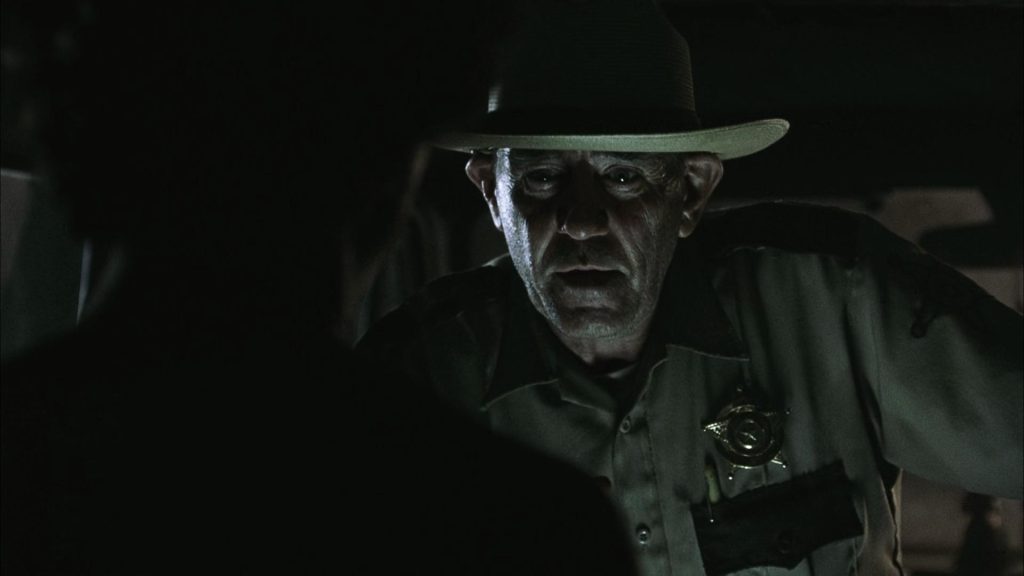
Hoyt represents the dark side of American authority. The Texas landscape, empty and sunburned, becomes a reflection of his world view: a place with no rules except his own. His sheriff’s car and uniform symbolise the illusion of civilisation, maintained through violence and fear.
He also embodies generational corruption. His manipulation of Leatherface mirrors the way institutions breed obedience through pain. In training a killer to follow orders, Hoyt recreates the very system he claims to despise.
His death in The Beginning serves as poetic irony. He is shot and mutilated by one of his captives, undone by the same violence he spent his life controlling.
Cultural Impact
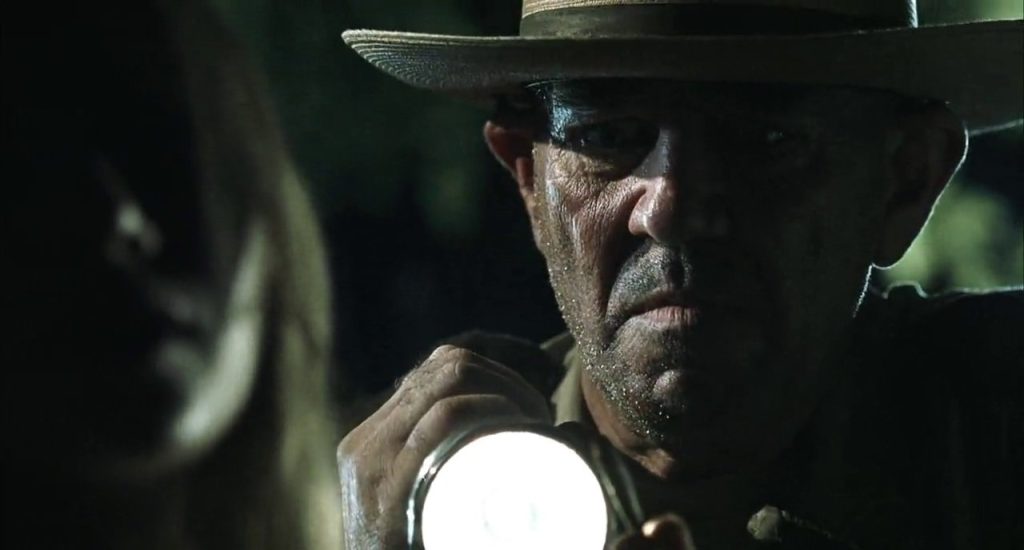
R. Lee Ermey’s portrayal of Sheriff Hoyt is widely regarded as one of the best performances in horror remakes. Drawing on his real-life experience as a military drill instructor, Ermey channels discipline into terror. His performance inspired a wave of similar authority-figure villains throughout the 2000s, from The Devil’s Rejects to Wrong Turn.
Fans of the Texas Chainsaw series often cite Hoyt as the most frightening member of the Hewitt family. His intelligence and manipulation separate him from Leatherface’s brutality, making him the true leader of the household.
Even years after the remake’s release, his presence remains iconic — the cruel smile, the mirrored sunglasses, and the barked orders that echo through the dry Texas heat.
League Placement
Sheriff Hoyt belongs in the First Class Tier. He is the mind behind the massacre, the voice of a world where justice has curdled into sadism. A monster with a badge and a code, he stands among the most chilling human killers of modern horror.