
Real Name: The Horde – Kevin Wendell Crumb
Also Known As: The Horde, The Beast, Patricia, Dennis, Hedwig (among others)
First Appearance: Split (2016)
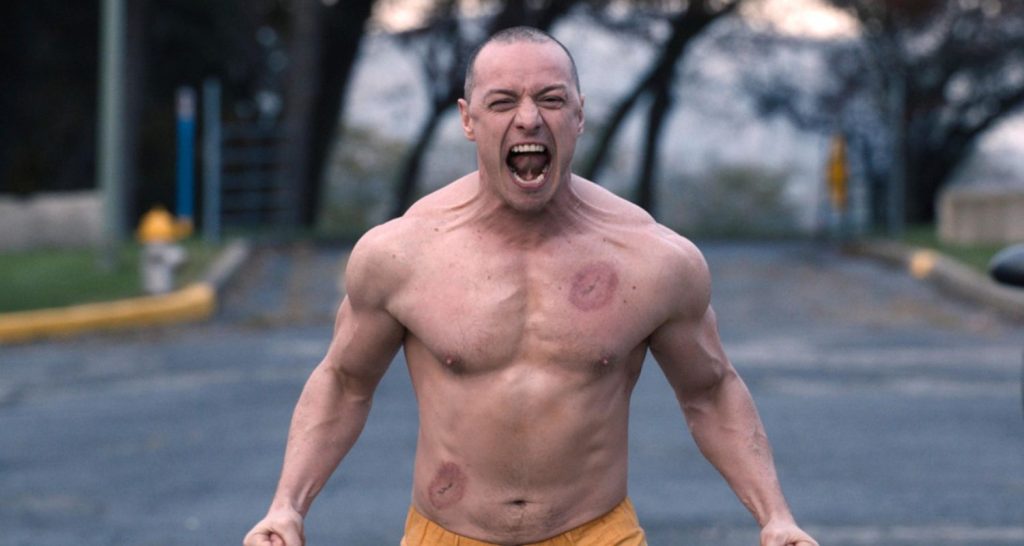
Most Iconic Form: Shirtless, veined body crouched like an animal, with unnatural strength and yellow eyes
Kill Count: 4–6 confirmed (onscreen), more implied
Portrayed by: James McAvoy
Split (2016) – The Beast Awakens
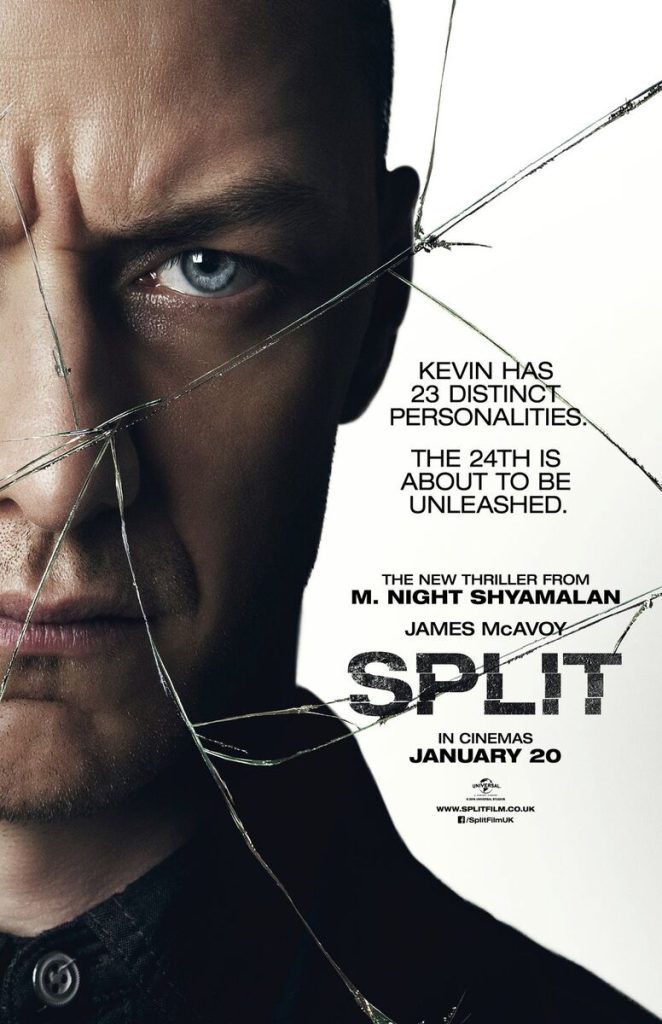
Directed by M. Night Shyamalan, Split begins as a claustrophobic psychological thriller and evolves into a supervillain origin story. Kevin Wendell Crumb suffers from Dissociative Identity Disorder (DID) — but not in a traditional way. He harbors 23 distinct personalities, ranging from:
- Patricia – strict, maternal, poised
- Dennis – obsessive-compulsive and violent
- Hedwig – a 9-year-old boy with a lisp and emotional vulnerability
- Others like Orwell, Jade, and Barry — with varied degrees of influence
Together, they refer to themselves as The Horde — and they await the arrival of a 24th personality: The Beast.
Kevin abducts three girls and locks them in a basement. As the dominant personalities prepare for The Beast’s arrival, the girls attempt to escape, with Casey (the lead) trying to manipulate Hedwig.
Eventually, The Beast emerges — a superhuman alter who climbs walls, bends steel bars, shrugs off bullets, and feeds on those he deems “impure.” His belief:
“The broken are the more evolved.”
He spares Casey after discovering her scars — proof of childhood trauma. Her “brokenness” grants her purity in his eyes.
In a final twist, it’s revealed the film shares a universe with Unbreakable (2000), turning The Horde into a comic-book-level villain.
Glass (2019) – Villain vs. Vigilante
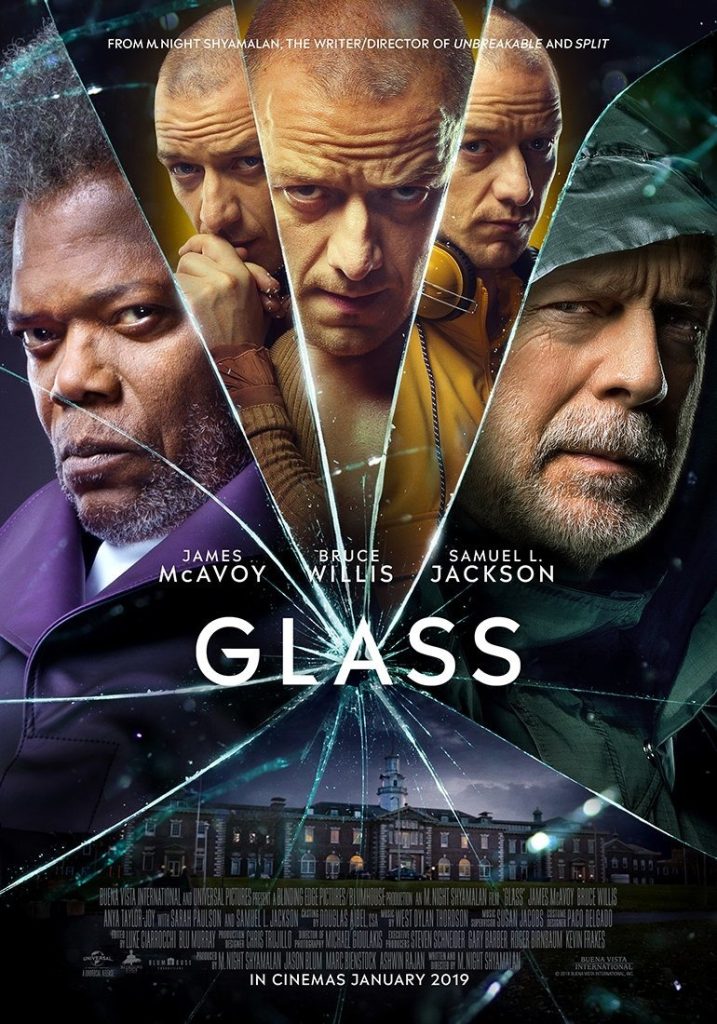
In the third film of Shyamalan’s Eastrail 177 Trilogy, Kevin (The Horde) is institutionalized alongside David Dunn (The Overseer) and Elijah Price (Mr. Glass). Under psychiatric supervision, his alters clash — some want to suppress The Beast, others feed him.
Dr. Ellie Staple attempts to convince the group that their abilities are delusional. But it’s clear: Kevin’s condition is extraordinary, not imagined.
The Beast returns — more unstable and aggressive, with animal-like rage. He clashes with David in a battle of strength vs. faith. But ultimately, all three are manipulated and destroyed by a secret organization trying to suppress super-powered individuals.
Kevin dies after briefly regaining control, holding Casey’s hand — her empathy the only thing that could pierce The Horde’s chaos. In death, he is human again, just a man in pain.
Physiology & Personality
- Suffers from DID — hosts 24 personalities, each with unique traits
- The Beast has:
- Subdermal muscle growth
- Yellow, feline-like eyes
- Wall-crawling and enhanced agility
- Bullet resistance and superhuman strength
- Other key alters:
- Patricia: icy, religious, acts as the leader
- Dennis: dangerous, watches young girls dance
- Hedwig: childlike, acts as the gatekeeper
- Kevin (core identity) is gentle, traumatized, and unaware of much of The Horde’s actions
- Believes pain and trauma elevate humanity
- Powers possibly stem from mind-body psychogenesis, a fictionalized evolution of psychosomatic theory
Cultural Impact
- A standout performance by James McAvoy, widely praised for switching between characters in real time
- Split was hailed as Shyamalan’s return to form
- The Horde became one of the most original horror villains of the 2010s
- Inspired debate over DID representation in media — both praised for complexity and criticized for stigma
- Spawned memes, impersonations, fan theories, and essays on trauma-as-superpower
- Split grossed over $275 million on a $9 million budget
- Glass cemented his place in the supernatural thriller canon
League Placement
The Horde belongs in the Second Class Tier — a terrifying blend of human tragedy and supernatural transformation. Kevin is not evil… but some of his alters are. And when The Beast emerges, you’re not facing a man — you’re facing a belief system with claws.
The first film in the series is Unbreakable