
Also Known As: The Djinn, The Wishmaster, Ahura Mazda’s Shadow, The Evil One
First Appearance: Wishmaster (1997)
Most Iconic Form: Crimson-skinned humanoid with horned skull ridges, jewel eyes, clawed fingers, and a forked tongue
Kill Count: 150+ across four films, nearly all delivered through ironic wish-granting
Portrayed by: Andrew Divoff (films I–II), John Novak (III–IV)
Wishmaster (1997)
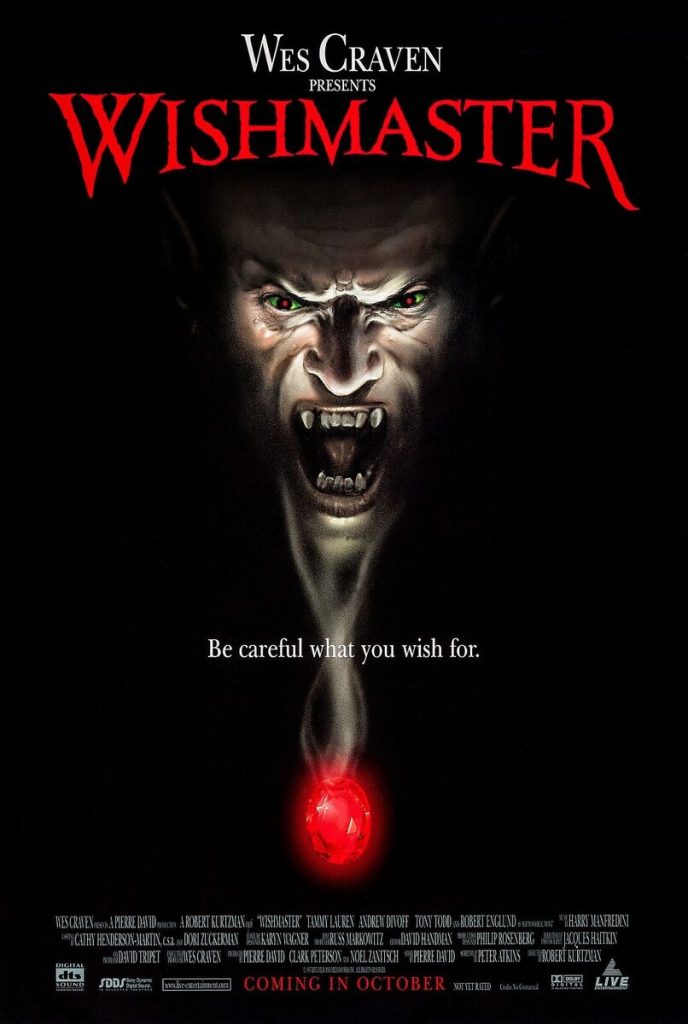
Directed by Robert Kurtzman and executive produced by Wes Craven, Wishmaster introduces The Djinn as a malevolent genie — not from fairy tales, but from pre-Islamic Persian lore. He is summoned when a fire opal is uncovered and awakened by a blood offering.
The Djinn collects souls through corrupted wishes. Each time someone speaks a desire aloud — even casually — he twists it into a fatal punishment:
- “I wish I could lose a little weight” → crushed to death in a collapsing room
- “I wish to be beautiful forever” → turned into a mannequin
- “I wish you would go f** yourself*” → done, literally, and fatally
Andrew Divoff plays him with Shakespearean menace, using elaborate, poetic wordplay and a sneering grin. His goal: to grant three wishes to the person who awakened him. If the third is granted, his race of Djinn will be unleashed to enslave the Earth.
The film blends high-concept fantasy with extreme body horror, featuring cameos from horror icons like Robert Englund, Kane Hodder, and Tony Todd. It’s a gory, stylish sleeper hit with a villain who’s part Loki, part Pinhead, and all ego.
Wishmaster 2: Evil Never Dies (1999)
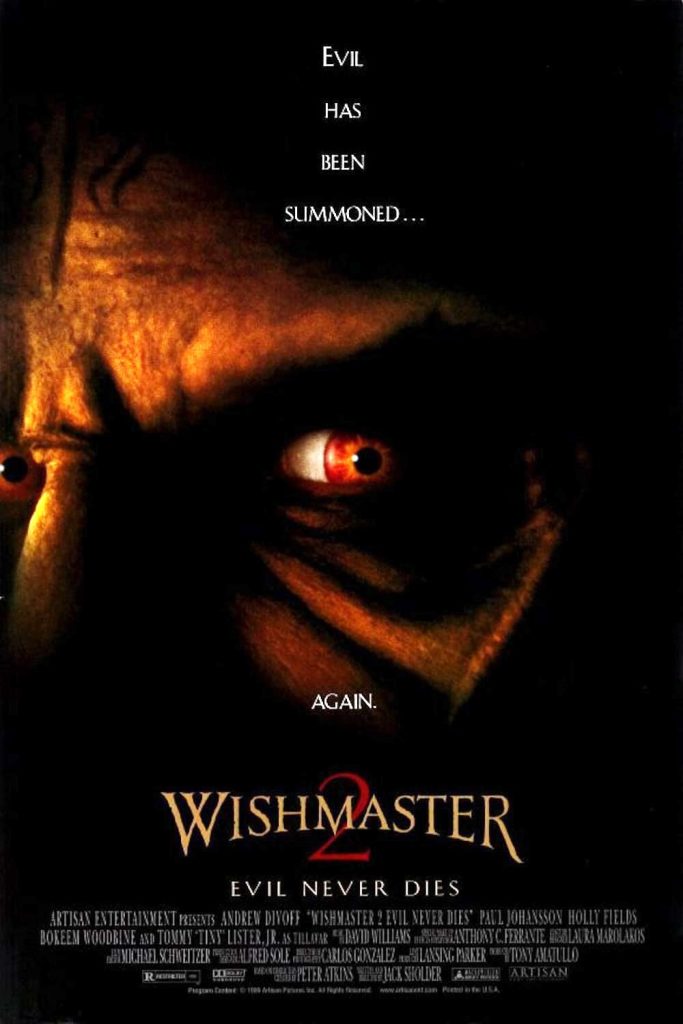
The Djinn returns, imprisoned in a jewel once again. This time he’s released during a botched museum robbery and sent to prison — an ideal place to exploit vulnerable souls.
This film leans harder into humor and irony:
- “I wish my lawyer would go f** himself*”
- “I wish I were invisible to the guards” → literally unseen, then shot
- “I wish I could get out of here” → is thrown against the bars and dies
He manipulates inmates, lawyers, guards — working toward his third wish. Divoff returns with the same sinister charm, though the effects are more low-budget. Still, the Djinn remains charismatic, cunning, and increasingly theatrical.
Wishmaster 3: Beyond the Gates of Hell (2001)
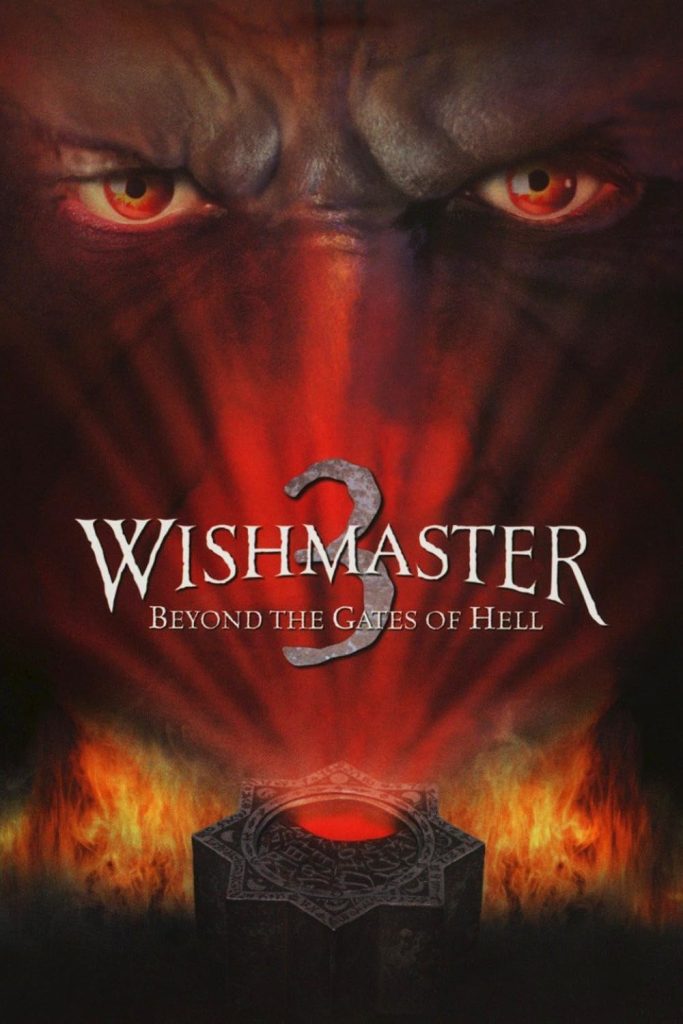
Divoff is replaced by John Novak, and the tone shifts to something more akin to a SyFy TV movie.
Now set at a college, the Djinn grants wishes to horny or arrogant students, twisting their words into comically gruesome deaths:
- Wishes for love → obsessive psychotic murder
- Wishes for intellect → driven insane
- Wishes for power → fatal betrayal
The Djinn is more physically active here but loses much of his original menace and style. The film explores archangel lore, bringing in the angel Michael to oppose him — a strange turn toward supernatural warfare.
Wishmaster 4: The Prophecy Fulfilled (2002)
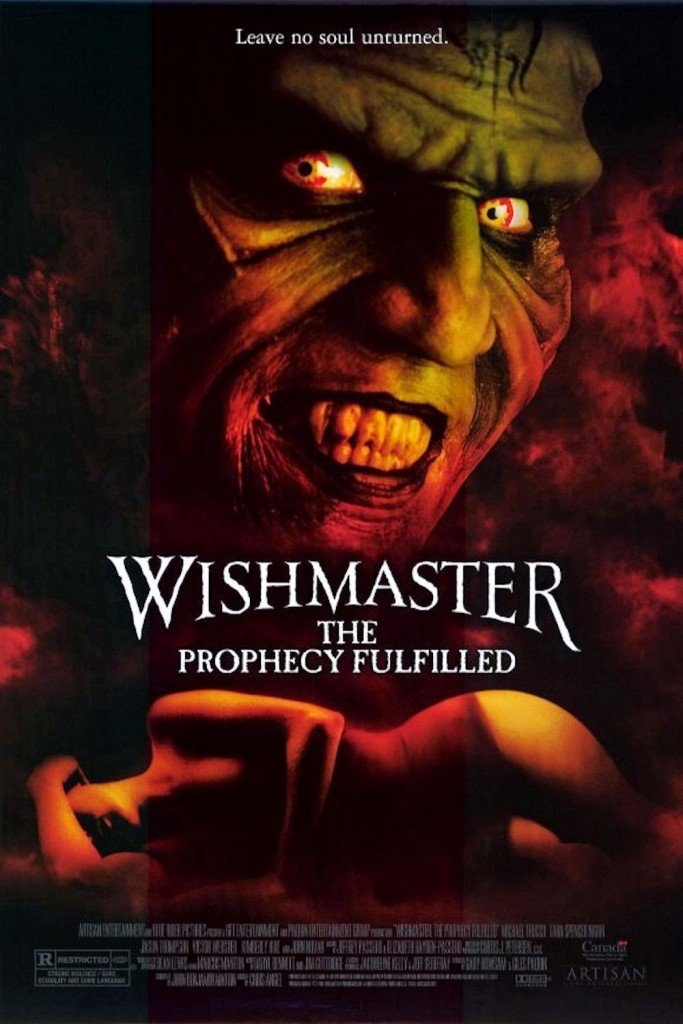
The final installment sees the Djinn once again trying to trigger the apocalypse by seducing and manipulating a woman named Lisa, whose wishes are deeply emotional and complicated:
- Wishing her boyfriend could walk again
- Wishing for unconditional love
- Wishing for emotional honesty
It’s a more psychological entry, but poorly executed. The Djinn falls in love, betrays his mission, and is defeated — again — in a now formulaic fashion.
Despite the decline, he remains iconic for his theatrical kills and sadistic glee.
Physiology & Behavior
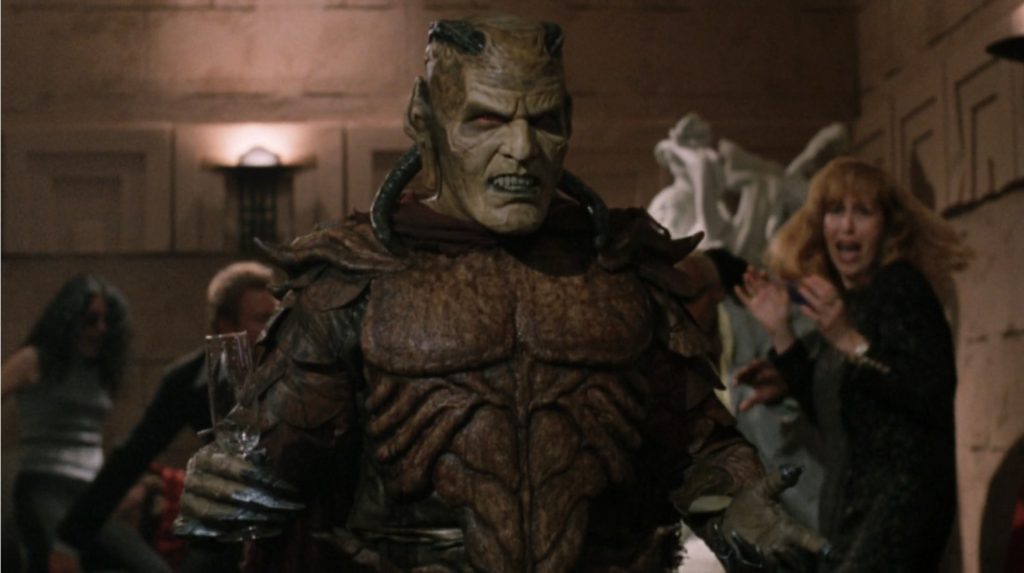
- Ancient pre-human demon from Persian myth, imprisoned in a gemstone
- True form: horned, red-skinned, towering humanoid with glowing eyes and claws
- Can shapeshift into a human disguise to walk among mortals
- Powers include:
- Wish-granting with fatal twists
- Teleportation
- Reality manipulation
- Fire and body horror conjuration
- Weakness: cannot act freely — only kills through verbal consent (wishes)
- Goal: collect 1,000 souls and secure the third wish from the summoner
- Personality: theatrical, philosophical, ironic — speaks in riddles and poetic curses
Cultural Impact
- A late-90s cult favorite for fans of ironic horror and wordplay kills
- Seen as a spiritual cousin to Freddy Krueger and Pinhead — verbose, stylish, supernatural
- Andrew Divoff’s portrayal is beloved for its voice, posture, and menace
- Spawned action figures, T-shirts, horror meme edits, and comic-style fan art
- Crossover potential often discussed (e.g., vs. Freddy or Leprechaun)
- The concept of twisted wish-fulfillment inspired other films and shows (Supernatural, Wish Upon, etc.)
League Placement
The Djinn belongs in the Second Class Tier — a supernatural powerhouse who never quite broke through to the mainstream. But among genre fans, he’s royalty: poetic, perverse, and entirely original. He doesn’t chase you… he waits for you to ask for something — and he always delivers.