
Also Known As: Pyramid Head, Red Pyramid, Bogeyman, Executioner
First Appearance (Film): Silent Hill (2006)
Game Debut: Silent Hill 2 (2001)
Most Iconic Form: Towering humanoid clad in butcher’s robes, dragging a massive Great Knife, with a giant angular pyramid-shaped helmet in place of a face
Kill Count: 4+ onscreen (film), dozens implied in games
Portrayed by: Roberto Campanella (film), voiced by various in games
Silent Hill (2006) – The Wrath of Guilt
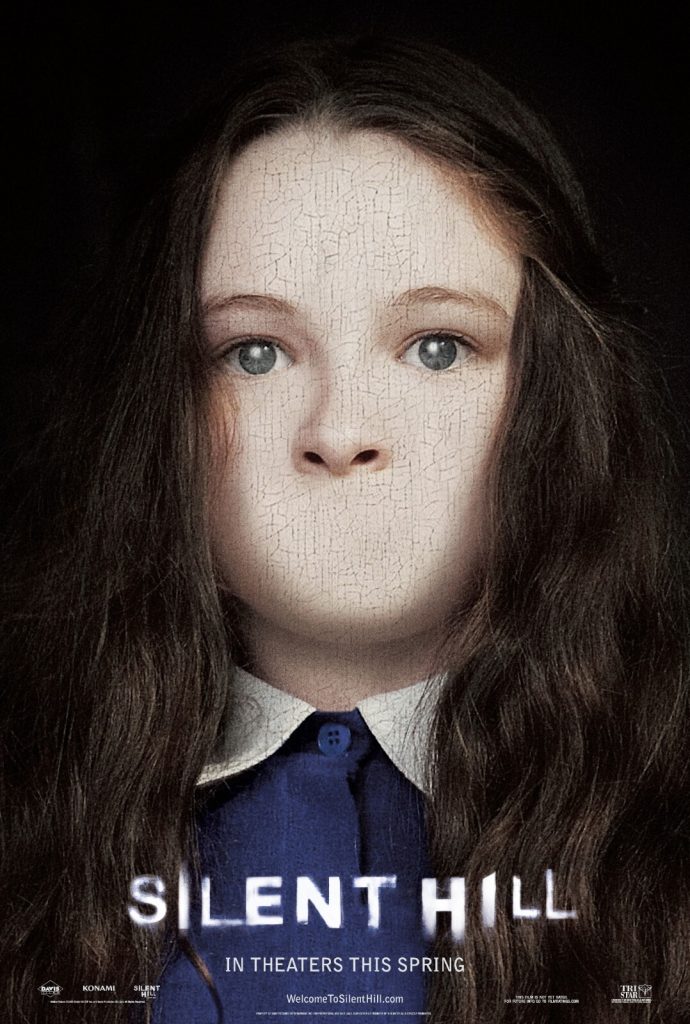
In Christophe Gans’ visually surreal adaptation of Konami’s psychological horror franchise, Pyramid Head is introduced as one of the most unforgettable elements of the cursed town of Silent Hill. Towering, silent, and impossibly strong, he serves as a manifestation of repressed trauma and divine punishment within the film’s hellish dreamscape.
Unlike most slashers, Pyramid Head doesn’t stalk or taunt. He appears without warning, unleashing brutal, symbolic violence in complete silence.
Highlights from the film:
- First appears in a rusted hallway, peeling the flesh off a screaming victim in one shocking pull
- Repels a SWAT team with ease, dragging his massive blade behind him
- Confronts Cybil and Rose during the church sequence, terrifying even the fanatics
- In one of the film’s most graphic scenes, rips Anna’s skin off in a single motion and hurls it at the church doors
Pyramid Head isn’t a “killer” in the traditional sense — he’s a punisher, carrying out metaphysical judgment. In the film, he appears to act as an agent of vengeance and moral reckoning within the fractured realities of Silent Hill, particularly tied to Alessa’s tormented psyche.
Though not the main antagonist, his brief appearances leave lasting impressions. Every moment with Pyramid Head is loaded with dread, symbolism, and grotesque beauty.
Pyramid Head in the Games – Guilt Made Flesh
Silent Hill 2 (2001)
Pyramid Head made his debut in Silent Hill 2, where he serves as the manifestation of protagonist James Sunderland’s guilt and desire for punishment. Unlike the film, where he’s a roaming monster, here he is deeply personal, haunting James throughout his journey.
Key moments include:
- Watching Pyramid Head assault other monsters — acting out James’s repressed sexual guilt
- Fighting him multiple times as a near-invincible boss
- At one point, two Pyramid Heads appear to drive home the duality of guilt and the inescapable need for retribution
- In the game’s finale, the Pyramid Heads commit suicide, symbolizing James’s acceptance of truth and guilt over his wife’s death
He is not a villain — he’s a mirror. A psychosexual punisher born from a man’s internal torment.
Later Appearances
Pyramid Head was brought back in later titles like:
- Silent Hill: Homecoming – as a judge figure, called “The Bogeyman”
- Silent Hill: Origins – a cameo, hinting at shared symbolic purpose
- Silent Hill: Downpour – visual references
- Dead by Daylight (2020) – fully playable killer
- Silent Hill: The Short Message (2024) – teased in environmental storytelling
In many later appearances, fans debated whether Pyramid Head’s use was justified — as his original purpose was tied strictly to James Sunderland’s story. Reusing him beyond that dilutes his symbolism, but his fear factor remains intact.
Design & Behavior
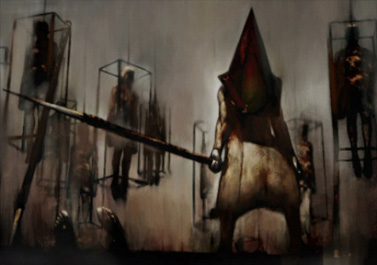
- Silent, imposing, and ritualistic
- Physically strong beyond reason — capable of tearing flesh, impaling bodies, or dragging massive weapons
- Wields the Great Knife or a large spear
- Helmet obscures all identity — no eyes, no mouth, no face
- Never speaks, but communicates through action
- Walks with deliberate, unstoppable pace
- Represents shame, punishment, repression, and absolution through suffering
His presence is more psychological than literal — he is not a killer, but a consequence.
Cultural Impact
- Widely regarded as one of the most iconic horror monsters ever created
- Instantly recognizable silhouette, featured in cosplay, art, and merchandise
- Often referenced in horror films, games, and shows for his psychological weight
- Became a playable killer in Dead by Daylight, introducing him to a new generation
- Featured in two Silent Hill movies despite being specific to SH2, due to fan popularity
- Inspired other horror villains that blend symbolism and physical threat (e.g., The Butcher from The Evil Within)
Pyramid Head transcended his original narrative — not by intention, but through sheer design brilliance and existential dread.
League Placement
Pyramid Head belongs in the Second Class Tier — not due to a lack of menace, but because he is not a killer in the traditional sense. He’s punishment embodied, a monster of meaning more than malice. When he appears, it’s because someone deserves to suffer — and suffering is the only way out.