
Also Known As: The Terror Train Killer
First Appearance: Terror Train (1980)
Most Iconic Form: A vengeful killer masked in costumes stolen from his victims aboard a moving train
Kill Count: 7+ passengers and crew
Portrayed by: Derek MacKinnon
Tier: Second Class Tier
Terror Train (1980)
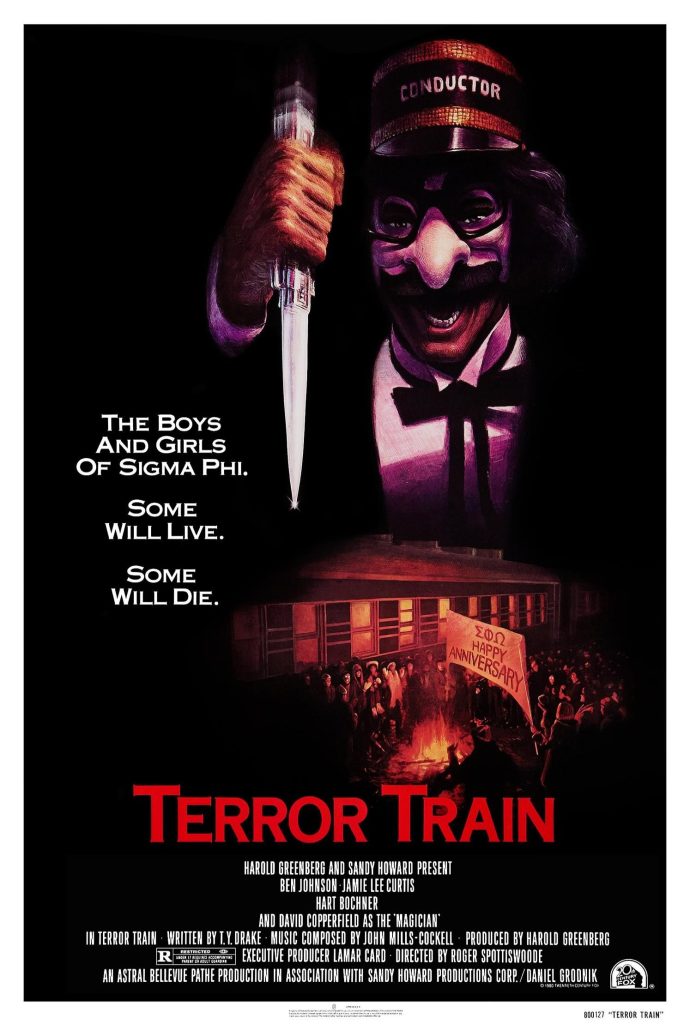
Kenny Hampson begins not as a faceless monster but as a tragic figure. A shy, awkward pledge desperate to be accepted into a college fraternity, he is lured into a humiliating prank. During a hazing ritual, the popular fraternity members and their girlfriends convince Kenny that he is about to sleep with Alana Maxwell, the compassionate sorority sister played by Jamie Lee Curtis. Instead, he finds himself in bed with a corpse stolen from the medical school. The trauma shatters him, and Kenny is institutionalised, his fragile mind completely broken.
Years later, the same fraternity throws a New Year’s Eve costume party aboard a chartered train. The night begins with drunken celebration, pranks, and the novelty of a travelling magician (played by David Copperfield), but there is an uninvited guest. Kenny, his psyche scarred beyond repair, has returned. His revenge is as methodical as it is theatrical: he dons the costumes of his victims, blending in seamlessly with the revelry. One by one, he isolates the students responsible for his humiliation, dispatching them with knives, swords, and sheer ferocity.
The confined space of the train heightens the claustrophobia. There is no escape, no safe hiding place. As the partygoers grow suspicious, confusion mounts because the killer can take on any disguise. Each costume change is not only a practical ruse but a cruel reminder of the night that destroyed Kenny’s life — masks, identities, and trickery.
The killings escalate until Alana is cornered. Unlike the others, she expresses genuine remorse for her part in the prank, recognising that it was cruelty, not comedy. Yet Kenny cannot be reasoned with. His mind is consumed by betrayal and rage. In the climax, he is finally overpowered and hurled from the train into the night, his body vanishing into the darkness.
Terror Train (2022 Remake)

The 2022 remake reintroduces Kenny Hampson to a new generation, modernising the original story while keeping its core themes intact. Once again, Kenny is portrayed as a socially awkward outsider who becomes the victim of a cruel fraternity prank. Instead of the corpse reveal from the original, the remake updates the hazing to fit a contemporary college setting, though the result is no less devastating. Kenny’s mental collapse and subsequent disappearance form the backdrop for the film’s events.
The New Year’s Eve train party is restaged with new characters, but the same sense of claustrophobic dread. The killer stalks the passengers by donning the costumes of victims, allowing him to move unnoticed among the revelry. This conceit remains the remake’s most effective element, keeping audiences guessing about whether the masked reveller in any given scene is an innocent partygoer or Kenny himself.
While the remake is more restrained in gore than the original, it emphasises atmosphere, suspense, and the psychological torment of the survivors. Kenny’s identity is revealed in the climax, echoing the structure of the 1980 film, though the updated version positions him as a modern commentary on bullying, hazing, and the destructive nature of social cruelty.
Though not as notorious as the original, the remake rekindled interest in Terror Train, reminding horror audiences of Kenny’s role as one of the most tragic and theatrical killers of the slasher boom.
Psychology and Behaviour
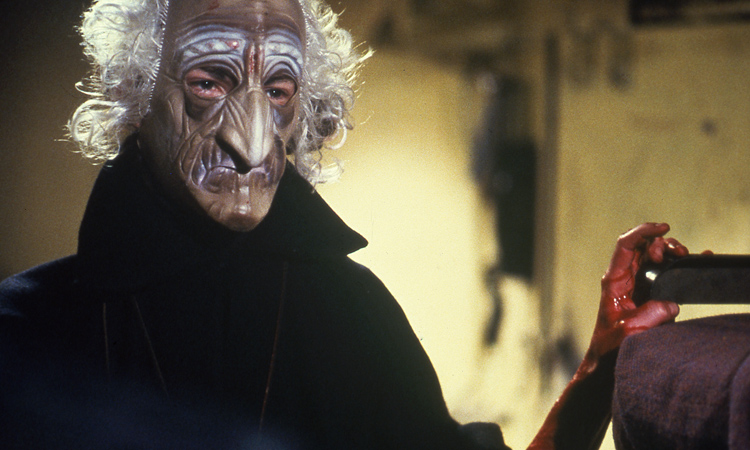
Kenny is defined by trauma. Unlike many slashers who kill for compulsion or supernatural drive, his violence is rooted in humiliation and mental collapse. The prank that destroyed his dignity also destroyed his sanity. His choice of disguise and costume highlights his fractured identity: he hides his ruined self beneath masks, becoming anyone but the boy who was broken.
He kills with a theatricality that mirrors the prank played upon him. Each murder is not simply about revenge but about performance, echoing the cruel spectacle that shaped him. Kenny is tragic in the way that many slashers are — a victim of cruelty who becomes an engine of cruelty himself.
Cultural Impact
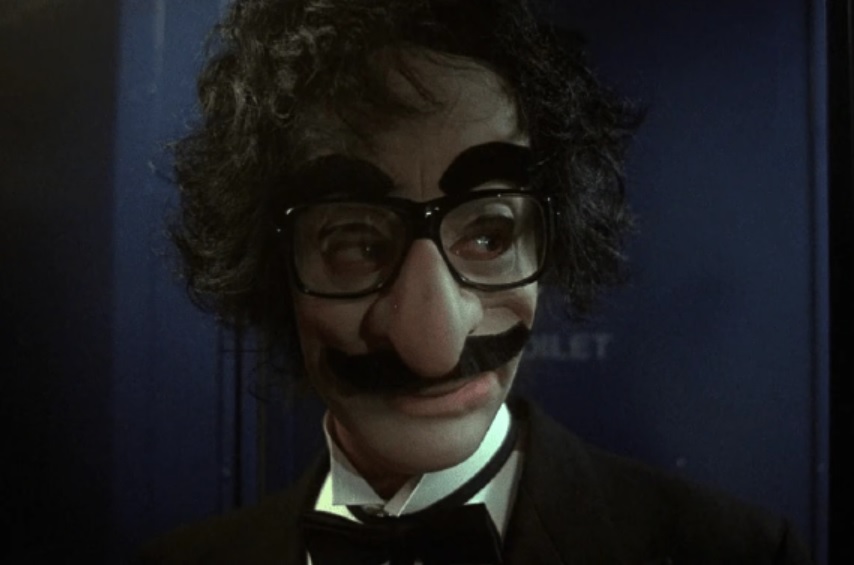
Terror Train was part of the early 1980s boom in slasher films, released at the height of Jamie Lee Curtis’s scream queen career. While Kenny never spawned a franchise, the film distinguished itself with its unique setting — a moving train — and its emphasis on disguise and deception.
In the United Kingdom, Terror Train was caught up in the early wave of censorship during the “video nasties” panic. Though not officially prosecuted, it was often listed alongside other banned titles for its violence and lurid marketing, cementing its cult reputation.
Kenny himself stands out as a slasher villain because he is both victim and aggressor, a fragile boy destroyed by cruelty who becomes a masked killer seeking vindication. His use of costume and disguise foreshadowed later slashers like Ghostface in Scream, proving that horror villains could use theatricality as effectively as brute force.
The 2022 remake, though less culturally seismic, introduced Kenny to younger viewers and gave the story fresh relevance. His reimagining as a victim of bullying and hazing resonated in a modern climate more attuned to issues of mental health, proving that his story still carried power.
League Placement
Kenny Hampson belongs in the Second Class Tier. He lacks the cultural reach of the genre’s titans, but his tragic backstory, inventive use of disguise, and place in one of the most atmospheric early slashers give him a secure place in horror history.