
Also Known As: Cropsy, The Caretaker, The Camp Killer
First Appearance: The Burning (1981)
Most Iconic Form: Horrifically burned face, concealed in shadow beneath a coat and hat, silently wielding oversized garden shears
Kill Count: 10+ campers and counsellors
Portrayed by: Lou David
Tier: Second Class Tier
The Burning (1981)
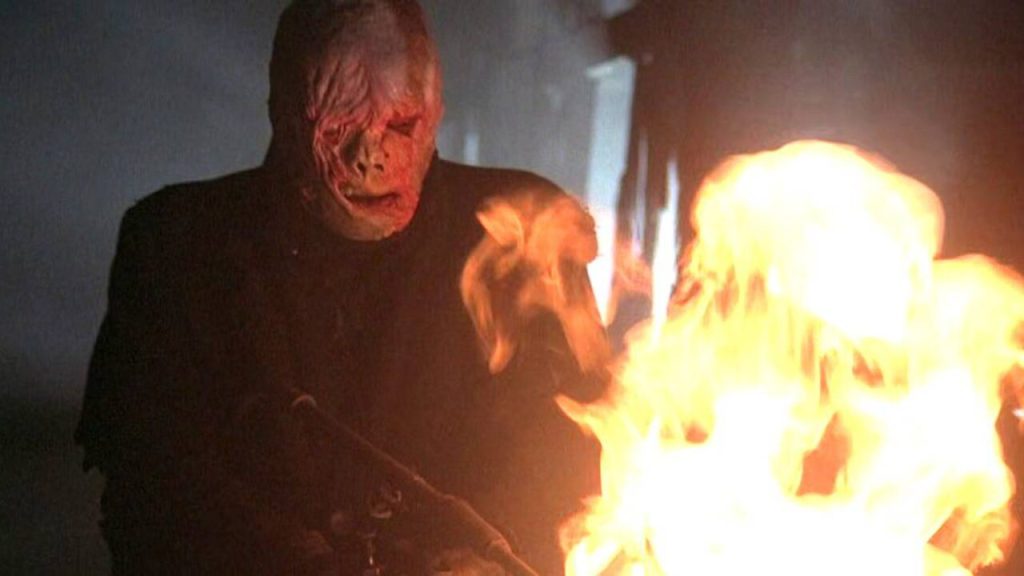
At Camp Blackfoot, Cropsy was once the cruel, spiteful caretaker who lorded over the campers, bullying them and ruling through fear. One summer night, a group of boys decided to take revenge on him with a prank — a rotting skull filled with lit candles, planted by his bed to scare him awake. What they never anticipated was disaster: the skull toppled, the bed went up in flames, and Cropsy’s cabin exploded into an inferno. He ran screaming into the night, his body engulfed, crashing into the lake as the boys watched in silent horror.
Five years later, Cropsy is released from the hospital. His body is mangled, his face a melted ruin that leaves nurses recoiling. Once a petty tyrant, he is now something worse — a man hollowed out by pain, driven only by rage. He heads back into the woods, gravitating to a nearby summer camp filled with unsuspecting teens, seeking vengeance on the carefree youth who remind him of what was stolen from him.
The early scenes are deceptively idyllic. The campers flirt, joke, and explore the forest, blissfully unaware of the eyes watching them from the trees. Cropsy moves silently through the undergrowth, waiting. When he strikes, it is without warning or mercy. His weapon of choice is a pair of massive garden shears, which he uses to slash throats, sever limbs, and drive through torsos in sudden outbursts of violence.
The film’s most infamous sequence takes place on a raft. A group of teens, believing they have spotted an abandoned canoe, paddle towards it. Without warning, Cropsy erupts from the vessel and hacks them apart in a matter of seconds. The scene is drenched in blood, showing severed fingers, gashed faces, and slashed throats in a shocking display of Tom Savini’s practical effects. The killings are not theatrical or clever — they are brutal, fast, and physical.
In the finale, Cropsy kidnaps one of the remaining counsellors and drags him to an abandoned mine. There, in the flickering light of the tunnels, his face is fully revealed at last — wet, glistening scar tissue stretched across a skull-like visage. He is ultimately killed with his own shears, but his name becomes a campfire legend, whispered to frighten children for generations.
Psychology and Behaviour
Cropsy is a creature of vengeance. Once human, the fire stripped away compassion and replaced it with pure rage. He kills silently, without the taunts or theatrics common to other slashers. He appears, strikes, and vanishes back into the trees. He stalks not out of compulsion but with focused purpose, and he never toys with victims — his kills are swift and savage.
His disfigurement enhances his terror. He hides his face until the end, relying on the psychological fear of the unseen and the primal horror of mutilation. His silence makes him seem less like a man and more like a revenant of rage, haunting the forest he once tended.
Cultural Impact
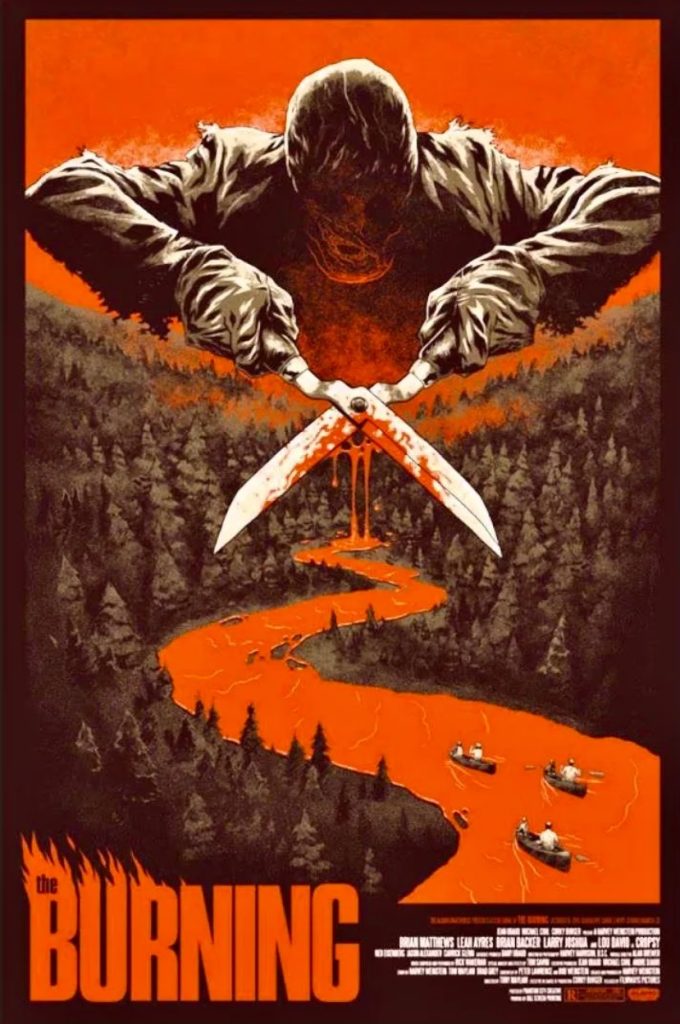
The Burning holds a notorious place in horror history. Released in the early 1980s, it quickly drew attention for its graphic violence and became one of the original “video nasties” banned in the United Kingdom under the Video Recordings Act 1984. The infamous raft massacre made it a prime target for censors, who deemed it excessively sadistic and harmful.
Despite this, or perhaps because of it, The Burning became a cult classic. Tom Savini’s grisly effects were widely praised, and the film is now often cited as one of the most brutal entries in the golden age of slashers. While Cropsy never returned in sequels, his legend endured, inspiring urban myths about disfigured camp killers and helping shape the DNA of later icons like Jason Voorhees.
League Placement
Cropsy belongs in the Second Class Tier. He is not as culturally dominant as the great franchise killers, yet his sheer brutality, visual horror, and the legacy of his film’s censorship cement him as one of the deadliest summer camp slashers to ever stalk the screen.