Film: The Bad Seed (1956)
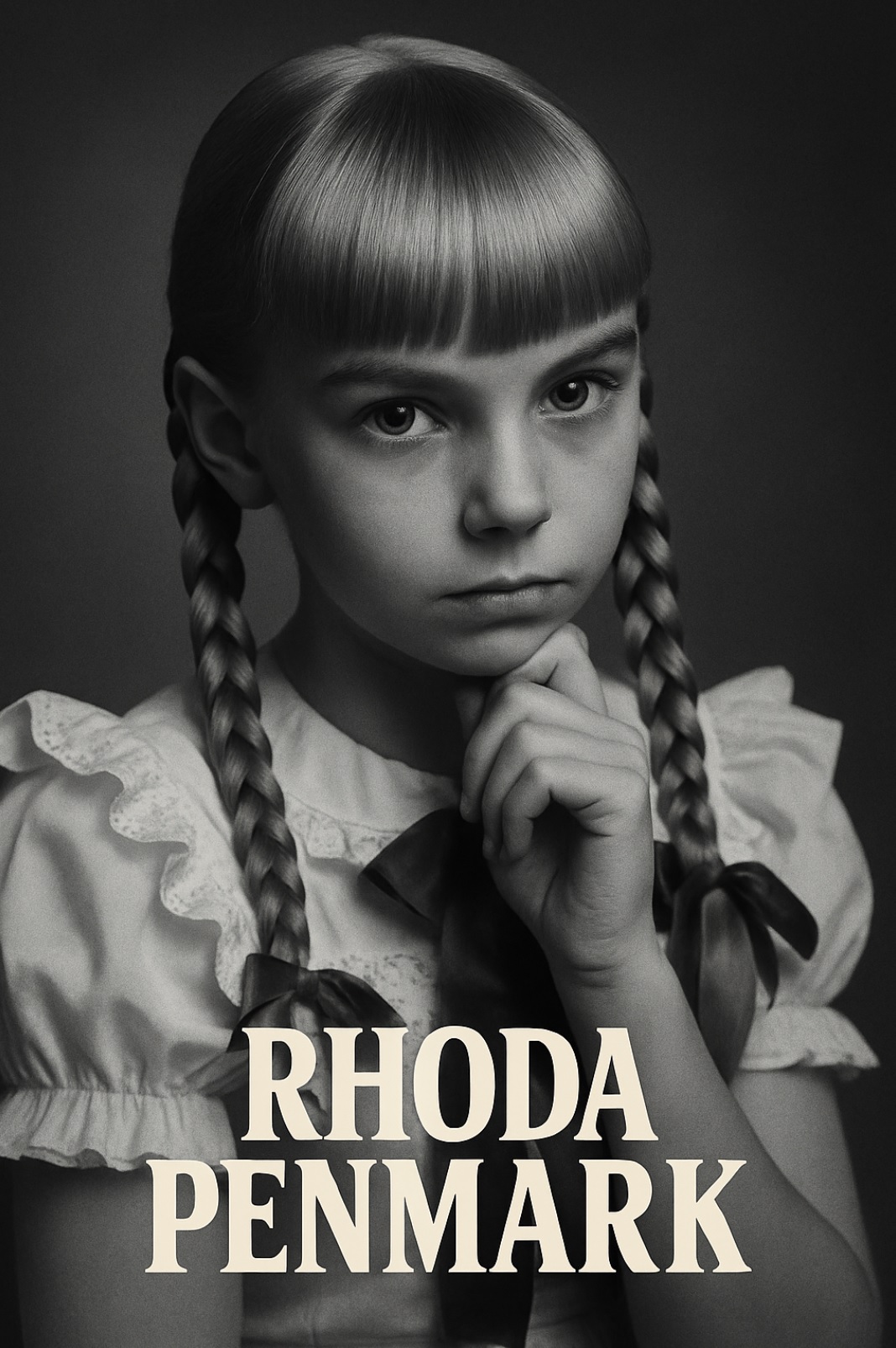
Character: Rhoda Penmark
Portrayed by: Patty McCormack
Classification: Human
Tier: Second Class
Film Directed by: Mervyn LeRoy
Based on: The Bad Seed by William March
Rhoda Penmark
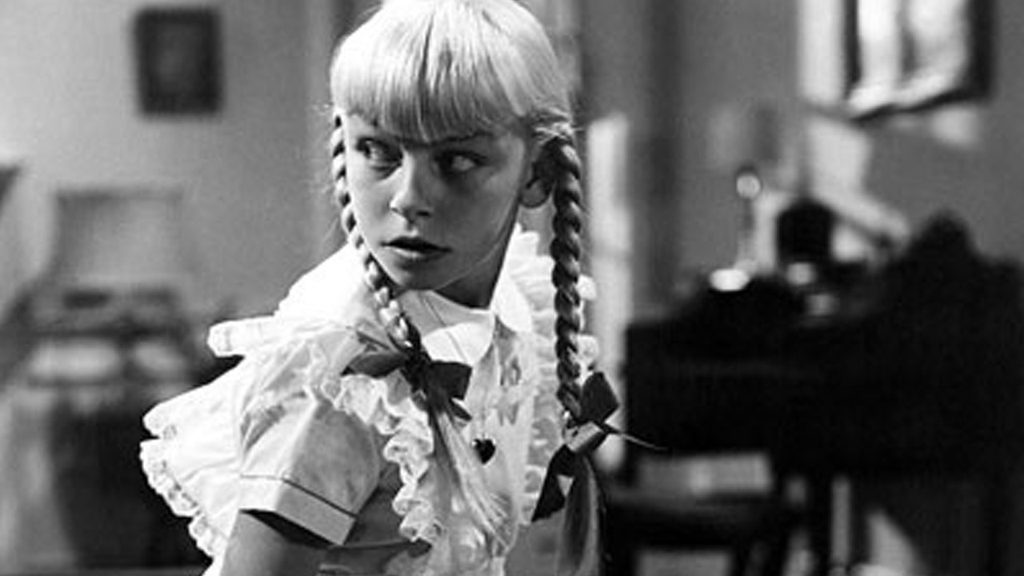
Long before horror cinema gave audiences Damien Thorn, Esther Coleman or countless other murderous children hiding behind innocent faces, there was Rhoda Penmark. At eight years old, Rhoda is polite, immaculately presented, intelligent and capable of charming almost every adult she meets. Beneath that carefully maintained exterior, however, is a child capable of manipulation, cruelty and murder.
What makes Rhoda particularly disturbing is the absence of anything supernatural behind her actions. She doesn’t transform into a monster and she isn’t possessed by one. The horror of The Bad Seed comes from the possibility that this apparently perfect little girl simply does not experience guilt or empathy in the way those around her expect. Her innocence is not merely deceptive; it becomes one of her greatest advantages because adults find it almost impossible to accept what she may be capable of.
Rhoda originated in William March’s 1954 novel The Bad Seed before appearing in Maxwell Anderson’s successful stage adaptation. The story reached cinemas in 1956 with Mervyn LeRoy’s film, in which Patty McCormack reprised the role she had already played on Broadway. McCormack’s performance earned her an Academy Award nomination for Best Supporting Actress and created the screen incarnation of Rhoda that remains most closely associated with the character.
The Perfect Little Girl
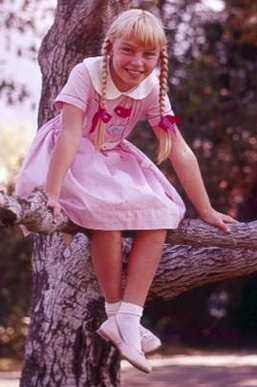
One of Rhoda’s greatest weapons is that she doesn’t look dangerous. She presents herself to adults as a model child: well dressed, well mannered and seemingly capable of turning on sweetness whenever the situation requires it. Rhoda understands how adults expect a little girl to behave and is remarkably good at giving them exactly that performance.
Her mother, Christine Penmark, initially has every reason to want to believe in that image. Rhoda has been raised in a loving household, while Christine’s husband Kenneth is away on military duty. Yet there have already been troubling incidents in Rhoda’s past, and the death of one of her classmates finally forces Christine to confront what her daughter may actually be capable of.
The catalyst is a school penmanship medal. Rhoda believes she deserves the award, but it is instead given to her classmate Claude Daigle. When Claude subsequently drowns during a school picnic, Rhoda’s behaviour begins to attract suspicion. Particularly disturbing is her lack of genuine grief over another child’s death and her continuing fixation on the medal that Claude had won.
Christine’s suspicions become much more serious when she discovers the medal among Rhoda’s possessions. Eventually, the terrible truth emerges: Rhoda killed Claude and took the prize she believed should have belonged to her. What might initially have been explained away as jealousy or childish resentment is revealed to have developed into something considerably darker.
A Child Without Remorse
Rhoda’s response to Claude’s death is central to why the character remains so unsettling. She doesn’t behave like a frightened child who has done something terrible and subsequently regrets it. Once confronted, she is capable of discussing what happened with a chilling emotional detachment, treating another child’s death as a problem that has already been dealt with.
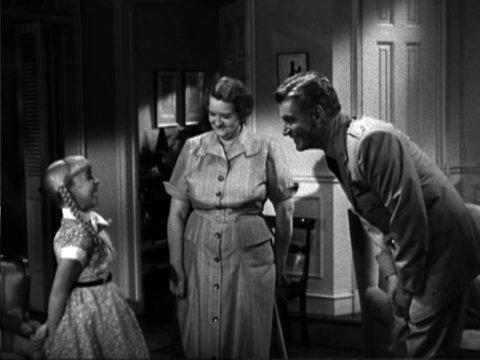
Christine also begins reconsidering suspicious events from Rhoda’s past. An elderly neighbour had previously died after falling from a height, and Rhoda had coveted something belonging to her. As Christine pieces together her daughter’s history, she is forced to consider that Claude may not have been Rhoda’s first victim.
The horrifying possibility facing Christine is therefore much larger than one terrible incident. Her daughter may already have learned that removing somebody permanently is an effective way of getting something she wants. Rhoda’s outward appearance protects her because the adults around her are predisposed to see an innocent child rather than a calculating killer.
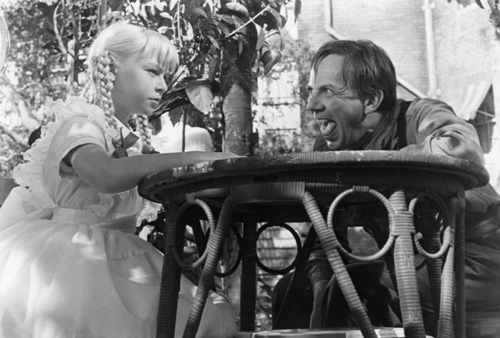
Then there is Leroy Jessup, the apartment building’s maintenance man. Leroy is one of the few adults who recognises something deeply wrong in Rhoda. Rather than being completely taken in by her performance of childhood innocence, he antagonises her and begins probing the circumstances surrounding Claude’s death. When he discovers evidence that could expose her, he becomes a genuine threat.
Rhoda responds in the most extreme way possible. After realising that Leroy knows too much, she sets fire to his bedding in the basement and locks him inside. Leroy burns to death, and Christine is confronted with further proof that her daughter isn’t simply responsible for one impulsive killing. Rhoda is capable of deliberately murdering someone to protect herself.
Christine’s Horrifying Discovery
The Bad Seed adds another layer to its story through Christine’s discovery of her own family history. Christine was adopted and eventually learns that her biological mother was Bessie Denker, a notorious murderess. Within the heredity theories explored by William March’s story, Christine begins to fear that a capacity for criminal behaviour has somehow passed through her and manifested itself in Rhoda.
It is important when looking back at The Bad Seed not to treat the story’s ideas about inherited criminality as modern scientific fact. They belong to the novel and film’s dramatic exploration of the nature-versus-nurture question. The terrifying proposition presented to Christine is that Rhoda has received love, security and a comfortable upbringing, yet none of it has prevented her from becoming capable of murder.
For Christine, that possibility becomes unbearable. After Leroy’s death, she reaches the conclusion that Rhoda will continue hurting people and that she herself may be the only person capable of stopping her. It turns the story into a particularly cruel dilemma because Christine still loves her daughter while simultaneously believing that allowing Rhoda to live could result in further deaths.
Christine eventually gives Rhoda a deliberately dangerous quantity of sleeping pills before attempting to take her own life with a gun. What happens afterwards depends upon which version of The Bad Seed is being told.
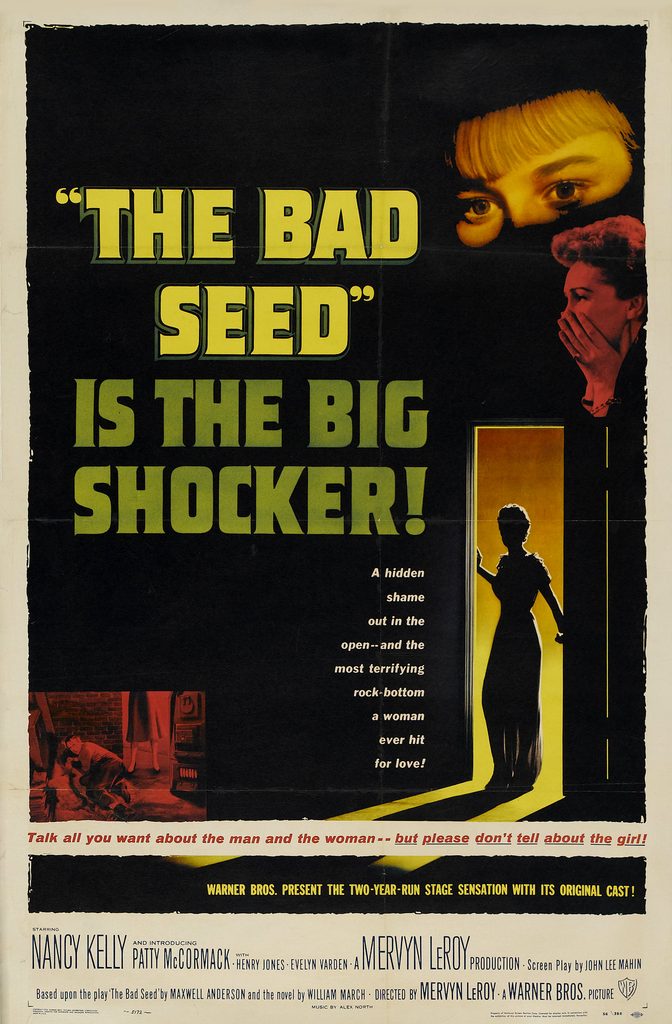
The Novel and the 1956 Film
William March’s original novel delivers perhaps the cruellest ending possible. Christine dies, but Rhoda survives. Help arrives in time for the girl to be taken to hospital and revived, while those around the family interpret Christine’s actions without understanding the horrifying truth she had discovered. Rhoda is consequently left alive, with the people capable of exposing her either dead or unable to reveal what she has done.
The implication is chilling because nothing has really stopped the bad seed. Christine has sacrificed herself and attempted the unthinkable in order to prevent future murders, yet Rhoda emerges from the story with her carefully constructed appearance of innocence largely intact.
Maxwell Anderson’s stage adaptation also allowed Rhoda to survive, but Hollywood in the 1950s presented a problem. The Production Code made an ending in which a murderer could simply escape punishment difficult to retain, so Mervyn LeRoy’s 1956 film substantially changes the conclusion.
In the film, both Christine and Rhoda initially survive Christine’s attempted murder-suicide. Later, during a thunderstorm, Rhoda returns to the lake where Claude died. Christine had thrown the incriminating penmanship medal into the water, and Rhoda goes back intending to retrieve it. While on the pier, she is suddenly struck by lightning and killed.
Christine survives, reversing the fundamental outcome of March’s original story. Instead of Rhoda escaping while her mother dies, the film ensures that the murderous child receives an unmistakable punishment for her crimes.
The film then adds one final and deliberately playful piece of 1950s showmanship. After the drama has concluded, the performers are presented to the audience and Nancy Kelly puts Patty McCormack over her knee and spanks her. It is an extraordinarily light-hearted coda after such dark subject matter and has itself become one of the memorable curiosities associated with the film.
Patty McCormack
A huge part of Rhoda Penmark’s longevity comes from Patty McCormack’s performance. McCormack had already played Rhoda on Broadway and was brought across to the film alongside several other performers from the stage production, including Nancy Kelly, Eileen Heckart and Henry Jones. Rather than completely rebuilding the cast around established Hollywood names, the film retained performers who already understood the material and their characters.
McCormack’s Rhoda works because she doesn’t simply spend the film behaving like a miniature horror villain. There is a calculated artificiality to her sweetness. Her immaculate appearance, carefully delivered manners and ability to manipulate adults become part of the character’s disguise, while flashes of anger reveal what exists underneath whenever that disguise stops getting her what she wants.
The performance was recognised by the Academy, with McCormack receiving a nomination for Best Supporting Actress. Nancy Kelly and Eileen Heckart were also nominated for their performances, while cinematographer Harold Rosson received a nomination for Best Cinematography, Black-and-White. The film therefore received four Academy Award nominations in total.
McCormack’s performance remains crucial to why Rhoda still works as a horror character decades later. The contrast between the girl’s appearance and her actions is the entire point, and McCormack is able to move between those sides of Rhoda without turning her into a cartoon monster.
Character and Legacy
Rhoda Penmark belongs to a much older tradition than the masked killers who would eventually dominate the slasher genre, but her place in the history of murderous children on screen is significant. The fundamental idea remains frighteningly effective: take someone audiences instinctively regard as harmless and make that innocence itself part of the disguise.
Rhoda doesn’t need physical strength, an intimidating costume or supernatural abilities. Adults underestimate her because she is a little girl, and she understands how useful that assumption can be. Her outward sweetness allows her to manipulate situations that would immediately make an older character suspicious, while the very idea of a child committing calculated murder is so difficult for the adults around her to comprehend that it provides her with another layer of protection.
The character also predates many of horror cinema’s best-known evil children. The Bad Seed arrived before Village of the Damned, The Omen and the many supernatural, demonic and psychologically disturbed children that would populate later horror films. Rhoda is particularly disturbing because the story does not require a supernatural explanation for her behaviour. The monster is already sitting at the dinner table, smiling politely and asking for what she wants.
Her importance also predates the 1956 film itself. William March’s novel was published in 1954, with Maxwell Anderson’s theatrical adaptation opening on Broadway later that year. Patty McCormack therefore established her association with Rhoda on stage before bringing the character to cinema audiences two years later.
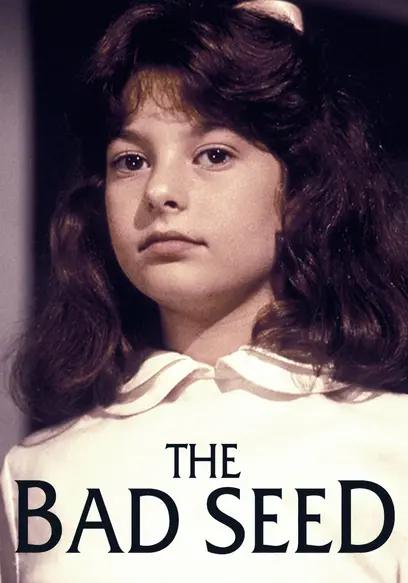
The story has subsequently returned to the screen in several forms. A 1985 television adaptation changed Rhoda’s name to Rachel Penmark, with Carrie Wells playing the character. Later adaptations would again revisit the central premise of an apparently perfect young girl concealing a murderous personality, demonstrating how durable March’s original concept has proved.
Yet it is Patty McCormack’s smiling, immaculately presented Rhoda from 1956 who remains the defining screen image of The Bad Seed. More than seventy years after the character was created, there is still something profoundly uncomfortable about watching a child commit terrible acts and then effortlessly return to playing the part of the perfect little girl.
Rhoda doesn’t have a mask, a supernatural curse or a signature weapon. She has something much more useful: almost everyone who meets her wants to believe she couldn’t possibly be capable of murder. That combination of innocence, manipulation and complete absence of remorse earns Rhoda Penmark her place in the Hall of Killers — Second Class.