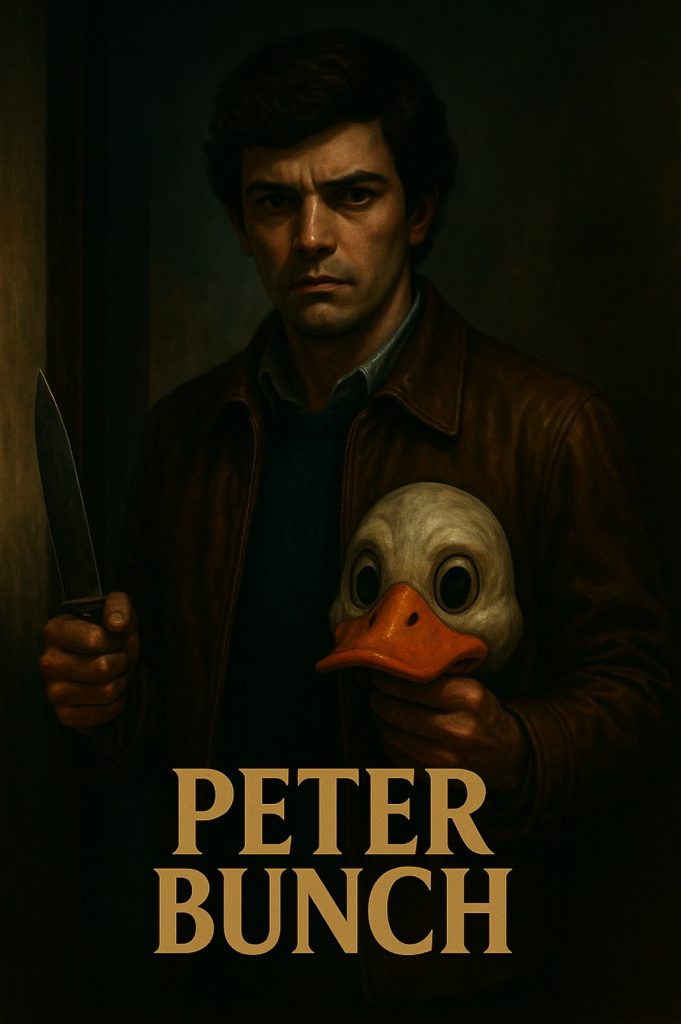
Also Known As: Peter Bunch, The New York Ripper
First Appearance: The New York Ripper (1982)
Most Iconic Form: A shadowed figure who taunts police with a duck-like voice while brutally murdering women across Manhattan
Kill Count: At least six confirmed victims
Portrayed by: Andrea Occhipinti (voice by Vittorio Di Prima)
Tier: Third Class Tier
The New York Ripper (1982)
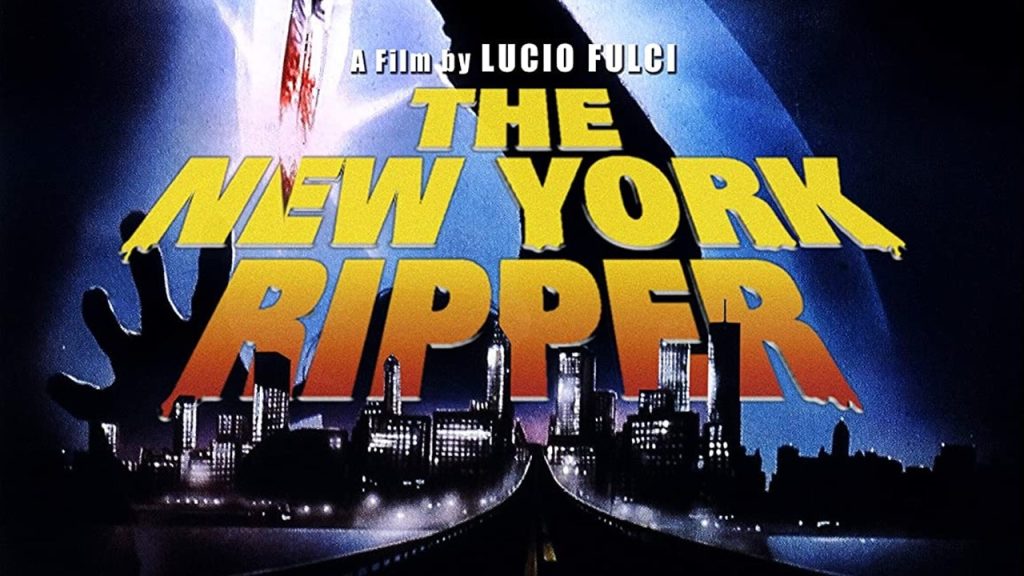
Lucio Fulci’s The New York Ripper stands as one of the most infamous entries in the giallo canon, combining the genre’s traditional mystery structure with the graphic brutality of early 1980s exploitation. Set against the filth and neon of New York’s underbelly, the film follows Detective Williams as he hunts a serial killer targeting women in increasingly sadistic ways.
The murders are grotesque and theatrical, yet disturbingly intimate. Victims include sex workers, dancers, and ordinary women — each killed with obsessive precision. Between these killings, the murderer calls the police to mock them, speaking in a distorted, high-pitched quack. This grotesque detail, seemingly absurd at first, becomes one of the film’s most chilling motifs.
As the investigation unfolds, suspicion falls on several figures, including the cold and detached Dr. Davis and a voyeuristic professor. However, the truth behind the killings is far more tragic and psychologically complex. The murderer is revealed to be Peter Bunch, a quiet man whose mind has fractured under the weight of grief and jealousy.
Peter’s daughter lies terminally ill in hospital, and his rage is directed towards the world’s perceived indifference and decadence. Each murder becomes an act of displaced vengeance, a way of punishing women who, in his distorted mind, represent everything that is healthy, sensual, and alive — everything his daughter will never be.
When his identity is revealed, the absurdity of his duck-like voice takes on new meaning. It echoes the sound his daughter made when playing with him as a child, turning what first seemed mocking into something profoundly sad. The murders are not born of simple cruelty but of despair transformed into violence.
Psychology and Motivation
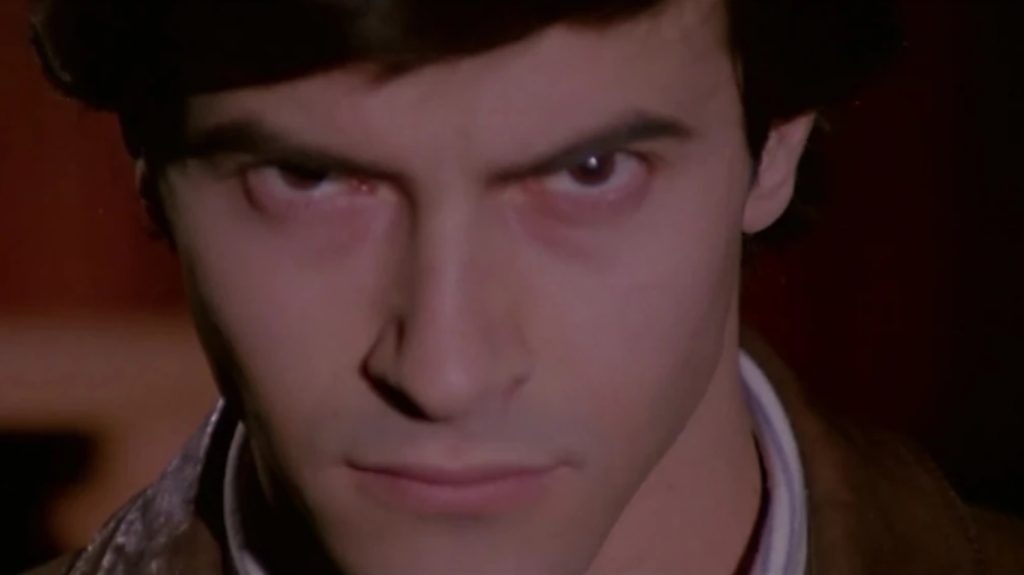
Peter Bunch’s crimes are the product of emotional collapse rather than pure psychosis. His mind is torn between tenderness and rage, between the father he once was and the killer he becomes. The duck voice, used to mock the police, is his way of clinging to his daughter’s memory while externalising his guilt.
He kills with ritualistic precision, choosing victims who symbolise the vitality he has lost. His obsession with women’s bodies reflects both attraction and resentment, mirroring the giallo genre’s fascination with desire and destruction.
In the final scenes, when Peter is cornered, he does not fight or flee. His last words are fragmented and childlike, the voice of a man consumed by grief. His death, though violent, feels like the release of a trapped soul.
Themes and Symbolism
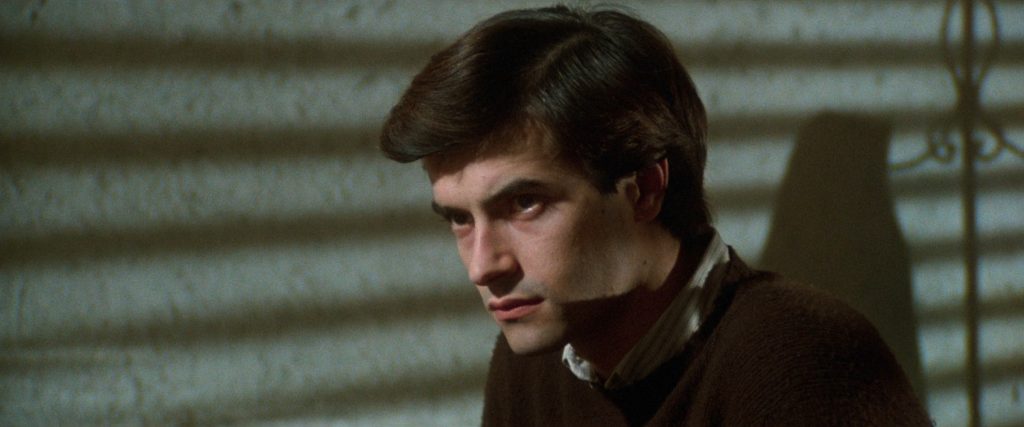
The New York Ripper is often remembered for its shocking violence, but beneath the exploitation lies a dark meditation on urban alienation and moral decay. The film presents New York as a diseased organism, where sex, death, and entertainment blur together. Peter’s killings become a symptom of this sickness — a distorted reflection of a city that feeds on suffering.
The duck voice, once derided as absurd, becomes the film’s central metaphor. It is the sound of innocence lost, echoing through a world that no longer recognises empathy. Fulci turns mockery into tragedy, forcing the audience to see horror not only in the act of killing but in what drives it.
Cinematographer Luigi Kuveiller captures the city as a purgatory of shadows and light, its streets crawling with neon and decay. Every corner feels unclean, every shot laced with voyeurism. The violence, while extreme, serves as commentary on a society that consumes its own misery for pleasure.
Cultural Impact
Upon release, The New York Ripper was banned in several countries, including the United Kingdom, where it became one of the most notorious “video nasties.” Critics attacked it for misogyny, while fans defended it as a brutal mirror to the era’s moral collapse.
Over time, the film has gained a cult following. Its shocking imagery, haunting soundtrack, and raw atmosphere have been re-evaluated as deliberate stylistic choices rather than gratuitous provocation. Fulci himself described it as a film about sickness — not only the sickness of the killer but of the society that surrounds him.
Peter Bunch remains one of Fulci’s most complex killers. His murders are abhorrent, yet his motives evoke pity. He is not a supernatural monster, but a man destroyed by grief and guilt, whose humanity curdles into horror.
Shameless Films released The New York Ripper on Blu-ray.
League Placement
Peter Bunch belongs in the Third Class Tier. His story is closed and tragic, his crimes rooted in despair rather than evil. He stands as one of Lucio Fulci’s most unsettling creations — a man whose voice, once loving, becomes the sound of death.